Why Budapest’s Danube Is Suddenly Giving Up Its Secrets — And Why You Shouldn’t Touch Them

If you’ve strolled along the Danube embankment near Margaret Bridge this summer, you may have noticed something odd: wide stretches of riverbed that are usually submerged now sit exposed under the sun, cracked mud and rusted metal glinting where boats normally glide. Budapest is in the grip of a historic drought, and the Danube’s plunging water level is turning the riverbed into an open-air time capsule — one that’s equal parts fascinating and genuinely dangerous.
A River at Historic Lows
The Danube has dropped to levels rarely seen in living memory. Near Margaret Bridge, the water gauge read just 41 centimeters in late July 2026, only a few centimeters above the historic low of 38 centimeters set back in October 2018. Further south in Baja, the river actually broke its own negative record, falling to just 25 centimeters before forecasts suggested it could dip as low as 21 centimeters in the days ahead. Hydrologists point to a familiar culprit: a prolonged lack of rainfall, relentless summer heat, and dry conditions stretching across the entire Danube basin, from Germany and Austria down through Hungary. This isn’t a one-off either — similar droughts hit the river in 2018, 2022, and 2024, each time exposing shipwrecks, old bridge remnants, and wartime debris that had been hidden underwater for decades.
What’s Been Turning Up in the Mud
Along the exposed banks near Margaret Island, curious locals and amateur treasure hunters have been wading out with metal detectors, and the finds have been genuinely eclectic. Old Hungarian coins are among the most common discoveries — a 2-forint piece minted in 1962 during the era of the Hungarian People’s Republic, along with 20-fillér coins and 5- and 20-forint pieces from various decades. Beyond the currency, the mud has coughed up rusted iron fragments, old machine parts, bicycle components, fishing gear, and hundreds of tons of scrap metal, remnants of a river that has quietly swallowed everyday objects for generations. In previous droughts, the situation got even more dramatic: sections of the original Margaret Bridge, destroyed in a wartime explosion in 1944, briefly reappeared in the riverbed.
The Real Danger Lurking Beneath
Here’s where the story turns serious. The Danube isn’t just a graveyard for lost coins and bike parts — it’s also littered with unexploded ordnance from the fierce World War II battles fought along its banks. As the water recedes, shell casings, grenades, land mines, and even artillery rounds are surfacing at an alarming rate. Hungary’s Ministry of Defence bomb disposal unit, the 1st Bomb Disposal and River Guard Regiment, reported handling roughly 170 calls related to wartime munitions in June alone, many of them tied to newly exposed wetland and riverbank areas.
The most dramatic recent case unfolded near Margaret Bridge itself. A suspected explosive device, roughly 10 centimeters in diameter, was spotted close to the bridge’s central pillar, prompting authorities to shut the bridge entirely from both the Buda and Pest sides starting at 5:00 AM on a Friday morning. The closure also extended to the southern tip of Margaret Island and a 200-meter exclusion zone on the river itself, giving bomb disposal teams room to work safely. It later turned out to be a 7.5-centimeter German artillery shell casing, resting near the bridge’s middle pillar — one of dozens of similar wartime relics recovered from the riverbed this summer.
Best deals of Budapest











This isn’t an isolated Budapest phenomenon either. Downstream near Százhalombatta, civil guard groups have flagged multiple wartime grenades and anti-tank mines emerging from the same drought-exposed mud, some containing ekrazit, an explosive compound historically used in torpedoes and underwater demolitions that can still detonate even after decades submerged. So if you spot uniformed personnel with metal detectors near the water’s edge, don’t be alarmed — that’s most likely the Hungarian Defence Forces doing exactly what they’re trained for, not a treasure hunt.
A Word of Caution for Families
If you’re exploring the exposed riverbank with kids in tow, keep an especially close eye on them. Children are naturally drawn to shiny or oddly shaped objects poking out of the mud, and a corroded shell casing or old ordnance fragment can easily be mistaken for a bottle, a toy, or an interesting piece of scrap metal — exactly the kind of “treasure” a curious child might want to pick up and show you. Given that some of these wartime relics remain fully capable of exploding even after 80 years underwater, it’s worth having a quick conversation with your children beforehand: anything metal found near the water should be pointed out to an adult, never touched or picked up. When in doubt, keep a firm hand nearby and treat every unfamiliar object on the riverbed as a potential hazard rather than a souvenir.
What to Do (and Not Do) If You Spot Something
For visitors exploring the riverbanks, the rule is simple: look, don’t touch. Hungarian law treats the riverbed and its contents as state property, meaning unauthorized digging, metal detecting, or removing artifacts from the Danube or its shoreline is a punishable offense. The stakes get considerably higher with anything resembling wartime ordnance. Moving, kicking, or picking up a suspicious metal object — however innocuous it looks after 80 years underwater — can be lethal, since old explosives don’t necessarily lose their potency over time.
If you come across anything that looks like a shell, mine, or unidentified metal object while walking the embankment, the correct move is to leave it exactly where it is and immediately call 112, Hungary’s general emergency number, so the bomb disposal unit can assess and safely remove it.
A City Still Writing Its History
There’s something oddly poetic about a modern tourist city like Budapest still surfacing physical fragments of its wartime past along the very riverbanks where visitors now snap sunset photos of Parliament and Buda Castle. It’s a reminder that beneath the postcard views, the Danube carries eight decades of layered history — some of it charming, like an old 2-forint coin, and some of it still capable of real danger. For now, the safest way to enjoy this unusual chapter of Budapest’s summer is from a respectful distance: admire the exposed riverbed, snap a photo of the newly visible bridge pillars, and leave the actual digging to the professionals in uniform.
Related news

Explore Budapest from the Danube This Fall
Few experiences reveal Budapest quite like a cruise on the Danube. From the water, the city’s grand landmarks come into focus one after another:...

Why Is the Danube Below Zero in Budapest? What a Negative Water Level Really Means
Budapest’s Danube gauge has entered unfamiliar territory: for the first time in its recorded history, it has shown a negative reading. It may sound...
Autumn Arrives in Budapest: Cooler Air, Rain, and a Record-Low Danube
Budapest’s long, punishing summer is finally loosening its grip. A cold front sweeping in on Wednesday evening will end the heatwave for good,...
Update! – A New Kolodko Mini-Statue on Liberty Bridge Honors Budapest’s Forgotten Hydroplane Line
Update! Contrary to what Kolodko had his followers to believe, the artist did not install the mini-statue in Budapest. Instead he picked one of the...

Message in a Bottle: The Danube’s Real-Life Treasure Hunt Near Budapest
If you’re strolling along the Danube Bend this summer and spot a plastic bottle bobbing near the shore, don’t be too quick to write it...
Why Budapest Is Asking Everyone, Tourists Included, to Go Easy on the Water
Budapest is in the middle of one of the driest, most water-stressed summers anyone can remember, and the Danube itself is the clearest evidence of...
Cleanup Crews Race to Clear Debris From the Shrinking Danube
Budapest’s water authorities have launched a large-scale operation to remove decades of accumulated waste and wreckage from the exposed bed...
When the Titanic Kept Playing, Budapest Started Dancing
There’s an old story about the Titanic: as the ship went down, the band kept playing, and some passengers reportedly joked about chipping ice...

Swimming in the Danube: What Every Visitor to Budapest Should Know Before Jumping In
Budapest is in the grip of a brutal heatwave this summer, and with the Danube’s water level dropping to record lows, the temptation to cool...

Why Budapest’s Famous Landmarks Are Staying Dark This Summer
If you’ve strolled along the Danube after sunset recently and noticed that the Hungarian Parliament Building, Buda Castle, and the Chain Bridge...
The Danube Just Gave Up a Piece of World War II History in the Heart of Budapest
Budapest’s mighty river has always had a habit of keeping secrets, but this summer it decided to share one. As the Danube dropped to a record-low...

What’s On in Budapest: The City’s Best Photo Exhibitions Right Now
Budapest has quietly turned into one of Europe’s most rewarding cities for photography lovers this year, and you don’t need to hunt far...

What’s On in Budapest This Weekend (August 7-9): The Best Outdoor Events
If you’re spending this weekend in Budapest, you’ve timed your trip beautifully. Between Friday evening and Sunday night, the Hungarian...

Budapest’s Magical Danube Mayfly Bloom: A Rare Summer Spectacle Worth Catching
If you happen to be strolling along the Danube in Budapest during the first weeks of August, you might witness one of nature’s most delicate...

Ride Back in Time: Budapest’s Nostalgia Trams and Retro Buses in August
Budapest has plenty of postcard-perfect ways to see the city, but few are as charming — or as photogenic — as hopping aboard a vintage tram or...
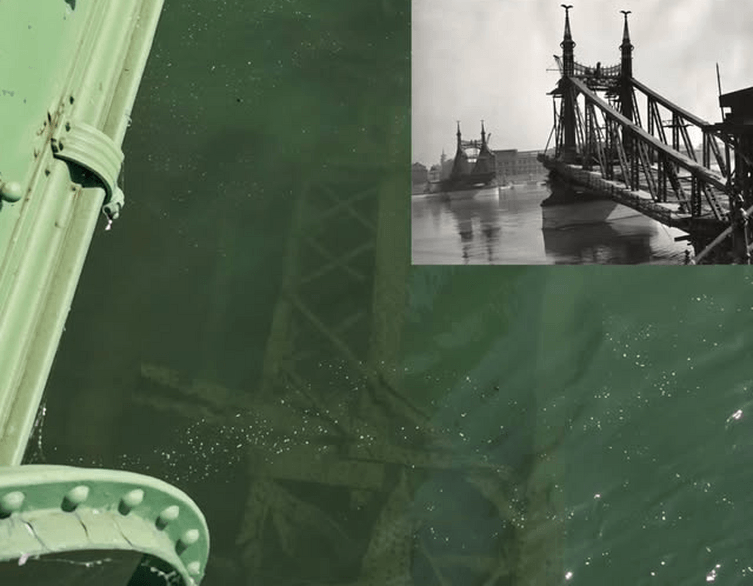
Take Only Photos: The Sunken Ghost Bridge Reappearing in the Danube
Budapest’s Danube is running so low this summer that it’s giving up one of its best-kept secrets: the skeletal remains of a bridge that...

Budapest’s Ornamental Lights Will Be Shut Down
If you’re planning a trip to Budapest in the coming days, you might notice something unusual after sunset: the glowing facades of the Hungarian...
The Danube Just Hit Its Lowest Water Level Ever Recorded in Budapest
If you’re strolling along the Danube this week, you might notice something unusual: the river looks strikingly low, almost dramatically so....

Budapest’s Tiniest Troublemaker Strikes Again: Two New Kolodko Statues to Hunt Down
If you’ve spent any time wandering around Budapest, you’ve probably noticed that this city has a soft spot for the unexpected. Tucked...
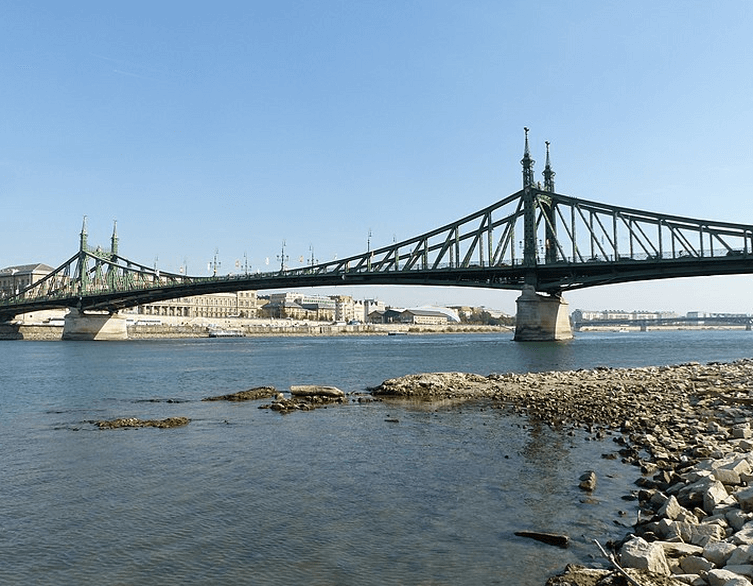
The Danube’s Historic Low Water Levels in Budapest
If you’re visiting Budapest, you’ll notice something unusual along the riverbanks — the Danube has dropped to some of its lowest levels...

Swimming in the Danube: Discover Budapest’s Free Riverside Beach at Árasztó-part
Budapest is famous for its thermal baths, but what if you could take a refreshing dip right in the Danube? In summer 2026, this unique experience...
Related events