Winnie-the-Pooh Turns 100: Discover Budapest’s Tiny Tribute to a Beloved Bear
Some birthdays call for a very large cake. This one might be better celebrated with a pot of honey. On October 14, 2026, the first Winnie-the-Pooh book turns 100: A. A. Milne’s much-loved collection, illustrated by E. H. Shepard, was published on this day in 1926. A century later, the adventures of Pooh and his friends still have a way of making the world feel a little gentler.
But what does a bear from the Hundred Acre Wood have to do with Budapest? Quite a lot, as it turns out. The Hungarian version of his stories has a charming family connection, and a tiny Winnie-the-Pooh statue brings that literary history to life on a Budapest street. For visitors who enjoy discovering the stories behind the sights, it makes a lovely little detour.
Find the Winnie-the-Pooh Statue on Damjanich Street
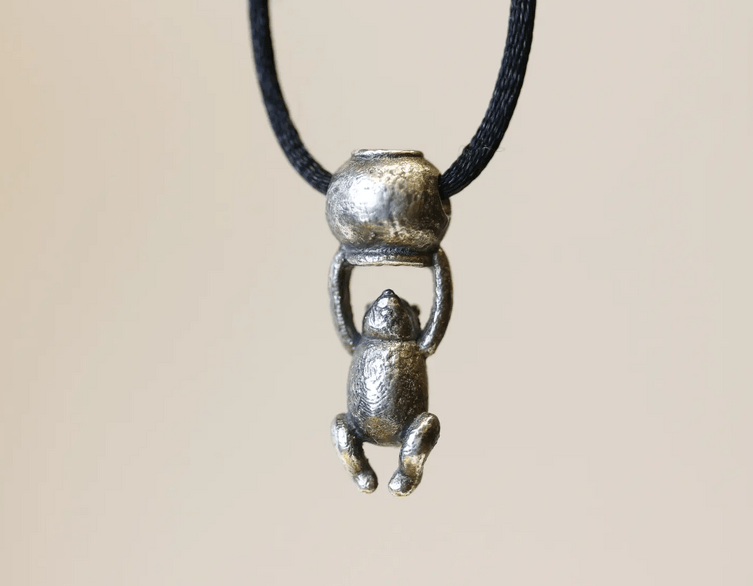
You don’t need to venture into an enchanted forest to find Pooh in Budapest. Head to 27 Damjanich Street, in the city’s seventh district, and look beneath the memorial plaque on the building’s façade. There, a miniature Pooh hangs from a honey pot, apparently determined not to waste a single delicious drop. It’s a wonderfully fitting pose for a bear whose appetite has always been part of his appeal.
The sculpture is the work of Mihály Kolodko, whose miniature artworks turn unexpected corners of Budapest into little moments of discovery. Installed in June 2023, this particular bear is more than an adorable photo opportunity: its location pays tribute to Hungarian writer, humorist and translator Frigyes Karinthy, who was born in the building on June 24, 1887.
The memorial plaque provides the clue, while Pooh supplies the punchline. Together, they tell a story that’s easy to miss if you simply walk past.
And if a photo with Budapest’s tiny Winnie-the-Pooh isn’t quite enough, visit the artist’s website, where you can find a pendant featuring the little bear—a charming keepsake of your Budapest adventure.
Why Winnie-the-Pooh Is Called Micimackó in Hungary
For generations of Hungarian readers, Winnie-the-Pooh has been known as Micimackó. His first Hungarian edition appeared in 1935, with Frigyes Karinthy credited as the translator. Yet the story behind the translation involves another member of the family, too.
Karinthy’s sister, Emília, prepared the initial Hungarian translation, which he then reshaped into its distinctive literary form. Her contribution also lives on in the bear’s Hungarian name: Emília’s nickname was Mici, and Micimackó combines that nickname with the Hungarian word for a bear or teddy bear.
That connection gives the tiny statue an extra layer of meaning. Pooh isn’t simply decorating a convenient wall; he’s hanging outside the birthplace of the writer who helped give him his Hungarian voice, with a name that remembers the sister whose work helped make it possible.
Best deals of Budapest










A Hundred Years of Small Adventures
The anniversary marks 100 years since the first Winnie-the-Pooh book, rather than the character’s very first appearance. A Pooh story had already appeared in the London Evening News on Christmas Eve in 1925, before the book followed on October 14, 1926.
Perhaps the enduring pleasure of these stories lies in their scale. There are no grand ambitions in a search for honey or a visit to a friend, yet Milne’s world makes room for kindness, uncertainty and the comfort of belonging. Those gentle themes of friendship, brought to life through Shepard’s illustrations, have helped the stories travel across generations and languages.
Budapest’s miniature tribute feels perfectly in keeping with that spirit. It doesn’t demand much of your time. You stop, look a little closer and find something to smile about.
Continue the Adventure at Budapest’s Story Museum
For families who would like to carry that storytelling mood a little further, Budapest’s Fairytale Museum and Story Workshop offers a different kind of adventure at 15 Döbrentei Street. Opened on October 2, 2012, following an idea by Hungarian poet Sándor Kányádi, it invites children to step into the world of fairy tales rather than simply read about it.
This isn’t a Winnie-the-Pooh museum. Instead, its permanent exhibition draws visitors into the world of Hungarian fairy tales, where the journey matters as much as the destination. Children can make their way through a dark forest, tackle challenges and work towards the royal throne—taking on the role of the hero themselves.
The workshop area adds more ways to explore that imaginative world, with children’s books, a listening den, a stage and opportunities to create a little fairy-tale film. It’s a fitting follow-up to spotting Pooh: first a familiar character hidden in the everyday city, then a space where children can enter a story of their own.
Plan Your Story-Inspired Budapest Visit
The Winnie-the-Pooh sculpture is on the exterior of the building at 27 Damjanich Street, so it works well as a brief sightseeing stop rather than a scheduled attraction. Give yourself a moment to find the small figure and take in its connection to the plaque above it—the literary backstory is what makes this little bear especially memorable.
The Story Museum requires a little more planning. Its published opening hours for individual visitors are Thursday and Saturday from 10 am to 5 pm, and Sunday from 10 am to 1 pm. Other weekdays are reserved for prearranged kindergarten and school-group sessions. Hours may change during school holidays, and the museum lists October 23 among its closure dates, so check the current schedule before setting out.
Whether you’re visiting Budapest with children or simply have a soft spot for the Hundred Acre Wood, Pooh’s centenary offers a lovely reason to notice one of the city’s smallest literary landmarks. No elaborate expedition required—just a little curiosity, a glance beneath a plaque and, perhaps afterwards, something sweet.
Related news
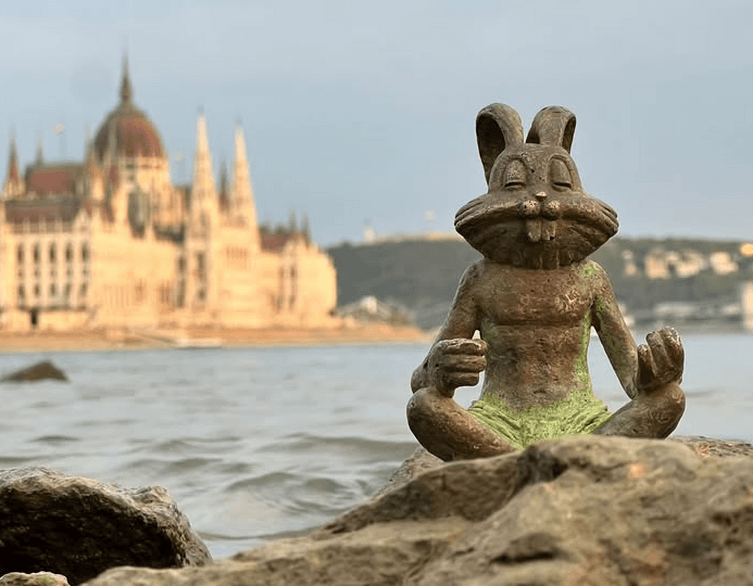
Kolodko’s Zen Rabbit Is Back on Margaret Island
There is a tiny new reason to explore the southern tip of Margaret Island. Mihály Kolodko’s meditating rabbit has returned after the original...
Budapest’s Secret Bronze Treasures: The Mystery of the Vanishing Kolodko Mini Statues
If you have wandered through Budapest lately with your eyes glued to the pavement, railings, and stone ledges, you already know the thrill of the...
Related attractions