When the Titanic Kept Playing, Budapest Started Dancing
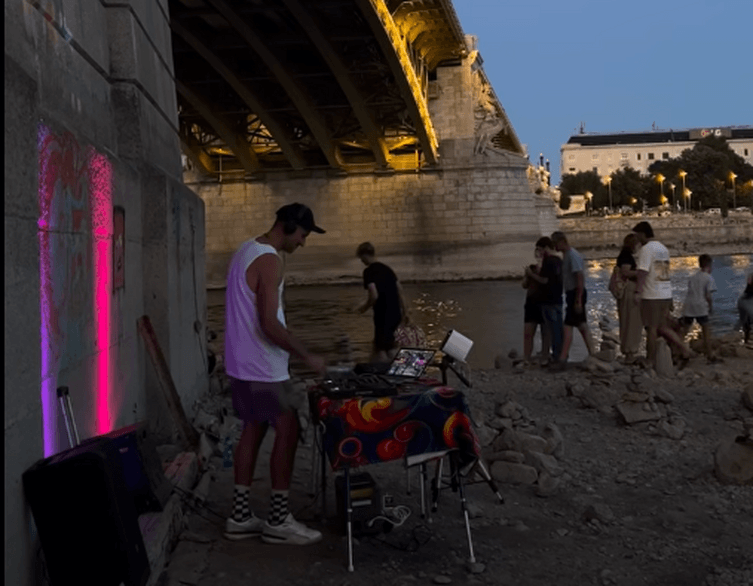
There’s an old story about the Titanic: as the ship went down, the band kept playing, and some passengers reportedly joked about chipping ice straight off the iceberg for their cocktails. It’s a strange kind of gallows humor, but it’s exactly the mood that has taken over a stretch of the Danube in Budapest this summer. Where water should be flowing past the city’s landmark bridges, locals and a growing number of curious tourists are now dancing on dry, cracked riverbed — turning one of Europe’s most dramatic drought scenes into an impromptu open-air party.
The Famine Rock Has Resurfaced
If you want a single symbol of just how low the Danube has fallen, look no further than the so-called Famine Rock, or Ínség-szikla, near Liberty Bridge. This rock has a long folk history in Budapest: it only breaks the surface during periods of severe drought, which is precisely why locals nicknamed it after famine and hardship. Its reappearance this year is more than a curiosity — Hungary’s hydrological authorities have recorded roughly a ten percent drop in the Danube’s average annual flow over the past decade, and 2026 has pushed water levels toward record lows, with readings in Budapest dipping to around 23 centimeters, well below the previous all-time low set in 2018.
A New Beach Under Margaret Bridge
The most striking transformation, though, is happening around Margaret Bridge. The riverbed beneath the bridge’s central pillar is surfacing more frequently every year, and the exposed area keeps growing. This isn’t a one-off event: back in 2018, the underwater extension of the Margaret Island shoal, on the Parliament side of the bridge, became walkable even in ordinary shoes for the first time. Since then, the phenomenon has repeated itself more often, for longer stretches, and across an ever-larger footprint of dry ground.
László Wild, the heritage architect who oversaw the most recent restoration of Margaret Bridge, has described the state of the riverbed along Budapest’s stretch of the Danube as genuinely chaotic. Every time the water recedes, the same debris resurfaces: old metal scrap and rubbish bins of a style common in Budapest before the Second World War, along with what are believed to be the remains of scaffolding pillars used by engineer Ernest Goüin’s construction team up until 1876, when the bridge was originally being built. It’s an accidental open-air museum of the city’s industrial past, exposed by a very modern crisis.
Best deals of Budapest










From Cautious Curiosity to a Full-Blown Party Scene
At first, people who wandered onto the dried riverbed did so with a sense of unease more than celebration — it was a strange, almost eerie novelty to walk where boats normally pass. As the dry zone has expanded, though, more and more visitors are crossing over on foot from Margaret Island, drawn by a genuinely striking reward: a brand-new angle on the city skyline, especially magical when the Parliament building and the bridges light up in the evening.
That novelty eventually attracted a different crowd. Photographer Zsanett Zsebők shared a video on Facebook of a Saturday-night pop-up party held right on the exposed riverbed, and it set off a wave of debate online. Some viewers found the whole thing undeniably cool — a spontaneous, only-in-2026 kind of gathering that turns a climate anomaly into a good story. Others saw something far darker: a preview of how climate change is reshaping European summers, with Hungary sitting squarely in the path of it.
Party in the river bed
Not Just a Party Trick — A Region-Wide Drought
Budapest’s dancing riverbed is a symptom of a much bigger problem rippling across Central Europe this summer. Persistently hot, dry weather has pushed the Danube to near-record lows not just in Hungary but along much of its course, disrupting river cruises, stranding cargo vessels, and forcing operators to cancel or reroute sailings. Sightseeing cruises north of Budapest, toward towns like Szentendre and Visegrád, have been suspended entirely at times, and July bookings for river tourism reportedly fell by around eighteen percent. Officials have also flagged concerns about the resilience of the city’s drinking-water infrastructure if the drought drags on, even though there’s no indication of an imminent water shortage for residents.
Carpe Diem or Cause for Concern?
The Danube’s shrinking waterline seems to pull people in two completely different directions, and that tension is really the heart of the story. For some, it’s a moment to seize — a rare, temporary landscape worth dancing on before it disappears again. For others, it’s a visible, unsettling sign of a warming planet rewriting the rules of a river that has shaped this city for centuries. Both reactions are understandable, and maybe that’s the point: the receding Danube, much like the Titanic’s final hours, brings out both denial and delight in equal measure.
Visiting Budapest? What to Know Right Now
If you’re planning a trip to Budapest this summer, it’s worth building the Danube’s unusual state into your itinerary rather than around it. The riverbed near Margaret Bridge and Liberty Bridge offers a genuinely unique photo opportunity and a fresh perspective on the cityscape, particularly at sunset when the lights come on along the embankments. That said, exposed riverbeds are uneven, littered with old debris, and not officially maintained walking paths, so sturdy shoes and a bit of caution go a long way. If a river cruise is part of your plans, it’s smart to check with your operator in advance, since low water levels have already forced some sightseeing routes north of the city to pause. Whatever side of the carpe diem debate you land on, walking the drying Danube right now is a strange, memorable way to see Budapest — just don’t forget you’re standing on the bottom of a river that, for now, has largely gone missing.
Related news
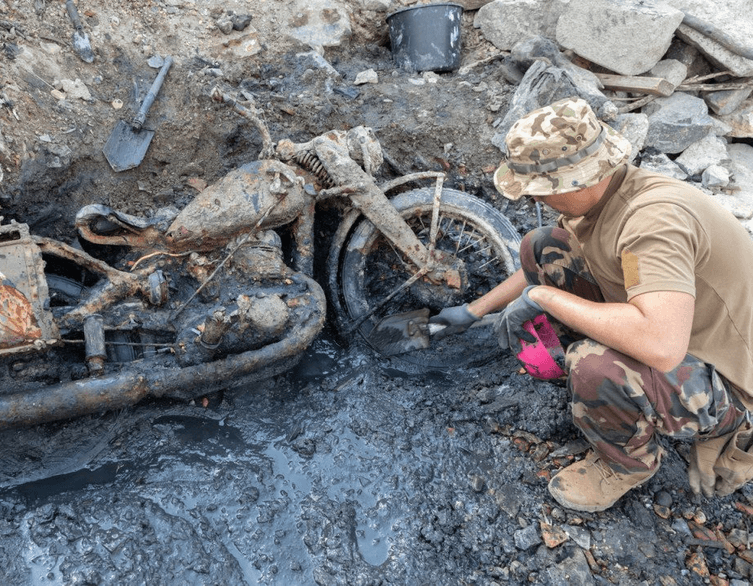
The Danube Just Gave Up a Piece of World War II History in the Heart of Budapest
Budapest’s mighty river has always had a habit of keeping secrets, but this summer it decided to share one. As the Danube dropped to a record-low...

Budapest’s Magical Danube Mayfly Bloom: A Rare Summer Spectacle Worth Catching
If you happen to be strolling along the Danube in Budapest during the first weeks of August, you might witness one of nature’s most delicate...
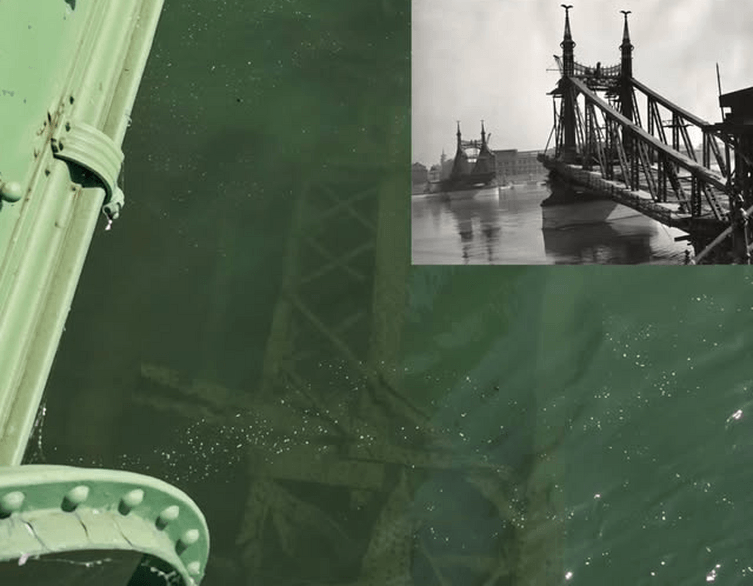
Take Only Photos: The Sunken Ghost Bridge Reappearing in the Danube
Budapest’s Danube is running so low this summer that it’s giving up one of its best-kept secrets: the skeletal remains of a bridge that...

Why Budapest’s Danube Is Suddenly Giving Up Its Secrets — And Why You Shouldn’t Touch Them
If you’ve strolled along the Danube embankment near Margaret Bridge this summer, you may have noticed something odd: wide stretches of riverbed...