Budapest’s Historic M1 Metro Earns a Place Among the World’s Best
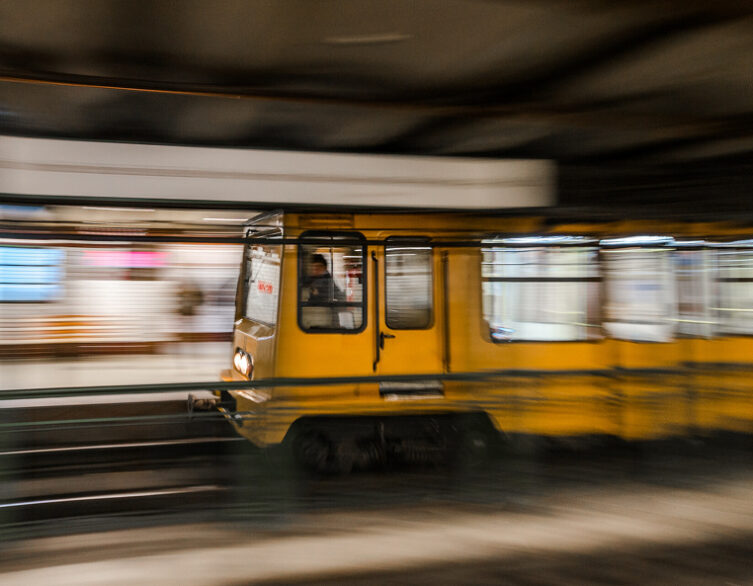
Some metro journeys simply get you across a city. In Budapest, a ride on the little yellow M1 is part of the sightseeing itself. With its compact carriages, tiled stations and old-fashioned charm, the Millennium Underground Railway offers a glimpse of the city’s past while keeping you firmly on the move.
Now there’s another reason to take a ride: CNN has included Budapest’s metro in its selection of 18 of the world’s best metro systems, alongside those of London, Tokyo, New York and Shanghai. Its Budapest entry puts the spotlight on the pioneering M1 line—a small railway with a remarkably big place in transport history.
A Little Underground With a Remarkable History
Affectionately known to locals as the “Little Underground,” Budapest’s M1 metro opened on May 2, 1896. That makes it 130 years old in 2026 and the oldest underground railway in continental Europe. London’s Underground came first, opening in 1863, but Budapest’s line was electric from the beginning.
Its official name, the Millennium Underground Railway, reflects its connection to the celebrations marking 1,000 years since the arrival of the Magyars in the Carpathian Basin. Budapest was expanding rapidly, and the railway helped carry passengers towards City Park, one of the main settings for the festivities.
Yet this was about more than getting crowds from one place to another. The city needed modern transport without sacrificing the appearance of elegant Andrássy Avenue. The solution was to send the trains beneath the boulevard, keeping tramcars and overhead wires out of the streetscape.
Why CNN Singled Out Budapest
CNN’s selection celebrates metro systems for different reasons, and Budapest’s appeal lies in the M1’s combination of engineering innovation and enduring character.
When it opened, the line featured electric lighting in its stations and carriages, trains that could operate in either direction, and an overhead electrical supply. These were significant advances in urban transport at the end of the 19th century, even if today’s passengers are more likely to notice the charming proportions of the trains.
The recognition applies to Budapest’s metro system rather than a separately ranked competition between individual lines. Still, it is the historic M1 that takes centre stage in CNN’s account—and it’s the line visitors should make time to experience.
Ride Beneath a World Heritage Boulevard
Above ground, Andrássy Avenue is one of Budapest’s grandest streets. Below it, the M1 tells another part of the same story: how the Hungarian capital embraced modern city life.
Best deals of Budapest










That relationship is recognised by UNESCO. Andrássy Avenue and the Millennium Underground Railway were added to Budapest’s World Heritage property in 2002, acknowledging the importance of both the boulevard and the transport innovation beneath it.
For visitors, the appeal is refreshingly straightforward. You don’t need to book a special tour to experience this piece of history. Step down from street level, wait on a compact platform and board a yellow train that still serves everyday passengers. At stations such as Oktogon, the tiled surroundings and close-up view of the arriving carriages make the journey feel quite different from a ride on a large modern metro.
Turn the Journey Into Part of Your Sightseeing
The M1 is particularly useful for exploring the Pest side of Budapest, following Andrássy Avenue towards City Park. Rather than treating it as a shortcut beneath the sights, combine a ride with a walk above ground: enjoy the boulevard’s architecture on one leg of your journey, then take the underground for another perspective on the same stretch of the city.
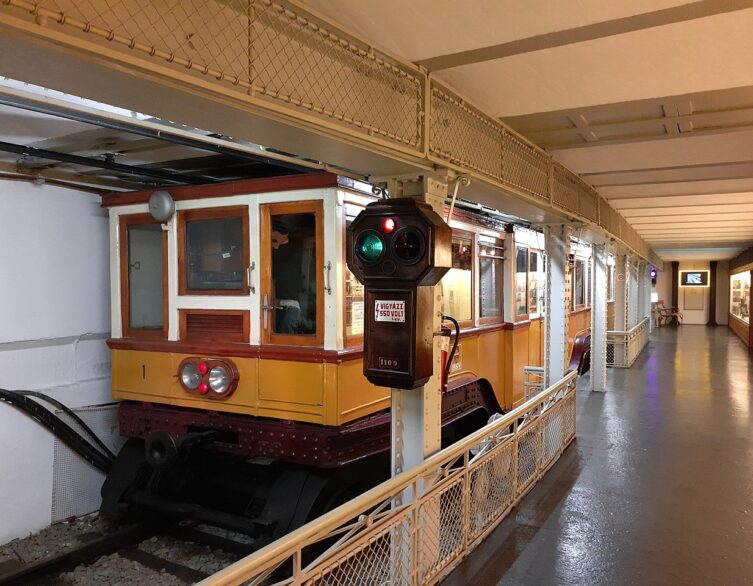
To delve deeper into its history, visit the Millennium Underground Museum at Deák Ferenc Square. Set within a former section of the railway, the museum preserves historic carriages and offers a closer look at the line’s early years. It’s a fitting companion to a ride on the working railway, especially if you enjoy transport history or want to see how the original cars differed from those running today.
Know Before You Board
Historic charm doesn’t mean heritage-train rules: the M1 is part of Budapest’s regular public transport network, so you need a valid ticket or pass.
If you use a paper single ticket, validate it before beginning your metro journey and keep it until you leave the network. Buying a ticket alone is not enough. For digital single tickets, follow the validation instructions in the app and scan the code at the metro entrance before travelling.
Station signs use Hungarian place names, so it helps to recognise both versions when planning your route. Deák Ferenc Square appears as “Deák Ferenc tér,” while Heroes’ Square is “Hősök tere.”
Make Time for Budapest’s Little Yellow Trains
Budapest has no shortage of grand attractions, but some of its most memorable experiences come on a smaller scale. The M1 offers both a practical journey and a connection to the ambitious city that built it 130 years ago.
So, between admiring the architecture and exploring City Park, take a trip beneath Andrássy Avenue. You’ll be riding a railway that helped shape modern Budapest—and discovering why its Little Underground continues to attract attention far beyond Hungary.
Related news
Related events
Related attractions