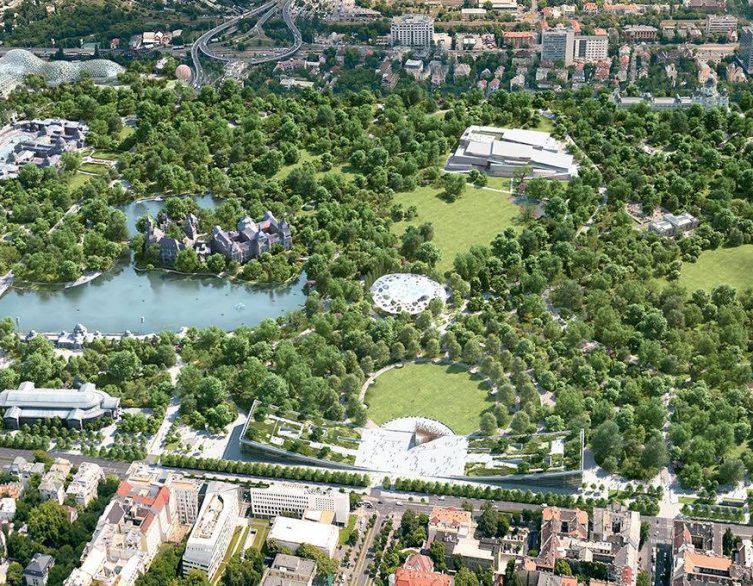
Budapest Beyond Sight: Discover the Sensory Garden in City Park
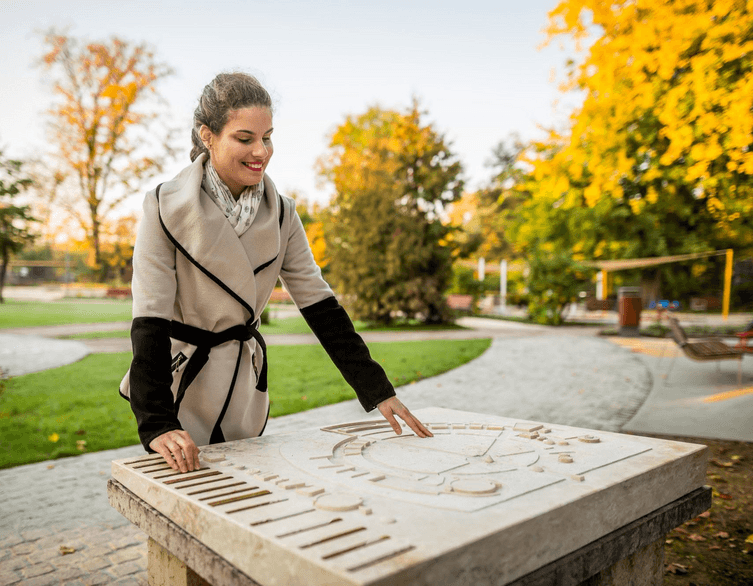
Budapest is famous for its spectacular views, but some of its most thoughtful places offer something beyond a beautiful backdrop. Tucked into City Park, the Sensory Garden is a green retreat designed specifically for blind and partially sighted people—a place where fragrance, texture and sound are central to the experience.
October 15, White Cane Day, is a fitting occasion to discover its story. The day draws attention to the independence and inclusion of people with visual impairments, and to the importance of environments that support their everyday lives.
A Special Garden with a Long History
Established in 1972, the Garden of the Blind—also known in English as the Sensory Garden—was Hungary’s first garden created specifically for the relaxation and recreation of blind and partially sighted people. Covering almost one hectare, it has long served people from nearby institutions and organisations supporting those with visual impairments.
In 2018, the garden underwent a comprehensive renovation as part of the Liget Budapest Project. Its familiar basic layout was preserved, while paths, planting, play areas and facilities were updated to better meet its users’ needs. The result is a space where accessibility shapes the design rather than being added as an afterthought.
Where Fragrance, Texture and Sound Matter
The garden’s details reveal how much difference thoughtful planning can make. Specially paved circular and radial paths help visitors find their way, while raised beds bring fragrant plants within easier reach. Railings with distinctive colours and Braille information support orientation and help users get to know the planting.
Water features add sound to the surroundings, and outdoor musical play equipment offers another way to explore. An accessible building with accessible toilets replaced the former wooden structure, making the garden more comfortable for those spending time here.
There is room for both quiet relaxation and more energetic recreation. Adapted table tennis, swings, skittles and a sandpit occupy the western side, away from the main resting area. Specially developed play equipment also caters to children with multiple disabilities.
Best deals of Budapest










A Place to Understand, Not Just Visit
For tourists exploring City Park, the garden offers an important reminder that public spaces can be experienced in many different ways. A path’s surface, a recognisable railing or the position of a planting bed may be just as important as the overall view.
It is worth remembering, however, that this is a dedicated recreational space rather than a conventional tourist attraction. The garden remains enclosed and is intended primarily for blind and partially sighted users. General sightseeing access should not be assumed.
Its significance lies in the freedom it gives its regular users: somewhere to relax, play and enjoy time outdoors in surroundings designed with them in mind.
Another Perspective: Budapest’s Invisible Exhibition
Visitors interested in exploring this theme further can book Budapest’s Invisible Exhibition. Led by blind or partially sighted guides, the experience takes place in complete darkness, encouraging you to rely on touch, hearing and smell as you move through familiar everyday situations.
More than a novelty, it is an opportunity to listen to your guide, ask questions and notice abilities you might otherwise take for granted. A short visit cannot recreate the full experience of living with sight loss, but it can open up a valuable conversation.
The exhibition is at 2 Népligeti Road, beside People’s Park—not City Park. English-language tours are available by advance reservation, and the experience lasts a little over an hour.
Discovering a Different Side of Budapest
Between its grand buildings and well-known landmarks, Budapest also has places whose importance lies in the care behind their design. The Sensory Garden is one of them.
Its story encourages a different kind of attention: noticing not only how a place looks, but how it helps people feel comfortable, move independently and enjoy their surroundings. On White Cane Day—and throughout the year—that is a perspective worth bringing to your travels.
Related news

Related events
Related attractions