Franz Liszt, the Great Traveler: Discover the Man Behind Budapest Airport’s Name

If you have arrived in Budapest by plane, you have already encountered Franz Liszt’s name. Budapest Ferenc Liszt International Airport honours the Hungarian composer and pianist whose extraordinary career carried him across Europe long before air travel existed. Known internationally as Franz Liszt and in Hungary as Liszt Ferenc, he was born on October 22, 1811—making 2026 the 215th anniversary of his birth.
But there is more to his story than dazzling piano performances. Liszt was also a tireless traveler, building a life around journeys, encounters and performances in distant cities. For anyone discovering Budapest today, that makes the airport’s namesake a surprisingly relatable figure: someone whose curiosity and commitments kept drawing him towards the next destination.
When Europe Was His Stage
Imagine setting off on a European concert tour without flights, motorway connections or the reassurance of a journey-planning app. For Liszt, performing abroad meant long stretches on the road, complicated arrangements and an itinerary measured in months rather than days.
His letters reveal just how ambitious those itineraries could be. Writing to his mother, Anna Liszt, from Lucca on August 9, 1839, he described plans to visit Trieste, Munich, Vienna, Pest, Prague, Leipzig, Dresden, Hamburg and Brussels before returning to Paris. He expected the journey to take at least three and a half months because he intended to give a concert in each city.
That was not simply a trip between two homes. It was a carefully planned musical journey, with each destination bringing another audience and another performance.
Years later, a letter written in Szekszárd on October 22, 1846—his birthday—outlined another far-reaching itinerary. This time, he mentioned Cluj, Bucharest, Iași and Odessa, with Kyiv and Constantinople, now Istanbul, also under consideration. Even his birthday correspondence looked towards the next departure.
A Carriage That Became a Home on the Road
Spending so much time travelling required more than stamina. It also helped to have somewhere comfortable to sit, eat and sleep.
Best deals of Budapest









In Lisztiana, biographer Lina Ramann described the remarkable carriage in which Liszt arrived at his friend Prince Lichnowsky’s estate in Krzyżanowice, then in Prussian Silesia, in 1843. According to her account, Liszt owned two of these much-admired Offenbach carriages, equipped with considerable comfort.
By day, the carriage served as a sitting room and dining room. By night, it became a bedroom.
Think of it as a nineteenth-century answer to a touring vehicle: not a substitute for the speed of modern transport, but a way to make lengthy journeys more bearable. When reaching the next engagement could involve days or weeks on the road, that comfort was hardly a trivial luxury.
From Budapest to Paris: Weeks on the Road, Hours in the Air
To appreciate just how much travelling has changed since Liszt’s lifetime, consider a journey between Budapest and Paris. The historical comparison in the anniversary material puts a horse-drawn carriage journey at roughly two to three weeks. That is an illustration of nineteenth-century travel rather than the recorded duration of a particular trip by Liszt: weather, road conditions, overnight stops and the chosen route could all affect the journey.
Today, a direct flight takes around two and a half hours, although you still need to add airport transfers, check-in and security. A journey that once demanded weeks on the road can now fit comfortably into a single day.
Travelling overland makes the contrast just as striking. Driving between Budapest and Paris takes approximately 14–15 hours before allowing for substantial breaks or traffic delays. Modern rail connections can complete the journey in roughly 13–17 hours, depending on the timetable and transfers—considerably less than the approximately 30-hour historical rail journey cited in the anniversary material. That older figure is an illustrative comparison rather than a fixed journey time throughout Liszt’s lifetime, when railway networks were still developing.
His own letters offer an even more revealing measure of time. The three-and-a-half-month itinerary he described to his mother in 1839 combined travel with performances across ten cities. For Liszt, reaching the next destination was only part of the story. The journey itself became a way of life, shaped by concerts, encounters and long stretches between engagements.
Seen in that light, his carriage’s daytime sitting room and nighttime bedroom seem less like extravagances and more like practical essentials for an artist who was so often on the move.
The Confident Artist Behind the Famous Name
The stories passed down about Liszt suggest that his confidence extended well beyond the keyboard.
One anecdote describes Princess Metternich asking whether a concert in Italy had been good business. Liszt reportedly responded, “I make music, not business,” before leaving.
Another famous story places him at the piano in St Petersburg when Tsar Nicholas I began speaking during a performance. Liszt is said to have stopped playing and, when asked why, replied: “Even the music falls silent when Nicholas speaks.”
Such anecdotes are best enjoyed as stories handed down about the artist rather than as verbatim historical transcripts. Nevertheless, they capture the personality associated with him: proud, quick-witted and unwilling to treat music as mere background entertainment.
His letters offer a more personal counterpoint. Alongside the celebrated performer was a son keeping his mother informed about where he was going and when he hoped to return.
Paris, Weimar, Rome—and Budapest
Paris played an important role in Liszt’s early life, but his story cannot be contained within a single city. He later settled in Weimar, moving away from the relentless life of a touring virtuoso to devote more attention to composition. In his later years, he divided his time between Weimar, Rome and Budapest, describing this arrangement as his “threefold life.”
Budapest was therefore much more than a stop on a concert itinerary. Liszt became the founding president of the Academy of Music and taught Hungarian and international students without charging for his lessons. His teaching sessions brought students together in a format comparable to today’s masterclasses.
That connection gives his name a significance visitors can explore beyond the airport terminal. In Budapest, Liszt belongs not only to musical history but also to a continuing tradition of teaching, performance and cultural exchange.
Visit the Franz Liszt Memorial Museum in Budapest
For a closer encounter with the man behind the music, head to the Franz Liszt Memorial Museum and Research Centre at 35 Vörösmarty Street, just off Andrássy Avenue. The museum occupies his former apartment in the Old Academy of Music building.
Liszt used this apartment during his stays in Budapest from January 1881 until his death in 1886. Today, its rooms contain his instruments, furniture, books, scores and personal memorabilia, bringing visitors into a setting connected with his everyday life rather than simply presenting his achievements at a distance.
The distinction between the Old Academy building and the present-day Liszt Academy is worth keeping in mind when planning your visit: the memorial museum is at the Vörösmarty Street address. Check current opening arrangements before setting off, particularly around public holidays.
A Fitting Namesake for Budapest’s Airport
There is something fitting about arriving in Budapest through an airport named after an artist whose life crossed so many borders. The journeys that once demanded elaborate planning and long carriage rides now begin for many visitors with a boarding pass and a few hours in the air.
Liszt travelled to perform, teach and connect with people through music. Following his story through Budapest adds another dimension to a city break: beyond the grand buildings and famous views lies the more personal history of someone who repeatedly left, returned and made the city part of his remarkable European life.
The next time you see his name at Budapest Airport, picture not only a pianist at a concert grand, but also a traveller settling into his carriage, with another city—and another audience—waiting ahead.
Related news

Inktober Inspo from Budapest: 18. flightless
There is something mildly ridiculous about being surrounded by aircraft while sitting completely still. Beyond the windows, planes are preparing...
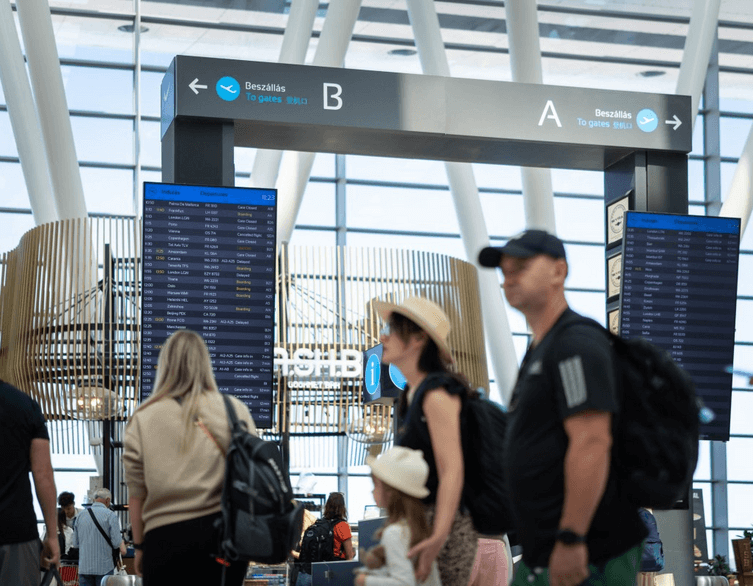
Your Ultimate Summer Travel Guide from Budapest’s Ferenc Liszt International Airport
Summer is officially here, and if you’re flying out of Budapest this season, there’s genuinely never been a better time to do it. Ferenc...
Franz Liszt Takes Flight: Budapest Airport’s Musical Tribute to a Legend
Your journey through Budapest begins the moment you step into Ferenc Liszt International Airport, and not just because you’re arriving in Hungary’s...

Budapest Ferenc Liszt International Airport: 75 Years Connecting Hungary to the World
Budapest Ferenc Liszt International Airport stands as a testament to Hungary’s resilience, innovation, and cultural pride. As it celebrates its...
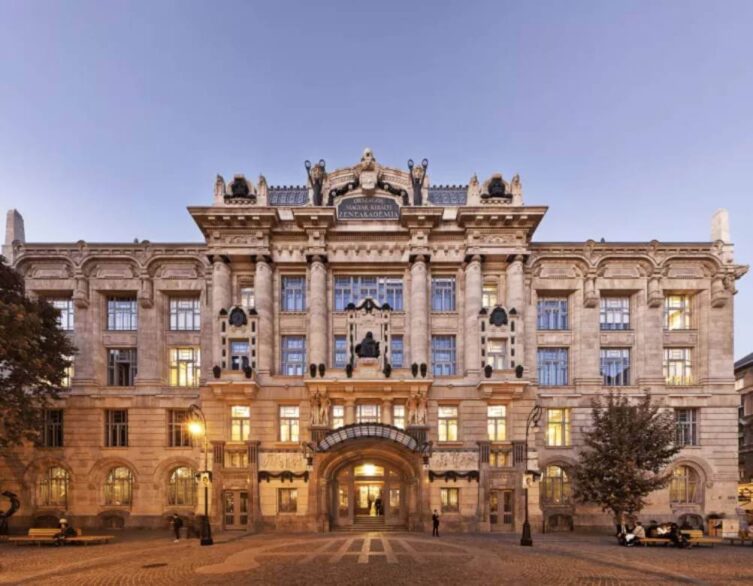
Liszt and Erkel’s Dream: The Budapest Academy of Music
Since it was World Music Day a few days ago, let’s take this opportunity to learn about the center of musical education in Hungary, specifically...
Related attractions
The Liszt Academy of Music: Budapest’s Crown Jewel of Art Nouveau Architecture and Musical Heritage
Standing majestically on Liszt Ferenc Square since 1907, the Liszt Academy of Music represents one of Europe’s most significant cultural institutions...
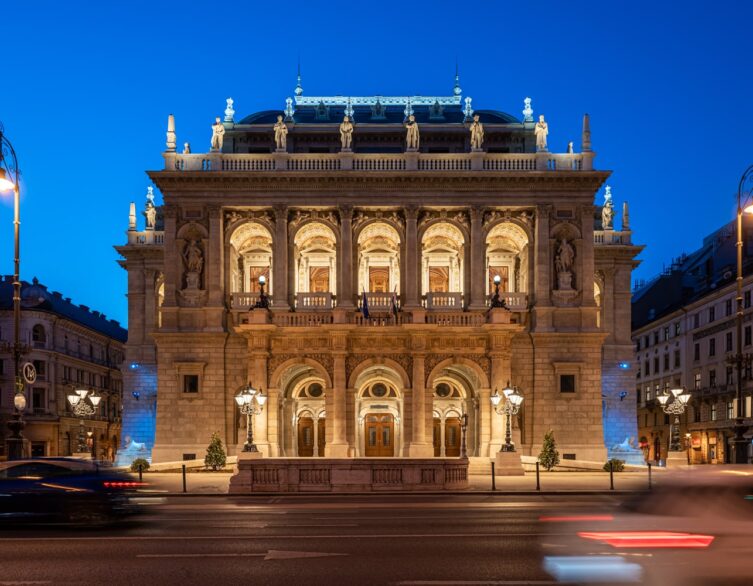
The Hungarian State Opera House: A Cultural Gem in the Heart of Budapest
The Hungarian State Opera House, located on the iconic Andrássy Avenue in central Budapest, is a magnificent neo-Renaissance building that has been...