What’s On in Budapest: The City’s Best Photo Exhibitions Right Now
Budapest has quietly turned into one of Europe’s most rewarding cities for photography lovers this year, and you don’t need to hunt far to find proof. From a legendary Hungarian-born war photographer’s life story to grainy flash-lit snapshots of forgotten nightclubs, the city’s exhibition calendar right now reads like a crash course in visual storytelling. Whether you’re a serious photography enthusiast or just someone who enjoys a good story told through images, here’s what’s currently on display and why each one deserves a spot on your Budapest itinerary.
Robert Capa, The Correspondent: A Legend’s Life on Display
Start at the source. The Robert Capa Contemporary Photography Center on Nagymező utca hosts the world’s first permanent exhibition dedicated entirely to Robert Capa’s life and work, titled Robert Capa, The Correspondent. Born Friedmann Endre in Budapest in 1913, Capa went on to redefine war photography with a fearless, close-to-the-action style summed up in his own famous line: “If your pictures aren’t good enough, you’re not close enough.” He documented five major conflicts, including the Spanish Civil War, World War II, and the First Indochina War — where he was killed in 1954 — and this exhibition brings together 138 photographs from his Master Collection, spanning everything from the D-Day landings at Normandy to quiet, human moments amid the chaos of war.
The exhibition unfolds across two floors and four distinct spaces covering Capa’s Budapest childhood, the tools and techniques of early photojournalism, his personal life story through multimedia displays, and an immersive curated installation of projected images. It’s organized thematically rather than chronologically, walking you through the realities of war, the humanity Capa found within it, and the way he essentially invented the modern war-correspondent aesthetic. Because Budapest holds one of the largest collections of his work anywhere in the world, seeing it here feels less like visiting a foreign retrospective and more like discovering a hometown hero. The center is located at 1065 Budapest, Nagymező utca 8, open Tuesday through Sunday, and since there’s over a hundred photographs to take in, budgeting a good two hours does the exhibition justice.
Robert Capa’s 1948 Budapest: A Homecoming Never Seen Before
Paired with the permanent retrospective is something rarer still: a collection of photographs Capa took during his final visit to his hometown in the autumn of 1948, many of which have never been shown to the Hungarian public before. By then Capa was a 35-year-old American citizen, a co-founder of the Magnum photo agency, and a man who had traveled with John Steinbeck through post-war Russia. He described Budapest at the time as looking “like a beautiful woman with knocked-out teeth,” and the roughly fifty black-and-white and color images on display, curated by Dr. Éva Fisli of the Hungarian National Museum in collaboration with New York’s International Center of Photography, capture exactly that unsettled, in-between moment. You’ll see workers rebuilding the Chain Bridge, students, street musicians, and ordinary pedestrians, all photographed as Hungary balanced between celebrating its 1848 revolution centenary and sliding into Stalinist rule.
The images originally ran in Holiday magazine in 1949 under the title “Budapest Conversation,” but this was never a typical travel piece for Capa — it was personal, and after this trip he never returned to Budapest again. Because this exhibition runs alongside the permanent Capa retrospective at the same address, you can experience both in a single visit and walk away with an unusually complete picture of the man, from his globally famous war photography to these quiet, deeply personal images of the city that shaped him. The 1948 exhibition runs from April 9 through August 23, 2026, with slightly different hours than the permanent show — Tuesday to Friday from 1 PM to 6 PM, and weekends from 10 AM to 6 PM, closed Mondays and public holidays.
Best deals of Budapest







Magnum Photos: Early Color at the Capa Center
Photography enthusiasts should carve out extra time at the same venue for Magnum Photos: Early Color, running until August 23, 2026. This exhibition turns the spotlight on the pioneering photo agency Capa co-founded in 1947 alongside Henri Cartier-Bresson and David “Chim” Seymour, focusing specifically on Magnum’s earliest experiments with color film in the late 1940s and 1950s, back when magazines like Life and Paris Match were redefining how the world consumed images. Because early color film was expensive and technically demanding, photographers worked slowly and deliberately, and the resulting images feel unusually rich and considered even decades later.
Among the highlights are an unusually intimate, vulnerable portrait of Marilyn Monroe by Eve Arnold, vivid scenes from Japan by Werner Bischof, sensitive post-war documentation by Magnum co-founders David Seymour and George Rodger, striking portraiture from Philippe Halsman, and global photo essays from Inge Morath and Burt Glinn. It’s worth remembering as you walk through that several Magnum photographers, including Capa and Seymour, ultimately lost their lives documenting the events they photographed, which adds real weight to images that might otherwise just look beautifully composed. Entry is free with a Budapest Card, and the same building also houses two companion shows — Hungarian Report, 1948, and a multi-screen projection called Flashes of History — so allowing 1.5 to 2 hours to see everything is a smart move.
Once Upon a Time, There Was a Csemege: Grocery Nostalgia in Óbuda
For something completely different, head across town to the Hungarian Museum of Trade and Tourism in Óbuda for Once Upon a Time, There Was a Csemege, an immersive exhibition running from December 12, 2025, through September 13, 2026. This one isn’t about war photography or fine art — it’s a nostalgic deep dive into Csemege, the beloved grocery chain that defined everyday shopping life in Hungary during the 1970s and 80s, back when clerks knew regular customers by name and a trip to the shop was a small social ritual rather than a transaction.
Inside, you’ll find colorful vintage product packaging, recreated shop counters, authentic period furnishings, and interactive displays that let you experience what a socialist-era shopping trip actually felt like, right down to the “service rules” that governed how salespeople interacted with customers. It’s a warm, often funny window into a very specific slice of Hungarian social history, and it fits perfectly into a day of exploring Óbuda’s cobblestone streets and cozy cafés — a part of Budapest that rewards travelers looking to go beyond the classic tourist spots. The museum sits at 1036 Budapest, Korona tér 1, and is easily reached by tram or bus from the city center.
Flash-storm: Budapest’s Lost Nightlife, Frozen in Flash
If your interest runs more toward Budapest’s cultural underground than its historical grand narrative, the House of Music Hungary in City Park is hosting a free pop-up exhibition called Flash-storm – The Pixelated Dawn of Hungarian Party Photography in the Early 2000s, running August 4 through September 13, 2026. This one throws you straight into the grainy, harshly lit chaos of Budapest’s early-2000s club scene, built around the work of photographer Balázs Glódi, known professionally as Fényérzékeny, whose images document now-vanished underground venues and nights that plenty of Budapest locals still talk about.
The exhibition officially opened on August 4 with an event in the venue’s lobby featuring László L. Laki, the creative force behind projects like Cinetrip and the Light Art Museum, alongside curator István Virágvölgyi and a live DJ set from Márk Matek, a former resident at legendary Budapest clubs including Süss Fel Nap and West Balkán. Even though you’ve missed the opening night itself, the exhibition remains completely free and open for over a month, offering a rare, authentic look at how Budapest earned its reputation as a nightlife capital long before ruin bars and international festivals put it on every traveler’s map. It’s housed inside City Park, so it’s an easy add-on if you’re already nearby for Heroes’ Square or Vajdahunyad Castle, and it connects thematically to the Independent Label Fair record market happening on September 12 for anyone who wants to go even deeper into the era’s music culture.
Related news
Budapest Just Got a Time Machine, and You Can Use It Right From Your Phone
Imagine standing on a street corner in Budapest, opening an app, and seeing exactly what that same spot looked like fifty or eighty years ago. That’s...
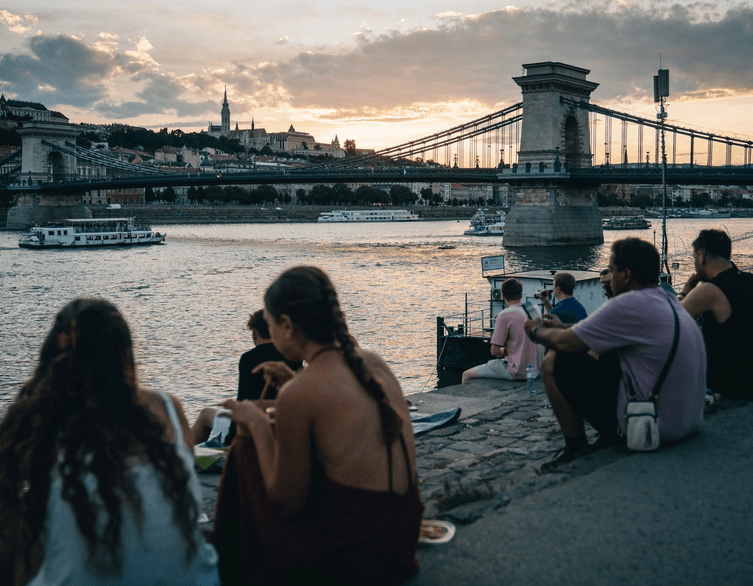
Lights Down, Spirits Up: How Budapest and Hungary Are Conserving Energy Together
If you’ve noticed that a few of Budapest’s famously glittering landmarks look a touch less dazzling after dark this summer, or that your...
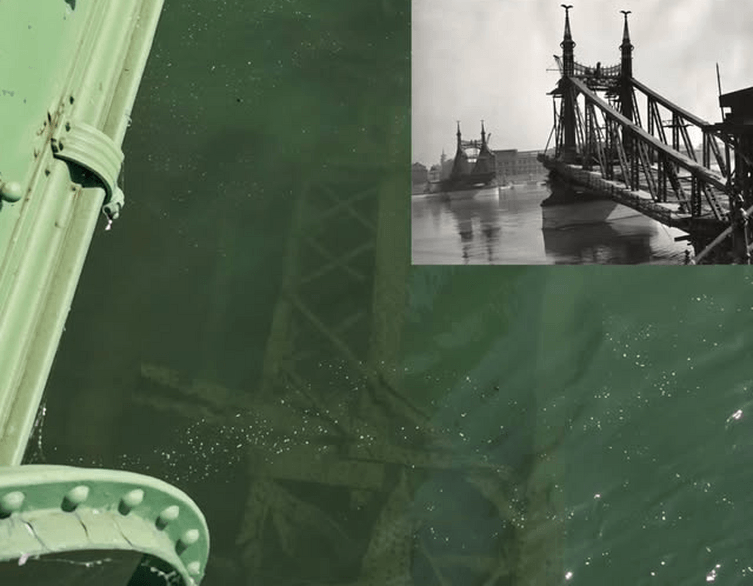
Take Only Photos: The Sunken Ghost Bridge Reappearing in the Danube
Budapest’s Danube is running so low this summer that it’s giving up one of its best-kept secrets: the skeletal remains of a bridge that...
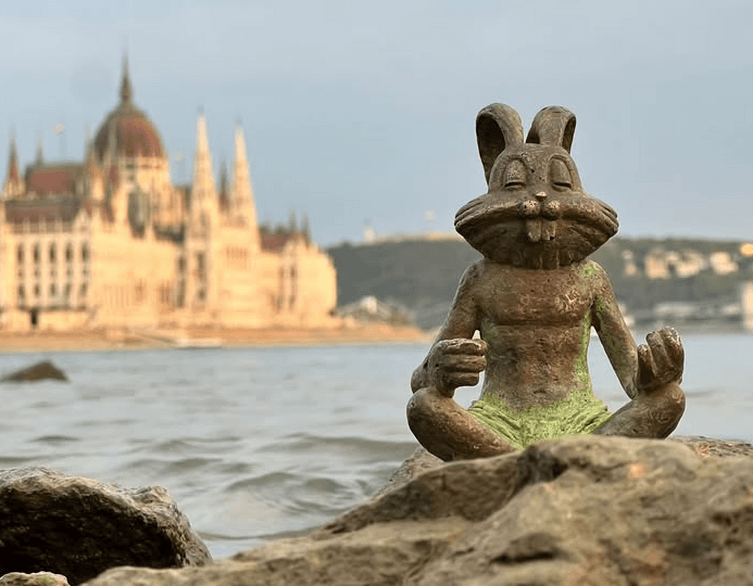
Budapest’s Tiniest Troublemaker Strikes Again: Two New Kolodko Statues to Hunt Down
If you’ve spent any time wandering around Budapest, you’ve probably noticed that this city has a soft spot for the unexpected. Tucked...

Why Budapest’s Danube Is Suddenly Giving Up Its Secrets — And Why You Shouldn’t Touch Them
If you’ve strolled along the Danube embankment near Margaret Bridge this summer, you may have noticed something odd: wide stretches of riverbed...
Budapest to Welcome the World’s First Centre for Everyday Photography
Budapest has never been short on world-class museums, but in the second half of 2027, the city is set to add something genuinely unprecedented to...
Related events