Budapest’s Night of Artworks Festival Is Back for Its 10th Edition — and It’s Going to Be Illuminating
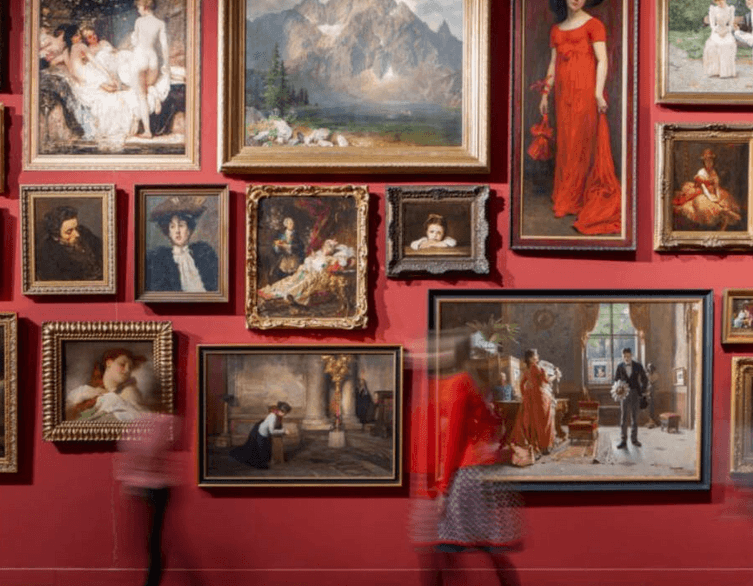
If you happen to be in Budapest between May 14 and 16, 2026, and you find yourself wandering past a museum at 10pm wondering why there are people inside with flashlights, don’t panic — you’ve just stumbled into one of the city’s most beloved annual events. The Night of Artefacts Festival (Műtárgyak Éjszakája Fesztivál) is celebrating its 10th anniversary this year, and with over 120 programs spread across 70 venues around the capital, it’s shaping up to be the most ambitious edition yet.
The theme for this milestone year is the healing power of art, which sounds lofty until you realize it translates into three evenings of guided tours, hands-on workshops, open studios, rooftop sunsets, and yes — people wandering through sculpture parks armed with torches. Budapest really knows how to throw a party.
What Is the Night of Artworks Festival?
Think of it as a city-wide art marathon that stretches across three evenings and refuses to respect normal opening hours. Museums, galleries, artist studios, and some genuinely unexpected venues throw open their doors after dark, offering experiences you simply cannot get on a regular Tuesday afternoon. Guided tours, restoration demonstrations, behind-the-scenes storage visits, film screenings, thematic city walks, family programs, and artist talks all feature across the three days. Many of the participating venues are only accessible during this festival, which is precisely why art lovers book it into their calendars months in advance.
A daily ticket gets you into all standard programs on that day, with VIP-designated events requiring a separate ticket. Full details and tickets are available on the festival’s official website at mutargy.com.
Light Is the Star of the Show
The 10th edition leans heavily into the theme of light — which turns out to be a surprisingly rich topic when you start pulling on the thread. The way light falls on a painting, a sculpture, or a building completely changes what you see. Raking light makes textures leap out dramatically, shadows carve depth into flat surfaces, and a neon-lit street at midnight tells a completely different story than the same street at noon. The festival has built entire programs around this idea, and some of them are genuinely unmissable.
At the Pesti Vigadó concert hall on the Danube embankment, you can catch the sunset from the panoramic terrace while exploring the works of painter István Szőnyi inside — a combination of old master art and one of Budapest’s most spectacular views that sounds almost unreasonably good. Over on Andrássy Avenue, the HAB Hungarian Art and Business sculpture park takes on an entirely different atmosphere after dark, and the festival is leaning into this by handing visitors actual flashlights to wander among the sculptures with. There is something wonderfully theatrical about navigating a sculpture garden by torchlight, and this might be the most memorable two hours you spend in Budapest all year.
Open Studios, Hidden Workshops, and a Former Brewery
One of the festival’s great strengths is its ability to get you inside spaces that are normally off-limits to the general public. The Artus Studio, operating in the former Taurus Rubber Factory building with a sprawling 2,000 square meters of creative space, is home to around 30 artists working side by side. During the festival, visitors can drop into individual studios: ceramicist and sculptor Edina Andrási invites guests to experiment with clay and plaster, Ferenc Forrai presents a video installation built around literary audio works inspired by Budapest, and Barbara Szlávik opens a personal visual atlas drawn from monochrome painting. Meanwhile, Géza Nagy’s project “Animal of Steel Stroking” explores the ironic relationship between material and form, and EdE DLA Sinkovics gives a talk on processing trauma through art. It’s the kind of lineup that makes you wish the evening were about six hours longer.
For something even more unusual, head to Budafok and the 116-year-old former Haggenmacher Brewery building on Sörház Street, now home to KULTIKUM. The host, Gábor Németh Konkrét, creates kinetic light objects from recycled industrial materials with fascinating backstories, and his guided tours through the space take in interactive works, design objects, paintings, and — in a detail that could only happen in Budapest — an exhibition and swap meet featuring relics salvaged from old Lake Balaton Party resorts. Yes, really.
Gül Baba, Stained Glass, and Psychic Cityscapes
The festival also serves as a brilliant excuse to visit some of Budapest’s most atmospheric but undervisited spots. The Tomb of Gül Baba on Rose Hill (Rózsadomb) is one of the city’s most romantically situated landmarks — a beautifully restored Ottoman-era türbe surrounded by a rose garden, offering one of the finest panoramas of Budapest from the Buda hillside. During the festival, guided walks explore the centuries-long history of the site, its permanent exhibition in the former Wagner Villa, and the stories connecting it to Zsolnay ceramics and the legacy of Ottoman Budapest. If you’ve never heard of Gül Baba, this is a wonderful introduction.
Best deals of Budapest








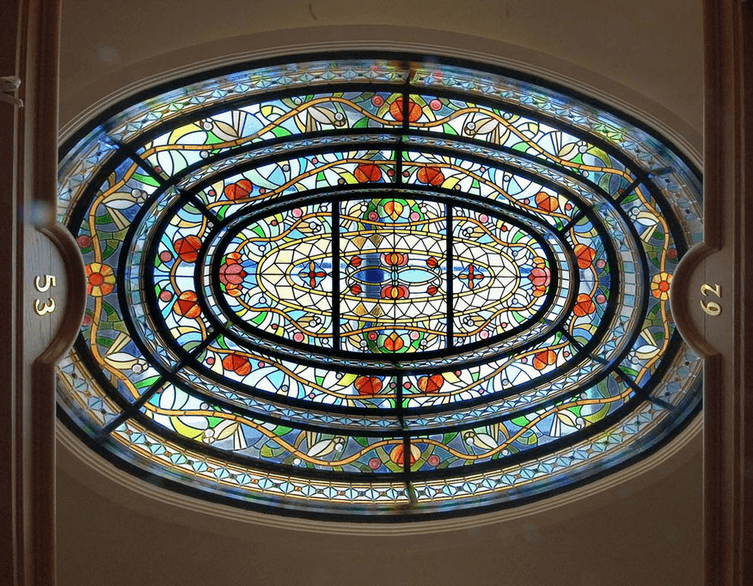
The Róth Miksa Memorial House in the 7th District is another gem perfectly suited to this light-themed festival. Miksa Róth was one of Hungary’s greatest masters of stained glass and mosaic art — sometimes called “the painter of light” — and his former home and workshop now operate as a memorial museum. Guided tours cover the family history, the turn-of-the-century upper-middle-class lifestyle preserved in the apartment museum, and Róth’s extraordinary works, including his collaborations with the famous Zsolnay factory. Stained glass is quite literally nothing without light, which makes this one of the most thematically perfect stops of the entire festival.
For something more introspective, the Képező gallery is hosting a guided tour by painter Zsombor Barakonyi through his exhibition “Filtered Light,” in which bridges, flyovers, tram tracks, and neon signs become maps of psychological states rather than literal urban landscapes. His talk, titled “Psychic Topographies,” explores how a city becomes an interior world — which is either very deep or exactly the kind of thing you want to hear while wandering Budapest alone at night, depending on your mood.
Jazz, Collage, and the Healing Power of Getting Creative
The festival’s anniversary theme — art as healing — gets a wonderfully hands-on interpretation across several workshop events. At the NEO Contemporary Art Space in the Millennium House in City Park (Városliget), an art therapy workshop called “Nocturnal Lights, Inner Worlds” invites participants to experience the restorative power of creative work through image, color, and form. It’s the kind of program that sounds slightly earnest until you’re actually in it, at which point it tends to be genuinely moving.
At the Pikszis Cultural Point, a solo exhibition by graphic artist Márk Fridvalszki brings together jazz record covers, posters, screen prints, and paintings through the improvisational logic of jazz itself — and the opening night includes a live concert by an ad-hoc trio playing across jazz, electronics, and hip-hop, bookended by DJ sets playing exclusively from vinyl. If that sentence didn’t make you want to clear your diary, nothing will.
Over at the Dugattyús venue, painter Linda Bodolóczki — known for vibrant, expressionist canvases where gestural painting meets geometric structure — leads a collage workshop where participants experiment with form, color, gesture, and layering to create their own compositions. At HAB on Andrássy Avenue, there’s also a workshop where you build illuminated collages onto paper lanterns and take them home at the end. Practical, beautiful, and deeply satisfying.
Don’t Miss the Sensory Surprise at the Ráth György Villa
Easily the most quietly radical program in the lineup takes place at the Ráth György Villa, a stunning Art Nouveau mansion in Városliget that houses part of the Museum of Applied Arts’ collection. The program, titled “The Scent of a (Former) Woman,” centers not on sight but on smell and touch — participants handle period objects, perfume bottles, and fragrant plants from the Art Nouveau exhibition, then take part in a craft workshop making their own wardrobe scent. The program was originally developed for blind, visually impaired, and intellectually disabled visitors, but is warmly open to everyone. In a festival built around the power of light, a program that invites you to experience art without your eyes is a genuinely beautiful counterpoint.
Plan Your Three Evenings — Yes, Even If You Don’t Speak Hungarian
With 120 programs across 70 venues, the Night of Artworks Festival rewards a bit of planning. The festival runs May 14, 15, and 16, 2026, and daily tickets cover all standard programs on that day. Venues are spread across the city from Budafok to City Park and across the river to Rose Hill, so it’s worth mapping out a loose route rather than trying to sprint between everything.
Most programs are conducted in Hungarian, so it’s worth being upfront about that — but it’s far less of an obstacle than you might expect. A significant number of events, particularly the hands-on workshops, art therapy sessions, open studio visits, and visual installations, require absolutely no language skills and are fully accessible to international visitors. If you enjoy making things with your hands, exploring creative spaces, or simply being in the presence of interesting art, you’ll find plenty to keep you happily occupied without understanding a single word. The clay, the collage paper, the lanterns, and the flashlights work the same in every language.
The official website at mutargy.com has the full program, venue addresses, and ticketing — build your evening around two or three anchor events and let the city surprise you in between. After all, Budapest at night, seen through the lens of art, is about as good as this city gets.
Related news
Related events