Hungary Just Minted the Most Beautiful Football Coins You’ll Never Spend
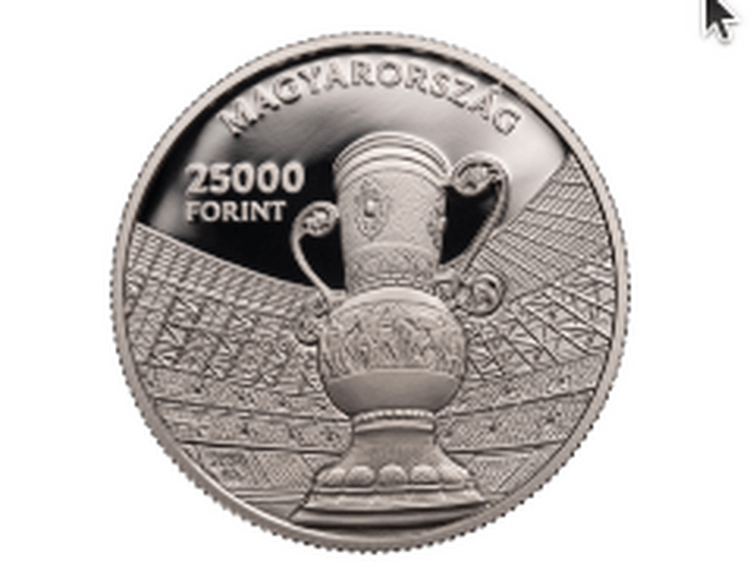
There are souvenirs, and then there are souvenirs. Budapest has long been a paradise for collectors of beautiful things — from hand-painted porcelain to vintage communist-era posters — but on May 9th, 2026, the Hungarian National Bank quietly added something rather special to that list: a pair of brand-new commemorative coins celebrating 125 years of Hungarian football. And yes, before you ask, they are technically legal tender. No, that doesn’t mean you should try to buy a lángos with them.
Football, History, and Shiny Metal
The Hungarian Football Association — known locally as the Magyar Labdarúgó Szövetség, or MLSZ — was founded in Budapest in 1901, making it one of the very first independent football federations in all of Europe. To put that in perspective: when Hungarian football officials sat down to form their association, the Wright Brothers still hadn’t figured out how to fly a plane. The federation moved fast too — the first official national team match was played as early as 1902, and Hungarian football never really looked back. The sport’s golden age came in the 1950s with the legendary “Golden Team” (Aranycsapat), which remains one of the most celebrated sides in the history of the game. More recently, Hungary has made its presence felt again at European Championships, and the country’s modern football infrastructure — headlined by the spectacular Puskás Arena in Budapest — signals that Hungarian football is well and truly back on the map.
All of this history, compressed into two coins. Not bad.
What’s Actually on the Coins
The coins were designed by applied artist Andrea Horváth, and she had plenty of iconic material to work with. The front face of both coins features the Hungarian Cup (Magyar Kupa) trophy — the famous traveling cup that has been the prize of Hungary’s cup competition since 1910 — set against the backdrop of the Puskás Arena, Budapest’s gleaming 67,000-seat national stadium. If you’ve ever strolled past the Puskás Arena on the outskirts of the city, you’ll know it’s a genuinely striking building; seeing it immortalized on legal currency feels entirely appropriate.
Flip the coin over and you’re transported back about a hundred years in time. The reverse side features a classic lace-up leather football of the kind that would have been bouncing around muddy pitches in the 1920s — charmingly retro, and a neat nod to where it all began. The MLSZ’s 125th anniversary jubilee logo sits alongside it, bridging past and present in one elegant design.
Best deals of Budapest











Silver or Copper — Choose Your Adventure
Two versions of the MLSZ coin were issued, and they cater to different kinds of collectors. The premium option is the silver commemorative coin, with a face value of 25,000 forints. It’s struck from 925 millesimal fineness silver, weighs 31.46 grams, and measures 38.61 millimetres in diameter — about the size of a large chocolate coin, but considerably more valuable. Only 4,000 of these will ever be produced, in mirror-polished proof finish, which means they’re basically wearable (or displayable) works of art. From 2026, silver commemorative coins are sold at market price rather than face value, so this one will set you back 40,000 forints — a slight premium over face value, but entirely reasonable for something this limited and this lovely.
The more accessible version is the copper-nickel coin at 5,000 forints face value, made from a 75% copper and 25% nickel alloy and weighing 30.8 grams. A maximum of 5,000 will be produced, and for the first year after issue you can pick one up at face value — meaning you’re essentially getting a beautiful piece of Hungarian football history for the price of a decent meal in central Budapest. Both coins have milled edges and share that same 38.61mm diameter.
There’s a Third Coin, and It’s About a Castle
If football isn’t quite your thing — or if you simply can’t resist buying all the coins — the Hungarian National Bank also released a separate 5,000-forint commemorative coin on May 10th, the day after the football pair. This one belongs to an ongoing series dedicated to Hungary’s national heritage sites, and it features the Széchenyi Mansion in Nagycenk — a stunning neoclassical estate about 200 kilometres west of Budapest, closely associated with Count István Széchenyi, one of the most important reformers in 19th-century Hungarian history. This coin was designed by artist Ferenc Lebó and will be produced in a bronze-patinated finish, with a maximum run of 10,000 pieces. Like its football siblings, it’s available at face value for the first year of issue.
Where to Get Them — and Why You Should
All three coins are available at the Hungarian Mint (Magyar Pénzverő Zrt.) coin shop in Budapest’s 5th district at Báthory utca 7 — a short walk from the Parliament building — as well as through the Mint’s online store. Given that these are strictly limited runs, anyone with even a passing interest in numismatics, Hungarian football history, or simply beautiful objects would be wise not to wait too long.
For tourists visiting Budapest, a commemorative coin makes for an unusually thoughtful and compact souvenir. It won’t take up space in your luggage, it won’t break, and unlike a fridge magnet, it actually tells a story — 125 years of Hungarian football, a legendary stadium, a century-old leather ball, and a country that has always taken its sport very, very seriously. The Puskás Arena is just across town if you want to see the real thing while you’re here. But the coin fits much more easily in your pocket.
Related news

The UEFA Champions League Final Is Coming to Budapest — Here’s How to Get a Ticket Without Selling Your Kidney
On May 30, 2026, Budapest will host the biggest club football match on the planet. The UEFA Champions League Final is coming to Puskás...

The UEFA Champions League Final Is Coming to Budapest — Here’s Why You Should Be Here
Budapest has hosted royal visits, survived sieges, and thrown parties that would make a Roman emperor blush. But on May 30, 2026, the city will pull...
Check Your Change: A Special 50-Forint Coin Just Entered Circulation in Budapest
There’s a small but delightful surprise waiting for visitors to Budapest right now, and it might arrive in the most unexpected way — as loose...
The Sacred Coins of St. Stephen: Hungary’s First Royal Currency
When you visit Budapest today and explore its rich numismatic heritage, you’re uncovering one of medieval Europe’s most fascinating monetary...
Related attractions