Girded with Splendour: A Rare Glimpse into Hungary’s Conquest Period at the Hungarian National Museum
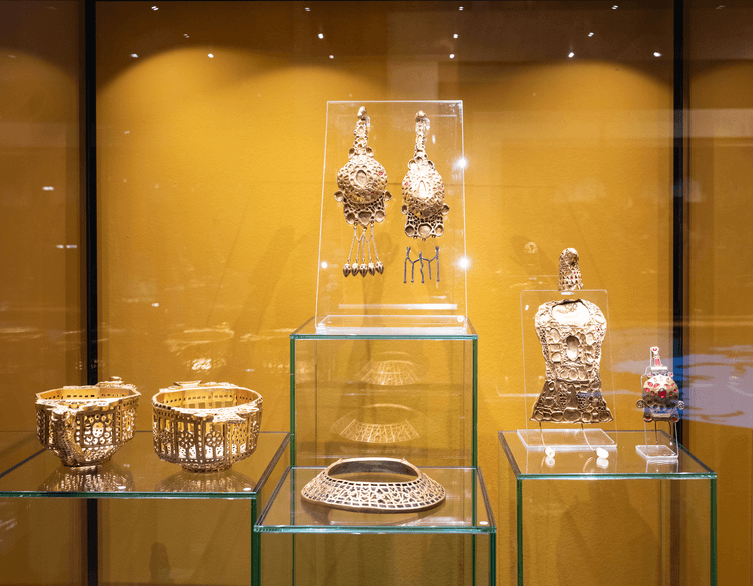
If you have even a passing interest in history, archaeology, or simply stunning craftsmanship from over a thousand years ago, this is one Budapest exhibition you won’t want to miss. Running from May 8 to June 7, 2026, Girded with Splendour: Remains of a Belt and a Sabretache Plate from the Hungarian Conquest Period is a compact but extraordinary showcase at the Hungarian National Museum — and it features finds so well-preserved they have been described as unique not just in Hungary, but across Europe.
What Is the Exhibition About?
This is the Hungarian National Museum’s Treasure of the Month — a recurring series of intimate, focused exhibitions that put a single remarkable discovery under the spotlight. This edition presents a set of archaeological finds unearthed near the village of Akasztó in Bács-Kiskun County, discovered by volunteers from the community archaeology programme of the Katona József Museum in Kecskemét. What they stumbled upon turned out to be one of the most significant Hungarian Conquest period discoveries in recent memory.
Three warriors buried in the 920s–930s AD were found in near-pristine, almost completely undisturbed graves. All three burials were packed with remarkable objects — silver fittings, decorated horse gear, Italian coins from the period, and extraordinarily well-preserved organic materials including leather, silk, and fur. The centrepiece of it all is the assemblage from the wealthiest grave: a silver sabretache plate and a unique silk belt belonging to a high-ranking young warrior aged just 17–18 years old.
Best deals of Budapest











The Star of the Show: A 1,100-Year-Old Warrior’s Belt and Sabretache
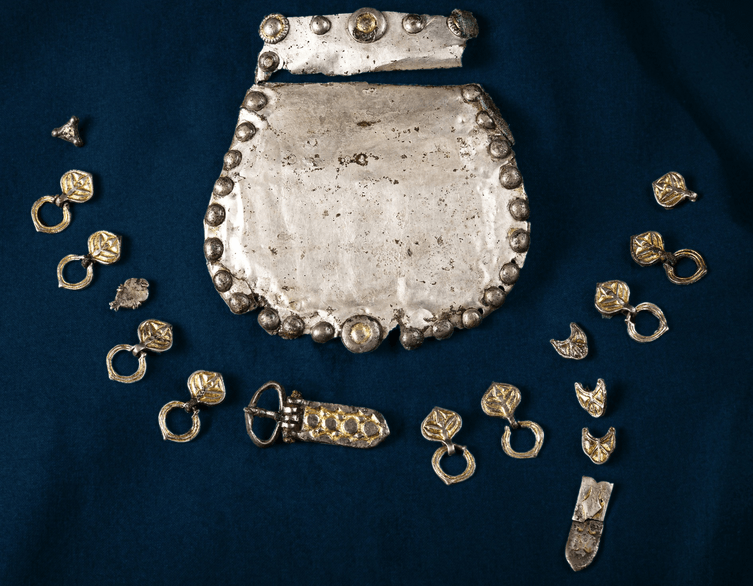
The richest burial belongs to a teenage warrior of clearly elite status. His belt was made not of leather, as you might expect, but of samite — a luxurious, twill-woven silk — onto which gilded silver hinged mounts with leaf-shaped pendants were attached at roughly one-centimetre intervals. Suspended from this belt on his right hip was a silver sabretache: a decorated pouch worn by Hungarian warriors of the period, functioning somewhere between a status symbol and an everyday carry.
What makes this discovery extraordinary is that the belt, the sabretache, and the layers of clothing surrounding them were preserved in such exceptional condition that archaeologists were able to remove them from the grave in their original position — completely intact, exactly as they were laid to rest over a thousand years ago. That almost never happens.
Silk, Leather, and Fur Under the Microscope
Once in the laboratory, the careful, painstaking excavation of the removed block revealed details that rewrote what archaeologists thought they knew about Conquest period dress. The sabretache itself turned out to be far more complex in structure than previously assumed — two distinct structural units were attached to both the plate and the belt. The clothing of the deceased featured leather, plain-woven linen, samite, and taffeta silk, pointing to a wardrobe of considerable wealth and sophistication for the time.
Chemical analysis of the leather detected aluminium, confirming the use of alum tanning — a technique that tells us something real about the craftspeople behind these objects. Even the stitching, though long decayed, left enough traces for researchers to understand how the sabretache was constructed.
The Goldsmith’s Secrets
The silver fittings were analysed using non-destructive X-ray fluorescence (XRF) spectroscopy, and the results are fascinating. All elements of the sabretache plate appear to have been made in the same workshop, from the same silver source — identifiable by its characteristic bismuth content. But the craftsman wasn’t just melting and pouring: the silver purity was carefully adjusted depending on the function of each component. The plate itself was made from highly pure silver (86–92%) for ease of shaping and a brilliant white finish, while the rivets were alloyed with bronze to lower the melting point, make casting easier, and produce a tougher, more durable result. This is precision metalwork from a goldsmith who knew exactly what they were doing.
Why This Exhibition Matters
As the director of the Hungarian National Museum, Dr. Gábor Zsigmond, put it at the opening: this discovery provides new, defining data for understanding the society and power structures of the Conquest period in the region between the Danube and Tisza rivers. The lead archaeologist Gábor Wilhelm described it with remarkable poetry: “There is a door, and behind it stands a 1,100-year-old warrior. Fortunately, there was a keyhole in that door, and we were able to look through it. What we saw was a 1,100-year-old moment — and we caught it.”
This is not just a museum exhibition. It is a window into a pivotal chapter of Hungarian history, brought to life through objects of extraordinary beauty and scientific significance.
Plan Your Visit
Everything you need to know before you go:
- Dates: May 8 – June 7, 2026
- Opening hours: Tuesday to Sunday, 10:00–18:00 (closed on Mondays)
- Location: Hungarian National Museum, Southern Fireplace Room (Déli Kandallóterem), Múzeum körút 14–16, Budapest 1088
- Getting there: A short walk from Kálvin tér metro station (M3 blue line), right in the heart of Pest
- Exhibition format: A focused, intimate showcase — plan for around 30–45 minutes, or longer if you explore the museum’s permanent Conquest period collection while you’re there
- Website: mnm.hu
Don’t Miss It
Exhibitions like this are rare even by the standards of a museum-rich city like Budapest. The Akasztó finds have been studied by an impressive roster of institutions — from ELTE’s archaeogenomics lab to the HUN-REN Institute for Nuclear Research — and the results are still coming in. A documentary series about the discovery is also underway, with the first episode already available. But for now, the best place to experience this story is in person, standing a few centimetres away from a silver belt buckle that once held together the outfit of a teenage warrior riding through the Hungarian plain in the year 925. It doesn’t get much more Budapest than that.
Related attractions

Related news