Budapest’s Little Underground Turns 130: The Metro That Didn’t Wait for the Emperor
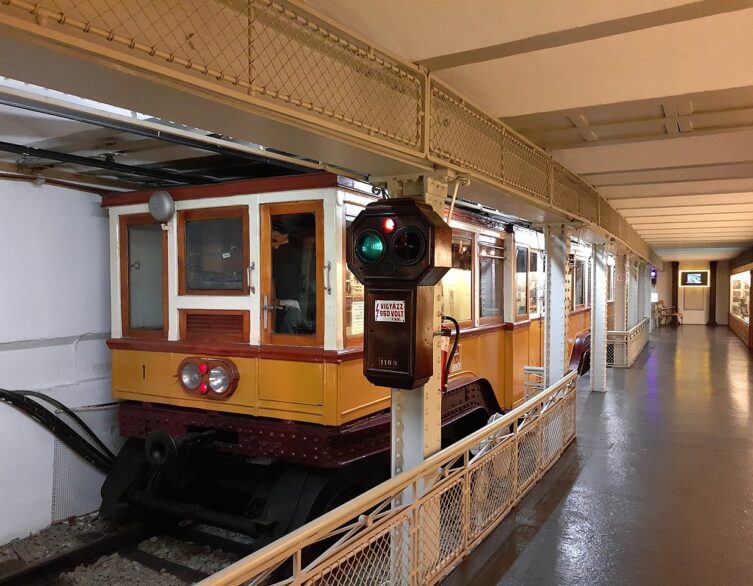
If you’ve ever hopped on the tiny yellow tram that burrows under Andrássy Avenue, congratulations — you’ve just ridden a piece of living history. Budapest’s M1 metro line, lovingly nicknamed the Kisföldalatti (the “Little Underground”) by locals, celebrated its 130th birthday on May 2, 2026. And the story of how this little tunnel came to be is far more dramatic, funny, and surprisingly imperial than you might expect.
Continental Europe’s First Underground Railway
Let’s set the scene: it’s 1896, there are no smartphones, no cars on every corner, and a large chunk of the population has never seen an electric light bulb. Yet right there, beneath the streets of Budapest, the first electrified underground railway on continental Europe was already whisking passengers from Vörösmarty Square all the way to City Park — at what must have felt like warp speed. London had its Underground, sure, but Budapest wasn’t far behind, and on the European mainland, it was simply unmatched. The world’s second oldest electrified metro line was not in Paris, not in Berlin, not in Vienna — it was right here, in Budapest.
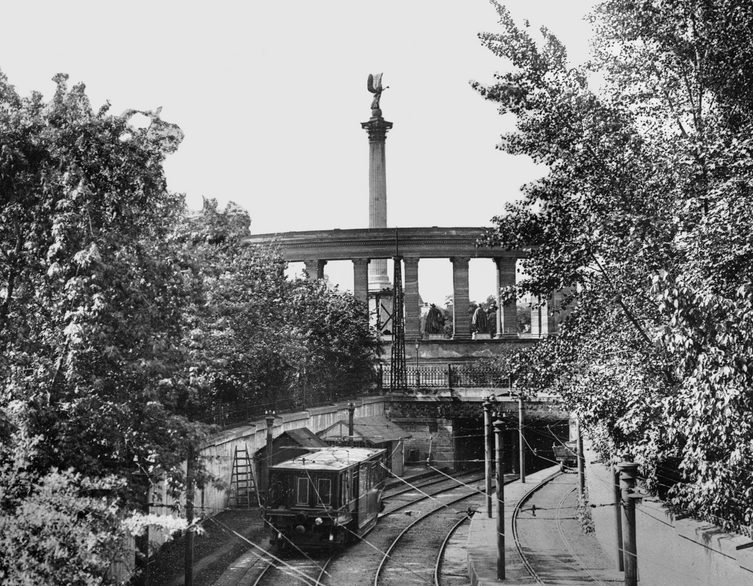
The whole thing was built in a jaw-dropping 21 months. Engineers didn’t drill any fancy tunnels either — they simply dug up Andrássy Avenue, laid the infrastructure, and paved it all back over again. Today, that same Andrássy Avenue is a UNESCO World Heritage Site, its elegant Neo-Renaissance mansions and the underground railway beneath it recognised together as a treasure of global significance in 2002.
Born in a Rush, Launched in the Rain
The Millennium Underground was built with a very specific deadline in mind: the Millennial National Exhibition, marking a thousand years since the Magyar tribes settled in the Carpathian Basin in 896 AD. The opening on May 2, 1896 was a quietly historic moment — and rather fittingly for Budapest, it happened to be raining. According to period newspaper reports, Budapestians were only too happy to duck underground into the “large, brightly lit, dry tunnel” to try out this peculiar new contraption. The bright, roomy carriages sped through under the busy streets, always packed to the brim, and passengers reportedly had a whale of a time — the air wasn’t even stuffy.
Despite being a genuine world sensation, the Budapest press greeted the launch with a curious lack of fanfare. The Budapesti Hírlap buried the news on page 13, sandwiched between stories titled “Suicide Student,” “Scandal at the Vienna Horse Race,” and “Lightning Strike at Military Drill.” No ceremonial ribbon, no speeches, no military band at the Gizella Square (today’s Vörösmarty Square) terminal. Apparently, some things happening above ground that day took priority.
The Emperor Who Almost Missed His Own Metro
Here’s where things get delightfully complicated. Emperor Franz Joseph I was actually in Budapest on May 2, 1896, to open the Millennial Exhibition — but he didn’t bother trying the underground that day. He only rode it six days later, on May 8, when the official ceremonial inauguration finally took place. The Emperor arrived at Gizella Square at noon sharp, was greeted by a reception committee, received a commemorative illustrated album, and graciously signed the guestbook with the words: “Franz Joseph, 8 May 1896.”
He was so impressed that he gave his permission — how generous of him — for the railway to be named after himself. There was just one small problem: by that point, the company operating the line had already printed its name everywhere. The original company acronym, BFKVV (Budapest Underground Road Electric Railway), was plastered on carriages and signage across the network. Repainting everything, updating the company charter, and filing the official name change request with the Ministry of Commerce took until August 22, 1896. From that point on, the line was officially known as the Ferenc József Földalatti Villamos Vasút Részvénytársaság — the Franz Joseph Underground Electric Railway Company, or FJFVV for short. Even imperial bureaucracy moves slowly.
Best deals of Budapest







Three days after the soft opening, Archduke Leopold Salvador and Archduke Franz visited the line with Archduchess Blanche and a clutch of courtiers. The press reported they were “extraordinarily surprised by the elegant furnishings and the speed of travel,” and couldn’t help noting that upon complimenting the staff, the royal party remarked: “If only Vienna had a railway like this.” Quite.
Zsolnay Tiles, Candy Machines, and Siemens Engineering
The M1 isn’t just historically significant — it’s genuinely beautiful. The stations are lined with cream and brown decorative tiles from the legendary Zsolnay porcelain factory, Hungary’s answer to Wedgwood. Wrought-iron railings frame the entrances, and the whole aesthetic feels like stepping into a polished 19th-century time capsule. The engineering, meanwhile, was handled by none other than Siemens und Halske, the German firm that would go on to become one of the world’s largest engineering companies.
One of the more charming pieces of trivia: the Stollwerck company, which supplied candy vending machines to the stations, also designed the ticket vending machines for the line. So in 1896, you could buy both your metro ticket and a chocolate bar from the same machine. Budapest was ahead of its time in more ways than one.
A single ticket in 1896 cost just two fillér — roughly the price of nothing by today’s standards, the kind of sum that doesn’t even register as a rounding error on a modern bank statement. Today the line carries an estimated 80,000 passengers a day, which puts it firmly in the category of “charmingly small but incredibly busy.”
A UNESCO Treasure You Can Ride for a Few Hundred Forints
The M1 isn’t just a metro line — it’s part of a UNESCO World Heritage Site. Together with Andrássy Avenue and Heroes’ Square, the Millennium Underground was inscribed on the World Heritage List in 2002. That means your morning commute — or your tourist joyride from Deák Ferenc Square to City Park — is technically a heritage experience. Not many cities in the world let you ride through a World Heritage Site for the price of a standard transit ticket.
The line runs from Vörösmarty Square in the heart of the city all the way to Heroes’ Square and City Park, stopping at some of Budapest’s most iconic locations including the Hungarian State Opera House and Oktogon. It’s essentially a guided tour of Andrássy Avenue on rails, for less than the cost of a coffee.
What Comes Next for the Little Underground
The Kisföldalatti has served Budapest faithfully for 130 years and isn’t done yet. Plans are currently in preparation for a major renovation, extension, and accessibility upgrade of the line. The proposals include extending the route, improving interchange connections with other transport lines, and making the stations fully accessible — all while respecting the heritage protection requirements that come with operating a 130-year-old UNESCO-listed railway. EU funding and ongoing negotiations will determine the timeline, but one thing is certain: Budapest’s most beloved little metro line has a future as bright as its gleaming Zsolnay tiles.
So next time you descend those wrought-iron stairs and feel the warm draft of an approaching yellow carriage, remember: you’re standing roughly where Emperor Franz Joseph once stood, doing exactly what Austrian archduchesses wished they could do back home in Vienna. Budapest had it first. Budapest had it best. And 130 years later, Budapest still has it.
Related news
See Budapest Through a Child’s Eyes: A Unique Exhibition at the Underground Museum
A Special Show With Only Days Left If you happen to be in Budapest this week, there is one more reason to head down to the metro — and it is not...
Budapest’s Underground Railway Museum Celebrates 50 Years of Preserving Metro History
Fifty years ago today, on October 28th, 1975, Budapest opened a museum in one of the most unusual locations imaginable—inside an actual abandoned...
Budapest’s Iconic Metro Line Reimagined: A New Era for the Millennium Underground
Budapest stands on the brink of a revolutionary transformation, and at the heart of this evolution is the legendary M1 Metro—the Millennium Underground...
Related attractions