Chairs, Tables, and a Little Bit of Chaos: The Battle Over Budapest’s Outdoor Terraces
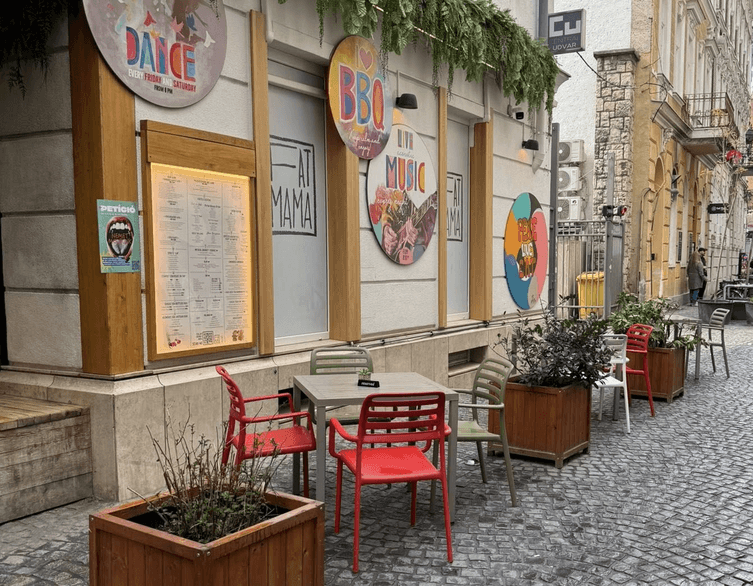
If you’ve ever sipped a glass of wine on a sun-drenched terrace in Budapest, watched the city hum around you, and thought this is exactly what urban life should feel like — congratulations, you’ve accidentally stumbled into one of the Hungarian capital’s most heated urban debates. Because those innocent-looking tables and chairs? They’re basically a political statement.
The Ruin Bar District at a Crossroads
Budapest’s 7th district, known as Elizabeth Town (Erzsébetváros), is the spiritual home of the city’s legendary ruin bar scene. For years, it has drawn travelers from across the globe with its quirky, lived-in charm — crumbling courtyards turned into cultural venues, eclectic bars spilling out onto cobblestone streets, and a nightlife energy that rivals any European capital. But that same energy is now at the center of a very grown-up argument about who gets to use the city’s streets, and what for.
The debate sounds simple on the surface: should cafés and restaurants be allowed to place outdoor terraces in former parking spaces? But peel back a layer or two, and you’ll find a rich, complicated conversation about urban space, economic fairness, community life, and what kind of city Budapest actually wants to be.
Parking Lots vs. People: The Great Terrace Question
Here’s the thing about parking spaces — they take up a lot of room, they serve a relatively small number of people at any given time, and they aren’t exactly known for creating warm neighborhood vibes. Outdoor terraces, on the other hand, do something rather remarkable: they turn dead asphalt into living, breathing social space.
Neighboring districts in Budapest have already figured this out. In Terézváros (the 6th district) and Józsefváros (the 8th), parklet-style terraces built on former parking spots have proven to be genuine community assets — places where locals meet friends, visitors linger over coffee, and the street feels alive rather than just functional. Even Vienna, that perennial model of elegant urban planning, has embraced this approach enthusiastically.
Best deals of Budapest









Elizabeth Town, however, spent several years resisting the idea entirely, which — with hindsight — looks like a bit of an own goal. The good news is that local advocates are now pushing hard to change this, arguing that it’s high time the district caught up with its neighbors and stopped treating its historic, beautiful streets as one giant car storage facility.
A Terrace is Never Just a Terrace
Here’s where it gets philosophically interesting — and yes, urban planning can absolutely be philosophically interesting, especially when you’re doing it over a cold Dreher.
The French thinker Henri Lefebvre famously argued that a city isn’t just a collection of buildings and streets — it’s a social construction, a space constantly being contested by different groups: residents, businesses, institutions, tourists. When a café owner places tables on the sidewalk, they’re not just adding seating. They’re staking a claim on shared urban space, reshaping pedestrian flow, altering the acoustic environment of a street, and — crucially — deciding, in a small but real way, what kind of neighborhood this will be.
Urbanist Matthew Carmona calls these kinds of spaces quasi-public: formally open to all, but in practice tied to consumption. You can walk past the terrace freely, but to actually sit there, you’ll need to order something. It’s a subtle but meaningful distinction, and it explains why these spaces generate so much emotional debate. The same dynamic plays out in shopping malls, arcades, and university campuses — places that feel public but operate by private rules. Budapest, incidentally, has some stellar examples of this hybrid space: the Gozsdu Courtyard and the magnificent Paris Passage are both beloved spots that blur the line between public thoroughfare and curated commercial experience.
The Night-Time Economy and Why It Actually Matters
Let’s talk about money for a moment, because it’s impossible to have this conversation honestly without it.
Budapest’s nightlife is not a niche product. It’s a major economic engine, drawing hundreds of thousands of visitors every year who eat, drink, sleep, and spend their way through the city. Researchers Marion Roberts and Adam Eldridge, in their work on planning night-time cities, point out that hospitality plays a crucial role in diversifying urban economies and boosting tourism appeal. Outdoor terraces are a key part of that equation — they increase a venue’s capacity, visibility, and street-level magnetism in a way that’s hard to replicate indoors.
But the same terraces that delight tourists at 9 PM can feel considerably less delightful to the person trying to sleep in the apartment directly above at midnight. Deborah Talbot, writing about night-time regulation, frames this tension well: managing the night-time economy is fundamentally a balancing act between economic interests and residents’ quality of life. There’s no perfect solution, just better and worse attempts at finding equilibrium.
The COVID-19 pandemic, strangely enough, gave this debate a new dimension. As lockdowns forced restaurants to close their indoor spaces, cities around the world — Budapest included — rapidly expanded terrace allowances, often converting parking lanes and road space almost overnight. What started as an emergency measure revealed something important: people liked it. The terraces became symbols of urban resilience and freedom, and many cities chose to make at least some of those changes permanent.
Rules, Revenues, and a Little Respect for the Neighbors
So what does a sensible terrace policy actually look like? Advocates in Elizabeth Town are proposing something pragmatic and worth paying attention to. Terraces should close by 10 PM, with strict noise regulations that the district is actually expected to enforce — not just pass on paper and forget about. The “live and let live” principle has to work in both directions: businesses get to operate, and residents get to sleep.
There’s also a genuinely clever idea on the table regarding revenue sharing. Since terraces pay a public space usage fee to the city, the proposal suggests that 20% of that fee should go directly to the apartment building in front of which the terrace is located. It’s a neat piece of local economic thinking: if your neighborhood generates revenue, some of that revenue should stay in your neighborhood. It also changes the dynamic between residents and businesses from pure antagonism to something closer to a shared interest.
As geographer David Harvey observes in his work on urban space, the privatization of public areas through commercial use can risk deepening urban inequality — unless it’s managed thoughtfully, with benefits flowing back into the communities that bear the costs. A 20% kickback to the building next door won’t solve everything, but it’s the kind of thinking that moves the conversation in the right direction.
What Kind of City Do You Want?
Ultimately, the terrace debate — whether you’re having it in Budapest, Barcelona, or Milan — is never really about chairs and umbrellas. It’s about a much bigger question: what is public space for?
Is it primarily an economic resource, to be allocated to whoever can put it to the most productive commercial use? Or is it a commons, belonging to everyone equally, where the priority is shared access and community life — even if that means fewer lattes and more empty benches?
The honest answer is probably somewhere in the middle, and the beauty of a city like Budapest is that it’s still actively figuring this out. The ruin bar district didn’t happen by careful planning — it happened through a wonderful, chaotic collision of artists, entrepreneurs, crumbling buildings, and a city that wasn’t quite sure what to do with its own post-communist heritage. The terrace question is, in a way, the next chapter of that same story.
Next time you settle into a wobbly chair on a Budapest sidewalk, raise a glass to that ongoing negotiation. It’s messier than a zoning regulation and more interesting than a parking space — and that, honestly, is what makes this city worth visiting.
Related news
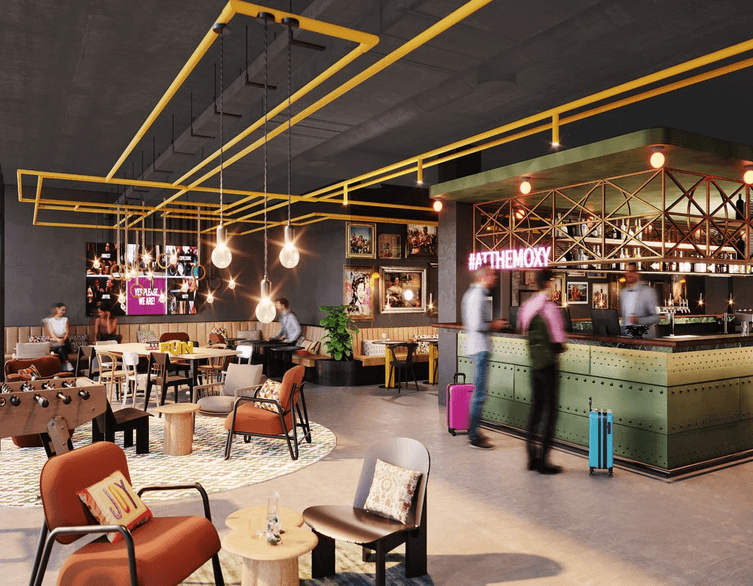
Moxy Budapest Downtown: Hungary’s First Moxy Hotel Opens in the Heart of the Party District
Budapest has a new address for travelers who want more than just a place to sleep. Moxy Budapest Downtown, Hungary’s first Moxy hotel, officially...
The Best Parks for a Picnic in Budapest in 2026 — A Visitor’s Guide to Eating Outdoors in the Hungarian Capital
Budapest is one of those cities that becomes almost impossibly beautiful when the sun comes out. The light bouncing off the Danube, the green hills...
Top 10 Terraces in Budapest to Enjoy the Sunshine this Spring
Budapest’s terrace culture is in full bloom, offering locals and visitors the perfect spots to enjoy sunny days with delicious food, refreshing...

Cool Down and Enjoy the View at the Money Museum’s Rooftop Terrace
Hey there, coffee lovers and adventure seekers! If you’re looking for a unique spot to chill out and enjoy some fantastic views, I’ve...
Related events