Budapest Just Threw the Most Historically Significant Party You’ve Never Heard Of
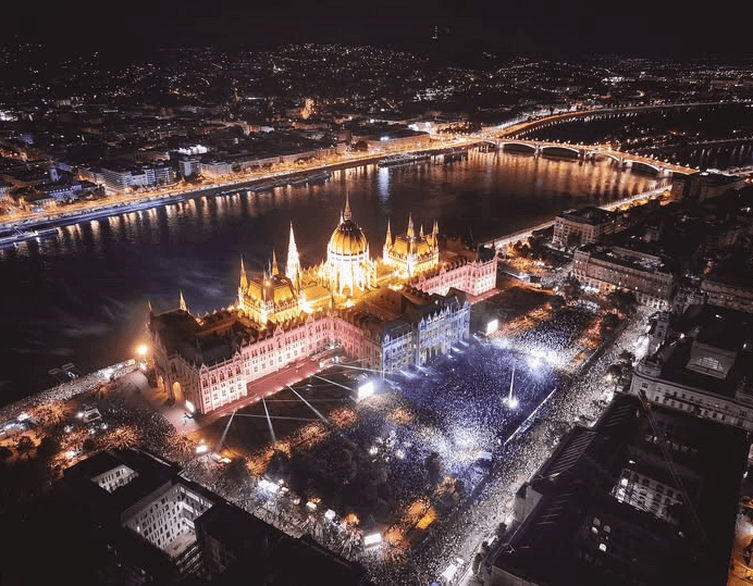
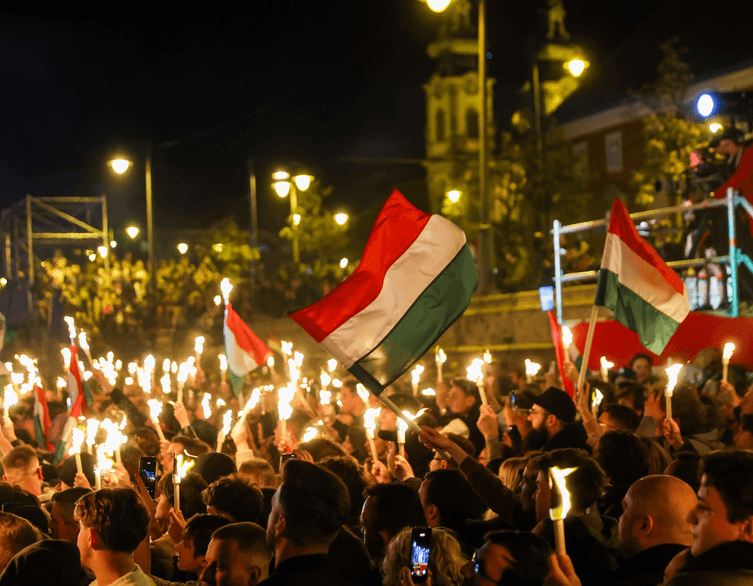
If you happened to find yourself wandering along the banks of the Danube in Budapest on May 9th, 2026, you might have stumbled upon something rather extraordinary: tens of thousands of Hungarians crying, dancing, hugging strangers, and singing their hearts out in front of one of the most beautiful parliament buildings in the entire world. Don’t worry — nobody was hurt. On the contrary, something was healed.
Sixteen Years Is a Long Time
To understand why Budapest essentially turned into one enormous street party, you need a little context. For the past 16 years, Hungary was governed by Viktor Orbán and his Fidesz party — a tenure that left many Hungarians feeling, to put it gently, left behind. Teachers were fired, journalists were stigmatized, civil society organizations were pressured into silence, and communities were turned against each other in what critics describe as a systematic campaign of scapegoating and intimidation. Millions of Hungarians felt that their own country had abandoned them.
But even in those years, not everyone went quiet. Teachers, students, nurses, researchers, environmental activists, Roma rights advocates, and independent journalists kept showing up — kept pushing back — even when it cost them dearly. May 9th was, in no small part, a celebration for all of them.
April 12th: The Day Everything Changed
The story really begins on April 12th, when Hungarians went to the polls in record numbers — voter turnout exceeded 77%, setting a historic post-communist record. The result was a political earthquake. Péter Magyar, a 45-year-old lawyer and the founder of the center-right Tisza Party, swept to victory with a stunning 53.6% of the vote, securing 138 seats out of 199 in parliament — a constitutional supermajority. Orbán’s Fidesz was left with just 55 seats. For context, a supermajority in Hungary means you can amend the constitution itself. The mandate couldn’t have been clearer.
The Parliament That Finally Loosened Its Tie
Fast-forward to the morning of May 9th. At 10 a.m., the newly elected parliament convened for its inaugural session inside the spectacular neo-Gothic Parliament Building on the banks of the Danube. MPs took their oaths at 10:45 a.m. Outgoing President Tamás Sulyok gave a speech emphasizing reconciliation and offered constructive cooperation to the Tisza Party. Then, in a secret ballot, Ágnes Forsthoffer was elected as the new Speaker of Parliament — and in her very first act after taking the oath, she announced that the European Union flag would once again be raised on the Parliament building, after it had been controversially removed by Orbán’s administration back in 2014.
That detail — a flag, going back up — meant more to people than it might seem. It was the first of many symbolic gestures that made the day feel genuinely historic. Journalists inside the Parliament building reported something unusual too: they were allowed to work freely, moving around and conducting interviews without the restrictions that had become the norm over the previous years.
“I Will Serve, Not Rule”
At 2:30 p.m., Péter Magyar was officially elected Hungary’s new Prime Minister with 140 votes in favor. His inaugural speech was long, emotional, and utterly unlike anything Hungarians had heard from their leaders in a very long time. He spoke candidly about the sins of the previous era, and in a moment that left many in tears, he publicly apologized to the victims of institutional abuse — including the victims of the Bicske and Szőlő Street scandals — and to everyone who had been stigmatized or harassed by the previous government.
“There can be no fresh start without reconciliation; no reconciliation without justice; and no justice without confronting the past,” Magyar declared. He promised to be the prime minister of every Hungarian, and pledged that his own government would actively limit its own power — a statement so unusual in modern Hungarian politics that people genuinely weren’t sure they’d heard it correctly. European Council President António Costa quickly sent his congratulations, noting that “a new chapter has begun in Hungarian history” and that the EU was “ready to work with the new Hungarian government.”
Kossuth Square Goes Absolutely Wild
After the formal ceremonies concluded, the real spectacle began. At 4 p.m., in front of the Parliament on Kossuth Square — one of the grandest public spaces in all of Central Europe — the Hungarian flag was raised with full military honors at Magyar’s personal command. Then he stepped outside to face the crowd.
Best deals of Budapest






What happened next was the kind of thing that makes foreign visitors blink and wonder whether they’ve accidentally wandered onto a film set. Magyar told the tens of thousands gathered before him: “We have taken back Parliament — and not only has the country changed, but so have I.” He thanked the crowd for their support and then, without missing a beat, launched a full-blown outdoor concert. Caramel (that’s singer Molnár Ferenc to the uninitiated), the actors of the Vígszínház theatre, and legendary composer-musician Gábor Presser all took the stage. The party was planned to run well into the night.
Meanwhile, on the lower Pest embankment — that gorgeous stretch of the Danube where tourists love to stroll — a separate gathering closed out 16 years of political trauma with a shared moment of reflection. Speakers thanked teachers, civil activists, journalists, and ordinary people who had refused to be broken. “This day was not just about closing a system,” the message went, “but about the fact that we have shared strength, shared memory, and a shared future.”
Ibolya Oláh, the Song That Broke Everyone
No concert on this particular evening could have been complete without Ibolya Oláh taking the stage to perform her beloved song “Magyarország” — which translates simply as “Hungary.” The moment she began to sing, something extraordinary happened across the crowd: thousands of people wept openly, unselfconsciously, without a trace of embarrassment. These weren’t tears of sadness. They were the particular, overwhelming kind that come from relief — from the feeling of a long-held breath finally being released. The song, already deeply woven into the fabric of Hungarian identity, took on an entirely new emotional weight that night. For many in the crowd, it felt like a national exhale set to music.
A Light Show Fit for a New Era
As darkness fell over Budapest, the Parliament Building — already one of the most photogenic structures in all of Europe — was transformed into something almost otherworldly. A spectacular light show was projected directly onto its ornate neo-Gothic façade, turning the iconic riverside landmark into a canvas for the story of Hungary’s democratic renewal. The intricate stonework, the soaring spires, the grand dome — all of it became a backdrop for swirling colors and imagery that could be seen from across the Danube. It was the kind of visual spectacle that reminds you why Budapest consistently ranks among the most beautiful cities on the planet, and it gave the entire evening the feel of a moment carefully staged by history itself.
The Dancing Health Minister and the DJ Prime Minister
No account of this day would be complete without mentioning two moments that have already gone viral. Health Minister-designate Zsolt Hegedűs, who had previously become internationally famous for his joyful dancing at the Tisza Party’s election night celebration at Batthyány Square on April 12th, couldn’t help himself — he did it again, this time on Kossuth Square, for all the world to see. Apparently, governing responsibly doesn’t mean you can’t bust a move.
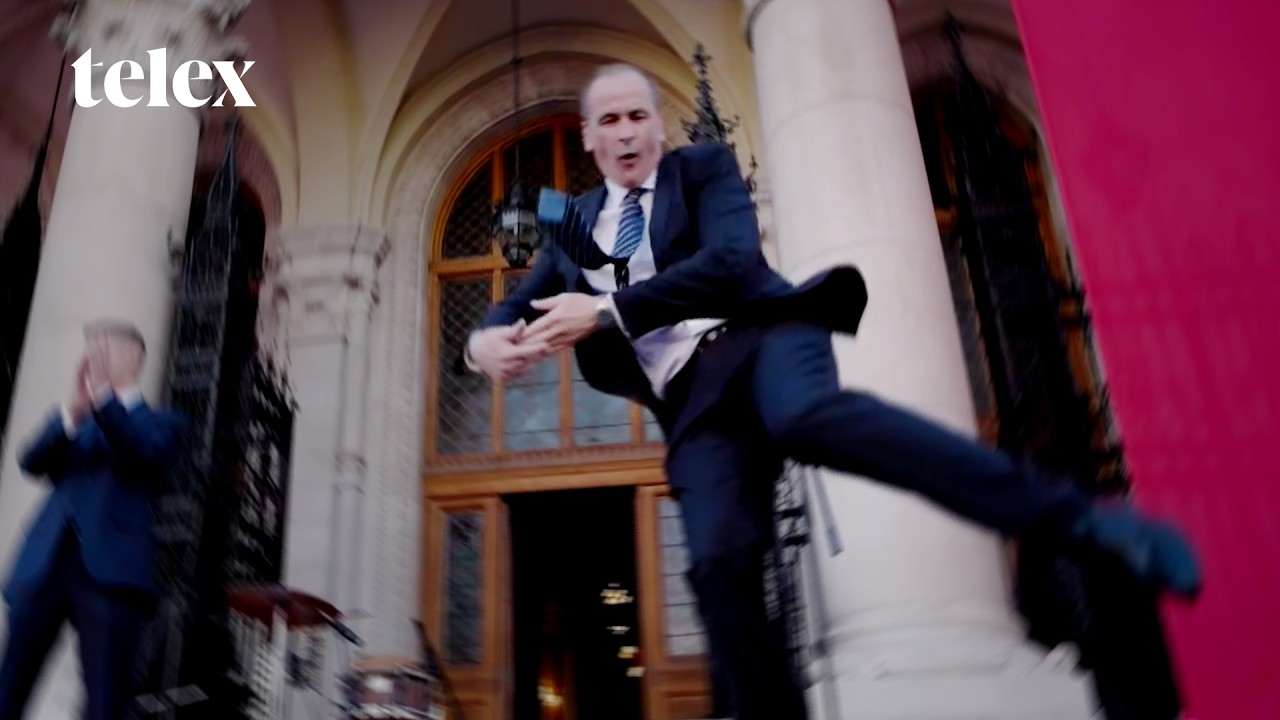
Zsolt Hegedűs, the best dancer of the Parliament
The Health Minister is the best role model for both physical and mental health
And then there was the Prime Minister himself. As the evening deepened and the crowd showed no signs of going home, Péter Magyar — suit and all, headphones clamped firmly over his ears — stepped behind the DJ booth and played “Az éjjel soha nem érhet véget” (“The Night Can Never End”) by Soho Party, the track that became the unofficial anthem of Hungary’s national football team during Euro 2016. The crowd, predictably, lost its mind.
What This Means for Budapest — and for You
Beyond the emotional spectacle, the practical implications of this political shift are significant for anyone visiting or moving to Budapest. Magyar’s government has pledged to unlock approximately €17 billion in EU funds that were frozen during Orbán’s tenure due to rule-of-law concerns. His administration also promises a complete overhaul of the public health system, with a commitment to transparent operations. And in a move that signals a broader cultural opening, Tisza MP Gábor Pósfai announced that Budapest Pride will be held freely this year — a sharp departure from the restrictions of recent years.
The EU flag is back on the Parliament building. Journalists are working freely inside it. The prime minister was dancing in a DJ booth. Budapest, as ever, is many things — but on May 9th, 2026, it became something it hadn’t been in a very long time: a city exhaling.
If you’re visiting Budapest and you want to feel the pulse of this extraordinary moment in history, take an evening stroll along the Danube embankment past the Parliament building. Look up at the flag. Listen for music. The Hungarians around you have earned their dancing shoes — and they’ll almost certainly invite you to join in.
Related news

Budapest Just Made History — and It Was Absolutely Wild
Something extraordinary happened in Budapest on May 9, 2026, and if you weren’t there, you genuinely missed one of the most unforgettable days...
A Nation Reborn: Budapest Throws Its Biggest Party to Welcome a New Political Era
There are days when a city simply buzzes with something bigger than itself, when the streets fill up not because of a festival or a football match,...
Budapest Erupts in Joy: Hungary’s Historic Election Ends Orban Era
If you happened to be in Budapest last night — or if you’re arriving in the city today — you may have noticed something extraordinary in...