Bringing Your Bike on Public Transport in Budapest: What Tourists Need to Know in 2026
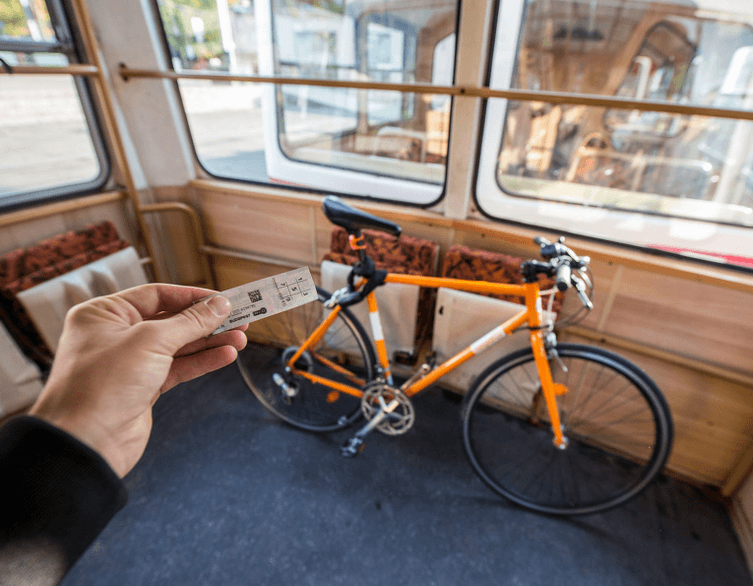
Budapest is one of those cities that practically begs to be explored on two wheels. One minute you are cruising along the Danube with postcard views on both sides, and the next you are facing a Buda hill that suddenly feels much taller than it looked on the map. The good news is that getting around the Hungarian capital is becoming easier, greener, and much more practical for cyclists thanks to new trams, new electric buses, and updated rules for carrying bicycles on public transport.
If you are visiting Budapest and planning to combine sightseeing with cycling, this is the sort of information that can save your day. Whether your e-bike battery gives up halfway through the afternoon, a summer downpour arrives with perfect dramatic timing, or you simply decide that enough uphill riding is enough, Budapest’s public transport network can often come to the rescue for both you and your bike.
Budapest’s transport network is changing
In recent months, Budapest has been putting new CAF trams, electric buses, and MaxiMidi buses into service. These upgrades are not only making travel more modern and environmentally friendly, but they are also changing how some routes are operated, with certain services now handled by different operators such as BKV and ArrivaBus.
For passengers, the practical effect is simple: the number of lines that allow bicycle transport is growing, but the system is also changing. That means it is worth checking current information instead of relying on an old travel article, a blurry memory, or the extremely risky strategy of just hoping for the best.
From May, bicycles are once again allowed on bus lines 110, 112, and 139. At the same time, bike transport is temporarily unavailable on the 212 bus family. There is also an important weekday restriction on tram lines 17 and 61, where bicycles can now be carried only from Monday to Friday.
Even better, more lines are expected to become available for bike transport in the summer months, so Budapest’s cycling-and-transit story is still expanding.
Why this matters for tourists
This matters because Budapest is a fantastic city for combining cycling with public transport. It is large enough that you may not want to pedal every single kilometer, and varied enough that at some point your legs may begin negotiating for better working conditions. The flatter Pest side is easy for relaxed urban riding, while the Buda side offers greener routes and hills that can quickly turn a casual ride into a cardio event.
Being able to bring your bicycle onto a tram, bus, Cogwheel Railway, or suburban train gives you flexibility. It helps if you get a flat tire, if your electric bike battery runs out, if the weather turns wild, or if you are traveling with children and want to keep things fun instead of heroic. It is also a great option for travelers who enjoy cycling but would rather skip the more demanding climbs.
For longer distances, the Budapest transport authority recommends combining biking with public transport and using the BudapestGO app to plan ahead. That app is especially useful because it can show what kind of vehicle is arriving, which is important on lines where not every tram or bus is suitable for bicycles.
Which lines allow bicycles?
The basic rule is easy to remember: look for the bicycle pictogram next to the door. If you see it, that vehicle is approved for bicycle transport. If you do not, your bike will need to stay outside.
That detail matters because not every vehicle on the same line is suitable. On weekdays, bicycles are allowed on a broad selection of bus and tram lines, including buses 11, 15, 21, 21A, 29, 57, 65, 65A, 87, 87A, 91, 102, 110, 111, 112, 128, 129, 137, 139, 155, 156, 165, 187, 221, 237, 257, and 291, as well as tram lines 1, 1A, 12, 14, 17, 19, 28, 28A, 41, 56, 56A, 59, 59A, 59B, 60, and 61.
On weekends and public holidays, the selection changes slightly. Bike transport is available on trams 12, 14, 28, 28A, 37A, 41, 59, 59A, and 60, as well as many of the same bus routes, including 11, 15, 21, 29, 57, 65, 65A, 87, 87A, 91, 102, 110, 112, 128, 129, 137, 139, 155, 156, 165, 187, 221, 237, 257, and 291.
There is one very important tram-related catch. On tram lines 1, 14, 17, 19, 56, 56A, and 61, bicycles can currently be carried only on the older high-floor trams. The newer low-floor CAF and Combino trams do not yet allow bicycle transport. So yes, the fancy modern tram may arrive looking efficient and elegant, but your bike may still be told, politely, “not today.” The BudapestGO app is your best friend here, because it lets you see the vehicle type in advance.
Where bicycles go on board
Bicycles can only be transported in clearly designated spaces. Budapest’s transport system is fairly welcoming, but it is not improvisational.
On buses, you can bring a bicycle aboard through the second or middle door, where the stroller area is located. Only one bicycle can be carried on a bus at a time, and it must be placed in the marked space and secured safely before departure. On some Modulo buses, there are industrial hook-and-loop straps to keep the bike in place during the ride.
Best deals of Budapest










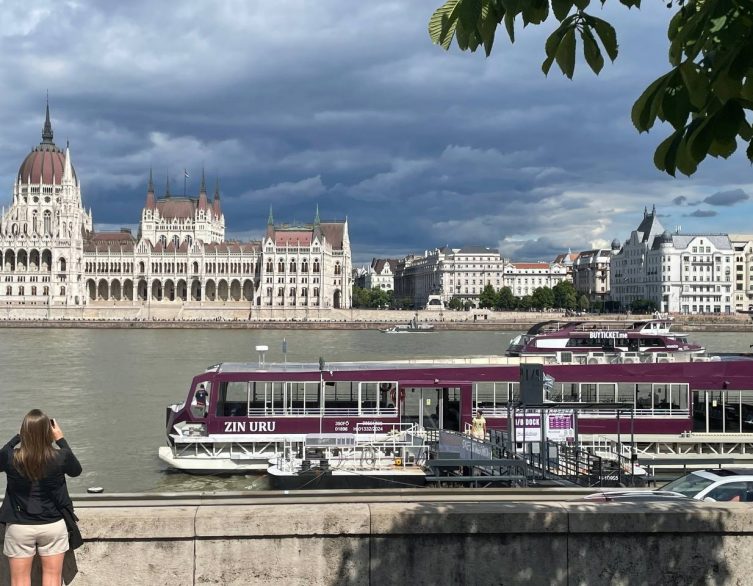
On older Tatra trams, bicycles can be carried at the end of the carriage without a driver’s cab, in the area marked with a bicycle symbol. Depending on the tram formation, this means two or even three bicycles can be transported across the full set. These also need to be secured with the onboard straps.
On the Cogwheel Railway, officially tram line 60, bicycles can be carried in the designated area near the rear door of the uphill carriage. Up to sixteen bikes are allowed, which makes this one of the best transport options if you want to explore the Buda Hills without having to earn every meter of elevation the hard way.
On HÉV suburban trains, the designated bicycle area is located at one end of the middle carriage, where up to four bicycles can usually be placed safely. The platform markings help you find the correct boarding door. This is particularly useful for travelers planning a ride beyond central Budapest.
The rules are simple, but real
Each passenger may carry only one bicycle, and the bike must not exceed 180×130×70180×130×70 centimeters, which is about 70.9×51.2×27.670.9×51.2×27.6 inches. On trams, only bicycles that can be properly secured with the onboard straps are allowed. That means unusual bike designs such as recumbent bikes are not accepted, and cargo bikes or tandem bikes are also not allowed.
The person traveling with the bike is responsible for securing it properly. If the vehicle is too crowded or there is no safe way to fix the bicycle in place, the driver can refuse boarding. It may feel a bit harsh in the moment, but it is better than turning your bike into an accidental bowling ball on public transport.
In some vehicles, the bicycle area is shared with stroller and wheelchair spaces. In those cases, passengers traveling with wheelchairs or strollers have priority. That is simply part of proper travel etiquette.
If a route uses front-door boarding only, you must first show the driver your own valid ticket or pass and, if needed, the bicycle ticket or pass at the front door. After that, you may board with the bicycle through the designated middle or rear door and secure it before the vehicle departs.
What ticket do you need?
If you are using BKK services with a regular ticket and want to carry a bicycle, you need a separate bicycle ticket for the bike. A line ticket or block ticket can be validated for bicycle transport, and there are bicycle passes available as well. If you already have a valid travel pass, or you are entitled to free travel, you may usually carry one bicycle free of charge on BKK services.
On HÉV suburban rail services, bicycle transport also requires the appropriate bicycle ticket or pass, although one bicycle may be carried free of charge within Budapest’s administrative boundaries if the traveler has a valid pass or qualifies for free travel. Bicycle tickets and the national bicycle pass are available from MÁV sales points and in the MÁV app.
Small bicycles with a wheel diameter up to 4141 centimeters, which is about 16.116.1 inches, as well as scooters and folded bicycles, can be carried free of charge as hand luggage on all vehicles, provided they do not dirty other passengers or damage the vehicle. So if you are traveling with a folding bike, congratulations: you have found the loophole that makes transport much easier.
What about bike sharing in Budapest?
One important update for visitors is that MOL Bubi bikes are currently not available, so tourists should not plan their trip around the city’s better-known public bike-sharing system for the moment.
Instead, visitors can use Manfred bikes around the city. If you want the flexibility of hopping on a bike without bringing your own, Manfred is the option worth checking during your stay. For many travelers, this can be a practical alternative, especially for shorter urban rides between major sights or riverside routes.
Smart advice for cycling visitors
If you want a smooth experience, check the BudapestGO app before every trip. This is especially important on tram lines where only certain vehicles allow bicycle transport. It is also wise to avoid the busiest periods, because even when bicycles are allowed, squeezing onto a crowded vehicle with one during rush hour is nobody’s idea of a relaxing Budapest moment.
This flexibility is particularly useful in summer, when the weather can switch from sunshine to downpour very quickly. It also helps in hilly parts of Buda, where a bus or the Cogwheel Railway can turn a demanding route into a much more pleasant day out. If you are heading toward the Buda Hills, riverside cycling paths, or greener districts farther from the center, knowing you have a public transport backup makes the city far easier to enjoy.
Budapest is getting easier on two wheels
Budapest is becoming a more cycle-friendly city for travelers who want freedom without unnecessary hassle. The arrival of new buses and trams is making the network cleaner and more modern, and the growing range of bike-friendly public transport options gives visitors more ways to explore beyond the obvious city-center postcard spots.
So go ahead and enjoy that Danube ride, coast through leafy streets, and take on the hills if you are feeling energetic. And if your legs, the weather, or simple common sense tell you it is time for help, Budapest’s buses, trams, HÉV trains, and Cogwheel Railway are ready to step in. Just keep an eye out for the bicycle pictogram, secure your bike properly, and let the city carry some of the weight.
Related news
Getting Around Budapest Just Got Easier: New Bus Ticket Payments and Safer Crossings
Budapest keeps fine-tuning the everyday experience of getting around the city, and this month brings two welcome upgrades for visitors: you can now...
Bike and Ride in Budapest: The Smart Way to Skip the Traffic
If you’re visiting Budapest and want to get around like a local rather than sit in traffic, there’s a simple trick worth knowing before...
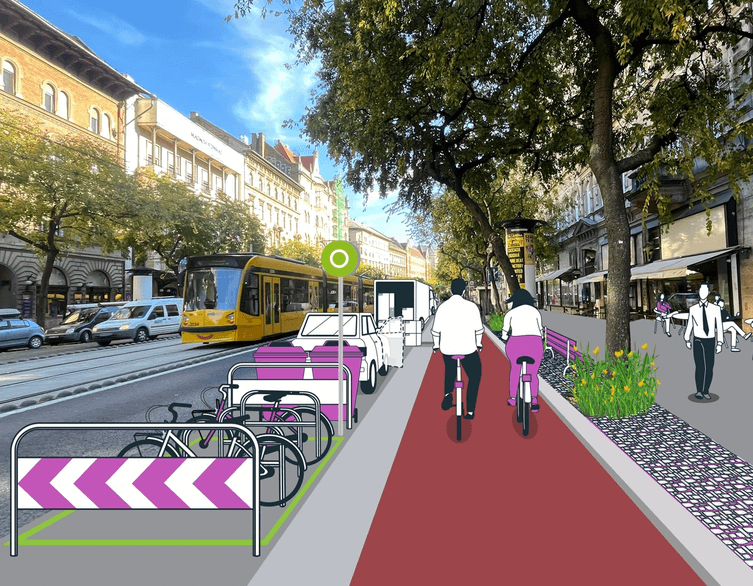
Budapest’s Grand Boulevard Gets a Biker-Friendly Upgrade This Summer
If your Budapest itinerary includes wandering, cycling, or grabbing a coffee anywhere along the Grand Boulevard (Nagykörút), you’ll want...
How Budapest Residents Are Shaping the City’s Transport Future
Budapest is quietly rewriting how it plans public transport and infrastructure, and it’s doing so by putting residents’ voices at the...
More Budapest Buses Now Allow Bikes On Board
If you’re exploring Budapest by bike but occasionally want the option of jumping onto public transport, the city’s transport authority...
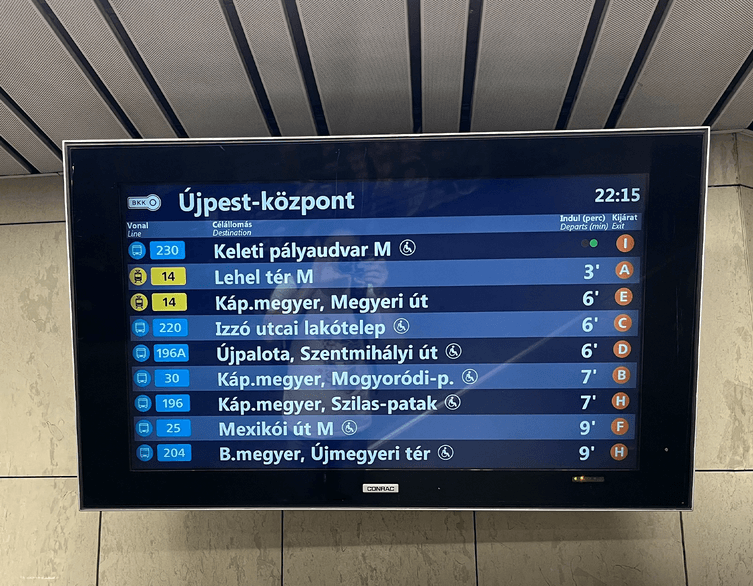
Clearer Stops, Real-Time Screens, and Accessible Rides: Budapest Upgrades Public Transport
Getting around Budapest by bus, tram, or metro is about to become a lot less confusing for visitors, thanks to a wave of new passenger information...
Budapest Parking Just Went Fully Digital: What Tourists Need to Know
Budapest is entering a new era—and if you’re planning to drive in the Hungarian capital this summer, there’s one major change you need...

Budapest’s Night Bus Network Is Getting a Major Overhaul — Everything You Need to Know From July 1
If you’re planning a late night out in Budapest next week, there’s some genuinely exciting news: the city’s entire night public...
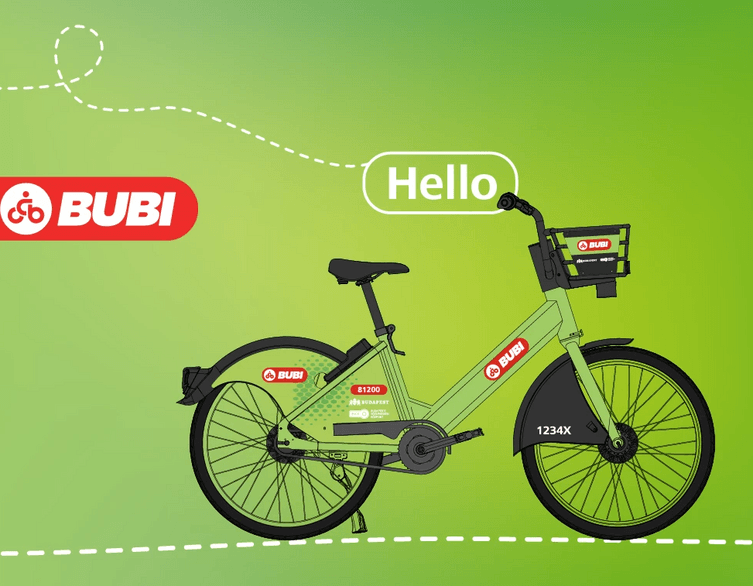
Budapest’s Beloved Bike-Share Is Getting a Major Upgrade: Meet the New Bubi 3.0
If you have ever spotted those cheerful green bicycles gliding through Budapest’s streets and thought about hopping on one, now is a very exciting...
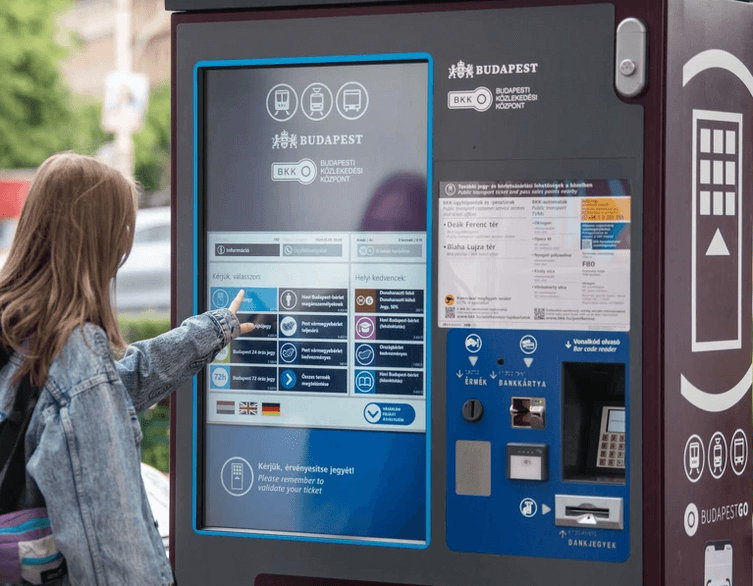
Update in the Public Transport Passes for Foreign Students
Budapest is one of Europe’s most charming capitals, where historic architecture meets vibrant urban life. Whether you are strolling along the Danube...
Stay Cool While Getting Around Budapest
Summer in Budapest can be wonderfully vibrant, but also quite warm. The good news for visitors is that the city’s public transport system is increasingly...
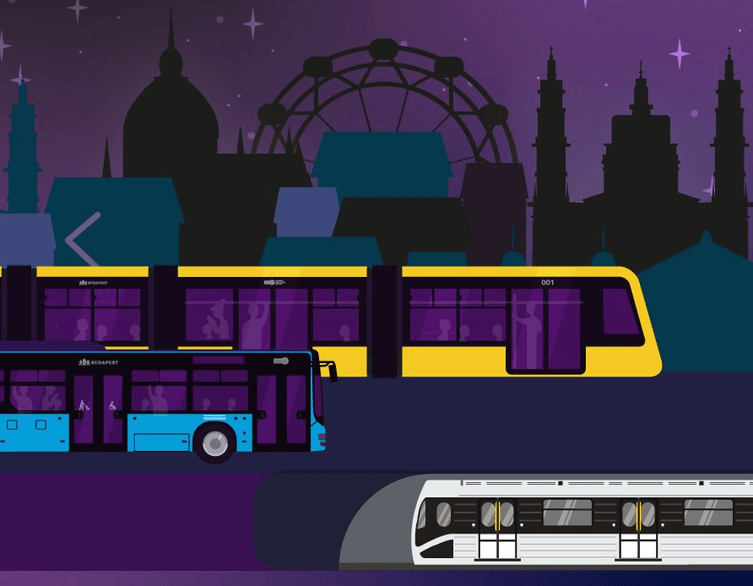
Budapest’s Night Transport Gets a Major Upgrade This Summer — Everything Tourists Need to Know
If you’re planning a trip to Budapest and love staying out late, here’s some genuinely exciting news: the city’s night public transport...
Bubi 3.0 Is Coming: Budapest’s Bike-Sharing System Is Entering a New Era
Budapest is getting ready for an exciting upgrade to one of its most useful and tourist-friendly transport services. The next generation of Bubi,...

Green Ways to Explore Budapest: Your Guide to Eco-Friendly Transport
Earth Day is a great reminder that protecting our planet doesn’t require grand gestures. In fact, some of the most meaningful changes start...

More Than 20,000 Cyclists Rolled Through Budapest at I Bike Budapest 2026
Budapest showed a different side of itself this weekend, as more than 20,000 cyclists took part in the I Bike Budapest parade on Saturday to draw...
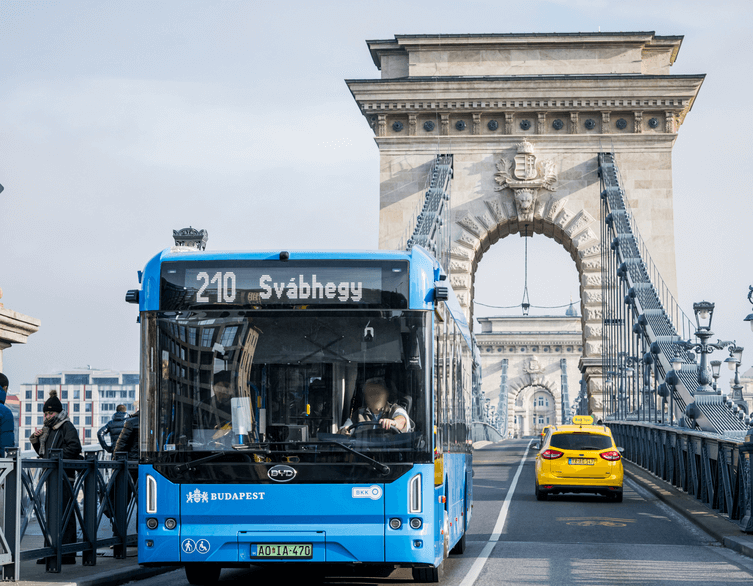
Budapest’s Public Transport Gets a Spring Upgrade: More Buses, More Trams, and Easier Access to the City’s Green Spaces
Spring has arrived in Budapest, and the city is responding in the best way possible. As the temperatures rise and the urge to get outside takes over,...
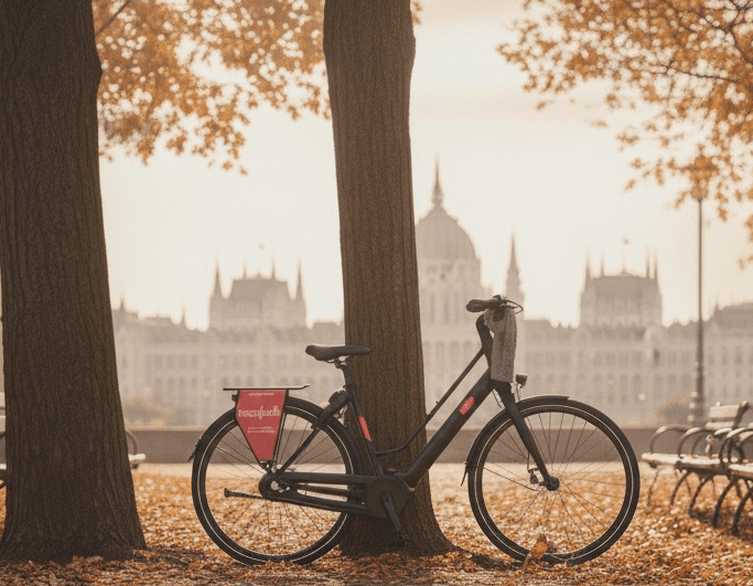
Meet Manfred: Budapest’s New Bike-Sharing Service Filling the Gap Left by Bubi
If you’ve been planning a trip to Budapest and were counting on hopping on a city bike to explore the Hungarian capital, you might have noticed...
Is Budapest The New Amsterdam? Introducing the Bike Superhighway
Get ready, Budapest cyclists! The city’s iconic Grand Boulevard (Nagykörút) is about to get a serious upgrade that’ll make your two-wheeled...
Related events