What to Wear in Budapest in Winter 2026: A Practical Guide as Frosty Weather Arrives

Budapest’s cold-weather season is arriving, bringing crisp mornings, chilly evenings and a good reason to make room in your suitcase for a proper coat. If you’re visiting in November or planning a winter city break, the trick isn’t to pack your entire wardrobe. It’s to choose clothes that work together, keep you comfortable outdoors and come off easily when you step into a warm café.
With colder nights approaching and City Park Ice Rink preparing for its November opening, now is a good time to think beyond a light autumn jacket. Here’s how to dress for Budapest’s colder months without letting a bulky suitcase—or cold feet—get in the way of your trip.
Frosty Mornings Are on the Way
Early-November forecasts point to increasingly cold nights across Hungary, with frost becoming more widespread as skies clear. Overnight temperatures in many areas could fall to between −3°C and −1°C (27°F to 30°F), while particularly frost-prone countryside locations could become considerably colder.
Those national forecasts don’t mean you should expect the lowest readings outside your central Budapest hotel. Sheltered valleys and rural frost pockets can cool much more sharply than the city centre. Nevertheless, early starts and late evenings are becoming noticeably more wintry.
For winter sightseeing, it’s sensible to prepare for conditions around freezing. Temperatures between approximately −2°C and 5°C (28°F to 41°F) are a useful packing scenario, rather than a forecast for every day of your visit. Some days will be milder, while colder spells can bring lower readings.
The important distinction is between the afternoon temperature and the conditions you’ll experience over a whole day. A pleasant lunchtime walk can turn into a chilly evening outing if you stay out after dark. Check Budapest’s local forecast shortly before travelling, then look again each morning.
Build Your Outfit Around Three Flexible Layers
The most useful principle for a Budapest winter wardrobe is layering. A moisture-managing base layer, an insulating middle layer and a protective outer layer let you adjust to changing temperatures and activity levels without needing a different outfit for every part of the day.
Start with a lightweight merino wool or synthetic thermal top worn close to the skin. Add a wool jumper, fleece or another insulating layer, then finish with a coat that protects against wind and, when necessary, rain or wet snow.
Both wool and technical synthetic fabrics can work well. Synthetic clothing isn’t automatically a poor choice: a quick-drying thermal top or fleece can be a practical part of a cold-weather outfit.
For sightseeing, choose layers you can unzip or remove easily. You want to feel comfortable while walking, not so bundled up that you start sweating on the first uphill stretch. Damp clothing can leave you feeling cold once you slow down, so adjust your layers before you become overheated.
Best deals of Budapest












Choose Fabrics That Keep You Warm Without Filling Your Suitcase
Merino wool is particularly useful for travel because it works well in base layers, socks and accessories. It helps manage moisture and resists odours, making it a practical option when you want to rewear a few well-chosen pieces. It can be expensive, though, and you don’t need an entirely merino wardrobe to stay comfortable.
Technical polyester base layers are a good alternative, especially if you prefer something quick-drying. A fleece worn under a protective coat can also provide warmth without the weight of several thick jumpers.
Cotton needs more consideration. It absorbs moisture and dries slowly, so a cotton T-shirt is less useful as your main base layer during a long, active day outdoors. Jeans can be perfectly wearable for a dry city day, but they’re less appealing if they become soaked. For lengthy outdoor plans in damp weather, wool or quick-drying synthetic fabrics are more practical.
Pick a Coat for Your Actual Plans
A long sightseeing day calls for a different approach from a short walk between your hotel and a restaurant. If you expect to spend hours outdoors, prioritise a warm, wind-resistant coat with enough room underneath for an insulating layer. A coat that feels snug over a thin top may become uncomfortable once you add a jumper.
A longer insulated coat is a practical choice for visitors who feel the cold, while a substantial wool coat can suit shorter city outings and evening plans. If your chosen coat isn’t waterproof, bring a lightweight rain shell or another reliable way to keep your layers dry.
Think about where you’ll be spending time, too. An exposed riverside walk or a stop at Fisherman’s Bastion can call for more protection than a brisk stroll between indoor attractions.
Try your complete outfit before packing. You should be able to move your arms comfortably, fasten your coat without squeezing your layers and remove a jumper without dismantling your entire wardrobe.
Keep Your Legs Warm, Too
It’s easy to focus on coats and forget that your legs will be outdoors for just as long. For colder days, wear trousers with enough room for thermal leggings underneath. On milder, dry days, a warmer pair of trousers may be all you need; when temperatures approach 0°C (32°F) or fall below it, an extra base layer becomes particularly useful for extended outdoor plans.
Skirts and dresses can still have a place in your suitcase. A knitted dress or midi skirt with warm tights and boots can work well for a restaurant evening or a day with limited outdoor walking. For an extended sightseeing route in freezing conditions, trousers with a thermal layer are generally the simpler option.
The goal is a small wardrobe that mixes easily. A couple of comfortable bottoms and coordinating tops will usually serve you better than several complete outfits that each need different shoes and accessories.
Give Your Footwear More Thought Than Your Photos
Cold, wet feet can shorten an otherwise lovely day. Choose comfortable, water-resistant boots with a substantial sole and dependable grip, particularly if your plans include sloping streets, outdoor steps or potentially icy pavements.
Warm socks are useful, but your boots still need enough space for your toes to move comfortably. Forcing thick socks into already snug shoes can make your feet less comfortable rather than warmer.
Wear your sightseeing shoes before the trip instead of discovering on your first morning that they rub. If your suitcase allows, a second comfortable pair gives you an alternative while the first dries.
For everyday sightseeing, leave delicate heels behind. Stable footwear is a more useful companion for cobbled streets and long walks, and you can always change shoes for an evening performance or dinner.
Don’t Forget Your Hat, Scarf and Gloves
Accessories are small enough to pack easily but make a noticeable difference when you’re outside for hours. Bring a hat that covers your ears, a scarf that closes the gap around your collar and gloves you’ll actually keep on.
Touchscreen-compatible gloves are convenient when you’re checking directions or taking photos. If your hands get cold easily, consider mittens, which generally keep fingers warmer than gloves.
Keep these items in your day bag even when the afternoon feels mild. They’re easier to carry than an extra jumper and useful when your sightseeing runs later than planned.
Pack for the Day You’re Having, Not Just the Temperature
Before heading out, think about how much time you’ll spend walking, standing still and sitting indoors. An energetic walk needs adjustable layers; a long outdoor wait or a leisurely stop at a viewpoint may call for more insulation.
An afternoon at 5°C (41°F) can feel quite different depending on whether you’re walking uphill, standing beside the Danube or taking frequent indoor breaks. Wind, rain and your activity level all influence how comfortable you feel, so don’t choose your entire outfit based on a single number.
Once you enter a café, museum or restaurant, open your coat and remove extra layers rather than sitting indoors dressed for freezing weather.
For evening plans, one smart outfit that works with your existing coat and boots is usually more useful than a completely separate wardrobe. A fine-knit jumper, tailored trousers or a knitted dress can make the transition from daytime exploring to dinner much easier.
City Park Ice Rink Is Preparing to Open in November
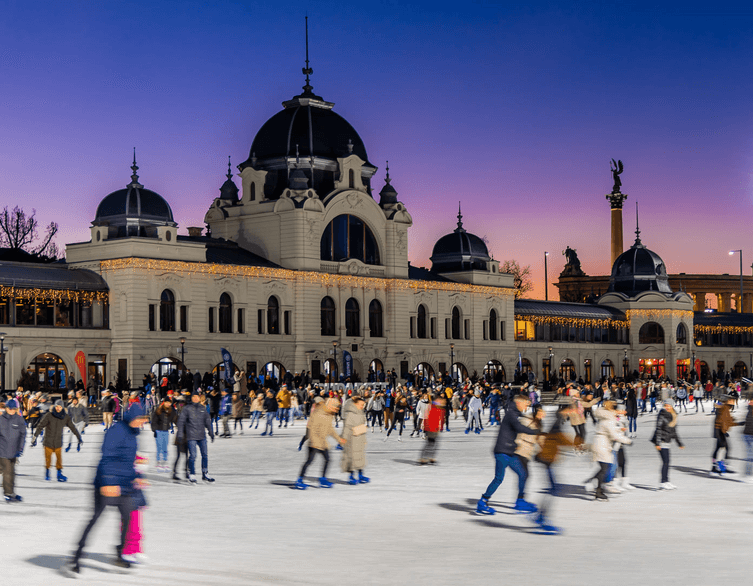
There’s a particularly good reason to pack your gloves this month. City Park Ice Rink is planning to begin its 2026–27 season on Friday, November 20, with the opening scheduled for 5 pm. The date remains dependent on weather and ice-making conditions, so check the latest announcement before arranging your day around it.
This season marks 100 years since the introduction of the mechanically refrigerated rink in 1926—not the beginning of skating at the site, which dates back to 1870. The anniversary opening is expected to bring celebratory programmes alongside skating, with Vajdahunyad Castle providing the backdrop.
If skating is on your itinerary, wear flexible layers rather than one heavy jumper. You may warm up while moving, then cool down quickly when you stop. A dry spare top can be useful if you tend to work up a sweat.
Make Warm-Up Stops Part of the Experience
A cold-weather city break doesn’t need to be an endurance test. Build café stops, museum visits and unhurried lunches into your day instead of saving every indoor activity for bad weather.
A hot drink is an enjoyable reason to pause, but don’t rely on mulled wine as protection against the cold. Alcohol is not a substitute for warm clothing or shelter, even if it creates a temporary sensation of warmth.
If a thermal-bath visit is part of your plans, leave room for swimwear and poolside footwear, and check your chosen bath’s current opening arrangements and visitor requirements before travelling.
After any wet-weather outing, change out of damp clothes rather than hoping they’ll dry while you continue sightseeing. Staying dry is an important part of staying warm.
Pack Light, but Pack for Real Conditions
The most useful winter suitcase isn’t necessarily the fullest. It’s the one with a reliable coat, comfortable footwear, compatible layers and the accessories you’ll reach for every day.
Check the forecast, consider how long you’ll actually be outdoors and give yourself options for both milder afternoons and freezing mornings. With the right clothes and a few well-timed warm-up stops, Budapest’s colder months become much easier to enjoy—whether you’re exploring the city streets, lingering over a café lunch or taking your first lap around the ice.
Related news

Best Autumn Walks in Budapest: Beautiful Parks, Scenic Viewpoints and Evening Lights
Budapest is a city worth slowing down for in autumn. Golden leaves soften its parks, woodland paths invite you into the hills, and panoramic terraces...

Budapest Airport Winter Schedule 2026/27: New Flights and More Ways to Visit
Planning a winter escape to Budapest? Getting here comes with more choice this season. Budapest Airport’s winter schedule launched on 25 October...

Immersive Light Events in Budapest This Autumn 2026
Budapest’s autumn evenings are getting a colourful makeover. Beyond the illuminated bridges and riverside landmarks, the city is filling with glowing...

A Day on Budapest’s Buda Side: Thermal Baths, Local Cafés and City Lights
A morning in warm thermal water, a leisurely lunch in a neighbourhood café, an unexpectedly entertaining museum and a nighttime view across the...
Budapest Gets Ready for Ice Skating Season
Budapest may still be enjoying a balmy Indian summer, but preparations for winter are already underway. Across the city, pedal boats are being packed...

Explore Budapest from the Danube This Fall
Few experiences reveal Budapest quite like a cruise on the Danube. From the water, the city’s grand landmarks come into focus one after another:...
Related events