A Seaplane on the Danube? Budapest’s Unusual Riverside Visitor Explained
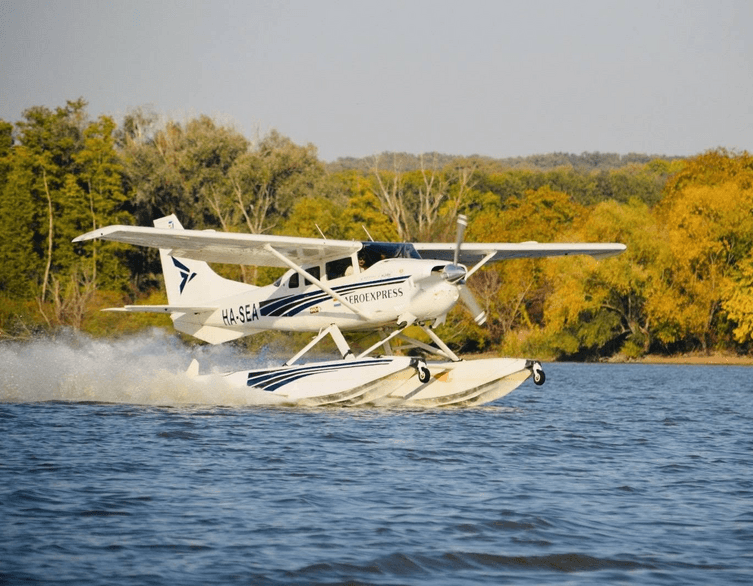
A walk beside the Danube usually comes with a familiar cast of characters: sightseeing boats, kayakers, cyclists and the occasional determined runner. Recently, however, people strolling along Római-part (Roman Riverside) have had something rather different to watch—a small aircraft landing on the river.
The visitor is HA-SEA, an amphibious Cessna operated by Aeroexpress Seaplanes. Its recent appearances have brought a little aviation theatre to northern Budapest, alongside questions about what seaplanes might mean for one of the city’s favourite recreational stretches of river.
Meet the Aircraft That Can Land on Water
The aircraft is a Cessna U206F Stationair equipped for amphibious operations, meaning it can land on water as well as on a conventional runway. Carrying the Hungarian registration HA-SEA, it is an unusual sight even for people familiar with the Danube’s busy boat traffic.
Instead of approaching an airport, the aircraft can descend towards a suitable stretch of water, touch down on its floats and then taxi towards a mooring. Its ability to move between land and water is what makes this small plane such an intriguing visitor.
Its operator describes it as the only operating example of its type in Central Europe—a distinction that makes an encounter with HA-SEA a memorable addition to a Budapest riverside walk.
Why Has a Seaplane Been Landing at Római-part?
The recent flights are connected with efforts to revive water-based aviation in Hungary. Testing, pilot instruction and examination flights form part of that work, alongside an ambition to make seaplane flying accessible through sightseeing experiences.
During its recent visits to northern Budapest, the aircraft reportedly moored at Yacht Club Budapest, near the Pünkösdfürdő embankment, before continuing its activities on and around the Danube.
For visitors, the important distinction is that these appearances do not establish a regular passenger service from Római-part. The reported activity involves training and testing, rather than a scheduled waterfront departure point where tourists can simply turn up for a flight.
In other words, spotting the aircraft is an unexpected bonus—not something to build a sightseeing itinerary around.
A Police Inspection with a Nautical Twist
One of the more memorable episodes in the aircraft’s recent travels took place at Lake Balaton. According to the operator’s account, aviation police inspected the seaplane after arriving aboard a water-police motorboat, having previously observed its activity by helicopter.
In aviation, this kind of on-site inspection is known as a “ramp check.” Here, the setting was rather different from an airport apron: the aircraft was checked on the water near Alsóörs.
The operator reported that all documentation was in order. It also highlighted an unusual aspect of the operation: the pilots involved held both aviation and boat-operating qualifications. With an amphibious aircraft, the transition between flying and moving on the water brings two very different worlds together.
Training Pilots, Not Just Creating a Spectacle
Behind the eye-catching river landings is a practical training programme. Hungarian and international pilots use different locations around the country to develop experience in water take-offs, landings and aircraft handling.
Best deals of Budapest











The wider ambition is for Hungary to become an important European location for seaplane-pilot training. The team behind the programme also points to the need for suitably qualified crews in water-based firefighting aviation, where operating confidently from lakes and other water surfaces requires specialist skills.
HA-SEA itself should not be confused with a large firefighting aircraft. Its role here is training: giving pilots experience of operating an aircraft from water, rather than scooping up water to fight fires.
Why Some Riverside Users Are Concerned
Not everyone sees the aircraft’s arrival as a welcome attraction. Local reactions have included concerns about engine noise, disturbance to wildlife and the safety of people kayaking or canoeing nearby.
For many people, Római-part is somewhere to escape the city’s noise, enjoy the river and spend time outdoors. The prospect of more frequent aircraft movements has therefore prompted questions about consultation, permissions and how aviation activity might coexist with recreation and nature.
These concerns should be kept separate from confirmed findings of wrongdoing. Public criticism does not establish that the recent flights were unsafe or unlawful, just as training flights do not prove that a regular Danube passenger network has been introduced.
The discussion does, however, highlight an important point: the Danube is not an empty runway. It is a shared space used for transport, recreation and wildlife, and any expansion of flying activity would need to take those overlapping interests seriously.
Budapest Has Seen Seaplanes Before
As surprising as the sight may feel, seaplanes are not new to Budapest. Between 1923 and 1926, a seaplane station operated near the Buda end of Liberty Bridge, with flights linking the capital to Lake Balaton and Vienna. A memorial plaque near the bridge recalls this short-lived chapter in the city’s transport history.
It is a fascinating detail to keep in mind while exploring the riverfront. The Danube was once more than a route for boats: it also served as a departure point for air travel.
Today’s training flights do not mean those historic routes have returned. But they do reconnect Budapest with a form of aviation that once played a small, distinctive part in the city’s life.
Kolodko’s Tiny Tribute Took the Story to Vienna
Budapest’s seaplane history has also inspired miniature sculptor Mihály Kolodko. His work The Last Flight commemorates the former station and the aircraft that once connected cities along the Danube. It first appeared near the Buda end of Liberty Bridge before ultimately finding a home in Vienna, near Reichsbrücke.
That journey gives the sculpture an especially fitting twist: a tiny tribute to the Budapest–Vienna connection ended up travelling between the same two cities.
For travellers familiar with Kolodko’s small-scale public artworks, it is also worth noting that, although the sculpture tells a Budapest story, its final location is in Vienna—not a riverside stop to add to a Budapest sculpture hunt.
An Unexpected Sight on a Budapest Riverside Walk
For now, the seaplane’s appearances offer a glimpse of an aviation revival still taking shape. They bring together specialist training, local history and a contemporary debate about how the Danube should be shared.
If you happen to spot HA-SEA during a walk along Római-part, you’ll know there is more behind the scene than a plane choosing an unusual place to land. It is part of an effort to bring water-based flying back into Hungary—and a reminder that even a familiar Budapest river view can still hold a surprise.
Related news
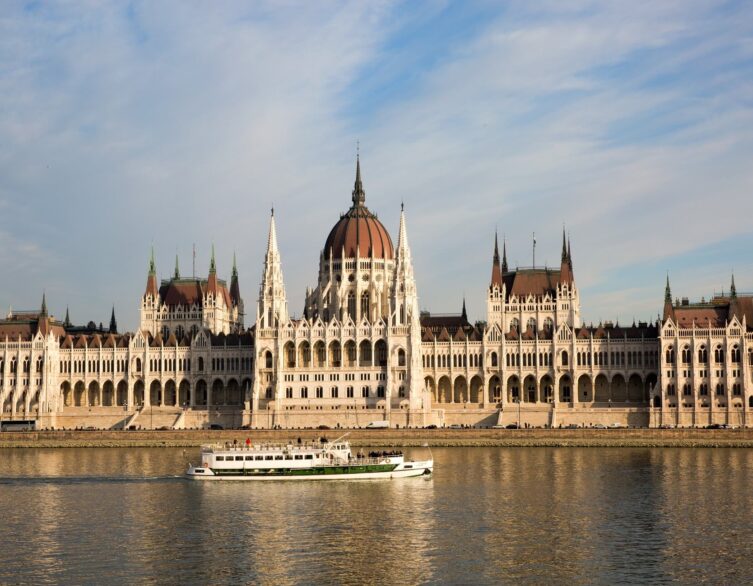
Explore Budapest from the Danube This Fall
Few experiences reveal Budapest quite like a cruise on the Danube. From the water, the city’s grand landmarks come into focus one after another:...
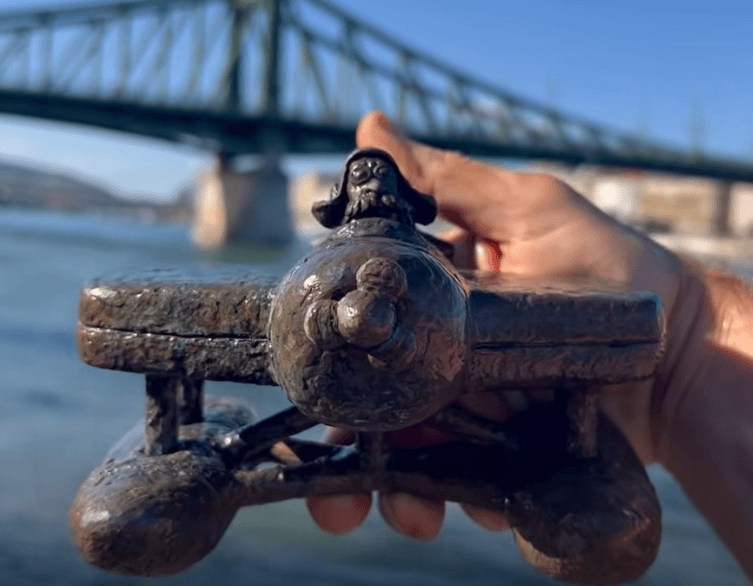
Update! – A New Kolodko Mini-Statue on Liberty Bridge Honors Budapest’s Forgotten Hydroplane Line
Update! Contrary to what Kolodko had his followers to believe, the artist did not install the mini-statue in Budapest. Instead he picked one of the...