Visiting Budapest With a Dog? New Castle District Rules and Dog Toilets Explained
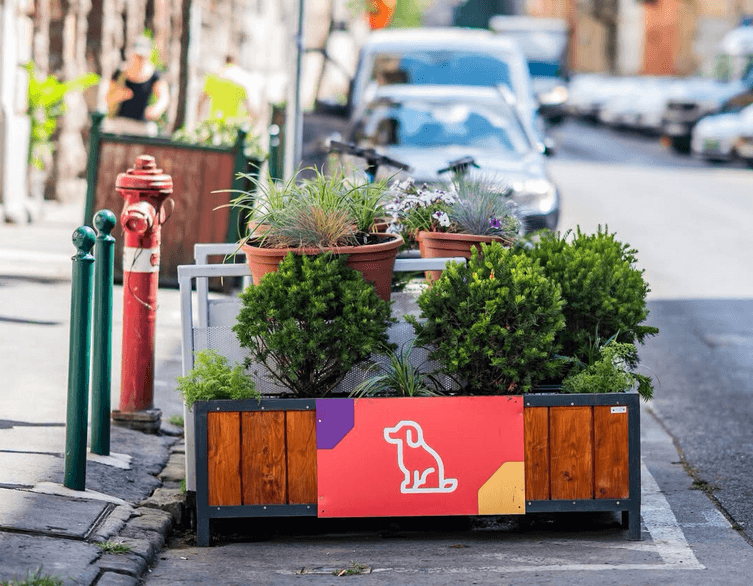
Visiting Budapest with your dog? Alongside planning your walks, there is a new local rule to keep in mind. From 21 November 2026, anyone walking a dog in public spaces in District I, which includes the Castle District, must carry something suitable for picking up dog waste and, when temperatures are above freezing, enough water to rinse away dog urine.
The change is part of a wider effort to keep Budapest’s streets cleaner. With more than 300,000 dogs estimated to live in the city, maintaining welcoming pavements, healthy green spaces and clean building entrances is no small task. While the Castle District is introducing new cleanup requirements, nearby districts are trying practical solutions of their own—including designated dog toilets.
What Are the New Dog-Walking Rules in the Castle District?
If you are taking your dog for a walk in District I, waste bags alone will no longer be enough. Under the new rules, dog walkers must also carry sufficient water to rinse away urine when the temperature is above freezing. Public-space enforcement officers can ask to see both the waste-collection equipment and the water. The requirement applies throughout the district’s public spaces, not just around Buda Castle.
The regulation takes effect on 21 November 2026, following the district council’s decision on 22 October. There will be a grace period until the end of December, during which officers will explain the requirements and issue warnings. From January 2027, violations may lead to penalties.
For visitors, the simplest approach is to pack waste bags and a bottle of cleanup water before leaving your accommodation. The municipality provides waste bags at several locations and has public water taps around the district, but dog walkers are still responsible for carrying the necessary supplies.
Best deals of Budapest












Why Cleaning Up Matters in a Historic Neighbourhood
Nobody wants to spend a sightseeing walk dodging dog mess or passing doorways that smell of urine. In the Castle District, however, the concern goes beyond everyday cleanliness.
Repeated exposure to dog urine can stain historic stonework and contribute to damage. Porous building materials are particularly vulnerable to moisture and dissolved salts: as salts repeatedly crystallise inside the material, they can contribute to crumbling and surface flaking. The extent of the damage depends on the stone, the salts involved and the surrounding conditions.
Keeping dogs away from historic doorways, carved stone details and building bases therefore matters as much as cleaning up afterwards. Preventing soiling reduces the burden on delicate surfaces and the need for repeated cleaning.
Greenery can suffer, too. Repeated exposure to the salts and nitrogen compounds in dog urine can damage plants, adding another challenge for densely built-up neighbourhoods where trees and planted areas already have limited space.
Budapest’s Dog Toilets: A Different Approach to Cleaner Streets
Across the city, District VI—also known as Terézváros—is creating designated places where dogs can relieve themselves.
The district’s efforts go back to 2005, when it placed dog-waste bags at 140 parking meters. In 2023, it introduced its first dog toilet at the corner of Andrássy Avenue and Eötvös Street. The designated area receives daily cleaning, and a waste bin helps owners dispose of collected dog mess.
A second facility opened at the corner of Szondi Street and Vörösmarty Street in summer 2025. By August 2026, three more had been completed, at the junctions of Rippl-Rónai Street and Szondi Street, Bajnok Street and Kmety György Street, and Podmaniczky Street and Szinyei Merse Street.
These newer facilities occupy spaces away from vehicle traffic, without taking up parking spaces. Urine and cleaning water drain directly into the sewer, and municipal maintenance staff wash the facilities as often as necessary, sometimes several times a day.
What Is the Difference Between a Dog Toilet and a Dog Urinal?
Despite the name, a dog toilet is not a miniature version of a human bathroom. It is a designated area where owners can give their dogs the opportunity to relieve themselves, with infrastructure that makes the space easier to clean.
A dog urinal has a more specific purpose: it provides a surface for urine marking. The idea is to redirect dogs’ attention away from nearby walls, posts and trees towards a dedicated spot. The Green Dog Association, known locally as ZöldEb, is involved in installing these facilities in Budapest.
Neither solution removes the owner’s responsibility to clean up. Solid waste must still be collected, including when a dog uses a designated toilet.
Will Your Dog Know How to Use One?
Not necessarily. A designated facility may make perfect sense to an owner, but dogs need time to investigate unfamiliar places.
Scent can help attract their attention, particularly when it comes to urine marking. Other dogs’ smells may encourage a dog to sniff and leave its own mark. Using a designated area for solid waste can be less straightforward, as individual habits and familiar routines also play a role.
Rather than expecting instant results, give your dog time to explore without pressure. These facilities provide an opportunity, not a guarantee—and they are no substitute for having cleanup supplies ready.
A Small Addition to Your Budapest Sightseeing Kit
For tourists travelling with dogs, the practical message is simple: keep waste bags with you, carry cleanup water for walks in District I when temperatures are above freezing, and make use of designated dog facilities where available. The Castle District’s new requirement begins on 21 November 2026, with warnings during the remainder of the year before penalties become possible in January.
A little preparation helps keep Budapest’s pavements, historic buildings and green spaces more pleasant for everyone sharing them.
Related news

Keeping Budapest Clean: A Visitor’s Guide to Caring for the City
A takeaway coffee on your morning walk, a picnic in the park or a late-night snack after sightseeing—small moments like these are part of enjoying...
Dog Walking in Budapest’s Nature Reserves: How to Explore Responsibly
A walk in nature can be one of the loveliest ways to slow down during a Budapest city break, especially if you’re travelling with your dog. There’s...
Black Dog Day in Budapest: Look Beyond the Fur
A black dog can be a challenge to photograph. In one picture, you see a pair of bright eyes floating in a dark cloud. In the next, the dog has vanished...
Traveling to Budapest with a Dog? Here’s Some Very Good News
Budapest has quietly become one of Europe’s most dog-friendly capitals, and one district is taking that reputation to a whole new level. If...

Free Dog and Bicycle Transport on MÁV Group Services within Budapest
Starting January 1, 2025, a significant change will be implemented in Budapest’s public transportation: the transport of bicycles and dogs...