Budapest’s Museum of Applied Arts: Restoration Plans Move Forward for an Art Nouveau Landmark
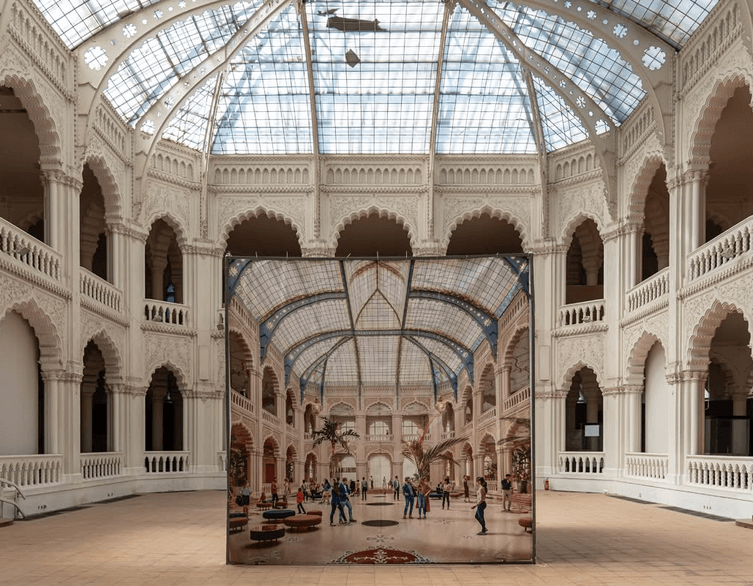
Budapest’s Museum of Applied Arts is finally moving closer to a long-awaited restoration. Closed to regular visitors since 2017, the museum’s extraordinary main building is the subject of a new government decision that sets out the next steps towards its recovery. For anyone drawn to Budapest’s architecture, it is encouraging news—but not yet a reopening announcement.
The decision, published on October 27, 2026, provides a framework for updating plans, reviewing permits and preparing the building for a comprehensive restoration. The ambition goes beyond repairing its decorative surfaces: the project aims to safeguard one of Budapest’s most important architectural landmarks and prepare it for a renewed life as a museum.
An Art Nouveau Masterpiece Turning 130
Designed by Ödön Lechner and Gyula Pártos, the Museum of Applied Arts building was completed in 1896, the year Hungary celebrated the millennium of its founding. In 2026, this remarkable Budapest landmark marks its 130th anniversary.
Its architecture brings together the practical needs of a major museum with a richly decorative visual language. Zsolnay ceramic cladding, Hungarian folk-art patterns and Eastern-inspired motifs helped create a distinctive expression of Hungarian Art Nouveau.
Not everyone appreciated it at first. Some contemporaries found the decoration excessive and mocked its unconventional appearance, while others welcomed its originality. Today, the building is widely recognised as one of the outstanding architectural achievements of its era.
For visitors interested in what makes Budapest’s architecture different from that of other European capitals, this is precisely the kind of building that tells the story. Rather than simply borrowing an established style, Lechner and Pártos helped shape a recognisably Hungarian architectural identity.
Why Has the Museum Been Closed for So Long?
The museum closed in 2017 ahead of a planned reconstruction, but the long-awaited transformation did not follow as intended. Meanwhile, the condition of the building continued to deteriorate.
Its problems are more than cosmetic. The museum suffered damage during the Second World War and the 1956 Hungarian Revolution, and earlier repairs did not fully resolve the consequences. Its electrical and mechanical systems have also become outdated, while structural damage and significant cracks make careful intervention essential.
The ground beneath the building has added to those challenges. Built over the sandy bed of an ancient course of the Danube, the museum has experienced settlement associated with groundwater fluctuations and later metro construction. Its riveted steel structure has provided some flexibility, but the accumulated problems require substantial strengthening and specialist conservation work.
Visitors briefly had an opportunity to see inside during organised building tours for the Night of Museums in June 2026. Those exceptional visits highlighted both the building’s beauty and the scale of the work needed; they did not mark a return to regular opening.
What Will the Restoration Include?
The planned project covers the historic main building on Üllői Road, the reconstruction of the Kinizsi Street wing and a proposed new wing accessed from Hőgyes Endre Street. Alongside architectural restoration, the museum’s plans for its future exhibitions and operation will also be reviewed.
Best deals of Budapest










The starting point is the earlier design work by Vikár and Lukács Architectural Studio. Those plans and their associated permissions now need updating before the project can advance.
The first phase includes what the Hungarian decision describes as heritage-saving dismantling. This does not mean demolishing the museum. It refers to carefully controlled work intended to protect valuable historic elements while preparing the building for restoration. The deadline for completing this phase is March 31, 2028.
The architectural concept for the new wing will undergo further review, while a later government proposal will address the second phase, its funding and the schedule for completing the reconstruction.
What Does the Announced Funding Cover?
The latest figures concern preparation and initial works, not the total cost of restoring the museum.
A combined HUF 265 million is being provided for preparatory tasks across 2026 and 2027. A further HUF 563 million is allocated in 2027 for heritage-saving dismantling. The decision also establishes a HUF 678 million ceiling for multi-year commitments undertaken against the ministry’s 2027 budget.
These are different budget provisions rather than separate amounts to be added together indiscriminately. Most importantly, they should not be mistaken for a fully funded construction budget covering the entire restoration.
When Will the Museum of Applied Arts Reopen?
There is no confirmed reopening date.
Acting director-general Zsombor Jékely has estimated that the full restoration would take around four to five years. Much of that time would be needed for structural reinforcement, specialist conservation and the painstaking restoration or replacement of missing historic details.
That estimate is not a countdown to a guaranteed opening. Preparatory work, updated permissions, procurement and decisions about the later construction phase still affect the timetable. The March 2028 deadline applies to the initial heritage-saving work, not to welcoming visitors back into a completed museum.
What This Means for Your Budapest Visit
If you are planning a trip to Budapest, do not yet include the Museum of Applied Arts’ main building as a regularly accessible indoor attraction. Any future special tours or temporary access should be treated as separately announced opportunities rather than evidence that the museum has reopened.
For architecture lovers, however, the restoration plans are worth following. This is more than the renovation of an exhibition venue: it is an effort to rescue a building that helped define Hungarian Art Nouveau. Its eventual return would restore an important part of Budapest’s cultural life—and give visitors the chance to experience a landmark whose architecture is as compelling as the objects it was designed to display.
Related news
