Robert Capa’s Last Homecoming: A Hidden Chapter of Budapest History
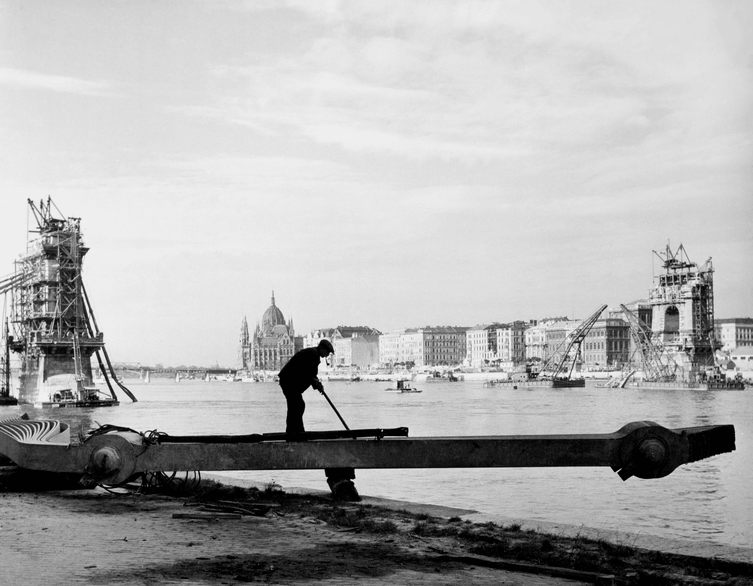
There’s a particular kind of melancholy in coming home to a place that no longer exists in the way you remember it. That’s the quiet heartbreak behind the photographs now on display at the Robert Capa Contemporary Photography Center — and it’s what makes this exhibition unlike anything else currently showing in Budapest.
The Man Who Left and Almost Couldn’t Come Back
Robert Capa was born Friedmann Endre in Budapest in 1913. He left in 1931 at the age of 18, reinvented himself in Paris, and went on to become one of the most celebrated war photographers in history. By 1948, he had documented the Spanish Civil War, the D-Day landings, and the liberation of Paris. He co-founded the Magnum photo agency. He was famous, decorated, and thoroughly American.
But in the autumn of 1948, he came back to Budapest — for what turned out to be the last time.
Best deals of Budapest








A Short Season
The window was narrow. From early September to mid-October 1948, Hungary was briefly accessible enough for a visit, and Capa used every moment of it. He photographed workers rebuilding the Chain Bridge, children in the streets, pedestrians, musicians, students, and the still-visible scars of wartime destruction across the city.
He described Budapest at the time with characteristic dark wit: “The city was like a beautiful woman who had had her teeth knocked out.”
What his photographs capture is a society balanced on a knife’s edge. Hungary was celebrating the centenary of its 1848 revolution, rebuilding its bridges, and cautiously hoping for a better future — while behind the scenes, a Stalinist dictatorship was quietly taking shape. Capa’s images hold both realities at once, without forcing either one.
The Story Behind the Story
The photographs were originally published in the November 1949 issue of the American Holiday magazine under the title “Budapest Conversation.” Holiday was a glossy, upscale travel magazine — the kind that ran breezy features about European getaways for wealthy American readers. Capa wrote regularly for it. But the Budapest piece was different. It wasn’t a travel feature. It was a reckoning.
As he wrote in 1952: “I returned to Budapest because I happened to be born there, and because the place only allowed a return for a short season.”
After that short season ended, he never went back. The Iron Curtain came down, the political climate hardened, and the Budapest of his childhood became permanently out of reach. He died in Vietnam in 1954, six years after taking these photographs.
Photographs That Were Never Meant to Be Hidden
That’s what gives this exhibition its particular weight. Most of these images have never been publicly shown in Hungary before. They existed — in the archives of the International Center of Photography in New York, founded by Capa’s brother Cornell — but they were largely unknown to Hungarian audiences. The exhibition, curated by Dr. Éva Fisli of the Hungarian National Museum, finally brings them home.
Around fifty photographs, some in black and white, some in color, reconstruct those six weeks in 1948 through Capa’s eyes. They are at once a historical document of postwar Budapest and an intensely personal portrait of a man looking at the city that made him, knowing somewhere that he was seeing it for the last time.
Related news
Related events