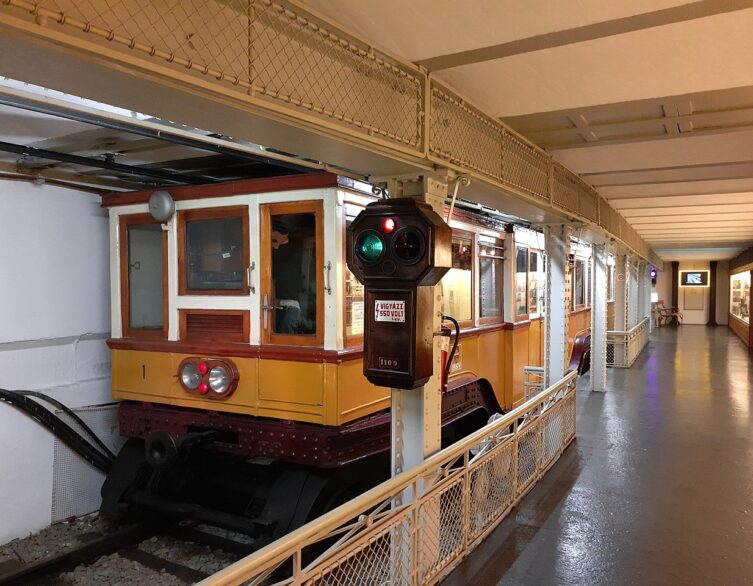
Walking in Budapest: 60 Years of the Blaha Lujza Square Underpass

Crossing a busy road might not sound like a memorable part of a Budapest holiday. But at Blaha Lujza Square, even the choice between taking the stairs and waiting at a pedestrian crossing tells a story about the city.
On November 5, 2026, the square’s pedestrian underpass turned 60. Opened in 1966 as Budapest’s second modern pedestrian underpass, it was celebrated as a glimpse of the future: a place where people could walk beneath the traffic rather than compete with it. Six decades later, Budapest is moving in a different direction, creating more opportunities to cross its busiest junctions above ground. For visitors exploring on foot, that means something refreshingly practical: fewer stairs and more straightforward journeys.
When Going Underground Meant Progress
Budapest’s first modern pedestrian underpass opened at Astoria in 1963, followed by Blaha Lujza Square in November 1966. These underground passages reflected an ambitious vision of a modern capital, with pedestrians and road traffic moving on separate levels. Contemporary coverage presented their interiors, shops and vending machines as signs of urban sophistication. An underpass was not simply a way across the road; it was a statement about where Budapest was heading.
Yet the promise of convenience depended on who was using it. For someone walking without difficulty, descending a staircase might have seemed a reasonable trade-off. For an older person, a parent with a pushchair or anyone carrying heavy luggage, the same route could become an exhausting obstacle. Wheelchair users faced an even more fundamental problem wherever there was no step-free alternative.
That tension helps explain the change now taking place. Separating pedestrians from cars may keep their paths apart, but it does not necessarily make walking easy.
Best deals of Budapest












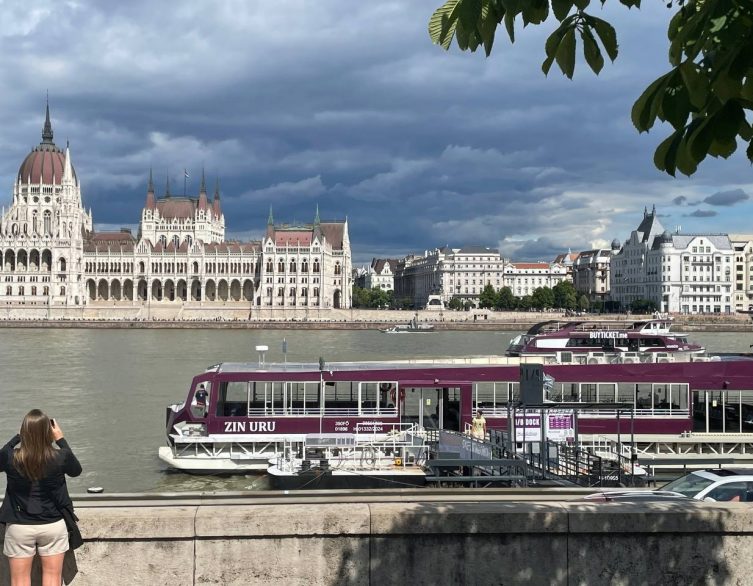
Blaha Lujza Square: You Can Now Stay Above Ground
If you are walking through Blaha Lujza Square today, you no longer need to head underground simply to reach the other side of the junction.
During the square’s redevelopment, Budapest added three pedestrian crossings. The last opened in September 2022, completing the existing crossing arrangement so that all four arms of the junction between Rákóczi Road and the Grand Boulevard could be crossed at street level. The improvements included pedestrian signals, refuge islands and accessibility features.
For tourists, the benefit is easy to appreciate. A suitcase does not need carrying down and back up a flight of stairs, and a short walk need not turn into an underground detour. The underpass remains available, but it is no longer the only way across.
There is, however, an important distinction: accessibility at street level does not automatically mean step-free access to the metro. Blaha Lujza Square and Astoria stations on metro line M2 are not wheelchair-accessible, even though pedestrians now have surface crossing options at these junctions.
Why Budapest’s Underpasses Are Not Disappearing
With more crossings appearing above ground, it is tempting to imagine that the underpasses will eventually become redundant. In many places, their role is more complicated.
At Blaha Lujza Square and Astoria, the M2 metro escalators lead into the underpasses rather than directly onto the street. These passages therefore remain part of the route to the trains, not merely an alternative way to cross the road. Closing them would involve much more than blocking a staircase.
Elsewhere, Budapest has already removed crossings that no longer justified their underground setting. At Ferenciek Square, a separate pedestrian underpass beneath the road closed during the 2013 redevelopment, while the passage serving the metro remained. At Jászai Mari Square, a former passage beneath the tram tracks was closed and its crossing function moved to street level.
The distinction matters: making Budapest more walkable does not mean removing every underground space. It means giving pedestrians a convenient surface route wherever possible, while retaining passages that still serve a useful purpose.
Astoria’s Underpass Has a Creative Side
Not every change involves construction. Some efforts focus on making existing underpasses more interesting places to pass through.
At Astoria, works by street artist VOID have appeared on metal doors inside the passage. Budapest’s participatory-budgeting initiatives have also included ideas for giving empty underground premises and display windows new community uses. These projects suggest a different future for spaces that might otherwise feel purely functional or neglected.
For a visitor, the appeal lies in noticing a less obvious layer of the city. Between the grand façades and famous sights, Budapest’s everyday transport spaces reveal changing tastes, practical compromises and occasional flashes of creativity.
What About Örs Vezér Square?
The debate becomes more complex at Örs Vezér Square, where the underpass connects different parts of a busy interchange. Unlike at Blaha Lujza Square, the M2 terminus here is at ground level. However, passengers transferring between the metro, suburban railway and buses still rely on routes across the junction. Removing the underpass without a carefully designed replacement could make those transfers slower or less convenient.
Although its future has prompted public discussion, the city has said that closing it is not a short-term plan. Surface pedestrian improvements have been considered, but eliminating the passage would require substantial investment and a broader rethink of the interchange.
A More Walkable Budapest: What Comes Next?
Budapest’s pedestrian strategy, adopted in September 2026, sets out a longer-term shift towards safer, more comfortable and more accessible walking routes. Its targets include 200 additional pedestrian crossings by 2030 and accessible routes at every city junction with a road underpass by 2035, preferably through surface crossings. These are development goals, rather than improvements visitors should expect to find everywhere already.
For anyone exploring Budapest on foot, the direction is encouraging. The city is increasingly treating walking as a journey worth making comfortable in its own right, rather than something to fit around moving traffic.
Blaha Lujza Square captures that change particularly well. Its 60-year-old underpass still carries people towards the metro, while the crossings above offer a simpler option for those continuing through the city on foot. What once represented the future now shares its role with a modest but meaningful alternative: crossing the street without going underground.
Related news
Give the Gift of Budapest: Unforgettable Christmas Experiences Instead of Things
Every December, the same question comes up: what do you get someone who already has everything? This year, skip the wrapping paper and give something...
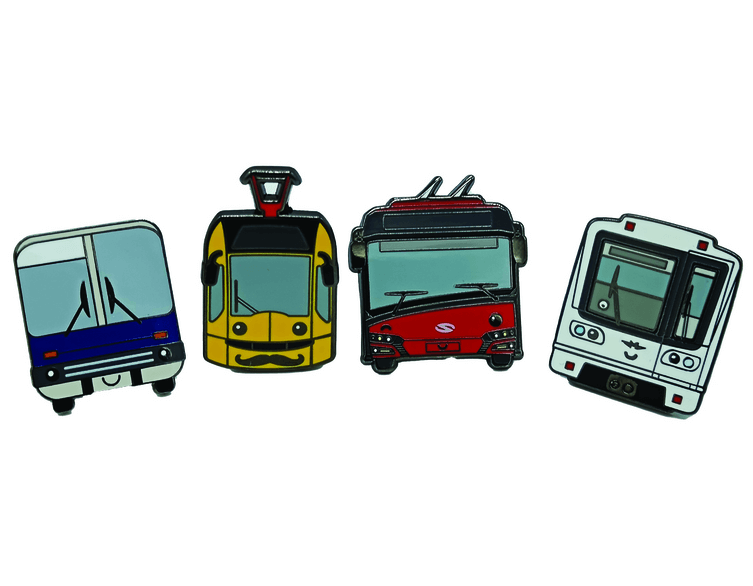
Take a Piece of Budapest’s Transport History Home With You
If you’ve spent any time riding Budapest’s trams, buses, or the quirky cogwheel railway up to the Buda Hills, you’ve probably noticed...
Budapest’s Transport Museum Is Getting a Spectacular New Home in Kőbánya
If you’ve ever wandered through Budapest wondering what happened to the city’s long-closed Transport Museum, here’s some genuinely...

New Street Art Brings Color to Budapest’s Historic Astoria Underpass
Budapest’s urban landscape just got a vibrant upgrade in one of its most unexpected places. The Astoria underpass, a bustling transit hub beneath...
Related attractions