Safer Streets on Budapest’s Grand Boulevard: What’s Changed on József körút
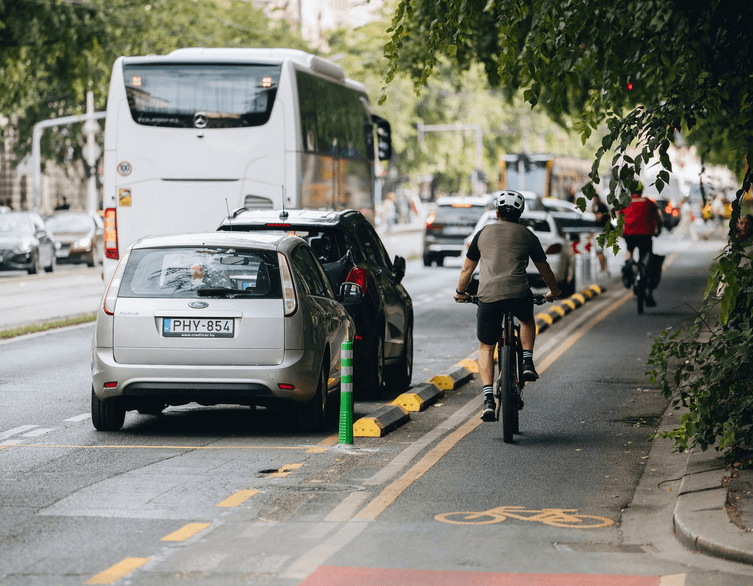
Budapest’s iconic Grand Boulevard, known locally as the Nagykörút, just got a practical upgrade on one of its busiest stretches, and it’s a nice example of how the city is quietly testing ideas before committing to a massive, years-long makeover. If you’re walking, cycling, or getting around by car near the Corvin Quarter this autumn, here’s what’s different and why it matters even if you’re just passing through.
A Safer Stretch Between Scheiber Sándor Street and the Corvin Quarter
The section of József körút running between Scheiber Sándor utca and the Corvin Quarter has been reorganized with pedestrians, cyclists, delivery drivers, and drivers all in mind. The most visible change is that the bicycle lane, which used to run awkwardly along the pavement in several spots, has been moved down onto the roadway itself and physically protected by a row of parked cars. That single shift removes a longstanding source of friction between people walking and people cycling, particularly around Rákóczi tér, Kiscsibész tér, and Pál utca, where foot traffic used to collide constantly with cyclists merging on and off the sidewalk.
For pedestrians, the payoff is straightforward: wider, clearer pavements with far less crossover traffic to dodge. For cyclists, the new setup offers a proper buffer zone between the bike lane and parked cars, wide enough to avoid the classic hazard of a car door swinging open into a rider’s path, a design lesson learned from an older, less successful layout that was once tried on Andrássy Avenue. Near intersections, parking spaces were removed entirely to improve visibility, so drivers, cyclists, and pedestrians can all see each other coming well before they reach a crossing.
New Loading Bays and Parking for Local Businesses
Anyone who has dealt with delivery vans double-parked on a narrow street knows the daily hassle it creates, and the Grand Boulevard was no exception. As part of the redesign, dedicated loading bays now give delivery vehicles a legal, designated spot to stop, rather than blocking a lane or mounting the curb. New parking spaces round out the package, some of them relocated from nearby Baross utca specifically to strengthen this stretch of the boulevard, along with several new Mobi-points, docking stations where shared bikes and scooters can be parked properly instead of littering the pavement in a haphazard pile.
Together, these small interventions add up to a noticeably calmer, more orderly streetscape for a part of the city that sees a constant mix of shoppers, commuters, delivery traffic, and tourists heading toward the Corvin Quarter’s shops, cafés, and cultural venues.
Best deals of Budapest









Part of a Bigger Vision Zero Push
This isn’t just a local tidy-up. The redesign is a direct extension of Budapest’s Vision Zero commitment, the internationally recognized road-safety philosophy built on the idea that no one should die or suffer serious injury simply from getting around the city. Vision Zero now shapes urban planning decisions in cities worldwide, and Budapest’s application of it here, separating vulnerable road users from vehicle traffic and removing ambiguous shared spaces, is a textbook example of how that philosophy gets implemented on the ground.
The funding story is worth knowing too. The roughly 30 million forint investment came entirely from European Union money, channeled through the Horizon Europe-backed REALLOCATE project, a research initiative that pairs cities across Europe, in this case twinning Budapest with Zagreb, to trial low-cost, fast-to-build street redesigns before committing to expensive permanent works. The project was delivered through a collaboration between the Municipality of Budapest, BKK, and Budapest Közút, the city’s road authority.
A Test Run Ahead of the Grand Boulevard’s Full Makeover
Here’s the part that makes this genuinely interesting beyond the immediate neighborhood: this stretch of József körút is effectively a live rehearsal for the Nagykörút’s complete transformation, a much larger project the city plans to finish by 2029. That full-scale renovation will eventually rebuild the entire boulevard from façade to façade, with new tree-lined sections, protected cycling infrastructure, and a fully redesigned roadway and pavement system stretching from Nyugati tér down to Boráros tér.
Rather than waiting years to discover what works and what doesn’t once the expensive construction begins, the city is using this smaller, fast, low-cost intervention to learn real lessons now, catching design flaws while they’re still cheap and easy to fix. The road surface itself hasn’t been repaved as part of this phase, and the final, greener pavement design envisioned for the boulevard’s long-term future is still to come. But the traffic pattern changes here will directly inform how the rest of the Nagykörút gets rebuilt in the years ahead.
Why This Matters If You’re Visiting Budapest
For a first-time visitor, this might sound like a small local traffic story, but it’s actually a good sign of how Budapest is approaching its own growth: testing ideas cheaply, gathering real-world feedback, and only then committing to the big, expensive, permanent version. If your visit brings you through the Corvin Quarter, whether you’re exploring its restaurants, cinemas, or shopping streets, you’ll likely notice the calmer sidewalks and better-separated bike lanes without even realizing there’s a much bigger boulevard renovation quietly being road-tested behind the scenes. It’s one more small piece of evidence that Budapest takes its public spaces, and the safety of everyone using them, seriously.
Related news
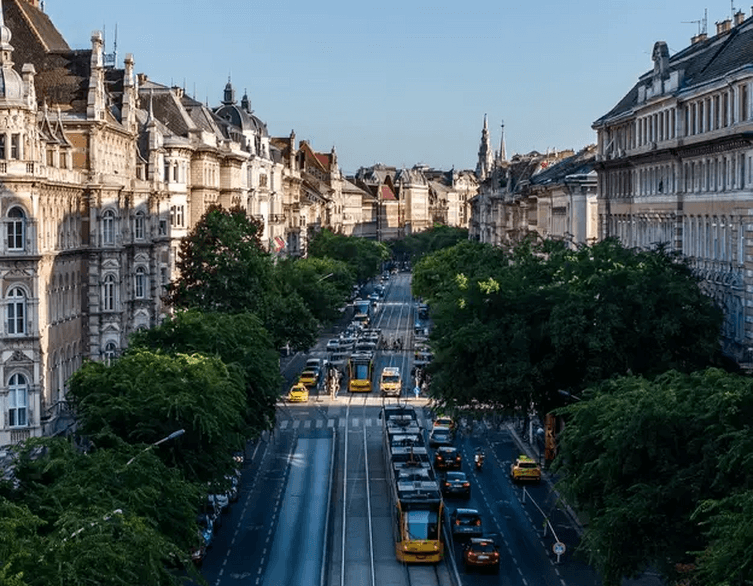
A Greener Grand Boulevard: Budapest’s Major Tree-Lined Renewal Takes Shape
Budapest’s Grand Boulevard is set to become greener, healthier and more pleasant to explore. New plans aim to renew the historic tree-lined avenue...

English-Language First Aid Course in Budapest: Learn Practical Skills with the Red Cross
What would you do if someone collapsed or was injured while you were out exploring Budapest? Knowing how to respond can make a daunting moment feel...
Rákóczi Tér Named One of the World’s Coolest Neighbourhoods for 2026
Budapest just earned a fresh badge of honor on the global travel map. Time Out’s closely watched annual ranking of the world’s coolest...
MOL Bubi 3.0 Is Finally Here!
If you’re planning a trip to Budapest, there’s a good chance you’ve already spotted those unmistakable green bicycles gliding past...
How Budapest Residents Are Shaping the City’s Transport Future
Budapest is quietly rewriting how it plans public transport and infrastructure, and it’s doing so by putting residents’ voices at the...
Take a Piece of Budapest’s Transport History Home With You
If you’ve spent any time riding Budapest’s trams, buses, or the quirky cogwheel railway up to the Buda Hills, you’ve probably noticed...
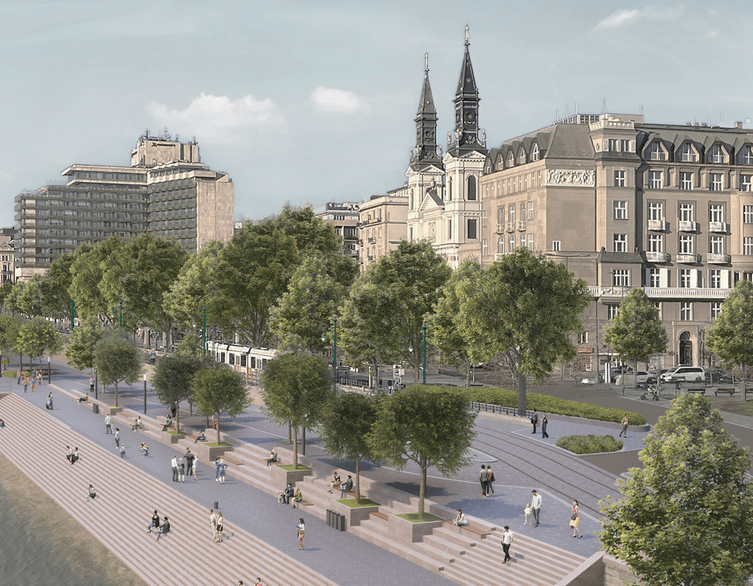
Budapest Is Transforming Its Danube Embankment — and the Results Will Be Stunning
A World Heritage Waterfront Gets a Long-Awaited Makeover Budapest’s lower Pest embankment has always been one of the city’s most breathtaking...
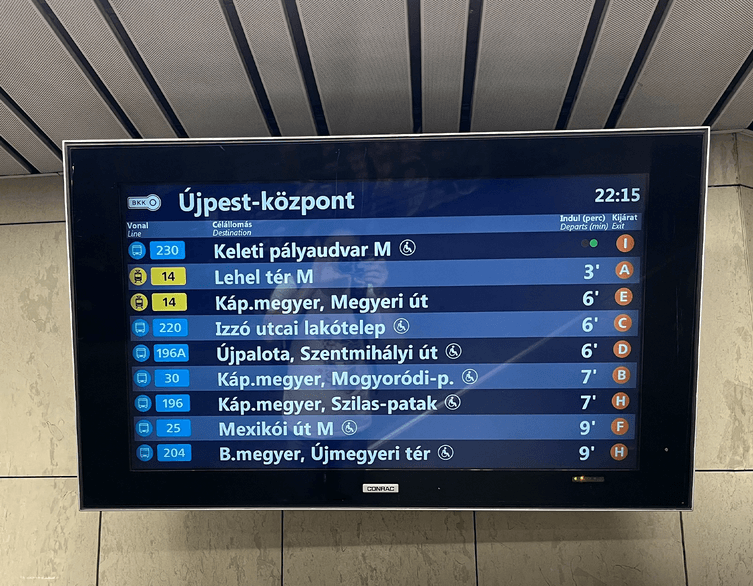
Clearer Stops, Real-Time Screens, and Accessible Rides: Budapest Upgrades Public Transport
Getting around Budapest by bus, tram, or metro is about to become a lot less confusing for visitors, thanks to a wave of new passenger information...
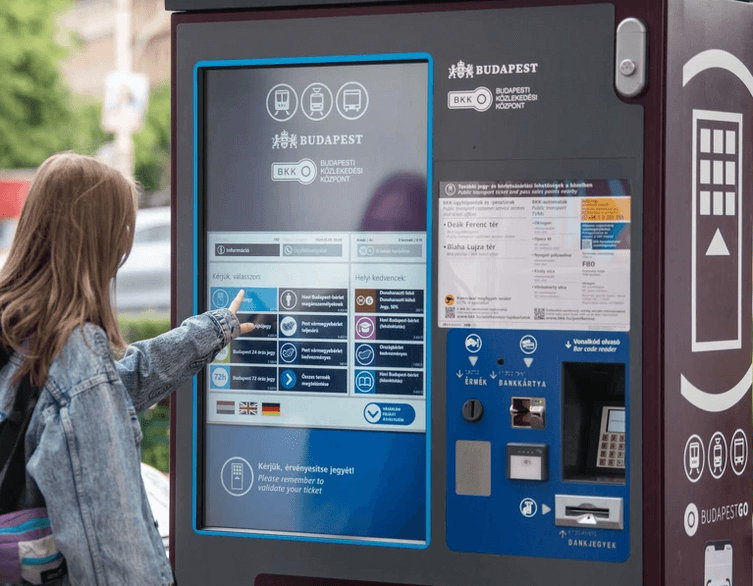
Update in the Public Transport Passes for Foreign Students
Budapest is one of Europe’s most charming capitals, where historic architecture meets vibrant urban life. Whether you are strolling along the Danube...
Budapest’s Night Transport Gets a Major Upgrade This Summer — Everything Tourists Need to Know
If you’re planning a trip to Budapest and love staying out late, here’s some genuinely exciting news: the city’s night public transport...
Nagykörút Reborn: Budapest’s Grand Boulevard Revival
Budapest’s Grand Boulevard is gearing up for a stunning revival that blends its 19th-century splendor with cutting-edge green urban design. Stretching...