The American Dream in Budapest: Discover Hungary’s Surprising Connections to the United States
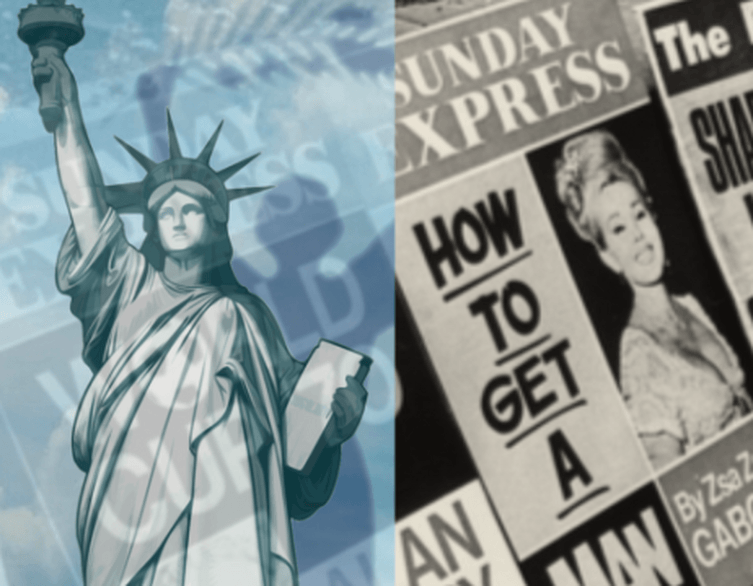
What do a Ford Model T, Zsa Zsa Gabor’s cocktail dress and the Terminator have in common? They all help tell a story that stretches from Hungary to America—and you can explore it without leaving Budapest.
At the Hungarian National Museum, The American Dream – Hungarians in the United States, 1776–2026 brings together remarkable objects and deeply personal stories to reveal how Hungarians helped shape life across the Atlantic. Open until November 1, 2026, this temporary exhibition marks the 250th anniversary of the American Declaration of Independence with a journey through migration, ambition, creativity and the search for somewhere to call home. For visitors looking for an engaging Budapest exhibition this autumn, it offers an unexpectedly familiar way into Hungarian history.
More Than a Story of Fame and Fortune
The American dream sounds simple enough: leave the old world behind, work hard and build a better future. The reality, of course, has rarely been so straightforward.
This exhibition explores both sides of that promise. Some Hungarians crossed the ocean in pursuit of opportunity; others left because political upheaval or personal circumstances gave them little choice. There were spectacular successes, but also difficult beginnings, disappointment, homesickness and lives rebuilt through years of quiet perseverance. Rather than presenting emigration as an uninterrupted parade of triumphs, the museum makes space for the people whose achievements never became household names.
That human perspective is what gives the exhibition its emotional pull. You do not need a detailed knowledge of Hungarian history to connect with the uncertainty of starting again, the excitement of new possibilities or the question of what happens to your identity when home is an ocean away.
The story also runs in both directions. Alongside Hungarian contributions to American life, the exhibition considers how American ideas of freedom, equality and prosperity influenced thinking back in Hungary. What emerges is not simply a tale of people moving from one country to another, but a long-running exchange of ideas, aspirations and cultural influences.
From a Ford Model T to Hollywood Glamour
The exhibition’s opening object makes its point with considerable style: a Ford Model T. Hungarian-born engineer József Galamb played an important role in developing the famous car, giving visitors an immediate example of how Hungarian talent contributed to an American success story. Here, the automobile is more than a celebrated piece of engineering—it is a reminder that the people behind familiar inventions are not always the people we remember.
Elsewhere, the mood shifts from automotive history to Hollywood. Zsa Zsa Gabor’s cocktail dress brings a touch of glamour to the galleries, while a Terminator figure introduces a very different kind of screen icon. Their unexpected presence helps break down the idea that a history exhibition must consist entirely of documents, portraits and dates. These are objects that catch your eye first, then draw you into the stories behind them.
The contrast is part of the appeal. Famous personalities sit within a much broader account of Hungarian-American life, allowing popular culture, personal ambition and the everyday experience of migration to share the same stage.
Best deals of Budapest










The Objects That Keep Home Close
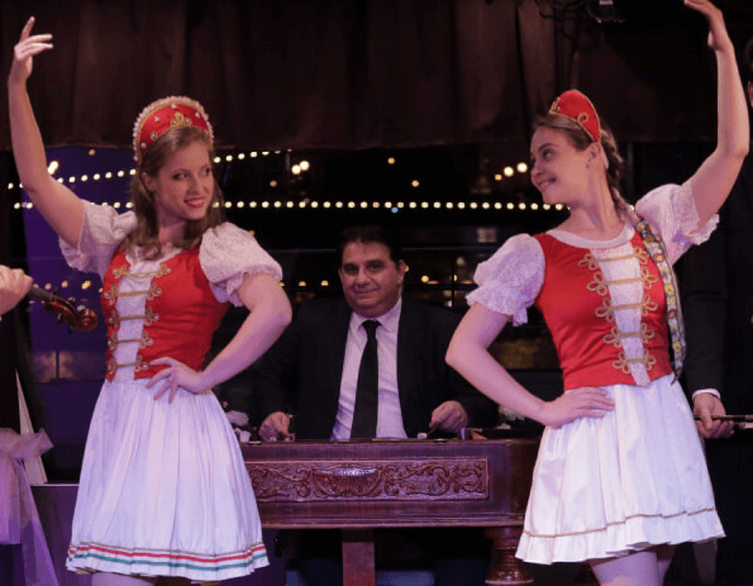
Some of the most revealing exhibits are less concerned with celebrity than with belonging. A flag belonging to Chicago’s Rákóczi Hungarian Mutual Aid Society, for example, points towards the community networks that helped emigrants maintain ties to one another and to their homeland.
Such objects bring the exhibition’s central theme into focus: leaving Hungary did not necessarily mean leaving Hungarian identity behind. Language, traditions, memories and affection for the place of one’s birth travelled with the emigrants, even as they became part of American society. Some eventually returned; others remained overseas for the rest of their lives. Their stories belong to both countries.
Rather than attempting to cover every chapter of Hungarian-American history, the exhibition takes a kaleidoscopic approach. Extraordinary careers and ordinary lives appear alongside one another, creating a picture that is richer—and more complicated—than a simple celebration of success.
A Grand Budapest Setting for an Intimate Story
The setting adds another dimension to the visit. The exhibition unfolds in some of the Hungarian National Museum’s most ceremonial spaces, including the grand staircase, the area beneath the dome and the adjoining fireplace rooms. The neoclassical surroundings give these stories a striking backdrop, while the personal experiences at their heart keep the exhibition grounded in human lives.
For foreign visitors, that combination is particularly rewarding. You can enjoy the museum’s architecture while discovering a side of Hungarian history that reaches well beyond the country’s borders. American travellers may recognise familiar cultural references; visitors from elsewhere will find equally relatable questions about opportunity, displacement and belonging.
The accompanying programme has also explored those connections through music. On October 9, the Hungarian vocal ensemble Jazzation performed a jazz a cappella concert linked to the exhibition, bringing another expression of Hungarian-American cultural exchange into the museum. That concert has already taken place, but the exhibition itself remains open through November 1.
Visiting The American Dream Exhibition in Budapest
The American Dream – Hungarians in the United States, 1776–2026 runs from July 30 to November 1, 2026, at the Hungarian National Museum, at 14–16 Museum Boulevard in Budapest’s eighth district. The museum’s regular opening hours are Tuesday to Sunday, from 10 am to 6 pm; it is closed on Mondays.
Plan to arrive with enough time to explore rather than leaving your visit until the end of the afternoon. The ticket office closes at 5 pm, and exhibition areas begin closing from 5:30 pm, ahead of the building’s 6 pm closure. Holiday opening arrangements may differ from the regular schedule.
Whether you come for the Hollywood connections, the Model T or the personal stories, this exhibition offers something more lasting than a collection of famous names. It reveals how the history of a country continues wherever its people build new lives—and how an American story can also be unmistakably Hungarian.
Related events