International Historical Games Convention in Budapest – October 17–19, 2026
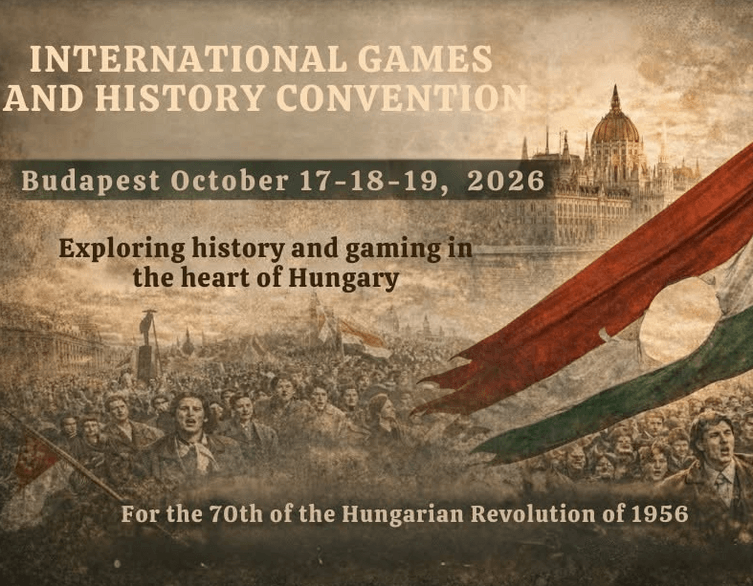
What happens when board games, Hungarian history and a weekend of cultural discovery come together? The International Historical Games Convention in Budapest offers a chance to find out from October 17 to 19, 2026. Marking the 70th anniversary of the Hungarian Revolution of 1956, the three-day event combines historical strategy games, expert talks, creative presentations and guided visits around the city.
Based at VDSZ on Benczúr Street, the convention offers an unusual addition to an autumn city break. Whether you’re a dedicated wargamer, curious about Hungary’s past or looking for something beyond the usual sightseeing itinerary, the programme brings together opportunities to play, learn and explore.
Essential Event Details
- Event: International Historical Games Convention – Budapest
- Dates: Saturday, October 17–Monday, October 19, 2026
- Main venue: VDSZ, 45 Benczúr Street, Budapest 1068
- Opening hours: Saturday and Sunday, 8 am–10 pm; Monday’s overall event listing gives a closing time of 6 pm, although a gaming-table entry lists 10 pm
- Programme: Historical board games and wargames, lectures, creative presentations, guided tours and social events
- Languages: English, Hungarian and French, depending on the individual activity
- Tickets and reservations: for more details see the official event site
- Anniversary theme: Commemorating 70 years since the Hungarian Revolution of 1956
Explore Hungarian History Through Games
Historical games are at the heart of the convention, with gaming tables available for both two-player encounters and multiplayer sessions. The organisers offer table reservations ranging from an hour to the full three days, giving participants space to set up their games and explore historical scenarios.
One of the featured titles is “Budapest 1956: Those of Corvin,” a new co-creation presented by game designer Luc Olivier. His background includes around twenty commercial wargames and extensive writing on military history. The game connects directly with the convention’s anniversary theme, offering visitors another way to engage with the events of 1956.
Saturday’s ongoing programme also features creations by Alfa Diallo and Mehdi Mrakha, subject to availability. Diallo’s projects include “Influence is Power,” in which provincial leaders compete for the crown, and “Mafia Control,” built around rival gangs battling for territory. These sessions provide a chance to discover developing games and meet people working behind the scenes.
Historical table creator László Sebestyén is another guest to look out for. His carefully researched settings draw on photographs and eyewitness accounts, using atmosphere and visual detail to make historical situations more tangible through play.
Saturday: Historical Talks and an Evening of French Games
The convention opens on Saturday, October 17, with the venue’s published hours running from 8 am to 10 pm.
Best deals of Budapest







From 9 am to 10 am, historian Gergely Fejérdy, Deputy Scientific Director of the Otto von Habsburg Foundation, presents a French-language talk on Otto von Habsburg and the 1956 Revolution. His session considers the international connections, diplomatic questions and political hopes surrounding the uprising.
At 11 am, history enthusiast Sándor Szabó leads a counterfactual, or “what if?”, presentation. This approach invites the audience to consider alternative historical possibilities rather than simply follow a chronology of events. His guest profile lists English and Hungarian, although the language of this particular session should be confirmed separately.
The evening changes pace with a celebration marking the third anniversary of the organisers’ game nights. Running from 6:30 pm to 10 pm, it brings French board games and French Tarot into a festive social setting.
Sunday: Photography, Art and a Visit to the House of Terror Museum
Sunday, October 18, combines gaming with a varied cultural programme. Wargames and gaming tables are scheduled from 8 am to 10 pm, while talks introduce perspectives ranging from photography to literature and international humanitarian law.
Photographer Gergő Forró gives a presentation in French and English from 10 am to 11 am. He is followed at 11 am by collector Denis Muzsnay, whose French-language lecture explores trench art, particularly lighters made by soldiers. Through these everyday objects transformed into individual creations, his subject offers a perspective on ingenuity and personal expression during wartime.
A visit to the House of Terror Museum, at 60 Andrássy Avenue, is scheduled from 2:30 pm to 4 pm, with French-language accompaniment. As this overlaps with part of the afternoon lecture programme, visitors will need to choose which activities they most want to attend.
Writer Dávid Dorosz speaks from 3 pm to 4 pm, with his guest profile listing English and Hungarian. His novel “Hatalom árvái” explores how secrets from Hungary’s political transition in 1989 can reach into the present through a thriller centred on a disappearance.
From 4 pm to 5 pm, Frédéric Poncelet brings together history, strategy and gaming. A former soldier who now works as an investigator on international humanitarian law, he draws on professional experience and his Belgian-Hungarian family background. His profile lists English, French and Hungarian, but the scheduled lecture’s language should be checked before attending.
At 6 pm, Swiss-Portuguese painter Michel Salzmann offers his perspective on Budapest in an English-language presentation. The day ends with a Hungarian family-style meal, described by the organisers as a dinner “like at Aunt Viki’s,” from 7:30 pm to 10 pm.
Monday: Military History, Family Memory and Guided City Walks
Monday, October 19, continues with talks and guided visits. French-speaking visitors can attend presentations by Quentin Censier, creator of the military-history YouTube channel “Sur le Champ,” and writer Michel Levaï. Both are listed from 10:30 am to 11:30 am, so visitors should check whether these are parallel sessions or whether the timetable will be adjusted.
Censier’s work connects tactical analysis with the wider political and social context of conflict, making his contribution particularly relevant to the convention’s interest in historical simulation. Levaï brings a more personal perspective through “The Revolution, My Father and Us – Budapest, 1956,” which examines his father’s involvement in the revolution and the transmission of family memory.
For English-speaking tourists, a guided tour of Heroes’ Square and City Park runs from 11 am to 12:30 pm. A French-language tour of the same area follows from 2 pm to 3:30 pm, providing another opportunity to combine the convention with time exploring Budapest.
The overall event listing gives Monday’s closing time as 6 pm, although the gaming-table entry extends to 10 pm. Confirm the final-day timetable before planning an evening visit.
Meet the People Connecting Games, History and Creativity
Beyond the scheduled talks, the guest line-up brings together designers, writers, artists and educators with different approaches to the relationship between play and culture.
Social educator Ottó Fogarasi uses board games and group activities to develop cooperation, decision-making and self-awareness. His approach centres on experiential learning, encouraging participants to learn through shared activities and reflection. His convention profile lists English and Hungarian.
Hungarian artist Gyula Pozsgay adds an illustration and design perspective, with work spanning comics, board games, video games and military-history projects. Alongside the designers and historical table creators, his presence highlights how visual storytelling can shape the way players encounter the past.
The convention extends beyond competitive gaming, considering how games can support learning, prompt discussion and connect historical research with personal experience.
Languages, Tickets and Planning Your Visit
The programme is multilingual rather than uniformly English-speaking. Individual activities take place in English, Hungarian or French, and a guest’s listed languages do not necessarily mean that every presentation will be delivered in all of them.
English-speaking visitors have several clearly identified options, including Gergő Forró’s bilingual presentation, Michel Salzmann’s Sunday talk and Monday’s guided walk around Heroes’ Square and City Park. Other guests also list English among their working languages, but their individual session arrangements should be checked.
The supplied information mentions ticketing and gaming-table reservations without giving prices or explaining whether the museum visit, guided walks and Sunday dinner require separate bookings or payments. Check the conditions for each activity, particularly if you plan to reserve a table or join an excursion.
For visitors interested in Hungarian history, strategy games and cultural exchange, the convention offers a distinctive way to spend three days in Budapest, moving between the gaming table, the lecture room and the city itself.