Budapest’s Citadel Wins International Award for Its Remarkable Restoration
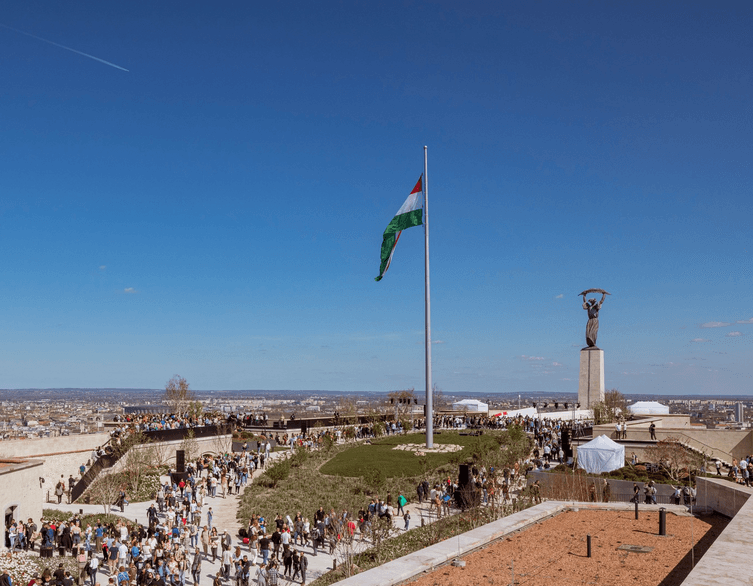
Budapest’s Citadel has a new reason to catch your attention—and this time, it is not just the view. The fortress on Gellért Hill has won the Best Project award in the reference category of the Mapei Grand Prix 2026, an international competition held among Mapei group companies. The recognition celebrates a restoration that renewed nearly 14,000 square metres of historic stonework while tackling the hidden problems threatening the building’s future.
For visitors, the result is more than freshly restored walls. The former military stronghold has been reimagined as a welcoming place to explore, with a public park, new passages, walking routes and viewpoints. It is a transformation that gives one of Budapest’s most distinctive landmarks a different relationship with the city below.
A Fortress That Has Opened Up to Budapest
The Citadel was originally built to keep Pest and Buda under military control. Its imposing walls were meant to separate the fortress from the city, not invite people inside. The renovation has turned that idea on its head: an enclosed defensive structure has become a shared cultural and public space.
The previously closed inner courtyard is now a public park, while new openings and paths make the complex more inviting to explore. Rather than treating the fortress simply as a backdrop for photographs, visitors can move through it and experience how its historic architecture has been adapted for a new purpose.
That change is central to the project’s appeal. The Citadel has not been stripped of its identity as a fortress; its historic walls remain an essential part of the experience. What has changed is how people can use the space within and around them.
The Restoration Challenge You Cannot See
The most demanding part of the renovation was not necessarily the work visitors notice first. Behind the restored stone surfaces lay a persistent problem: water. According to stone-restoration expert Gábor Ludányi, who helped prepare the project, moisture and the salts it carried into the masonry were among the greatest threats to the Citadel’s historic walls.
In places, the difference between the internal and external ground levels reaches four to five metres. Meanwhile, the original drainage system had largely disappeared or suffered damage over the decades. Moisture from the surrounding earth continued to enter the walls, bringing dissolved salts with it. As those salts crystallised inside the stone, they put pressure on its pores and gradually damaged the material.
That explains why simply cleaning the walls or repairing their visible defects would not have been enough. The restoration needed to address the causes of deterioration, not just its outward signs. New rainwater drainage and a drainage system designed to carry infiltrating water away from the masonry were therefore crucial parts of the work. The exterior stone surfaces also received water-repellent protection against driving rain.
Nearly 14,000 Square Metres of Historic Stonework Renewed
The scale of the restoration is striking. Nearly 14,000 square metres of historic stone surfaces were renewed, and more than 600 tonnes of Mape-Antique Allettamento restoration mortar were used. Those figures hint at the sheer amount of work involved, but choosing suitable materials was just as important as the quantity required.
Best deals of Budapest










For masonry more than 150 years old, a repair material must do more than perform well when first applied. It also needs to remain compatible with the original stone, existing construction materials and salts already present within the structure. The team therefore considered cleaning, salt reduction, masonry repairs and protective treatments as parts of one coordinated restoration approach.
Complete removal of salts from such thick historic walls was not a realistic goal. Instead, the task was to manage moisture and reduce the conditions that encourage further damage. The award recognises that less visible combination of investigation, conservation expertise, engineering and careful construction—not merely a cosmetic makeover.
Recognition Beyond the Mapei Award
The Mapei Grand Prix is not the project’s only international recognition. The Citadel also appears on the World Architecture Festival’s 2026 shortlist in the Completed Buildings – Creative Re-use category, under the project name “Citadella – The Bastion of Liberty” by art1st design studio.
The two honours highlight different aspects of the transformation. The Mapei award draws attention to the restoration work and its technical solutions, while the World Architecture Festival category places the project alongside other completed buildings given a new use. In the Citadel’s case, that means turning a closed military complex into an accessible public and cultural destination.
The distinction is worth keeping clear: the Citadel has won the Mapei award, while its World Architecture Festival recognition is a shortlist place rather than a category victory.
Visiting Budapest’s Renewed Citadel
For a visit, it helps to distinguish between the outdoor areas and the exhibition, as they operate on different schedules. The Liberty Statue and outer promenade are open around the clock throughout the year. Citadel Park opens from 6am until midnight between April and October, and from 8am to 10pm between November and March.
The exhibition is open from 10am to 6pm on Mondays through Thursdays and at weekends, with the last tickets issued at 4:40pm. On Fridays, it opens from noon until 8pm, with the last tickets issued at 6:40pm. This gives you flexibility to plan an outdoor visit separately from time spent inside the exhibition.
Several scenic walking paths climb Gellért Hill from Tabán and Saint Gellért Square, connecting with the promenade around the fortress. If you prefer to reduce the uphill walk, take bus 27 to the Búsuló Juhász stop—the Hungarian name to look for on transport displays. From there, the north entrance is approximately 500 metres away, a six-minute walk along Szirtes Road.
As you explore, the renewed stonework adds another layer to the visit. The new paths and public spaces show how the Citadel has opened up, while the restored walls reveal what it took to preserve its historic character. Much of the award-winning work remains out of sight, but it is what allows this former stronghold to begin its next chapter as a place for people rather than a barrier between them.
Related news
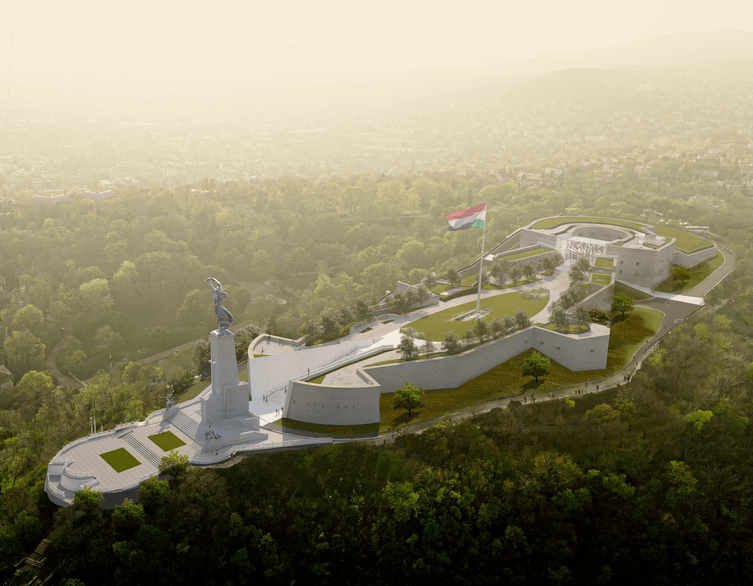
A Perfect Day Around Gellért Hill, the Citadella, and Bartók Boulevard
Some of the best days in Budapest aren’t built around ticking off famous landmarks one by one, but around letting one neighbourhood lead naturally...
Your Practical Guide to Budapest’s Renewed Citadella
Budapest’s most iconic hilltop fortress has just reopened after more than a decade of restoration, and it’s well worth the trip up. Here’s...