Budapest Just Hosted the Greatest Track and Field Show on Earth — Here’s What Happened
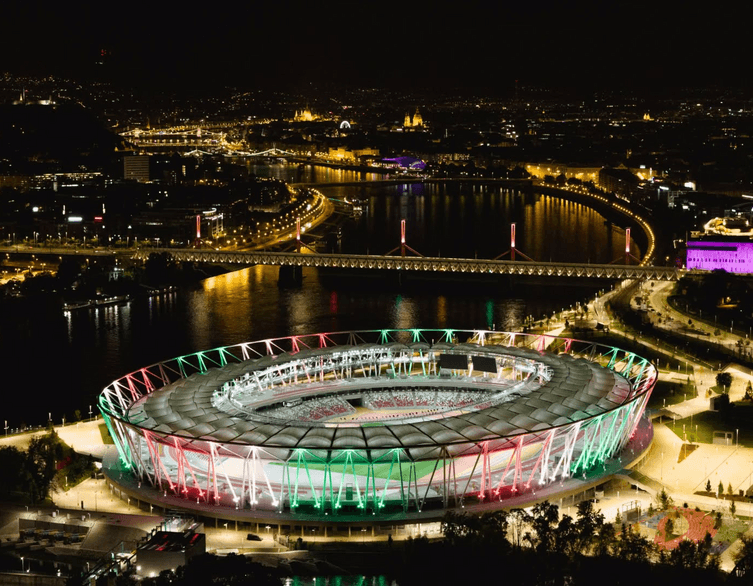
Between September 11 and 13, 2026, Budapest became the epicenter of world sport, hosting the inaugural World Athletics Ultimate Championship. Anyone in the city that weekend couldn’t miss it: a wall of sound rolling out of the Gyula Zsivotzky National Athletics Centre, tens of thousands of fans in national colors streaming toward Közvágóhíd, and a buzz across the city that felt more like a World Cup final than a typical September weekend. World Athletics called it the biggest athletics event of 2026, and having watched it unfold, it’s hard to argue otherwise.
For anyone who missed it live, or for travelers curious about what just happened at Hungary’s showpiece stadium, here’s the full story of the weekend, and why it says a lot about Budapest’s growing reputation as a world-class host city.
A Brand-New Format Built for Champions Only
Unlike the World Championships or the Olympics, the Ultimate Championship didn’t let just anyone qualify. Only athletes who were already number one in their event received an invitation: reigning Olympic champions, Diamond League winners, and world champions. That meant the start lists at the National Athletics Centre read like a highlight reel of the sport’s biggest names, competing across 28 events over three days with a combined prize pool of ten million dollars, the richest in athletics history.
World Athletics president Sebastian Coe described the event as a deliberate reinvention of the sport, saying the innovations were designed to show how the federation wants to push athletics forward with an entirely new global championship, raising the profile of the sport and its many stars. Rather than following a conventional heats-and-finals timetable spread across a week, the entire event ran on a tightly produced show format, with every second scripted to keep the spotlight on whichever event was happening. All the field events, along with the 1500m and 5000m, went straight to finals, while races at 800m and shorter still had semifinals to build the drama.
Best deals of Budapest






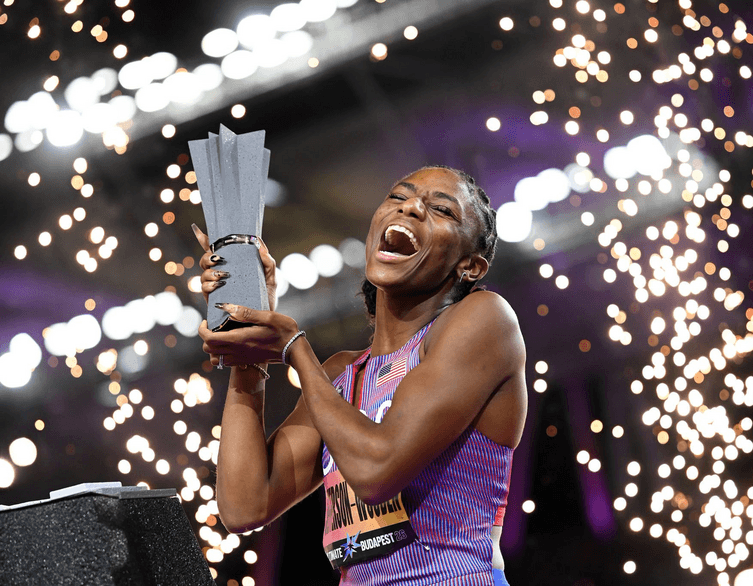
There were no medals handed out. Instead, every invited athlete received a unique participation keepsake, and the eventual champions collected a trophy designed to physically interlock with that keepsake, forming one complete piece. The production also broke from tradition visually: the track surface was rendered in bold black, with the specific lanes or field areas in use at any given moment highlighted in contrasting color so spectators’ eyes were always drawn to the right action.
Melissa Jefferson-Wooden Put On the Performance of the Weekend
If one athlete defined the championship, it was Melissa Jefferson-Wooden. The American world champion won the 100m in 10.62 seconds, a headwind time that stood as the fastest 100m run by anyone in the world in 2026 and the joint seventh-fastest of all time. It left her just one hundredth of a second off her own personal best of 10.61, a mark she set winning the World Championships in Tokyo and once called her “ultimate performance.” That result alone put her fourth on the all-time list, behind only Florence Griffith-Joyner, Elaine Thompson-Herah and Shelly-Ann Fraser-Pryce, and marked her fourth career sub-10.70 clocking, more than any other woman has managed this year.
She wasn’t finished. Less than 24 hours later, Jefferson-Wooden completed a rare sprint double by winning the 200m in 21.47 seconds, one of the fastest times ever run over the distance and enough to lift her to third on the world all-time list in that event too. Beating Olympic champion Gabby Thomas in the process, she extended a remarkable streak that has seen her lose just once in nineteen 100m races since the start of the previous year. Speaking afterward, she said she has now run under 10.70 four times in her career and that she genuinely believes a world record is within her reach.
A Photo-Finish 800m and Other Near-Misses
The women’s 800m delivered another headline showdown, pairing Switzerland’s Audrey Werro, the reigning European champion and outright world number one, against Olympic champion Keely Hodgkinson of Great Britain and Dutch star Femke Bol. Werro led from the gun and crossed the line first in 1:55.88, capping a season in which she had gone unbeaten outdoors. Hodgkinson closed hard to take second in 1:56.26, while Bol held on for third in 1:56.74, the same podium order seen at the European Championships earlier in the year.
Although Werro’s winning time was still more than two seconds shy of Jarmila Kratochvílová’s enduring 1983 world record of 1:53.28, and even a touch outside her own season best of 1:53.70 set in Zurich, it underlined just how much the women’s two-lap event has been reshaped this year by her rise from emerging talent to its undisputed leader.
Other Headline Moments From the Track and Field
Kenneth Bednarek, nicknamed “Kung Fu Kenny,” won the men’s 100m in a personal-best 9.85 seconds, edging Jamaica’s Oblique Seville by just five hundredths of a second, before returning the following day to claim the 200m as well, giving the United States a sweep of both blue-riband sprint titles across the men’s and women’s events. The women’s pole vault final turned into a genuine classic, with all eight finalists clearing 4.50m before the competition narrowed to an all-American battle at the top: Sandi Morris eventually beat training partner Hana Moll on countback after both cleared 4.90m, with Morris then just missing a personal-best attempt at 5 meters.
Elsewhere, Poland’s Klaudia Kaźmierska pipped Britain’s Georgia Hunter Bell by just 0.17 seconds in a thrilling women’s 1500m, Japan’s Haruka Kitaguchi threw a national record 68.92m to win the women’s javelin ahead of Chinese teenage sensation Yan Ziyi, and Greek long jump star Miltiadis Tentoglou claimed victory with a leap of 8.35m. Botswana’s Collen Kebinatshepile won the men’s 400m with one of the fastest times of his career, and Dominican Republic star Marileydi Paulino, unbeaten all season, took the women’s 400m title in 49.08 seconds.
Hungary’s Home Athletes Made the Crowd Proud
While Hungary didn’t come away with a title on this occasion, the local athletes gave the home fans plenty to cheer. Sára Mátó competed in the women’s 400m hurdles semifinal, entering the event ranked 34th in the world. She finished 17th overall in 57.05 seconds, short of her personal best, but spoke afterward about how meaningful it felt to represent Hungary on home soil, warming up alongside the world’s best and proving to herself that she belongs at that level. She also mentioned she’s a keen surfer and plans to make the most of her upcoming month off.
Attila Molnár finished eighth in the men’s 400m final, Boglárka Takács narrowly missed advancing from the 200m semifinal after a strong start against elite international competition, and Hungary’s mixed 4x400m relay team of Patrik Enyingi, Lili Brucker, Attila Molnár and Sophia Emmanuel posted their season’s best time of 3:16.73 while racing against the world’s top eight quartets.
The opening ceremony also gave the crowd something special: sixteen of Hungary’s own sporting greats, including Olympic and world boxing champion István “Kokó” Kovács, Ferencváros footballer Ádám Nagy, and European hammer throw champion Bence Halász, faced off in an exhibition 4x100m relay before the championship events began.
A Grand Finale With a Pop Star Twist
A three-day track meet closing with a concert might sound unusual, but that’s exactly how it ended. Swedish pole vault legend Armand “Mondo” Duplantis, a two-time Olympic champion, capped off the championship by performing the event’s official anthem, a song he wrote himself called “GOLD,” live in front of the sold-out crowd. Fans in the stands didn’t seem to mind that the world-record vaulter’s singing occasionally drifted off pitch — the atmosphere he generated turned the closing ceremony into a full-blown celebration, with fireworks lighting up the night sky over the stadium.
Why This Matters for Anyone Visiting Budapest
Beyond the results, this event is a useful signal for travelers: Budapest has now firmly established itself as a serious host for major international sporting spectacles, building on the success of the 2023 World Athletics Championships held in the same stadium. More than 60,000 tickets were sold across the three days, with roughly 40 percent of the crowd traveling in from 93 different countries, and a quarter of the International Olympic Committee’s voting members reportedly attended, the largest such gathering ever recorded in Hungary.
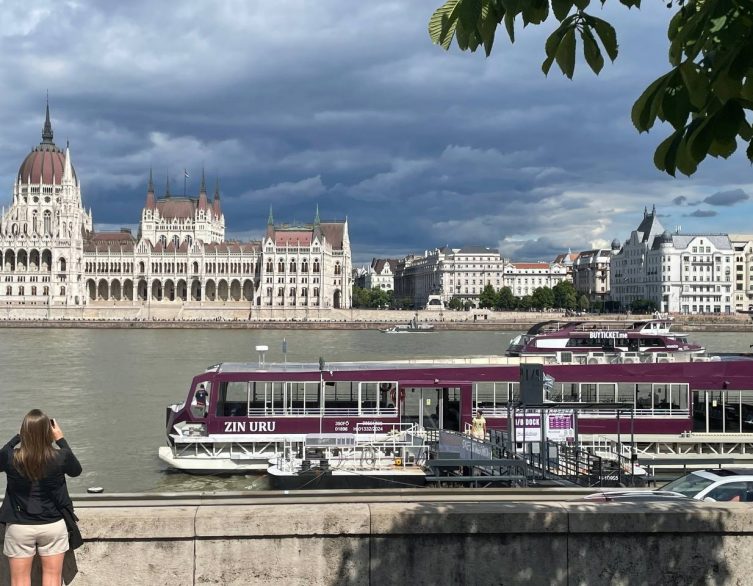
Sebastian Coe’s comments about wanting to bring more events to Budapest suggest this won’t be the last time the Hungarian capital takes center stage in world sport, and this weekend was a vivid reminder that Budapest’s appeal extends well beyond its thermal baths and river cruises into world-class sport, spectacle, and atmosphere.
Related news
Getting to the World Athletics Ultimate Championship in Budapest: Your Complete Public Transport Guide
Budapest is about to host one of the biggest moments in track and field history, and if you’re in town for it, figuring out how to actually...

Mondo Duplantis Just Turned Budapest Into a Music Video, and It’s the Perfect Hype for September
If you needed one more reason to be excited about visiting Budapest this September, pole vault legend Armand “Mondo” Duplantis just handed...