A Greener Grand Boulevard: Budapest’s Major Tree-Lined Renewal Takes Shape
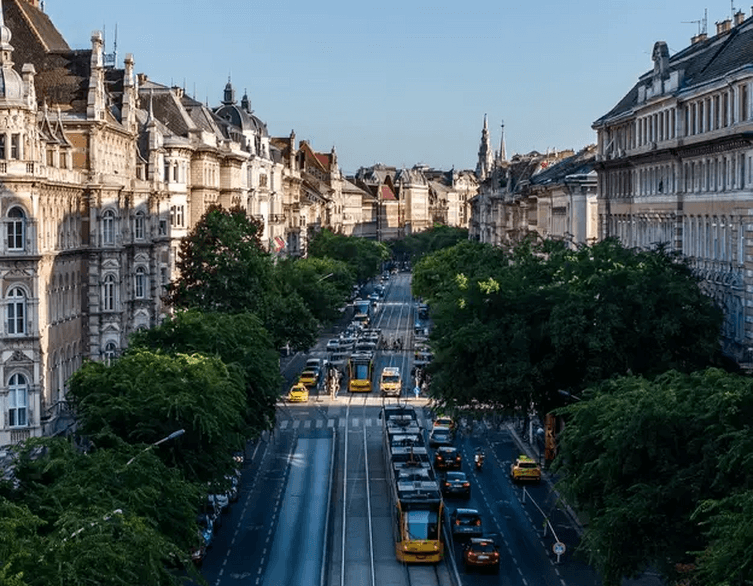
Budapest’s Grand Boulevard is set to become greener, healthier and more pleasant to explore. New plans aim to renew the historic tree-lined avenue and expand green spaces between Nyugati Square and Boráros Square, bringing more shade and climate-conscious public space to one of the city’s busiest urban routes.
For visitors, the project is important because the Grand Boulevard is much more than a transport corridor. This broad, lively route links neighbourhoods, cafés, theatres, shopping streets and major sights across Pest. It is where trams, cyclists, pedestrians, residents and tourists meet every day—and the planned transformation aims to make that experience more comfortable in the years ahead.
Budapest’s Grand Boulevard, Explained
Known in Hungarian as the Nagykörút, Budapest’s Grand Boulevard runs through the heart of Pest, connecting Nyugati Square in the north with Boráros Square in the south. Along the way, it includes several well-known sections, such as Teréz Boulevard, Erzsébet Boulevard, József Boulevard and Ferenc Boulevard.
It is one of the city’s most recognisable urban axes, lined with late 19th-century apartment buildings, independent shops, cafés, theatres and restaurants. Tram 4 and Tram 6 run along much of the boulevard, making it an easy and useful route for tourists travelling between western Pest, the Jewish Quarter, Blaha Lujza Square, Corvin Quarter and the areas near the Danube.
The boulevard has long been central to the rhythm of city life. The forthcoming renewal is designed to preserve that character while responding to the realities of a hotter urban climate, heavy traffic and the need for more comfortable pedestrian spaces.
More Trees, Not Fewer
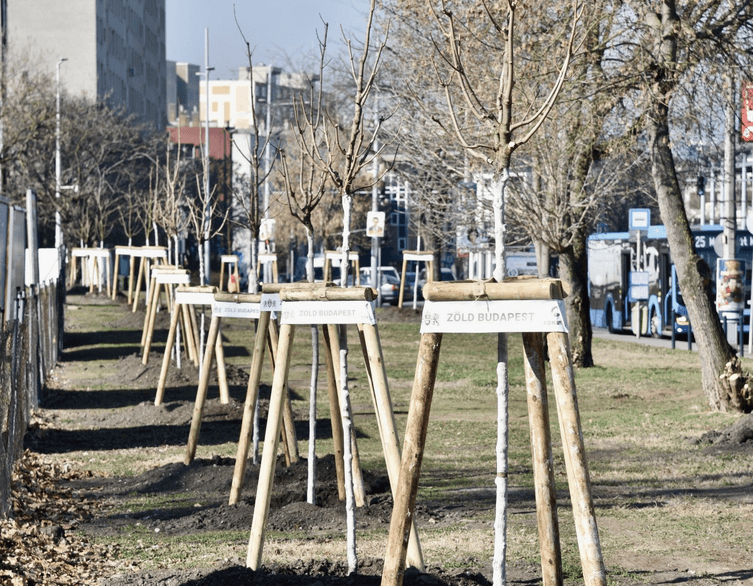
The green renewal covers the section between Nyugati Square and Boráros Square, where there are currently around 600 trees. A key promise of the plan is that no tree will be removed because of construction work.
Some trees will still need to be replaced for health-related reasons, but the city intends to plant at least three new trees for every tree that cannot be saved. One replacement tree would be planted in the original location, while the others would be added elsewhere along the Grand Boulevard. New rows of trees are also planned in sections that currently have no tree line at all.
The proposal is not simply about replacing mature trees with young ones. Specialists have developed targeted measures for several dozen existing trees in order to extend their lifespan where possible. As a result, fewer than 10 percent of the roughly 600 trees are expected to require replacement because of their condition.
Designing for Hotter Summers
Budapest’s summers are becoming warmer, and tree-lined streets play an increasingly important role in making the city more liveable. They provide shade, help cool the surrounding area and make walking through dense inner-city neighbourhoods more pleasant—especially for visitors exploring on foot between sights.
Best deals of Budapest








The Grand Boulevard project includes modern rainwater-management solutions and green infrastructure based on the “sponge city” approach. In simple terms, this means designing streets and planted areas to retain, absorb and use rainwater more effectively, rather than allowing it to run quickly into drains. This can support trees during dry spells, reduce pressure on drainage systems during heavy rain and make public spaces more resilient to changing weather conditions.
The choice of tree species will also reflect two priorities: maintaining the boulevard’s coherent historic streetscape and selecting varieties that can better cope with Budapest’s changing urban climate. Where established tree lines are renewed, the new planting will fit the existing character. On newly planted stretches, including parts of Ferenc Boulevard, more climate-resilient species are expected to play a larger role.
A Better Street for Exploring Budapest
The plan forms part of a broader vision to improve the Grand Boulevard from building façade to building façade. Alongside the trees and green infrastructure, the wider programme focuses on public-space quality, walking, cycling, safety and the revival of the boulevard’s cultural and commercial life.
For visitors, that could eventually mean a more inviting route for an unhurried city walk. The Grand Boulevard already offers a fascinating cross-section of Budapest: grand turn-of-the-century architecture, the bustling nightlife of Erzsébet Boulevard, the theatres around Blaha Lujza Square, the cafés and cinemas of Corvin Quarter, and the lively local character of Ferenc Boulevard.
The city is also introducing earlier, lower-cost safety and traffic improvements on parts of József Boulevard and Baross Street ahead of the wider renovation. The detailed greenery plans are an important step in a longer transformation, rather than an immediate reconstruction project.
Public Walks in October 2026
Although the walks are mainly intended for local residents, they are also an unusual opportunity for interested visitors to see Budapest’s urban planning conversation up close. Tree-assessment specialists will explain the condition of the existing trees, the reasons why certain replacements may be unavoidable and the locations where new planting could be introduced.
The planned walks take place on 7 October at 5 pm at Angyal István Park in District 9; on 8 October at 5 pm at the corner of Corvin Alley and József Boulevard in District 8; on 13 October at 5 pm in front of 53 Erzsébet Boulevard in District 7; and on 14 October at 5 pm at Nyugati Square, in front of the fountain, in District 6.
A Boulevard for the Future
The planned greening of Budapest’s Grand Boulevard is about more than adding trees to a busy street. It is an effort to protect a historic avenue while preparing it for hotter summers, sudden downpours and the everyday needs of people who live, work, shop and travel here.
For tourists, the project offers a glimpse of how Budapest is shaping its future without losing sight of its past. The Grand Boulevard will remain a practical tram route and a vibrant urban destination, but the long-term goal is a cleaner, cooler and more welcoming place to spend time—whether you are passing through on Tram 4 or 6, stopping for coffee, or exploring the city one neighbourhood at a time.
Related news
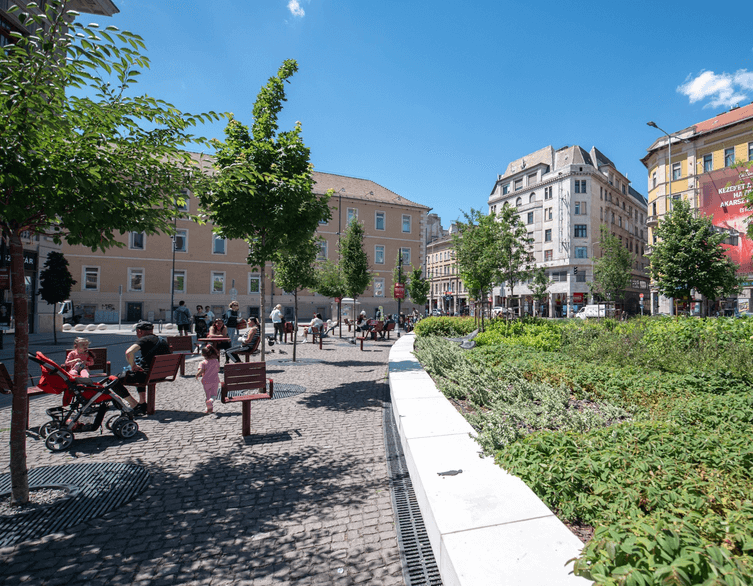
Budapest’s Green Future: The City Turns Into a “Sponge City”
Budapest has just taken a major step toward becoming one of Europe’s most climate-resilient capitals, and it’s a story worth knowing...
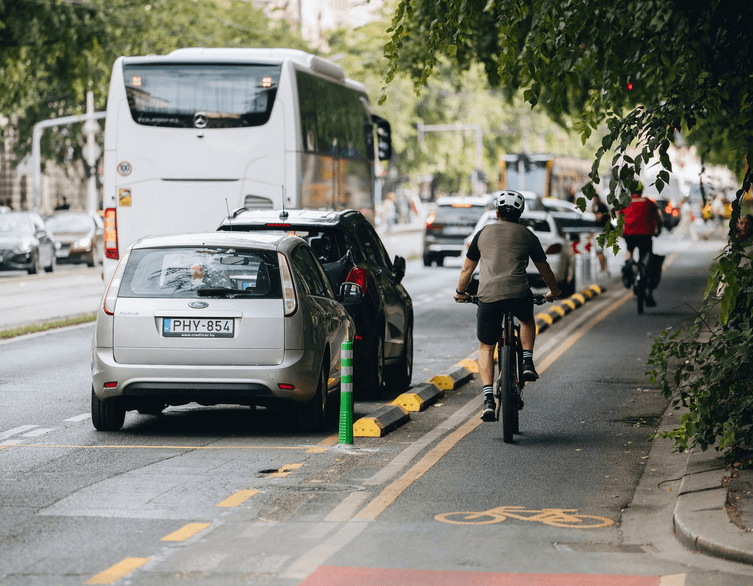
Safer Streets on Budapest’s Grand Boulevard: What’s Changed on József körút
Budapest’s iconic Grand Boulevard, known locally as the Nagykörút, just got a practical upgrade on one of its busiest stretches, and it’s...
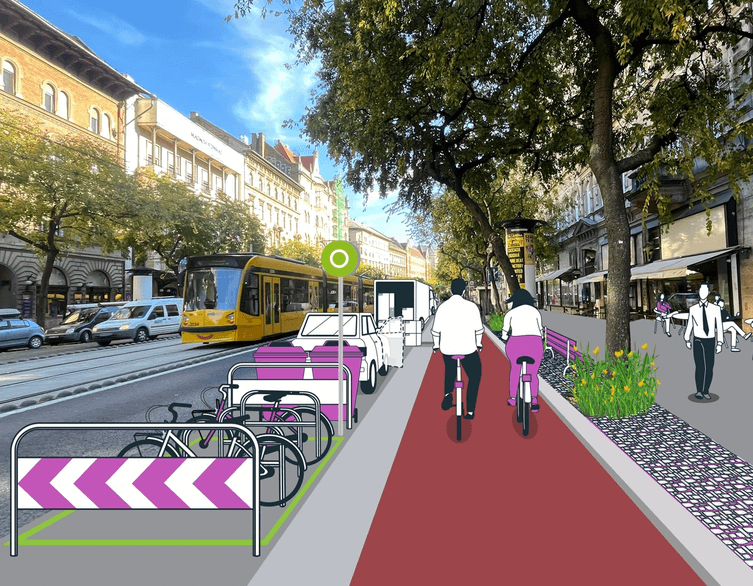
Budapest’s Grand Boulevard Gets a Biker-Friendly Upgrade This Summer
If your Budapest itinerary includes wandering, cycling, or grabbing a coffee anywhere along the Grand Boulevard (Nagykörút), you’ll want...
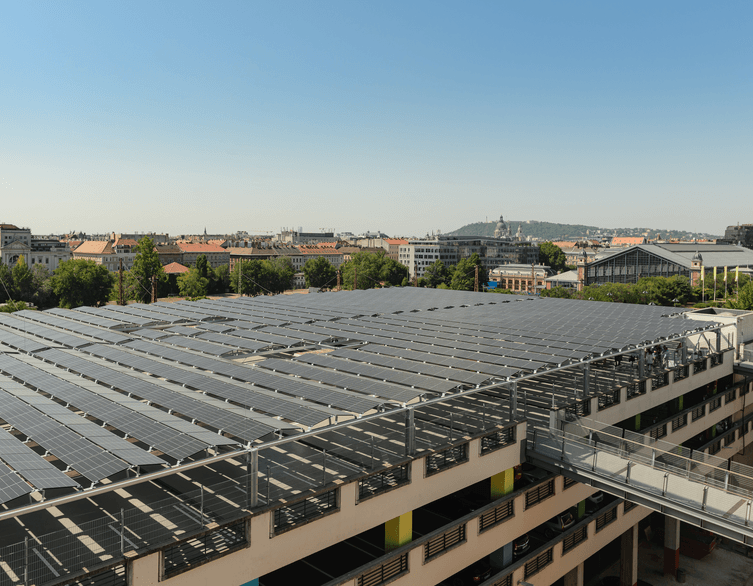
Westend Goes Green: Budapest’s Biggest Rooftop Solar Park Opens Above One of the City’s Favorite Malls
If you’ve ever browsed the shops at Westend Shopping Center in Budapest, you might not realize that just above your head now sits the city’s...

Green Ways to Explore Budapest: Your Guide to Eco-Friendly Transport
Earth Day is a great reminder that protecting our planet doesn’t require grand gestures. In fact, some of the most meaningful changes start...
Budapest Is Getting Greener: Over 560 New Trees Planted Across the City This Spring
If you’re visiting Budapest this spring, you might notice something fresh in the air — and not just the warmer temperatures. The city is...