Beating the Budapest Heat: Mist Gates Are Your Friend, Fountains Are Not
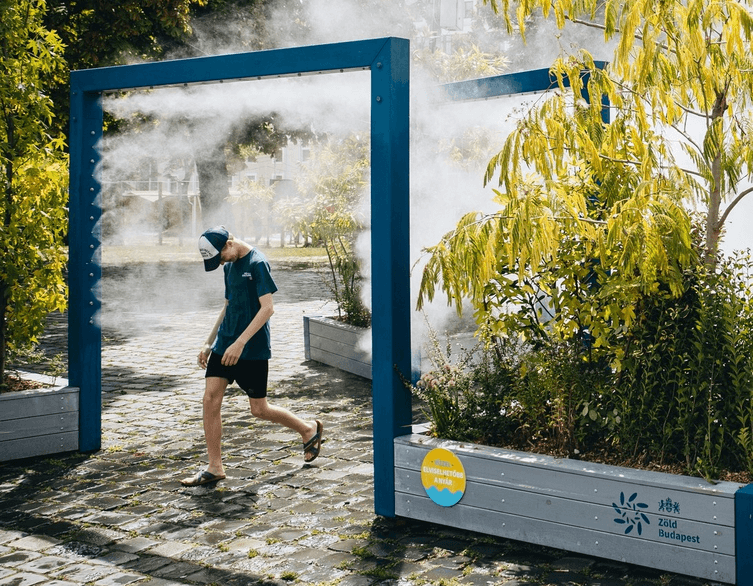
When Budapest’s summer temperatures climb toward the 35°C to 40°C range (95°F to 104°F), the city doesn’t just leave you to fend for yourself. Around town, you’ll spot misty little installations called párakapu, or mist gates, popping up at busy squares, transit hubs, and pedestrian streets. They’re one of the best free cooling tricks available to visitors this summer. But there’s a tempting alternative many tourists reach for instead, splashing around in the city’s ornamental fountains, and that one comes with real risks, plus a straightforward legal problem, worth understanding before you take the plunge.
What Mist Gates Are and Where to Find Them
Mist gates work by releasing a fine, cooling spray into the air, essentially creating a walk-through cloud that drops the ambient temperature around you without soaking your clothes. They won’t protect you from sun exposure, but they do wonders for how you feel while walking between attractions on a punishing afternoon.
Budapest has installed these cooling stations at some genuinely convenient spots for tourists. In the city center, District V alone hosts mist gates, mist columns, and mist rings across sixteen locations, many along the popular pedestrian shopping streets and revamped public squares. Around Castle Hill in District I, you’ll find them at Batthyány Square, Trinity Square, Clark Ádám Square, Horváth Garden, and near the cycling rest area by Vérmező Park. Kossuth Square, right by the Hungarian Parliament Building, has its own set as well, sometimes affectionately nicknamed by locals as little “mist eruptions.”

Cool down like a president
Transit hubs are covered too, which is genuinely useful if you’re arriving by train or lugging luggage between connections. Cooling gates operate at the passenger halls and platforms of Nyugati Railway Station and Déli Railway Station, as well as at Népliget Bus Station. If you’re heading toward the City Park (Városliget) or strolling down Ady Endre Street or Fő Street near the Zsolnay Fountain, you’ll find mist points there as well. Beyond the fixed installations, student volunteers and station staff often hand out bottled water directly to travelers at major stations, including Keleti, Nyugati, and Déli, plus the HÉV suburban rail stop at Batthyány Square.
Perhaps the most impressive setup is at Városháza Park, next to Deák Square, home to the city center’s largest greenery-filled mist gate. Hollán Ernő Street in District XIII and Hild Square near the Kuflis Playground round out some of the other well-loved cooling spots families gravitate toward during heat alerts.
Why Fountains Are Off-Limits, Not Just Unwise
Here’s where things get less obvious, and it’s worth pausing on. When the heat is unbearable, ornamental fountains scattered across Budapest, like the musical fountain on Margaret Island, the fountain at Vigadó Square, the one in Szent István Park, or the fountain at Elizabeth Square, can look like an irresistible spot to cool off. Dipping your feet, splashing your face, or letting kids wade through them feels harmless.
It is important to note that bathing in Budapest’s public fountains is officially prohibited. A spokesperson for the Budapest Municipality has confirmed directly that bathing in fountains managed by the city, including the musical fountain on Margaret Island, the Vigadó Square fountain, the Szent István Park fountain, and the Elizabeth Square fountain, is both forbidden and hazardous, since none of them were designed to be used as bathing facilities. Unless a fountain carries a specific sign identifying it as an interactive, splash-friendly installation, the safest and legally correct assumption is that stepping in, wading through, or cooling your hands and feet in it is simply not allowed.
Best deals of Budapest











The reasoning behind the ban goes well beyond bureaucratic caution. These fountains exist purely for visual and acoustic effect, and their water treatment reflects that purpose. Rather than being managed like a swimming pool with safe, swim-grade chemical balances, fountain water treatment focuses mainly on preventing algae growth and limescale buildup. The chemicals used for that purpose aren’t formulated with human skin contact in mind, and can cause irritation, itching, or rashes.
More concerning is what grows in fountain water once temperatures rise. Standing water above 25°C becomes a comfortable breeding ground for microorganisms, including Legionella bacteria. Officials specifically point to this bacteria as a reason the bathing ban exists, since a biological film can form on fountain surfaces that ordinary cleaning struggles to remove. While healthy adults typically shrug off exposure without issue, inhaling contaminated mist from a fountain can trigger flu-like symptoms or, in more serious cases, a form of pneumonia known as Legionnaires’ disease. Fountains also accumulate everyday debris you’d rather not think about while cooling off: dust, cigarette butts, litter, and yes, animal waste, all of which can introduce pathogens like E. coli or norovirus, particularly dangerous if swallowed accidentally during play.
There’s also a straightforward physical safety concern layered on top of the legal one. Fountains are typically built with hard stone surfaces, submerged nozzles, grates, and jets, and underwater sections that turn slippery fast. Kids running through ground-level, pavement-embedded fountains that shoot water upward face a real risk of slipping and suffering cuts, fractures, or head injuries. Larger, deeper fountains introduce added risk from water pressure and flow for anyone who can’t swim.
So the takeaway is simple and worth repeating: unless you see explicit signage marking a fountain as designed for interactive play, treat every fountain in Budapest as strictly hands-off, both because it’s against the rules and because it genuinely isn’t good for your health.
Making the Most of Mist Gates Instead
The good news is that mist gates give you nearly all the relief without any of the fountain risks, since they’re specifically engineered for safe human contact and public cooling. Building short pauses at mist gate locations into your walking route through Budapest is a smart, low-effort way to break up sightseeing on the hottest days, especially between noon and 3 PM when the sun is most intense.
Pair that with a few other heat-smart habits, and your Budapest visit stays enjoyable rather than exhausting. Increase your fluid intake noticeably beyond normal levels, and skip or limit coffee, alcohol, high-sugar drinks, and heavy, fatty meals during the hottest stretch of the day. Try to avoid direct sun exposure between 11 AM and 3 PM whenever your itinerary allows some flexibility. If you’re relaxing along the Danube or at a lakeside spot like Lake Balaton, resist sunbathing during peak hours and avoid jumping into water while your body is still overheated, since the sudden temperature shock isn’t good for your circulation. Sunscreen and loose, breathable, light-colored clothing round out the basics, and needless to say, never leave children or pets inside a parked car, even for what feels like just a minute.
The Bottom Line for Visitors
Budapest genuinely wants to help you survive its summer heatwaves comfortably, and the network of mist gates scattered across the city is proof of that effort. Use them liberally as you explore, whether you’re weaving through the Belváros pedestrian streets or resting near Kossuth Square. Just leave the decorative fountains for photos rather than dips, since doing otherwise isn’t just risky, it’s officially against the rules, no matter how good that water might look on a 39°C afternoon.
Related news

Budapest Weather Alert: Thunderstorms and Scorching Heat to Know Before You Explore
Anyone planning a day out in Budapest this week should keep half an eye on the sky. The Hungarian Meteorological Service, known locally as HungaroMet,...
St. Stephen’s Day Fireworks Meet a Level 2 Heat Alert
Budapest is gearing up for its biggest weekend of the year, and it’s arriving with a side of serious summer heat. From Thursday, August 20...

Budapest in August: Your Guide to the City’s Best Family Events
August in Budapest is the sweet spot of the Hungarian summer — the Danube glows gold in the evenings, the Buda Castle district smells like fresh...

Budapest in August: The Ultimate Guide to Immersive Experiences You Can’t Miss
August in Budapest is a city firing on all cylinders. The Danube glows gold at sunset, the summer heat pushes everyone toward shaded courtyards and...

Why Budapest’s Famous Landmarks Are Staying Dark This Summer
If you’ve strolled along the Danube after sunset recently and noticed that the Hungarian Parliament Building, Buda Castle, and the Chain Bridge...
What’s On in Budapest This Weekend (August 7-9): The Best Outdoor Events
If you’re spending this weekend in Budapest, you’ve timed your trip beautifully. Between Friday evening and Sunday night, the Hungarian...
Budapest’s Tap Water Stays Safe Despite Record-Low Danube Levels
If you’re visiting Budapest this summer and wondering whether it’s still fine to fill up your water bottle from the tap, the answer is...
Extreme Heat Alert Extended in Budapest: What Every Visitor Needs to Know
Hungary’s Chief Medical Officer has extended the country’s highest-level heat alert, Level 3, keeping it in force across the entire nation...

Staying Cool at Sziget Festival: How Budapest’s Biggest Event Handles the Summer Heat Alert
If you’re packing your bags for Sziget Festival this August, there’s one more thing worth knowing before you head to Óbudai (Óbuda)...
Budapest’s Baths Adjust Hours as Heatwave and Historic Drought Strain the Power Grid
If a Budapest thermal bath visit is on your itinerary this week, you’ll want to know that the city’s spa operator has just rolled out...
Are Budapest’s Trams Getting a Bath? The Story Behind the Sprinkler Trucks
If you’ve wandered around Budapest during a summer heatwave and spotted a truck cheerfully spraying water all over the streets and tram tracks...
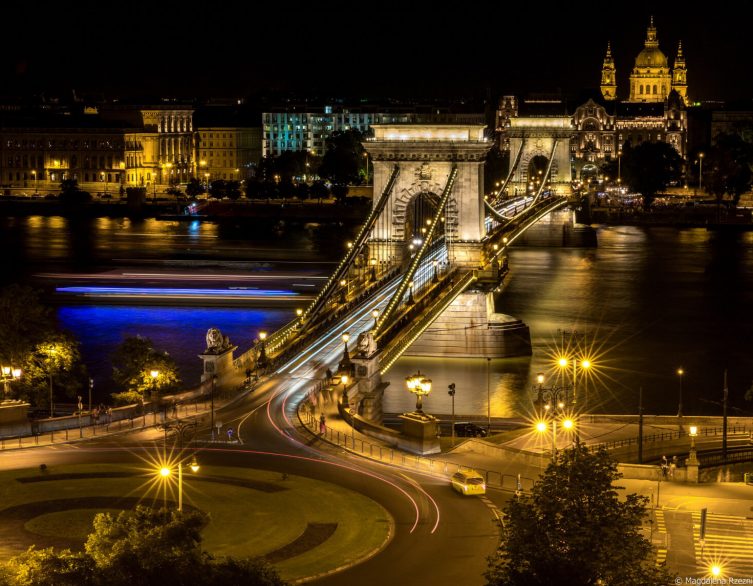
Budapest’s Ornamental Lights Will Be Shut Down
If you’re planning a trip to Budapest in the coming days, you might notice something unusual after sunset: the glowing facades of the Hungarian...

Beat the Heat: Your Guide to Staying Cool in Budapest’s City Park
When the pavement starts radiating heat and the sun feels relentless, Budapest’s City Park, known locally as Városliget, turns into one of...

What’s on in Budapest: July 30 to August 2, 2026
If you’re in Budapest this weekend, you’ve picked a genuinely electric time to visit. Between the Danube riverbank, City Park’s...

Budapest Level 3 Heat Alert: How To Prepare and Stay Safe
If you’re planning to explore Budapest between July 30 and August 4, 2026, there’s something important you should know before packing...
Heatwave Alert: What Tourists Should Know Before Visiting Budapest This Week
If you’ve got Budapest on your itinerary for the coming days, it’s worth packing your sunscreen and rethinking your afternoon plans....
Related events