Budapest in August: The Ultimate Guide to Immersive Experiences You Can’t Miss

August in Budapest is a city firing on all cylinders. The Danube glows gold at sunset, the summer heat pushes everyone toward shaded courtyards and air-conditioned galleries, and the calendar fills up with everything from the thundering music of Sziget Festival to the fireworks of St. Stephen’s Day on August 20, when the entire riverbank turns into one giant open-air party. But beneath the surface of Budapest’s classic summer buzz, there’s a quieter, stranger, and arguably more memorable trend taking hold: immersive experiences that pull you out of passive sightseeing and drop you straight into the middle of the story.
Instead of walking past a painting or reading a placard, you can now step inside a Van Gogh canvas, navigate a pitch-black city street guided only by touch and sound, or wander through thousands of glowing silk lanterns imported from South Korea. These are the kinds of Budapest attractions that don’t just fill an afternoon escape from the August sun — they change how you experience the city itself. Here’s your complete rundown of the most immersive things to do in Budapest this August, each one worth carving out real time for.
The Invisible Exhibition: Budapest’s Most Unforgettable Sensory Adventure
If you only have room for one truly transformative experience during your August visit, make it the Invisible Exhibition (Láthatatlan Kiállítás). For about an hour, you’re guided through a series of completely darkened rooms by a blind or visually impaired guide who navigates the space with calm, practiced confidence while you fumble your way through recreated everyday scenarios — crossing a busy street, ordering a coffee at a bar, identifying spices by smell alone in a kitchen setting. Stripped of sight, your other senses take over almost instantly, and what starts as disorientating quickly becomes genuinely moving.
This isn’t a gimmick built for shock value. It’s a real cultural exchange between the sighted and non-sighted worlds, framed around empathy and understanding rather than pity. After the dark portion of the tour, the exhibition’s lit section displays the everyday tools and adaptive objects that visually impaired people rely on, rounding out the experience with real insight rather than just novelty. The concept has since expanded to sister exhibitions in Prague and Warsaw, but Budapest remains one of the most beloved places to try it.
Reopened since July 8, the exhibition runs tours every 15 minutes with groups capped at just eight people, so advance booking is strongly recommended — walk-ins aren’t guaranteed once slots fill up. Arrive at least 15 minutes early to store your belongings, since all light-emitting devices, including phones, smartwatches, and glow-in-the-dark shoes, must go into a secure locker before you enter. The exhibition welcomes visitors aged 7 and up, while the after-hours Invisible Dinner experience is reserved for those 14 and older.
For international travelers, English-language guided tours run on set days and times and must be booked in advance, with a small supplement of 3,000 HUF per person on top of the standard ticket. If none of the scheduled slots work with your itinerary, the team is generally happy to arrange something custom, and groups of 20 or more can request dedicated pre-opening sessions. You’ll find the exhibition at Népligeti út 2 in Budapest’s 10th district, right by Népliget, one of the city’s largest parks, and easily reached by public transport. Beyond the standard visit, the venue also offers group experiences like an Invisible Dinner, team-building sessions, and even a pálinka and wine tasting conducted entirely in the dark — memorable options if you’re traveling with a group looking for something extraordinary.
Van Gogh Immersive Exhibition: Step Inside The Starry Night
A short walk from the Danube riverfront and Váci Street, in the heart of Budapest’s fifth district, the Van Gogh Immersive Exhibition at Piarista köz turns an entire hall into a 360-degree audiovisual world built from the artist’s most iconic works. The Starry Night, Sunflowers, and Van Gogh’s haunting self-portraits wrap around you floor to ceiling through high-resolution projections, immersive soundscapes, and dramatic lighting, giving you the sensation of standing inside the paintings rather than looking at them from across a gallery room.
The show does double duty as both a visual spectacle and a biography, zooming into individual brushstrokes and painting techniques you’d never notice on a museum wall, while narrating the key chapters of Van Gogh’s turbulent life alongside the imagery. It’s the kind of exhibition that rewards standing still for a few minutes just to soak it in, before inevitably reaching for your phone to capture the room-filling colour.
Here’s the detail that makes this one an especially good value pick for August: a single ticket also grants access to the Frida: Unbreakable exhibition running in the same venue, and currently includes the Gustav Klimt immersive experience as a free bonus add-on for a limited time. That’s three separate immersive art worlds under one roof and one ticket. Full-price entry runs 6,000 HUF, with a concession rate of 4,200 HUF for students, seniors, children, teachers, and visitors with disabilities (valid ID required), and free entry for children under 4. Booking online in advance shaves 10% off the price and lets you skip the queue, which matters during Budapest’s busy August tourist season. The venue is open daily from 10:00 AM to 9:00 PM, with a technical break between 2:15 PM and 3:15 PM, and the exhibition is confirmed to run through November 1, 2026, so there’s no rush if you’d rather fit it into a later part of your trip.
Frida Kahlo Immersive Exhibition at LumiereHall
Sharing the Piarista köz venue — known as LumiereHall — is an immersive tribute to Frida Kahlo, Mexico’s most celebrated artist. Through 360-degree projections, interactive elements, and narrated audio covering Kahlo’s life, love, and artistic evolution, the exhibition turns her intensely personal and symbolic paintings into a room-scale sensory experience rather than a static gallery wall. LumiereHall has built a reputation in Budapest for exactly this kind of large-scale immersive programming, having previously staged a scaled-down replica of the Moon and the Van Gogh experience next door.
The Kahlo exhibition runs alongside the venue’s other shows through November 1, 2026, with daily opening hours from 10:00 AM to 10:00 PM. As noted above, if you’re already visiting for Van Gogh, your ticket typically covers Frida Kahlo too, making this an easy add-on rather than a separate trip — ideal for travelers who want to maximize their August itinerary without maximizing their ticket spend.
Gustav Klimt: The Immersive Experience
Rounding out the trio at Vincent Hall on Piarista köz is Gustav Klimt: The Immersive Experience, a global sensation that has already dazzled audiences in London, Dublin, Los Angeles, Miami, and Antwerp before arriving in Budapest. Spread across a 2,000-square-meter digital wonderland, the show brings Klimt’s most famous works — The Kiss, The Sunflower Garden, Judith I — to life through 360-degree projections, ambient soundscapes, and interactive displays that turn every wall into a living, shimmering canvas.
One standout feature is the Golden Tunnel, an installation that literally surrounds you in shimmering gold and has become one of the most photographed corners of the exhibition. There’s also a virtual reality segment that lets you journey through Klimt’s Vienna and effectively see the world through his eyes, plus interactive art stations where you can try your hand at digital painting and watch your creations appear on the exhibition walls in real time. Along the way, the exhibition traces Klimt’s role as the father of the Vienna Secession and a pioneer of Art Nouveau, exploring the goldsmith influences and bold, sometimes controversial themes that made his work so distinctive.
Best deals of Budapest









Originally planned as a spring and summer 2025 run, the exhibition has since been extended through November 1, 2026, giving you plenty of runway to catch it during an August visit. Tickets are available through standard online ticket platforms, and given the exhibition’s popularity with everyone from art historians to social-media-savvy travelers chasing that perfect golden-tunnel photo, booking ahead is a smart move.
Scents, Flavours, Shapes: A Multi-Sensory Folk Art Experience
For something rooted firmly in Hungarian tradition rather than global blockbuster art, head to the Hungarian Heritage House for Scents, Flavours, Shapes – Look by Hand, See by Heart, an exhibition in the Maácz László Gallery designed to be touched, smelled, and explored rather than just observed. Originally conceived for visitors with sensory disabilities, it turns out to be a genuinely delightful experience for absolutely everyone, children included.
The exhibition organizes itself around four pillars of Hungarian folk art — gingerbread making, felting, pottery, and shepherding — and instead of glass display cases, you get hands-on installations like a felt memory game, a gingerbread spice recognition challenge, and a clay pattern-matching game, all crafted by skilled Hungarian artisans. It’s a tactile crash course in the textures, aromas, and techniques behind Hungary’s handmade traditions, from the fragrant spices used in gingerbread baking to the soft wool of pastoral felting and the gleaming glaze of traditional pottery.
The exhibition sits within the Museum of Hungarian Applied Folk Art, home to more than 10,000 artifacts, and was developed under the Erasmus+ ToMiMEUs project promoting inclusive, multi-sensory museum design across Europe — a mission recognized with a Special Award at the 2022 Museum Education Excellence Competition. You’ll find it at Corvin tér 8 in Budapest’s 1st district. Standard tickets cost 1,000 HUF, with a reduced rate of 500 HUF for students aged 6 to 26 and seniors aged 62 to 70, and free entry for preschoolers and visitors with disabilities. Adding an educational workshop costs an extra 1,300 HUF on top of the entry ticket, and the museum also runs dedicated workshops for schools, families, and special needs groups.
Lights of Korea: Jinju’s Silk Lanterns Illuminate the Korean Cultural Center
Running right through the heart of your August visit, from June 19 to September 4, 2026, the Korean Cultural Center is hosting Lights of Korea – Silk Lanterns of Jinju, a free exhibition filling its halls with more than 1,400 handcrafted silk lanterns. It’s less a museum visit and more an atmospheric journey into the traditions of Jinju, a South Korean city famous both for centuries of silk production and for judung, its floating lantern festival.
Walking through the softly glowing lanterns traces silk’s journey as one of humanity’s oldest materials, dating back roughly 5,000 years, and Jinju’s rise as one of the world’s five leading silk production centers thanks to the pristine waters of the Nam River. Rather than displaying silk as simple textile, the exhibition uses light itself as the medium, transforming the fabric into something closer to architecture, shaping and defining the mood of the entire space. The show arrives in Budapest as part of Touring K-Arts, a broader cultural exchange initiative backed by KOFICE and South Korea’s Ministry of Culture, Sports and Tourism, following a well-received run in Germany earlier this year.
You’ll find the exhibition at Frankel Leó út 30–34 in Budapest’s 2nd district, with summer opening hours (running July 6 through August 31) set at Monday to Friday, 10:00 AM to 6:00 PM. Entry is completely free, which makes it one of the best-value cultural stops in the city this month, and it’s an especially good option for photography enthusiasts or anyone wanting a meditative contrast to central Budapest’s summer buzz. Lantern-making workshops also run periodically throughout the exhibition’s dates, though these tend to book out quickly given the limited 15-person capacity.
Aura Bay: Budapest’s Immersive Light Park on Óbuda Island
If you want to see a genuinely different side of Budapest after dark, Aura Bay on Óbuda Island delivers Hungary’s first attraction to merge indoor light installations with a monumental outdoor light garden in a single visit. Spanning more than 6,700 square meters and powered by over 258,000 individual LED points, 4,000 meters of LED strip lighting, and 360-degree projection systems, it sits somewhere between an art exhibition and an immersive theme park.
Inside, you’ll pass through more than eight themed rooms, starting with the Whale, a 20-meter light sculpture serving as the park’s dramatic entrance, before moving through Memoscape, an interactive installation where your touch reshapes a digital archive of memory and nature, and the Jellyfish room, filled with floating strands of light evoking the deep sea. Further along, Lumenwood fuses natural wood structures with pulsing projected light, while the Mirror Corridor, a 30-meter passage lined with rippling LED overhead and angled mirrored walls, creates a genuine illusion of infinity. The journey builds toward the Whale Dream Rotunda, a 20-meter, fully 360-degree room where the legend of a whale born from light unfolds around you.
Step outside and the atmosphere shifts entirely: Talking Heads greets you with two monumental illuminated faces exchanging shifting expressions, Blooms Park turns the grounds into a glowing garden of luminous flowers, and the Pyramid lets you step inside a geometric structure built entirely from light. Crystal Garden offers a quieter, meditative moment among glowing crystal formations, while Kickit closes things out with a playful, motion-responsive light-ball game.
Aura Bay operates on timed entry, with an afternoon slot from 4:00 PM to 7:30 PM and an evening slot from 7:30 PM to 10:00 PM — the evening session is generally the better pick, since the outdoor light garden is at its most striking after dark. Most visitors spend one to two hours on site, with at least 30 minutes recommended indoors and 60 to 90 minutes if you’re planning to see both indoor and outdoor sections properly. The park is fully wheelchair accessible, though strollers aren’t permitted inside and children under 14 need adult supervision. It’s located at Óbuda Island, 1033 Budapest, open Wednesday through Monday, and easiest to reach via the H5 suburban railway to Szentlélek tér, or tram 1 and bus 160, followed by a short walk across the H Bridge. Online booking is strongly advised, since capacity is limited and weekend slots fill up fast during the height of Budapest’s August tourist season.
Making the Most of Your August Visit
Between the summer heat, the crowds drawn in by Sziget Festival and St. Stephen’s Day, and the sheer volume of things competing for your attention, August in Budapest rewards a bit of planning. Most of the immersive experiences above involve either advance booking or timed entry, so locking in your slots a few days ahead — especially for the Invisible Exhibition and Aura Bay — will save you from disappointment. Pairing an indoor immersive experience with the day’s peak heat hours, then saving outdoor wandering for the cooler evening, is a strategy that works particularly well this time of year.
What ties all of these experiences together is the same idea: Budapest’s most memorable attractions in August aren’t necessarily about looking at something from a distance, but about stepping directly inside it, whether that’s a painting, a folk tradition, a glowing garden, or complete darkness itself.
Related news

Catch a Rare Partial Lunar Eclipse on August 28
Stargazers visiting Budapest are in for a treat this month. In the early hours of Friday, August 28, a partial lunar eclipse will sweep across the...
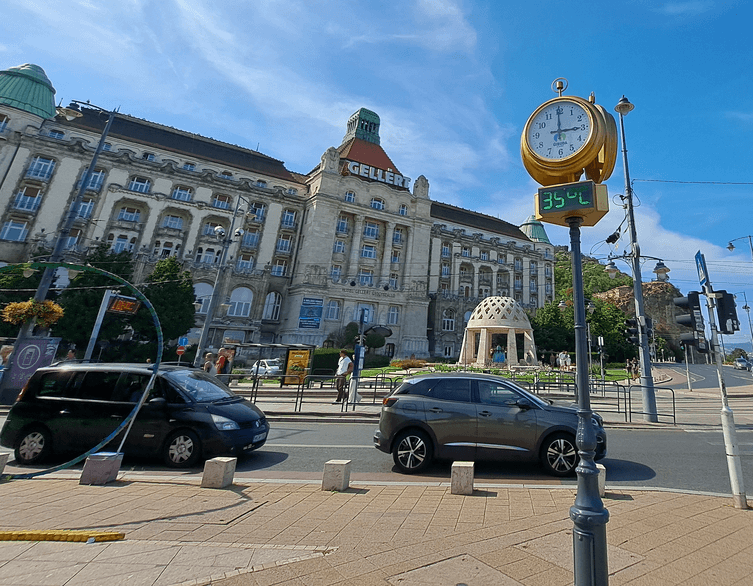
Extreme Heat Alert Extended in Budapest: What Every Visitor Needs to Know
Hungary’s Chief Medical Officer has extended the country’s highest-level heat alert, Level 3, keeping it in force across the entire nation...
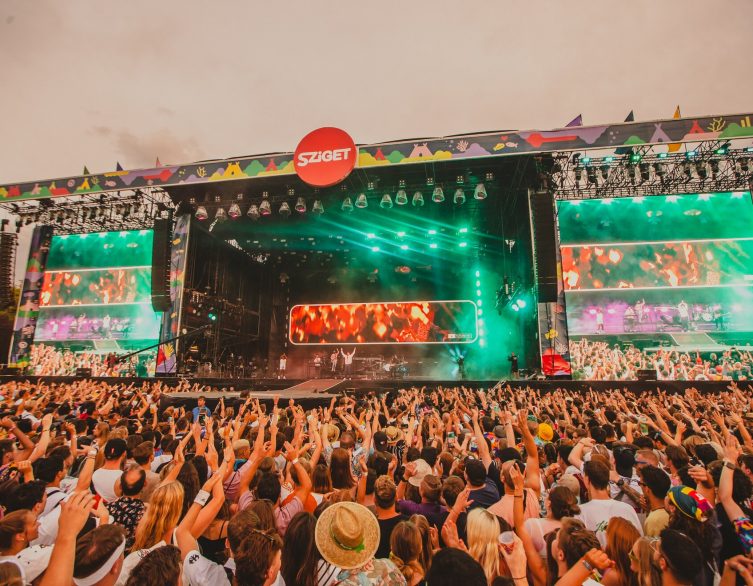
Staying Cool at Sziget Festival: How Budapest’s Biggest Event Handles the Summer Heat Alert
If you’re packing your bags for Sziget Festival this August, there’s one more thing worth knowing before you head to Óbudai (Óbuda)...

Beat the Heat: Your Guide to Staying Cool in Budapest’s City Park
When the pavement starts radiating heat and the sun feels relentless, Budapest’s City Park, known locally as Városliget, turns into one of...

Beating the Budapest Heat: Mist Gates Are Your Friend, Fountains Are Not
When Budapest’s summer temperatures climb toward the 35°C to 40°C range (95°F to 104°F), the city doesn’t just leave you to fend...
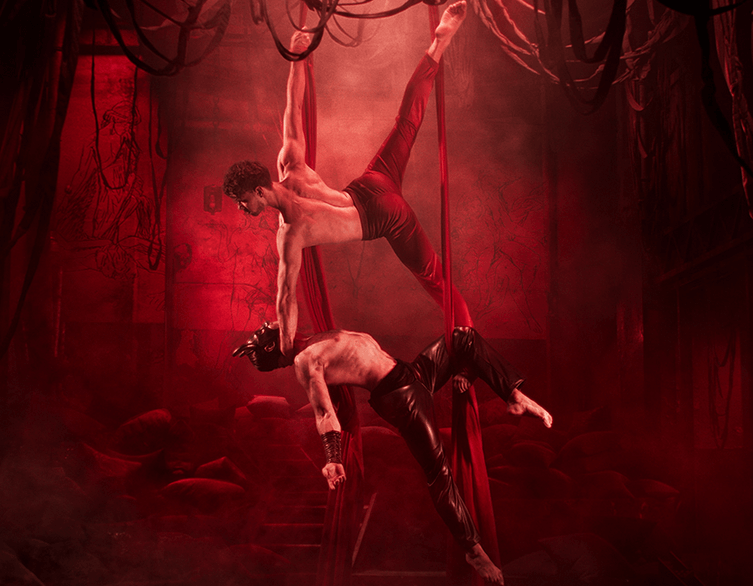
Walk My World: Budapest’s World-Famous Immersive Show Returns This Fall
The world famous immersive show Walk My World returns this fall, bringing its epic tale of gods, heroes, and doomed love back to Budapest for 40...
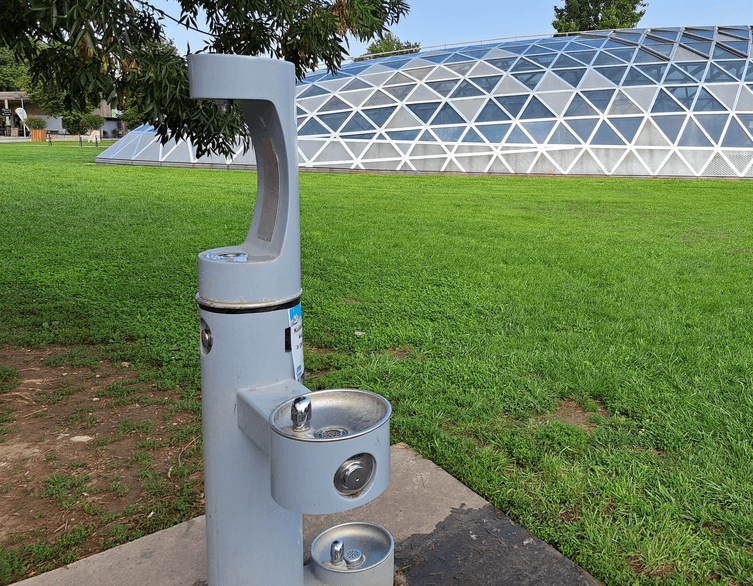
Stay Hydrated in Budapest: Free Drinking Water Fountains You Need to Know About
Budapest is a city made for exploring on foot. From the cobblestone streets of the Castle District to the buzzing ruin bars of the Jewish Quarter,...
Related events