Pünkösd: Discovering Hungary’s Colorful Pentecost Traditions
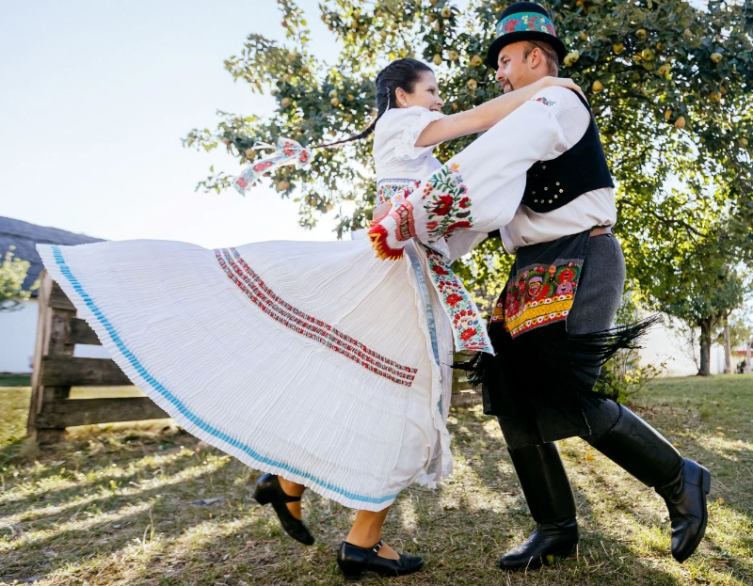
Pentecost — known in Hungarian as Pünkösd — is one of the most enchanting and culturally rich holidays on the Hungarian calendar. The word pünkösd itself derives from the Greek pentēkostē, meaning “fiftieth,” referring to the fifty days counted from Easter Sunday. It marks the descent of the Holy Spirit upon the apostles in Jerusalem — the moment the early Christian community transformed into an active, missionary Church, which is why Pentecost is often called the birthday of Christianity. In Hungary, however, it is so much more than a purely religious observance: over the centuries, ancient Magyar folk customs, pagan fertility rites, and Christian traditions have woven together into a uniquely Hungarian celebration, making Pünkösd weekend a truly special time to visit Budapest and the wider country.
A Long Weekend Like No Other
In Hungary, Pentecost is a two-day public holiday — both Sunday and Monday are official bank holidays, giving locals a beloved long weekend filled with family gatherings, outdoor events, and cultural programmes. In 2026, Pentecost Sunday falls on 24 May, with the Monday holiday on 25 May. For tourists, this long weekend offers a rare window into living Hungarian folk traditions that are otherwise hard to witness. Keep in mind that many shops and offices close on these days, so plan your practical errands in advance.
The Pentecost King and Queen
Perhaps the most beloved folk custom is the election of the Pentecost King (Pünkösdi király). Dating back to the Middle Ages, this tradition saw young bachelors compete in tests of strength and skill — horseback riding, wrestling, and skittles — and the winner was crowned king for an entire year. His privileges were considerable: he was invited to every feast, wedding, and celebration, he could drink for free at the local pub, and he was even exempt from corporal punishment for minor offences. This is also the origin of the famous Hungarian idiom “pünkösdi királyság” (“Pentecost kingship”) — used to describe short-lived fame or glory.
Best deals of Budapest


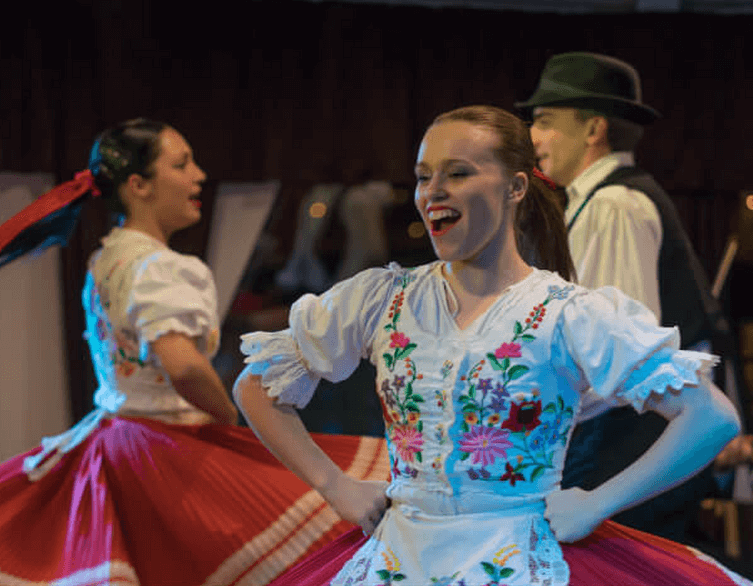


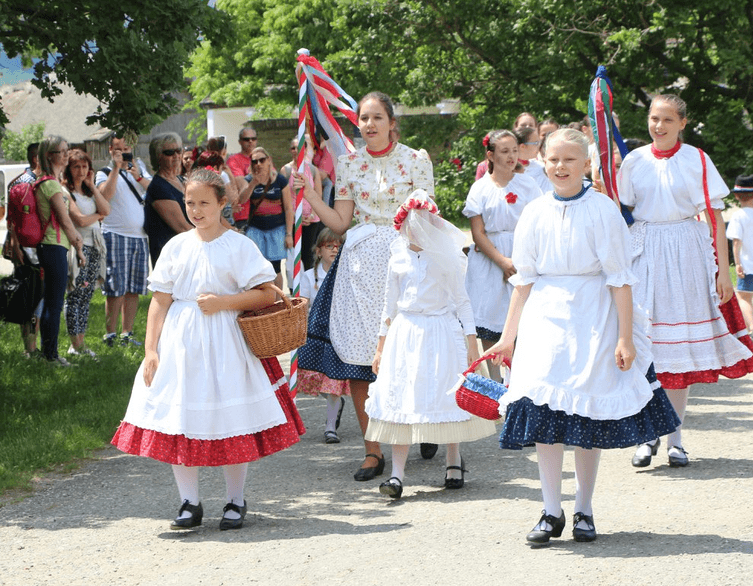
Equally charming is the tradition of the Pentecost Queen’s Walk (Pünkösdi királynéjárás). A group of girls, dressed in festive folk costumes, would select the youngest and most beautiful among them as their queen. Clad in a white dress and a flower crown, and with a red veil draped over her head, the queen was led door to door through the village at the head of a decorated procession. The group sang fertility charms and dance songs, lifting the queen up at the end of each performance, while collecting small gifts from the households they visited. In some places, the Pentecost King and Queen would walk the village streets together, surrounded by young people singing and reciting rhymes — a custom known as pünkösdölés.
Green Branches and Nature Magic
One of the most visually striking Pentecost customs is green-branching (zöldágazás). Birch twigs, elderberry branches, and fruit-tree boughs were fastened to the gates, doors, and fences of homes and stables. The purpose was twofold: to drive away evil spirits and to symbolically call summer into the village, banishing the last traces of winter. In some regions, a maypole adorned with colourful ribbons and small gifts was erected in front of the home of an unmarried girl — a romantic gesture from a hopeful suitor. The maypole, traditionally raised on 1 May, was ceremonially pulled down at Pentecost.
Courtship Customs and the Peony
Pentecost was historically one of the most important times for young people to express romantic interest. A suitor would place a peony flower (bazsarózsa) — the emblematic flower of Pünkösd — in the window of the girl he admired. If she returned his feelings, she would weave a wreath and present it to him. Another touching custom called mátkázás involved a suitor sending a basket of scones and wine to his beloved; if she felt the same way, she would send back a similar basket in return. The peony was also sprinkled into bathing water for good health, and its symbolism of love and renewal is still deeply associated with the holiday today.
Festive Food and Folk Beliefs
No Hungarian holiday is complete without a laden table. At Pentecost, families traditionally prepared lamb or mutton stew, poultry, and beef. Scrambled eggs held special significance as a symbol of fertility, and sweet baked goods were essential: braided brioche (fonott kalács), cottage cheese pie, and poppy seed rolls all graced the Pentecost table.
Hungarian folklore also gifted Pünkösd with a rich set of beliefs and superstitions:
- Fine Pentecost weather is said to promise an excellent wine harvest; rain, on the other hand, is considered a bad omen
- Morning dew collected at Pentecost was believed to carry healing and magical powers — used as a remedy for eye ailments and freckles
- Tea brewed from elderflowers picked at Pentecost was given to the sick as a restorative
- A child born at the dawn of Pentecost is said to be blessed with lifelong luck
- Herbs gathered at dawn carry special healing powers
- By tradition, it was forbidden to harness animals or bake bread on Pentecost day
- Burning bread crusts and scattering the ashes on cornfields was believed to ensure a rich harvest
The Csíksomlyó Pilgrimage
For the spiritually inclined visitor, no mention of Hungarian Pentecost is complete without the Csíksomlyó Pilgrimage in Transylvania — a tradition so significant it has been declared a Hungarikum (a uniquely Hungarian cultural treasure). Each year, tens of thousands of pilgrims travel to the Franciscan shrine of Csíksomlyó, walking in village processions called keresztalja, carrying banners of their patron saints. It is the largest Catholic religious gathering of Hungarians in the entire Carpathian Basin.
What to Do in Budapest at Pentecost
If you are spending Pünkösd weekend in Budapest, you are in luck. The open-air Skanzen Museum (Hungarian Open Air Museum) in nearby Szentendre regularly organises a full weekend of Pentecost folk events, where you can witness the Queen’s Walk, traditional dances, and crafts in an authentic village setting — a wonderful outing for families with children, too. Budapest’s thermal baths and parks also come alive during the long weekend, and the city’s ruin bars and cultural venues typically host special seasonal programmes.
Pünkösd is a reminder that Hungary’s soul is deeply rooted in its traditions. Whether you stumble upon a folk dance in a village square, admire a gate adorned with fresh green branches, or simply enjoy a slice of sweet brioche with locals — this holiday offers a glimpse of Hungarian culture at its most alive.
Practical note for tourists: Both Pentecost Sunday and Monday are public holidays in Hungary. Most supermarkets and shops will be closed or open on reduced hours. Plan ahead, and embrace the slower, festive pace of the long weekend!
Related news
Related events