Budapest Is Drying Out — And Here’s Why You Should Care (Even on Vacation)
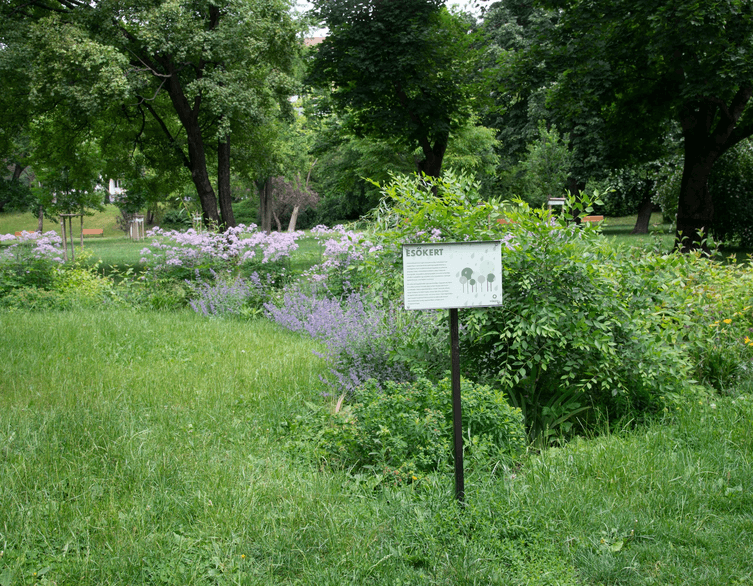
If you’ve arrived in Budapest this spring expecting lush green parks and a mighty, roaring Danube, we have some news for you. The river is looking a little… modest right now. The trees are working hard. And somewhere in the city, a landscape architect is probably staring at the sky and willing a cloud to appear. Budapest is in the grip of a serious drought, and it’s the kind of story that touches everything from the river you’re photographing to the park bench you’re sitting on.
The Danube Is Looking Unusually Humble
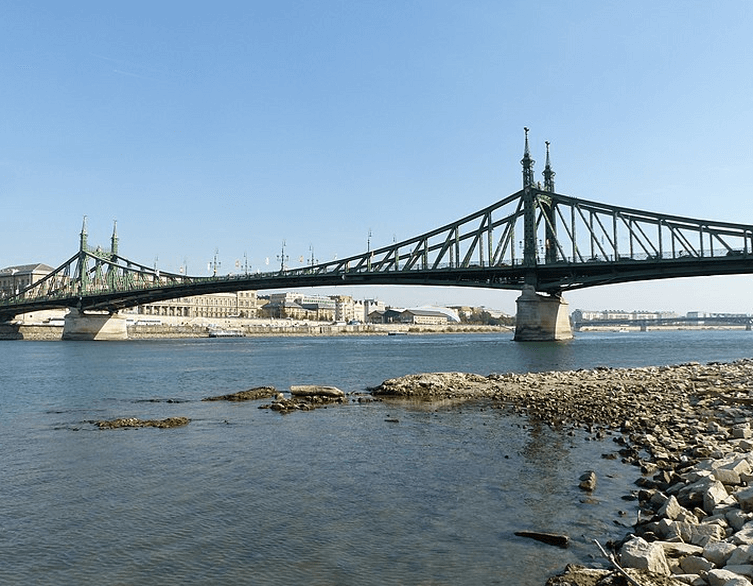
Let’s start with the big one. The Danube — that grand, iconic waterway that defines Budapest’s skyline and has inspired poets, composers, and countless Instagram posts — has dropped to critically low levels. Weeks of almost no rainfall have left the river looking like a shadow of its usual self, with water levels falling below 100 centimeters on most sections. Near Komárom, readings dropped to just 54 centimeters. Near Esztergom, upstream from Budapest, a mere 34 centimeters were recorded in early May. That’s not a river — that’s an awkward puddle with ambitions.
In some stretches near Esztergom, the water has receded so far that locals are reportedly crossing the Little Danube on foot. The Neszmély ferry has suspended operations due to the low water levels. And in Budapest itself, an old acquaintance has resurfaced — literally. The Famine Rock (Ínség-szikla), a rock formation in the Danube that only emerges during extreme droughts and historically served as a grim omen of hardship ahead, is visible again. Locals know that when the Famine Rock appears, conditions are serious. It’s a geological mood ring, and right now it’s flashing red.
This April Was Drier Than It’s Been in Over a Century
The drought isn’t just an inconvenience — it’s historically significant. This April was the driest in more than 100 years, a record that puts the current situation firmly in the territory of climate emergency rather than a bit of unfortunate weather. While the winter brought enough rain to keep moisture in the deeper soil layers, the complete absence of spring rains has left the surface bone dry. The Great Plain (Alföld) region has already declared a water shortage emergency, and the effects are rippling across the entire country. The lakes near Tata, for instance, are losing water so rapidly that the fish population is under threat.
For Budapest specifically, this means the city is bracing for what could be the toughest summer its trees, parks, and green spaces have ever faced. That’s not a figure of speech — Budapest’s chief landscape architect, Sándor Bardóczi, has said plainly that the city’s trees may be heading into the hardest summers they’ve ever endured.
Best deals of Budapest











Budapest’s Trees Are Fighting for Their Lives
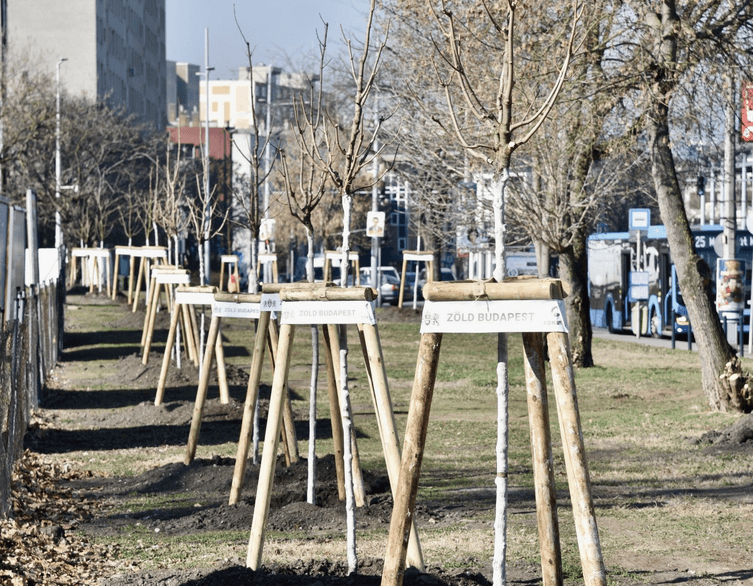
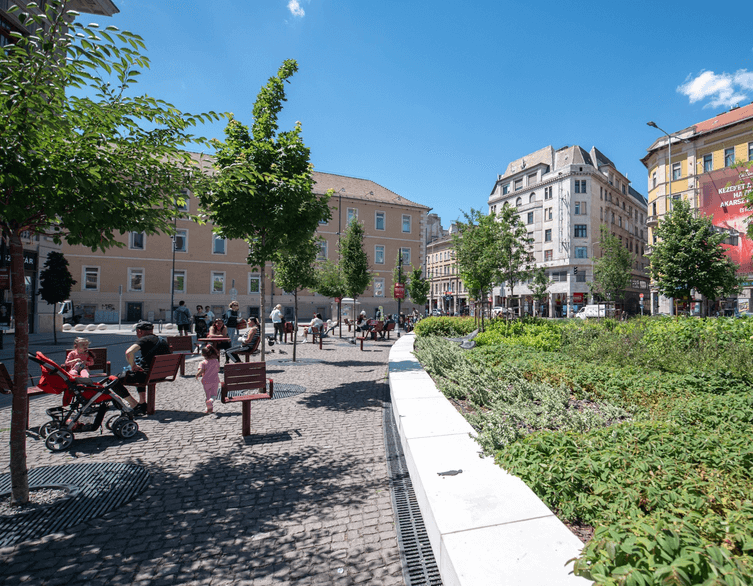
The people responsible for keeping Budapest green have been quietly working on this problem for years, and the drought has made their work more urgent than ever. The city’s landscape team and the experts at FŐKERT — the public company managing Budapest’s green spaces — have developed an entirely new tree-planting system in response to the changing climate. It uses specially engineered structural soils that retain more water, allow better airflow around root systems, and provide richer nutrients. The goal is simple: give young trees a fighting chance of surviving the kind of extended heatwaves and droughts that are becoming the new normal.
Bardóczi has noted that when these ideas were first introduced, they were met with confusion — planting trees in structural soil was a radical departure from decades of established practice. Now, others are following. But the focus isn’t only on new planting. The appeal going out to Budapest residents and visitors alike is this: right now, what the city needs is not just more trees, but help protecting the ones already there. Watering, caring for, and simply paying attention to existing trees matters enormously when the ground is this dry.
How Budapest Is Fighting Back: Sponge Cities, Green Roofs, and Pocket Parks
Long before this spring’s drought made headlines, Budapest had already started thinking seriously about its relationship with water — and with climate resilience more broadly. One of the most imaginative responses is the Sponge City concept, part of the LIFE – Urban Rain project. The central idea flips conventional urban planning on its head: instead of rushing rainwater away through drains and sewers as fast as possible, the city tries to absorb and retain it. Think of the city as a giant sponge — soaking up rain when it falls, storing it, and releasing it slowly when the ground needs it most.
In practice, this means installing underground rain reservoirs beneath public buildings, where stored water can later be used for irrigation, road cleaning, and even toilet flushing. It also means building rain gardens, permeable pavements that let water seep into the ground rather than run off into sewers, green roofs that absorb rainfall and insulate buildings, and water retention basins tucked into parks. The Twelfth District — Hegyvidék — has been a particular leader in this approach, running one of the first systematic sponge city pilot projects in Hungary, with plans to scale these solutions across the whole city.
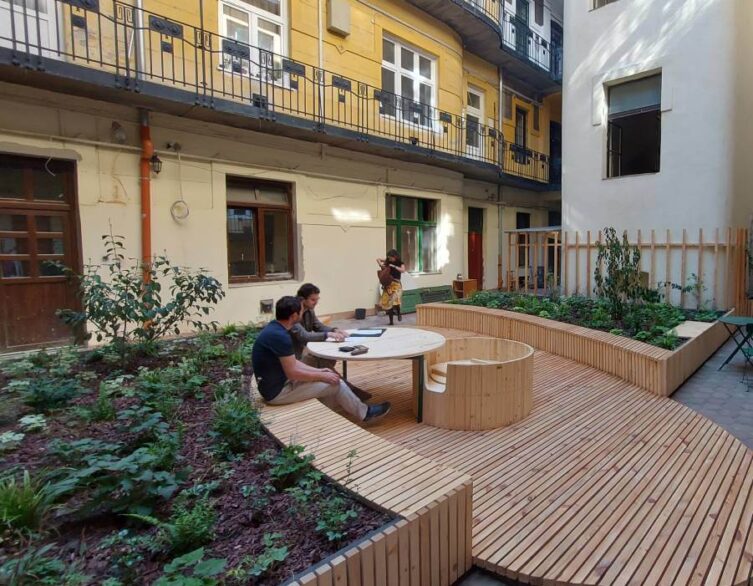
Then there are the pocket parks. In densely built central neighborhoods, apartment buildings traditionally sit around internal communal courtyards that have, over the decades, been paved over with concrete. The city has been quietly removing that concrete, turning these grey slabs back into small green gardens. It sounds modest, but these tiny spaces improve local water retention, cool the surrounding buildings, and give city-center residents somewhere genuinely pleasant to sit. Budapest is also part of the European Commission’s Mission for 100 Climate-Neutral and Smart Cities, having signed a Climate City Contract committing to cutting carbon emissions by 80% in the coming decades. A dedicated Budapest Climate Agency, launched in 2024, is now focused on accelerating the transition — starting with the city’s buildings, which account for a striking 60% of Budapest’s total greenhouse gas emissions.
None of this makes the current drought disappear. But it does mean that when you walk through Budapest’s parks, cross its bridges, or notice a peculiarly green rooftop on an otherwise unremarkable building, you’re looking at a city that is genuinely trying to adapt — not just talking about it.
No Mow May: The Movement That Asks You to Be Gloriously Lazy
Amid all this climate anxiety, there’s a pleasingly simple idea gaining ground — in Budapest and across much of Europe. It’s called No Mow May, and the premise is exactly what it sounds like: don’t mow your lawn in May. Put the lawnmower away, let the grass grow a little wild, and see what happens.
What happens, as it turns out, is rather wonderful. Dandelions — those cheerful yellow “weeds” that most gardeners attack with the enthusiasm of a personal vendetta — are actually one of the most important early-season food sources for bees, bumblebees, and other pollinators. Wild daisies, clover, and speedwell also emerge when the mower stays silent. These aren’t just pretty; they’re essential pit stops for insects that are, frankly, more important to our food supply than most of us like to think about.
There’s also a practical drought-related reason to let the grass grow. Taller grass blades shade the soil beneath them, slowing moisture evaporation and keeping the ground cooler. A denser, wilder patch of lawn handles a July heatwave dramatically better than a closely cropped, sun-scorched putting green. So the “lazy gardener” approach is, in fact, the smart one. Who knew that doing nothing could be so ecologically heroic?
A Word of Nuance for the Enthusiastic Non-Mowers
The No Mow May movement originated in the UK through the conservation charity Plantlife, and it comes with a caveat that tends to get lost in translation — including in Hungary. The idea isn’t simply to abandon your lawn for a month and call yourself an environmentalist. The original guidance encourages scattering wildflower seeds into the grass and waiting for them to set seed before mowing again. The goal is to create a genuinely self-sustaining wildflower meadow, not just a slightly shaggier version of your normal lawn.
If your garden is pure grass with nothing else in it, a month of not mowing will produce taller grass — which is still better for soil moisture than a trimmed one, but it won’t automatically become a bee paradise. The good news is that even a partial effort counts. Leaving sections of the garden wilder, cutting paths through for dogs and children while letting inner patches flower, is a perfectly valid approach. And no, you don’t need to worry about ragweed allergies in May — ragweed doesn’t flower until late summer.
What This All Means If You’re Visiting Budapest Right Now
If you’re here as a tourist, none of this means your trip is ruined — far from it. Budapest in spring remains spectacular. But it does add a quietly fascinating layer to what you’re seeing. The lower Danube you’re photographing from the Chain Bridge is a climate story unfolding in real time. The trees lining the grand boulevards are being fought for, root by root, by a team of people who genuinely care. The scruffier patches of grass in the parks might be part of an intentional effort to protect pollinators.
And the Famine Rock sticking out of the Danube? That’s not a quirky tourist attraction. It’s a centuries-old warning sign that humans carved meaning into long before climate science existed. The fact that it’s visible again in 2026 is worth a pause and a quiet moment of reflection, even between the thermal baths and the chimney cake.
What You Can Do — Even as a Visitor
You don’t need to live in Budapest to be part of the solution, even in a small way. If you’re staying somewhere with a garden or terrace, water the plants. If you’re exploring the city’s parks and notice a young tree surrounded by dry, cracked earth, a bottle of water poured at its base makes a real difference. Being mindful about water use during your stay — especially during a drought year — is a small but meaningful act of solidarity with a city that’s working hard to stay green.
Budapest has survived considerably worse than a dry spring. It’s a city built on resilience, hot springs, and a slightly world-weary charm that makes it one of Europe’s most captivating destinations. But right now, it could use a little rain — and a little help from everyone passing through.
Related news

Budapest’s Greenest Summer Event: Climate Weekend on the Danube Promenade
Budapest in June is alive with sunshine, river breezes, and vibrant city life, but this year, there is something even more meaningful to experience....
Budapest’s Greenest District Is Fighting Back Against Flash Floods — and the Results Are Beautiful
If you’ve ever strolled through the leafy hills of Budapest’s 12th District — known locally as Hegyvidék, meaning “Highland”...
Budapest’s Hunger Rock Is Back — And It’s Both Fascinating and Alarming
If you happen to be strolling along the Danube embankment in Budapest right now, you might notice something a little odd poking out of the river...

Green Ways to Explore Budapest: Your Guide to Eco-Friendly Transport
Earth Day is a great reminder that protecting our planet doesn’t require grand gestures. In fact, some of the most meaningful changes start...
Budapest Is Getting Greener: Over 560 New Trees Planted Across the City This Spring
If you’re visiting Budapest this spring, you might notice something fresh in the air — and not just the warmer temperatures. The city is...
Budapest Is Going Green — One Courtyard at a Time
If you’ve ever wandered through Budapest’s inner districts and peeked through the iron gates of an old apartment building, you’ve...

Understanding Budapest’s Climate and Green Spaces Today
Budapest’s environment faced some tough challenges in 2024, as laid out in the city’s official 2025 state assessment, approved last December...
Budapest’s Sponge City Initiative: A Sustainable Approach to Urban Water Management
In the heart of Hungary, Budapest is embracing an innovative approach to urban water management known as the “Sponge City” concept. This...