UPDATE! – Budapest Heatwave Warning: What Tourists Need to Know This Weekend (June 27–30, 2026)
If you’re planning to explore Budapest this weekend, there’s one thing that should be at the top of your packing list — and it’s not a guidebook. Hungary is currently in the grip of a serious heatwave, and as of Saturday, June 27, the country’s Chief Medical Officer has upgraded the national heat alert to its highest level: a Level 3 heat emergency, valid through Tuesday, June 30 July 1 at midnight. Temperatures across most of Hungary are expected to hit between 35 and 41°C (95–106°F), and nights won’t bring much relief either, with the mercury unlikely to drop below 25°C even after dark.
This isn’t just uncomfortable weather — it’s a genuine public health situation. Hungary’s heat alert system, developed back in 2005, exists precisely for moments like this. A Level 3 alert means forecasters expect the daily mean temperature to stay at or above 27°C for at least three consecutive days. On top of that, the national meteorological service HungaroMet has issued a red warning for the weekend, their most serious tier, indicating daily mean temperatures could exceed 29°C. In short: this weekend is going to be intensely hot, and it pays to be prepared.
Update: Heat Emergency Extended Through Wednesday, July 1
If you’re reading this on Tuesday or planning your visit into the start of July, here’s what you need to know: Hungary’s Chief Medical Officer has extended the Level 3 heat emergency — the highest tier in the country’s alert system — through midnight on Wednesday, July 1, 2026, covering the entire country. The alert has now been in effect since June 20, and with temperatures in some areas still approaching 40°C, there’s no sign of relief just yet.
The official advice remains consistent: stay out of direct sunlight between 11am and 4pm, keep hydrating steadily throughout the day, and avoid alcohol, caffeine, and sugary drinks. If you can structure your sightseeing around the cooler morning and late afternoon hours, you’ll have a far more comfortable experience — and a safer one.
More Water Points Than You Might Think
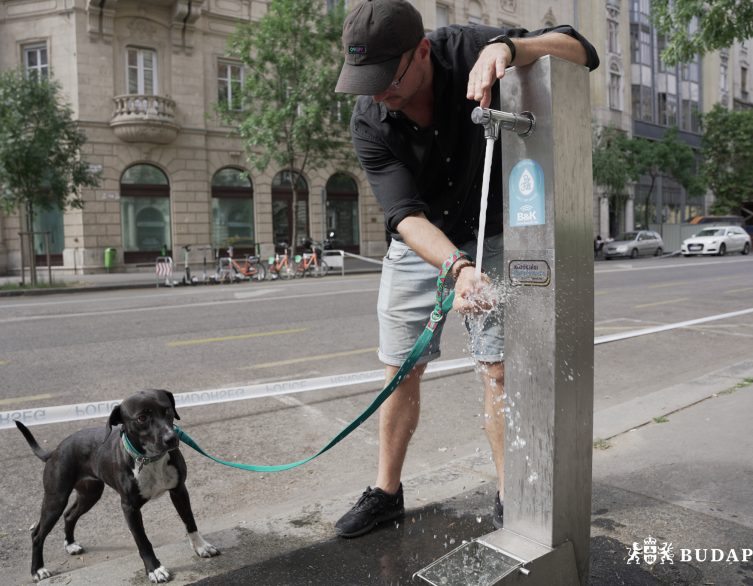
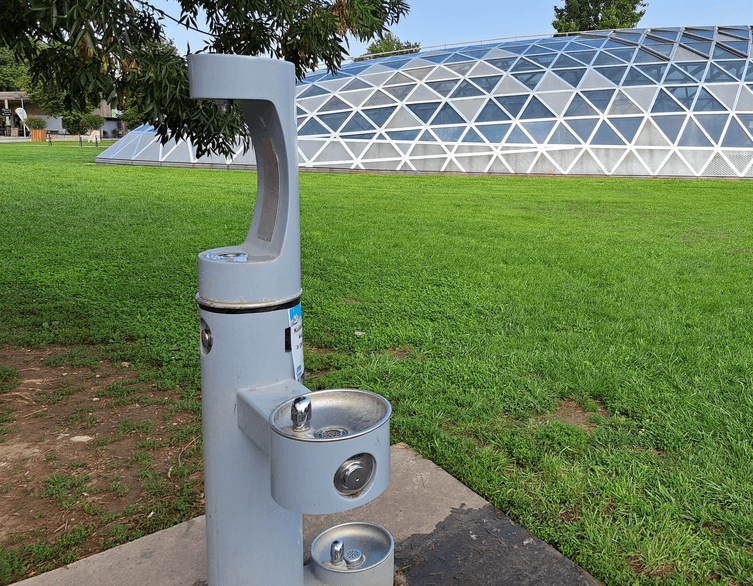
Good news on the hydration front: Budapest’s free water infrastructure is even more extensive than many visitors realise. In addition to the dedicated water distribution points run by Budapest Waterworks, there are 63 public drinking fountains and 747 public tap outlets scattered across the city. All of these are mapped on kozkutak.hu and findable in the BudapestGO app, so keeping your reusable bottle topped up really shouldn’t be an issue wherever you are in the city.
Best deals of Budapest









A New Warning: Carbon Monoxide Risk in the Heat
This one tends to catch people off guard. Since June 20, firefighters have been called out more than 120 times for carbon monoxide-related incidents — a hazard that actually increases in hot weather. Here’s why: high temperatures reduce chimney draft, which can cause air blockages that allow carbon monoxide to build up near open-flue water heaters. If your accommodation uses this type of water heater, make sure there’s a carbon monoxide detector in the space, and don’t assume it’s a winter-only concern. If you feel suddenly dizzy, nauseous, or disoriented indoors, get fresh air immediately and call 112.
Wildfires Are a Real Risk Right Now
A nationwide open-fire ban is currently in effect across Hungary, applying to all forests and a 200-metre radius around them. The vegetation across the country is extremely dry, and even a minor heat source can trigger a fire. If you’re planning any day trips outside Budapest — to the hills of the Danube Bend, Lake Balaton, or the countryside — be especially mindful. No campfires, no disposable barbecues, and no smoking in or near wooded areas.
Firefighters Have Now Responded to Over 200 Welfare Checks
Since the alert began on June 20, firefighters have been called to check on more than 200 elderly people living alone who hadn’t been heard from. It’s a striking figure, and a reminder that this heat is not just uncomfortable — it’s genuinely life-threatening for vulnerable people. If you’re in Budapest and notice an elderly neighbour, fellow guest, or anyone on a park bench who seems unwell, don’t hesitate to call 112. You don’t need to speak Hungarian; the operator will assist in English.
What the Authorities Are Doing
Budapest and the wider Hungarian emergency services are taking the situation seriously. The National Ambulance Service is operating on heightened readiness, with extra presence deployed in the most affected areas. Hospitals are closely monitoring their capacity and air conditioning systems, and emergency medication stockpiles are being maintained. Railway operators are keeping an eye on rail temperatures and may introduce temporary speed restrictions if tracks overheat — something worth bearing in mind if you’re travelling by train across the country.
For those getting around the city, public transport operators have put passenger protection measures in place during extreme heat, which includes providing drinking water at major hubs. Police are working alongside local authorities and social services to check in on elderly residents, people living alone, and other vulnerable groups. Since the alert was raised, firefighters have already been called out nearly a hundred times to check on elderly people living alone who hadn’t been heard from — a sobering reminder of how dangerous this heat can be.
How Budapest Is Cooling Down the City Itself
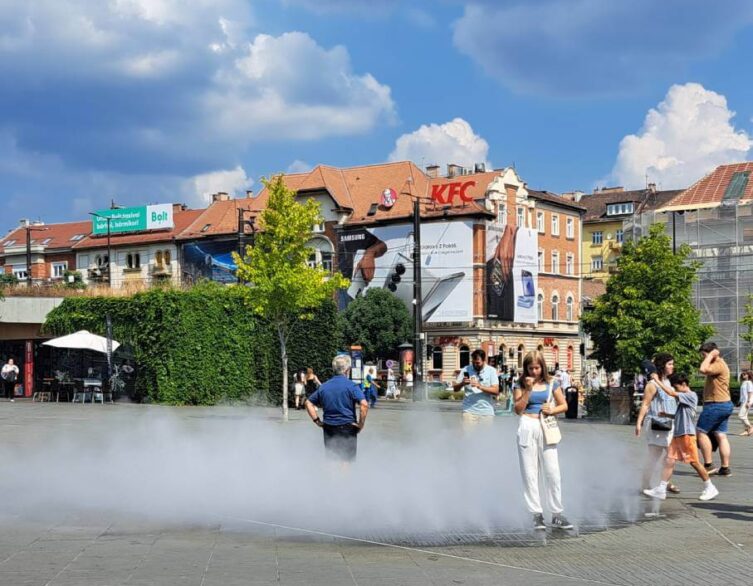
Beyond looking after its residents, the city is also actively working to cool down the urban environment itself. Street-cooling water sprays are being deployed across the hottest and most densely populated neighbourhoods to bring down surface temperatures, and the city is paying close attention to the maintenance of its green spaces, which play a crucial role in keeping things bearable. If you happen to pass through an area and notice what looks like a fine mist being sprayed across the streets or pavements, that’s entirely intentional — Budapest is doing its best to take the edge off.
Free Drinking Water Across the City
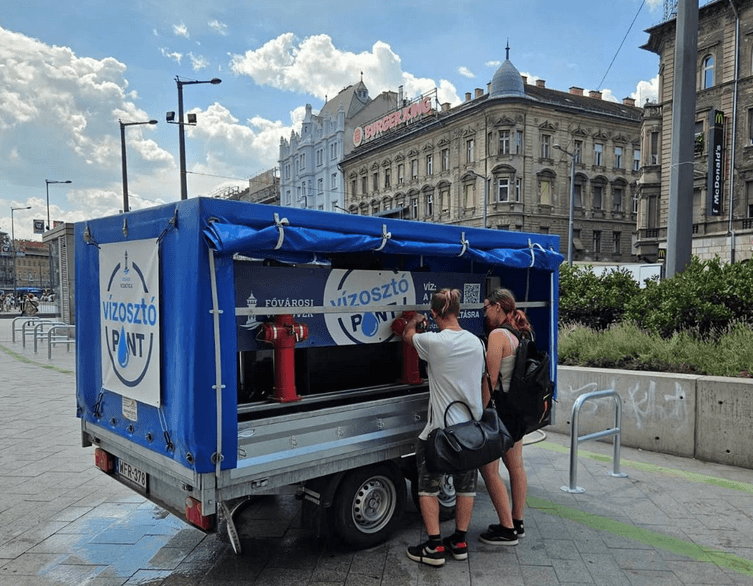
One of the most practical things to know as a visitor is that Budapest has set up a growing network of free water distribution points across the city, so you can refill your water bottle without spending a cent. The tap stands are operated by Budapest Waterworks and are clearly marked with the internationally recognized drinking water symbol — a pictogram showing a tap and a glass — so they’re easy to spot. The city is not providing plastic bottles or cups at these stations, in line with their environmental policy, so bringing your own reusable bottle is an absolute must.
Tap stand locations include Széll Kálmán Square (2nd district), Heltai Jenő Square in Békásmegyer (3rd district), Deák Ferenc Square (5th district), Astoria (Károly Boulevard, 5th district), Ferenciek Square (5th district), Kálvin Square (9th district), Móricz Zsigmond Square (11th district), and Kossuth Lajos Square near the Parliament Visitor Centre (5th district), among others. At Keleti Railway Station and City Hall Park, water is also available from tanker trucks, while Örs vezér Square has a tap stand similar to those at Széll Kálmán and Heltai Jenő. If you’re travelling on the metro, the M3 line between Nagyvárad Square and Újpest-Központ has 14 drinking water fountains courtesy of BKV, Budapest’s public transport operator — a handy option if you find yourself underground and running low. The full and regularly updated list of water points can be found at kozkutak.hu or in the BudapestGO app. If the water doesn’t feel cold right away, let it run for a few seconds — it’ll cool down.
How to Stay Safe in the Heat
Staying safe in this kind of heat is largely about common sense, but a few things are especially important to keep in mind. Hydration is your number one priority — drink water consistently throughout the day rather than waiting until you feel thirsty. Avoid alcohol, caffeine, and sugary drinks, as all of these increase your risk of dehydration. If you’re heading out to explore the city, wear light-coloured, breathable clothing, protect your skin with a high-SPF sunscreen, and don’t forget UV-blocking sunglasses and a hat.
During the hottest hours of the day — roughly between noon and 4pm — try to stay in the shade or duck into an air-conditioned space. Budapest’s many museums, galleries, shopping centres, and café-lined indoor passages make for ideal midday retreats, and you’ll find some of the world’s finest collections just a short walk from most tourist hotspots. The civil protection authority’s website also maintains a map of publicly accessible air-conditioned spaces if you need a cool-down spot in an unfamiliar neighbourhood.
If you’re planning a dip in one of Budapest’s famous thermal baths or outdoor pools, resist the urge to jump straight into the water when your body is overheated. Cool down gradually first — a splash on your wrists and the back of your neck goes a long way. Street fountains and ornamental water features are not suitable for drinking or cooling off; look for the designated mist gates that have been set up in various parts of the city instead.
A Word of Warning for Families and Pet Owners
This cannot be stressed enough: never leave children or pets in a parked car, not even for a minute, not even in the shade. Even a vehicle parked in partial shadow can reach life-threatening temperatures within minutes. If you see a child or animal left in a car, call Hungary’s emergency number 112 immediately.
The same number is the one to call if you suspect anyone — a fellow tourist, a local resident, an elderly person on a park bench — is suffering from heat exhaustion or heatstroke. Symptoms to watch for include confusion, hot and dry skin, a rapid pulse, and loss of consciousness. Quick action can save lives.
Staying Informed on the Go
For real-time alerts and updates throughout your stay, Hungary’s civil protection authority operates a free app called VÉSZ, available for download on both iOS and Android. It sends live notifications about the duration and severity of heat alerts and other weather emergencies, which is genuinely useful if you’re spending several days in the country. Weather updates from HungaroMet are also available in English via their website.
Budapest is a magnificent city to explore, and even a heatwave shouldn’t stop you from enjoying everything it has to offer — as long as you plan around the heat, stay hydrated, and keep a close eye on the forecast. Grab your water bottle, pick up a city map, and make the most of those cooler morning hours. The city is absolutely worth it.
Related news
Budapest Heatwave 2026: Record Temperatures Are Hitting the City
Budapest is in the grip of a serious heatwave right now, and it’s not letting up. On Sunday, June 28, a new daily heat record was set in Budakalász,...

International Day Against Drug Abuse: What Every Visitor to Budapest Should Know About Hungary’s Drug Laws
Today, June 26, marks the United Nations International Day Against Drug Abuse and Illicit Trafficking — a global awareness day established by the...
Staying Cool in Budapest: Everything You Need to Know During the Heatwave
Budapest is brilliant in summer — but this weekend, the heat is no joke. A second-level heat alert is in effect across Hungary from June 20 through...
Heat Warning in Budapest: What Tourists Need to Know This Weekend (June 20–23, 2026)
If you are visiting Budapest this weekend, there is one thing you need to plan around just as carefully as your museum visits and river cruises:...
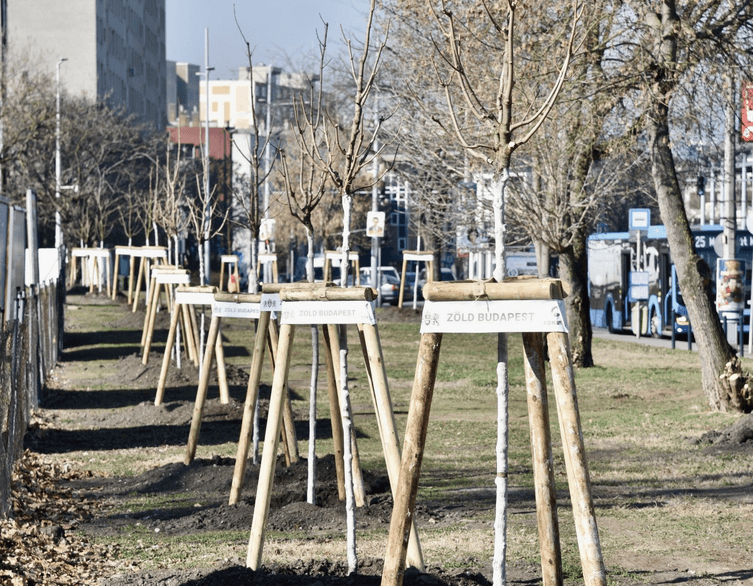
Budapest’s Urban Trees Need You: Join the Volunteer Water Giver Campaign
Budapest is one of Europe’s most beautiful cities — and a big part of that beauty comes from its trees. Those leafy giants lining the boulevards,...
Stay Hydrated in Budapest: Free Drinking Water Fountains You Need to Know About
Budapest is a city made for exploring on foot. From the cobblestone streets of the Castle District to the buzzing ruin bars of the Jewish Quarter,...
Budapest Is Heating Up: What Tourists Should Know About This Summer’s Climate “Red Alert”
If you’re planning a summer trip to Budapest, you’re probably picturing sunset walks by the Danube, ice‑cold fröccs on a terrace and lazy...