Budapest’s Oldest Tower Just Got Its Crown Back — And a Message for the Future Tucked Inside
If you’re strolling through Budapest’s city center this weekend, look up as you pass City Hall (Városháza) on Váci Street. After months of painstaking restoration, its historic clock tower has finally been lifted back into place, topped once again by its gleaming spire. It’s a small moment in the city’s calendar, but one with a story stretching back nearly three centuries, and it’s well worth a detour if you love uncovering the layers behind Budapest’s most familiar landmarks.
A Tower Older Than You’d Guess
City Hall itself wasn’t originally built to house bureaucrats at all. Construction began in 1716 as an “Invalidus House,” a home for soldiers wounded in the wars against the Ottomans. Architect Anton Erhard Martinelli envisioned a sprawling four-courtyard complex, though it was never fully realized because the medieval city walls couldn’t be demolished at the time. What did get finished, by 1741, included a three-story chapel space in the center of the building, consecrated in 1735. That chapel is now the building’s ceremonial hall, and the tower rising above it was originally built as a church tower, complete with two bells and a clock.
Here’s the detail that makes this tower special: it appears to be one of the oldest surviving towers in Budapest. It escaped major wartime damage during the World War II siege of the city, and remarkably, one of its two original bells survived every conflict and metal collection drive throughout history. The bell still bears its cast date of 1735, meaning it’s likely been hanging in place since the tower’s earliest days. For comparison, the tower of the Inner City Parish Church didn’t get its baroque spire until 1739, and the University Church’s towers weren’t finished until 1770.
Why the Tower Came Down in the First Place
Late in 2025, restoration crews discovered that much of the tower’s timber frame, particularly the wooden beams anchoring it to the roof, had rotted badly enough to require removal. On December 12, 2025, the spire was carefully lifted off the building for inspection and repair. Experts initially feared that up to 70 percent of the centuries-old wood would need replacing. As work progressed, though, the numbers flipped: roughly 70 percent of the original timber, including sections of the old boarding, turned out to be salvageable. Interestingly, the pine used in the original 18th-century construction proved denser and heavier than modern lumber, a small reminder of how differently things were built centuries ago. The tower received reinforced woodwork and a fresh zinc covering before being craned back into place on July 15, 2026, though finishing touches like masonry and carpentry work are still ongoing.
Best deals of Budapest







The Time Capsule Hiding in Plain Sight
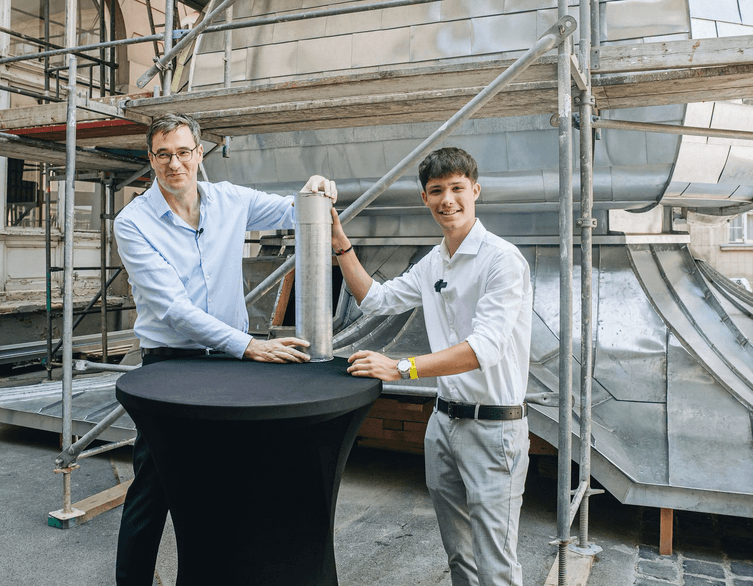
Long before the current restoration began, researchers digging through historical newspaper archives on Arcanum stumbled on a tantalizing clue: during the tower’s last major renovation in the late 1960s, workers had hidden a time capsule inside the metal sphere beneath the tower’s lightning rod. For years, that detail lingered as an intriguing bit of trivia. When the spire finally came down in December 2025, the moment of truth arrived, and sure enough, a welded metal tube emerged from inside the sphere, sealed since 1968.
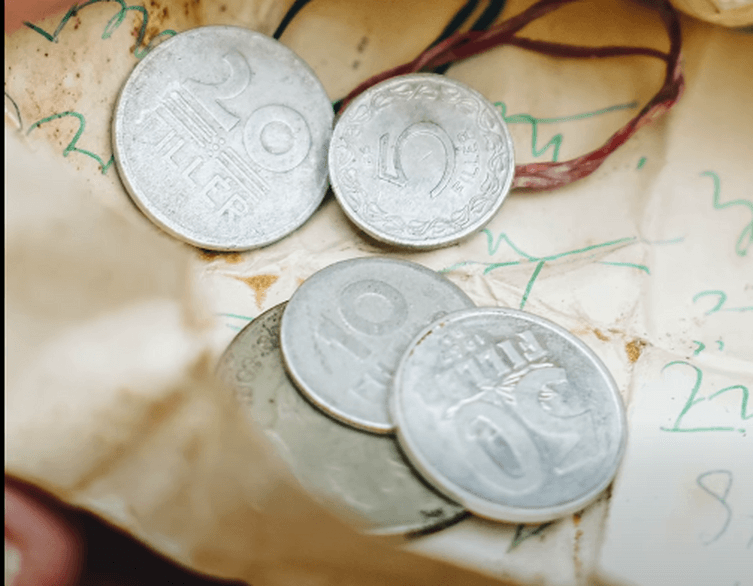
Opening it revealed a genuine snapshot of that era. Inside were copies of two now-defunct Hungarian newspapers from August 1968, along with a handful of coins in denominations of 5, 10, 20, and 50 fillér plus a 5 forint piece, architectural plans from the 1960s restoration, and documentation describing the renovation work. The newspaper front pages captured a vivid moment in history, referencing the crushing of the Prague Spring, the ongoing Vietnam War near Saigon, and even a report on the world’s youngest heart transplant patient at the time. Charmingly, the capsule also contained a checklist of items meant to go inside it, evidently someone’s carefully ticked-off to-do list from over fifty years ago.
A New Message Sealed for the Future
Rather than let the tradition end there, the restoration team decided to continue it. Working with members of the Budapest Student Assembly, they assembled a brand-new time capsule and placed it inside the tower’s sphere before it went back up. This one holds a more contemporary time capsule of its own: newspaper editions from the day after Hungary’s April elections, present-day coins, documentation from the current restoration project, a glossary of modern slang, and personal letters written by young Budapest residents describing their daily lives. Well-known musicians and performers also contributed messages addressed to whoever opens the capsule next, presumably decades or even centuries from now.
Why It’s Worth a Look This Weekend
For visitors exploring Budapest’s Inner City this weekend, the newly restored tower offers a small but meaningful photo opportunity, especially paired with a walk through the surrounding historic district. City Hall sits close to other central landmarks, making it easy to fold into a broader afternoon of sightseeing. Beyond the visual appeal of the restored zinc spire and reinforced woodwork, there’s something quietly moving about standing beneath a structure that has quietly carried messages across generations, from soldiers recovering from Ottoman-era wars to Cold War-era newspaper archives to letters written by today’s Budapest teenagers for readers who won’t exist for decades. It’s a reminder that even a city’s most overlooked architectural details often have remarkable stories tucked just out of sight.
Related news