Budapest’s Big Four-Day Celebration: Everything Happening for August 20th
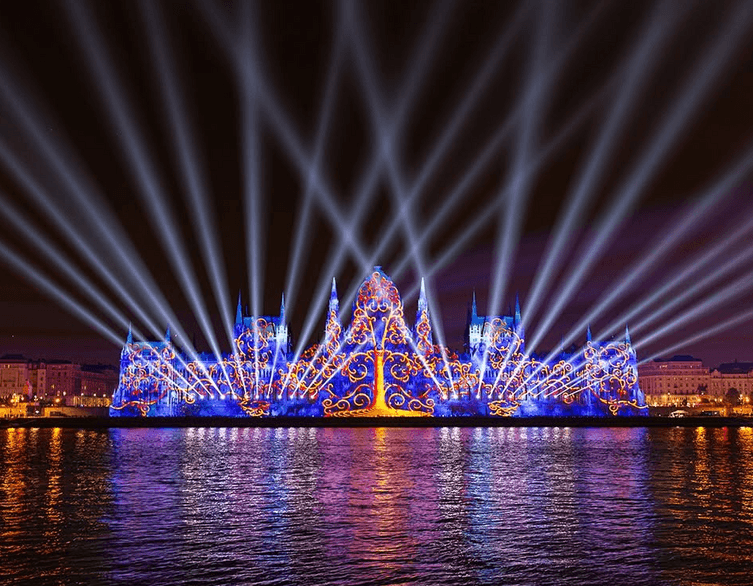
Hungary’s most important national holiday just got a serious upgrade, and if you happen to be in Budapest between August 19 and 22, you’re in for a four-day spectacle spread across ten locations, complete with a shortened but high-tech fireworks show, an all-night disco, and reasonably priced beer. Here’s a deep dive into everything a visiting tourist needs to know to make the most of it.
What August 20th Is All About
August 20th, or Szent István Nap, marks the founding of the Hungarian state and honors King Stephen I, the country’s first Christian monarch. It’s Hungary’s equivalent of a national birthday, blending solemn state ceremony with full-blown street party energy. This year’s edition, costing around 4 billion forints to stage, leans into the theme “a thousand years together in Europe,” and organizers from Centrum Production have deliberately avoided reinventing the holiday. Instead, they’ve kept the beloved traditional elements, the flag ceremony, the military parade, the religious procession, while wrapping the evening spectacle in modern staging, lighting, and sound design. The stated goal, according to government spokesperson Éva Magyar, is to make the country’s history “more immersive” for a new generation without erasing what makes the day meaningful. An interministerial coordination group and an operational staff team have been set up specifically to keep the sprawling four-day program running smoothly and safely.
Where to Be and When
The celebrations unfold across ten spots in the city, and each one has its own personality worth knowing about before you plan your route.
Kossuth Square and the Hungarian Parliament open the day at 8am on August 20th with the traditional flag-raising ceremony and the swearing-in of new military officers. From there, head to the riverbanks for the military and air parade over the Danube starting around 9am, visible from both the Pest and Buda embankments. The Parliament building itself throws open its doors for free, no registration needed, from August 20th through 22nd, a rare chance to walk through one of Europe’s most stunning legislative buildings without the usual ticket queue. Come nightfall, Kossuth Square shifts gears entirely: once the evening show wraps, it turns into an open-air disco. From 9:30pm, Anima Sound System takes over with a DJ set, followed by JumoDaddy and surprise guests from 10:30pm, then Abertura teams up with the folk-fusion group Matyó to carry the party through until 1:30am. It’s essentially a free, all-ages street party right in front of Parliament, something few European capitals offer on their national holiday.
Best deals of Budapest


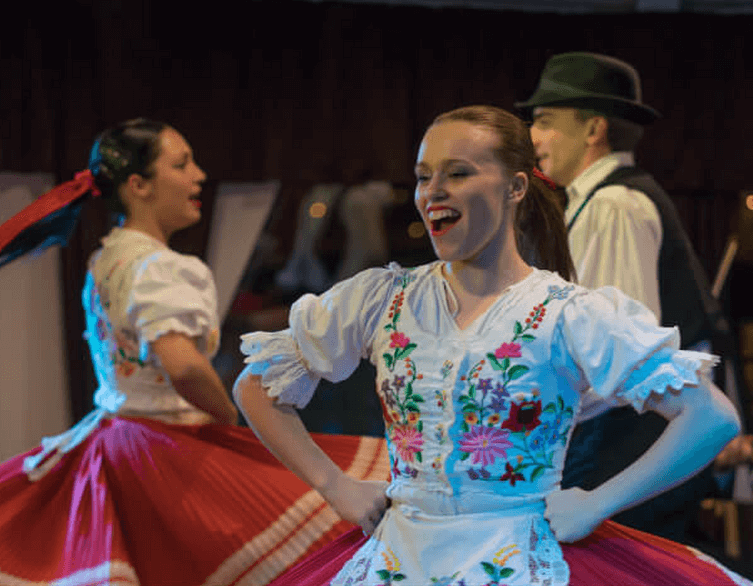



Down by Várkert Bazár, the beautifully restored terraced garden complex beneath Buda Castle, the Hungarian Flavors Street (Magyar Ízek Utcája) runs across multiple days, generally from around 10am until midnight, and this year extends its footprint to the Várkert embankment, Clark Ádám Square, Lánchíd Street, Ybl Miklós Square, Döbrentei Street, and Apród Street. This sprawling gastronomy festival, now well into its second decade, is the single best place to sample regional Hungarian cooking, from hearty stews to street food classics, alongside folk music, storytelling for kids, and blues and jazz sets that run late into the evening. Expect a lively program of live acts across the festival days, ranging from world music groups to swing bands and DJ sets, plus special appearances from folk puppet theatre for younger visitors.
Up in Buda Castle, the Festival of Folk Arts (Mesterségek Ünnepe) returns for its landmark 40th year, running from roughly 10am to 9:30pm and spotlighting pottery as this year’s featured craft, with the United States joining as guest of honor. Right alongside it in the same historic quarter, the Protestant Sokadalom gathering showcases Hungary’s Protestant church heritage through open-air concerts, a choir meet-up, an organ marathon, and exhibitions, running from about 10am to 5:30pm. The Carmelite Monastery in the Castle District also opens its doors for free visits during the day.
Meanwhile, Margaret Island transforms into family central for two days, August 20 and 21, with its Adventure Island (Élménysziget) program running from 10am to 6pm, packed with interactive children’s activities, movement games, and a dedicated Star Tent (Csillagsátor) hosting workshops and mini theatre performances. The island’s music stage, Beats Sziget, keeps things going well into the night with a genuinely eclectic lineup: folk-rock act Zabszalma opens the morning, electronic artist Дeva (Deva) takes the stage in the afternoon, Random Trip performs an LGT tribute set, Balkan brass legends Boban Marković Orkestar bring serious energy in the early evening, and alternative rock veterans Quimby headline at 9:30pm before DJ and radio host Infragandhi closes out the night. As the sun sets, the island’s Rose Garden becomes a Light Garden (Fénykert), glowing with elaborate light installations from 8pm until 1am across three consecutive nights, a genuinely magical, and very photogenic, spot for an evening stroll.
Over at the Müegyetem embankment, near the Budapest University of Technology, a two-day international electronic music festival takes over with serious production value: LED installations, immersive lighting, and a lineup that runs from DJ Reload in the late afternoon through German ambient-techno producer Christian Löffler in the early evening, finishing with Tolo and Falcao, the twin brothers behind Budapest’s legendary LavaLava party series, spinning until 1:30am.
Freedom Square (Szabadság tér) becomes a relaxed communal hangout, dubbed the Gasztrokert, or “gastro garden,” running an unusually long stretch from 8am until 3am, with food trucks and big screens for anyone who wants to follow the day’s ceremonies without fighting the crowds elsewhere. Over at Szent István Square and the Basilica, the Szent Jobb procession, one of Hungary’s most significant Catholic events, carries the mummified right hand of King Stephen through the streets starting at 6pm and running until 8pm, following the holiday’s ceremonial mass. And in the City Park (Városliget), the Hungarian Defence Forces run an all-day interactive program from 10am to 6pm letting visitors get up close with military vehicles and equipment.
The Evening Show and Fireworks
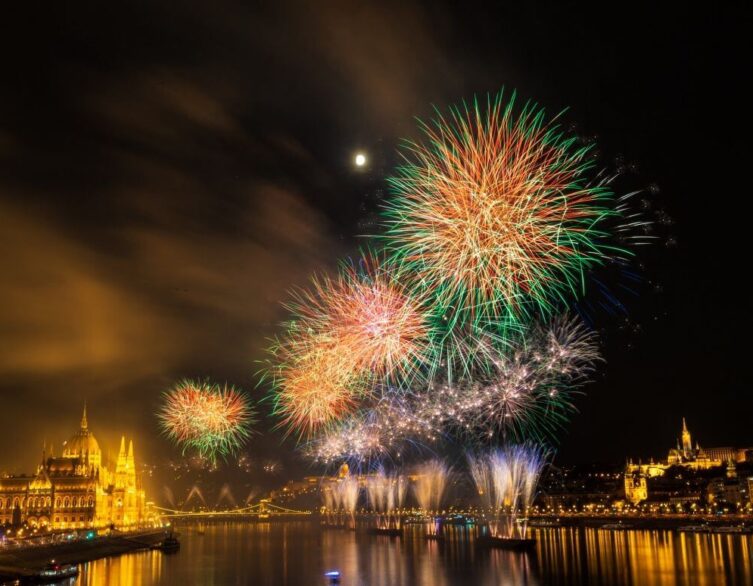
This year’s headline change is the fireworks display itself: shorter than usual, running just ten minutes starting at 9pm, but folded into a half-hour audiovisual show designed to tell Hungary’s history through modern visual technology and projection. Expect a full repeat screening around 10pm for anyone who misses the first showing, and the illumination doesn’t stop there either. The Parliament building and the Chain Bridge get lit up with projected light art continuing until 1am, making for a genuinely stunning night along the Danube even after the main fireworks have finished.
Bread and Cake: The Taste of the Holiday
No August 20th celebration is complete without its official food titles, and this year’s winners get their public unveiling at the Hungarian Flavors Street. The Hungarian Bakers’ Association has run its Saint Stephen’s Day Bread Competition for fifteen years now, and this year drew a record field of entries. The top honor in the Saint Stephen’s Day Bread category went to Pilisi Pityókás Kenyér, a potato-enriched loaf, while the Innovative Bread category was won by Magvető Kenyere, a seeded creation, and the Puff Pastry Walking Cake category went to Citrom Virág, a lemon-flavored pastry from Pedró Pékség. All three get their ceremonial first cut and public tasting right at the festival grounds, and August has traditionally been considered the month of “new bread” in Hungarian folk custom, tied to the harvest season, making this one of the most symbolically rich food traditions of the entire holiday.
Alongside the bread, this year’s Cake of Hungary title goes to Bíborfehér, a layered creation from Gyula’s Kézműves Cukrászda built around forest berries, toasted almonds, and a silky sour cream mousse with rögös túró, a distinctly Hungarian curd cheese. It’s a repeat win for the same pastry team that took the crown last year. A parallel Sugar-Free Cake of Hungary title went to Szilvafácska, a plum, walnut, and milk chocolate creation from Balatongyörök’s Promenád Kávéház, a great option if you’re watching your sugar intake but still want to join in the celebratory tasting.
Beer Prices and Practical Details
Here’s the honest news for budget-conscious visitors: don’t expect the rock-bottom beer prices of past years. Organizer Mátyás Kálmán confirmed that state subsidies for cheap beer are off the table this year, though prices will still be capped, with beer expected to stay under 1,000 forints and mineral water under 500 forints. It’s not the old sub-400-forint pint some past editions offered, but it’s still reasonable by most European festival standards, and free drinking-water refill points are set up at every venue, clearly marked with signage.
Entry to every outdoor event is free and open to everyone, no registration required, though each venue has a capacity limit set by local authorities, so arriving at least an hour early for popular acts like the evening show or the Kossuth Square disco is a smart move. Bag rules are fairly standard for a major public event: small backpacks or handbags up to A3 size (roughly 30x42cm), flags or scarves without poles, collapsible umbrellas without sharp tips, and sealed plastic bottles or non-glass canteens up to 0.5 liters are all fine, and personal medication is allowed with documentation if needed. Leave behind anything resembling a weapon, metal chains longer than 50cm, fireworks or pyrotechnics, glass bottles or cans, alcohol or drugs, drones, camera tripods or professional recording equipment, laser pointers, flammable materials, and any political or provocative banners. There’s no cloakroom or luggage storage on site, so plan accordingly, and security staff are not obligated to hold onto confiscated items.
Accessibility has clearly been considered this year. The Müegyetem embankment is flat and wheelchair-friendly, reachable via the M4 metro with elevators and low-floor trams from Szent Gellért tér, and includes accessible restrooms and a reserved viewing area in front of the main stage. Margaret Island’s entire grassy event area is step-free, with a dedicated space for wheelchair users right in front of the stage. Getting to Kossuth Square on the day itself is easiest by bus 15, though be aware it runs a shortened route between Gyöngyösi utca M and Kossuth Lajos tér M due to district road closures, still stopping at Nyugati railway station in both directions, with departures every 15 minutes.
Children of any age are welcome across the entire program, though anyone under 14 needs to be accompanied by an adult. If you’re traveling with kids, Margaret Island is your best bet, since its entire two-day program is designed specifically around family activities, from craft workshops to age-appropriate concerts and puppet shows. For the latest updates or last-minute schedule changes, organizers recommend checking the official event website, downloading the dedicated app for push notifications, or following individual performers’ Facebook event pages, since a program this size across ten venues can shift with little notice.
Whether you’re chasing history, food, music, or just want to see Budapest at its most festive, this four-day stretch offers something for every kind of traveler, and almost all of it costs nothing but your time and a bit of planning around the road closures.
Related news
St. Stephen’s Day Light Show 2026: Budapest’s Sky Comes Alive on August 20th
If there’s one night every August that turns the Danube into the most spectacular stage in Europe, it’s August 20th, Hungary’s...
Celebrate St. Stephen’s Day on the Danube in 2026
There’s really only one night a year when the entire Budapest sky turns into a canvas of gold and crimson over the Danube, and it happens every...
Related events