Protecting the Party: the Police is Looking Over Sziget Festival 2026
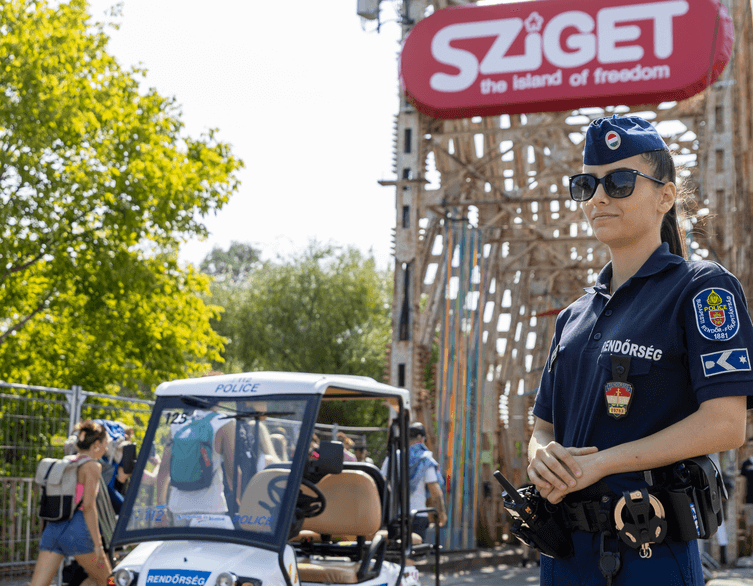
If you are heading to Sziget Festival this year, you will be sharing Óbuda Island with tens of thousands of fellow music lovers, and also with a much larger safety net than most visitors realize. Running from 11 to 15 August 2026 on the island in the Danube, Sziget is once again backed by a serious security operation, and this year the Budapest Police Headquarters has brought in reinforcements from across Europe to make sure everyone, locals and foreigners alike, can enjoy the festival worry-free.
A Multinational Police Presence on the Island
One of the most notable additions to this year’s operation is the international lineup of officers working alongside their Hungarian colleagues. British, French, Slovak and Dutch police officers have joined the Budapest force for the duration of the festival, patrolling the grounds on foot and on electric scooters. These foreign officers do not act independently or make arrests themselves; their main role is to bridge the language gap, acting as a point of contact for international festivalgoers who might otherwise struggle to explain a problem to a Hungarian-speaking officer. So if you spot an officer with a French or British flag patch and you need help, do not hesitate to approach them directly.
Behind the scenes, the security operation goes well beyond the uniformed patrols you will see wandering the paths between stages. Plainclothes detectives from the Budapest force work quietly among the crowd, focused on preventing crime before it happens and catching offenders in the act. Meanwhile, the Danube itself is never left unwatched. A river police boat from the Danube River Police Station patrols around the island 24 hours a day for the entire festival, with additional vessels able to reach the water within minutes should anyone get into difficulty in the river.
Who Handles What: Organisers, Security Firms and Police
It helps to understand how responsibility for your safety is actually divided up. Inside the fenced festival grounds, the day-to-day security is primarily handled by the organiser and a private security company, who run bag checks, wristband verification and crowd management at the gates. Outside that perimeter, and in a supporting role throughout the festival, the Budapest Police Headquarters works together with the Rapid Response Police, neighbourhood civil guard groups, and the local municipal law enforcement office for the Óbuda-Békásmegyer district. Uniformed officers are mostly visible during daytime hours, directing pedestrian and vehicle traffic, keeping public order on the surrounding streets, and stepping in to help wherever needed.
Best deals of Budapest











The I Love Budapest Police Prevention Point
Tucked into the festival grounds is something worth seeking out even if you never expect to need it: the I Love Budapest Police Prevention Point, an interactive stand of roughly 100 square metres open every day from 10am to 7pm. Rather than just handing out leaflets, the team here runs hands-on activities built around three themes this year: sport, drug prevention and cyber security. Expect skill challenges, sports equipment you can actually try out, a seatbelt simulator, and a traffic safety simulation where officers give personal tips on staying safe getting around the city.
One of the standout features is an award-winning programme developed with the University of Public Service, in which visitors step into the shoes of an investigator working a realistic drug-related case, learning firsthand about the risks of substance use and the digital footprint it can leave behind. There is also a quieter, more reflective installation called “What Gives Your Life Meaning?”, a message wall where festivalgoers can write down the people or values that matter most to them, a gentle reminder that the choices we make in the moment connect to something bigger. Staff at the Prevention Point speak multiple foreign languages, so you will not need to worry about a communication barrier if you stop by.
Protecting Your Belongings on Óbuda Island
Sziget runs as a cashless festival, meaning payments are made using your wristband, a contactless bank card, or a payment-enabled smart device, so keep a close eye on those items specifically since losing your card or phone can be more disruptive than usual. Organisers strongly advise against leaving laptops, cash or valuables inside your tent if you are camping, and recommend using the lockers and cloakroom facilities provided on site rather than carrying expensive jewellery around the festival grounds at all.
Should you ever find yourself the victim of a crime or witness one taking place, the advice is simple: flag down the nearest police officer, report it at the festival’s own complaints office, or call the European emergency number 112. For anyone who needs to file a formal police report, the 3rd District Police Station at Tímár utca 9/A operates around the clock throughout the festival with staff who speak foreign languages, and the team at the Prevention Point can give you directions and a map to get there if needed.
Why This Matters for Visitors
For a festival that regularly draws visitors from around a hundred different countries, this kind of layered, multilingual security setup is a genuine reassurance rather than just red tape. Whether it is a British officer helping you report a lost passport, a river police boat patrolling the Danube through the night, or a prevention specialist chatting with you about cyber safety at a stand near the main stages, the underlying message from Budapest’s police is clear: they want your biggest concern at Sziget to be picking which stage to head to next, not your personal safety.
Related news
Sziget Festival 2026 Is Officially Underway, And Óbuda Island Is Already Buzzing
Budapest’s most anticipated summer event of the year has officially kicked off, and by every account so far, Sziget Festival 2026 is already...

Sziget Festival 2026: How Budapest Becomes Part of the Party
Sziget Festival has always used Budapest as its backdrop, but this year the Hungarian capital is stepping out of the background and becoming an actual...

What to Wear to Sziget Festival: 2026’s Hottest Outfit Trends
Packing for Sziget Festival is half the fun of the trip, and this year’s festival fashion scene is leaning harder into bold self-expression...

Staying Cool at Sziget Festival: How Budapest’s Biggest Event Handles the Summer Heat Alert
If you’re packing your bags for Sziget Festival this August, there’s one more thing worth knowing before you head to Óbudai (Óbuda)...
Sziget Festival 2026: Your Essential Guide to Budapest’s Island of Freedom
If you’re planning a trip to Budapest this summer, chances are you’ve already heard whispers about Sziget Festival. Known affectionately...
Related events