Budapest Digital Tickets: Easier Validation on Buses and Trams from October 2026
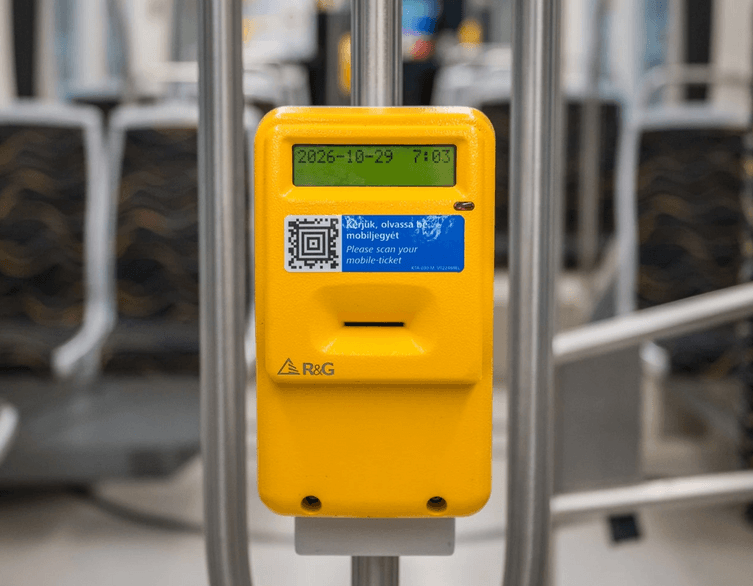
Catching a tram just before it pulls away? A new Budapest public transport update should make that moment a little less stressful. BKK, the Centre for Budapest Transport, is adding QR-code stickers inside surface transport vehicles, allowing passengers to validate digital tickets immediately after boarding when they have not had the opportunity to do so beforehand. The rollout began in the second half of October 2026 and is being introduced gradually across buses, trolleybuses, trams and suburban trains.
For visitors using BudapestGO or another supported mobile ticket app, it is a welcome practical change. There is one important catch, though: you still need to validate your ticket before starting your journey whenever possible. The new stickers provide a backup for those last-second boarding moments, not permission to settle into your seat and activate your ticket later.
What Is Changing with Budapest’s Digital Ticket Validation?
Until now, scanning a code before boarding could be an awkward extra step when your bus or tram was already at the stop. With QR codes being added inside vehicles, passengers who cannot validate beforehand will be able to scan a sticker as soon as they step aboard. BKK says the new stickers will become available on all its buses, trolleybuses and trams as installation progresses.
The distinction between buying and validating a ticket remains important. Purchasing a digital ticket does not, by itself, mean that a ticket requiring validation is ready for travel. You still need to complete the validation process in your mobile ticket app.
Best deals of Budapest












Because the rollout is gradual, do not assume every vehicle already has the new interior stickers. Keep validating before boarding whenever you can, and treat the onboard option as a useful fallback where it is available.
Where to Find the QR Codes on Board
On buses and trolleybuses, look for the QR-code stickers on the ticket-validation machines inside the vehicle. On trams, stickers are being installed by every pair of doors, while the existing stickers near the driver’s cabs will remain in place.
On suburban trains, commonly identified by the HÉV abbreviation, the stickers are being placed by each pair of doors, directly beside the ticket-validation machines. This puts the code close to where you board, so you can complete the process without searching through the carriage.
How to Validate Your Mobile Ticket
When using a digital ticket that requires validation, open your mobile ticket app and use its scanning function to read the QR code. If you have had to board before validating, scan the interior sticker immediately after stepping onto the vehicle. In BudapestGO, successful scanning brings up an animated graphic, which you should be ready to show to staff when required.
Do not wait until you spot a ticket inspector. BKK says the interior QR codes are temporarily unavailable during ticket inspections, and BudapestGO and other mobile ticket apps will display a message explaining this. In other words, onboard validation is something to do straight away, not something you can leave until someone asks to see your ticket.
For visitors relying on their phones, there is another practical detail worth remembering: mobile tickets require an active mobile data connection for purchase, use and verification. Make sure your roaming or local data connection is working before you travel, and keep enough battery power to display your ticket.
Does This Change Metro Travel or Travelcards?
The new interior-sticker rollout concerns surface transport. It does not introduce an option to board a metro train first and validate later. For metro journeys, complete the required code scan at the station entrance before entering the paid area.
It is also worth distinguishing individual tickets from travelcards and passes. Travelcards do not need separate validation for every journey and allow unlimited travel within their stated validity period and coverage. However, passengers using digital travelcards or passes still need to follow the app’s presentation requirements at metro entrances and on services with front-door boarding, including showing the animated graphic where required.
If you are planning several journeys during your stay, understanding which type of ticket you have can save a lot of unnecessary scanning—and help you avoid assuming that a single ticket works like a travelcard.
Budapest Public Transport Penalty Fares Rise on November 2
Alongside the easier validation process, BKK is increasing several penalty fares from November 2, 2026. The penalty paid on the spot or within two working days will rise from HUF 12,000 to HUF 15,000. The amount payable within 30 days will increase from HUF 25,000 to HUF 30,000.
A separate reduced penalty arrangement is also changing. Passengers who buy a qualifying monthly pass on the day they receive a penalty and present it within two working days will pay HUF 7,500 rather than HUF 6,000 under that arrangement. This is a specific concession, not the standard penalty fare for travelling without a valid ticket.
For a smoother visit, keep the routine simple: have your ticket ready, validate before boarding whenever possible, and use an interior QR code immediately if a last-second arrival prevents you from scanning beforehand. The new system gives you another opportunity to validate correctly—not extra time to travel without a valid ticket.
Related news
All Saints’ Day in Budapest 2026: Extra Public Transport Services and Cemetery Travel Advice
Visiting Budapest at the end of October? If your plans include a cemetery visit, allow a little extra time for the journey. From 29 October to 1...
Budapest Public Transport in Late October 2026: Clock Change and Holiday Timetables
Visiting Budapest in late October? A long weekend, the autumn school break and the end of daylight saving time will bring a few changes to the city’s...