Ride Through Time: Budapest’s Heritage Transport Lines Return This July
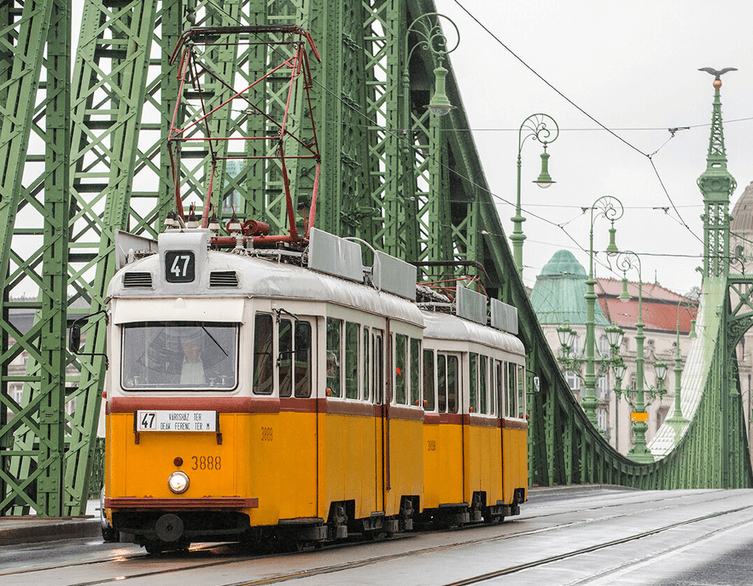
If you want to experience Budapest the way locals did decades ago, hop aboard one of the city’s beloved heritage transport lines running every weekend through October. These vintage trams, buses, and trolleybuses aren’t just a quirky photo opportunity—they’re a rolling piece of the city’s history, and one of the most charming ways to see the sights.
A Century of Budapest on Wheels
Budapest’s modern transport history stretches back more than a hundred years, and nearly every iconic vehicle ever built in Hungary has, at some point, rolled through its streets. Many of these vehicles were rescued from retirement and lovingly restored, and since 2010, BKK and BKV have run them together each summer season as part of a regular heritage transport program that’s become an internationally recognized leisure activity in its own right.
Alongside the true old-timers, you’ll also spot retro vehicles reminiscent of the 1980s and 90s streetscape, vehicles that once carried ordinary Budapest commuters and now offer visitors a nostalgic ride rather than just a way from A to B.
The Lines You Can Actually Ride This Summer
Five heritage routes are currently in operation, each one doubling as a scenic tour of the city.
The N2 tram is arguably the star of the fleet, running along the Pest side of the Danube on what’s often ranked among the ten most beautiful tram lines in the world. From your seat, you’ll catch views of the Parliament Building, the bridges spanning the river, and the postcard-perfect silhouette of Buda Castle and Gellért Hill.
Over on the Buda side, the N18 tram winds from Szent János Hospital through Széll Kálmán tér and down to the Danube embankment, eventually reaching Csóka utca in Kelenföld, passing through the shaded greenery of Városmajor park along the way.
The N19 tram follows the Buda riverbank past grand buildings, historic bathhouses, market halls, and green parks, with a stop at Deák Ferenc tér where you can visit the Underground Railway Museum, home to the first metro line built on continental Europe. From there, it’s an easy walk to the Buda Castle Funicular for those wanting to continue the old-fashioned transport theme.
For a different kind of ride, the N109 heritage bus—an open-top cabriolet on sunny days—cruises along the Bem quay for postcard views of the Parliament building and the Danube promenade before heading into the liveliest stretch of downtown along Bajcsy-Zsilinszky Avenue.
Running every Sunday from late May through late September, the N4 bus route is the longest of the bunch, crossing the city from Zugló to the Buda Hills and passing landmarks including the Budapest Zoo, Heroes’ Square, the Hungarian State Opera House, and the Chain Bridge, before terminating at the Zugliget Chairlift, a perfect launch point for a hike up János Hill.
Best deals of Budapest









What’s Running Each Weekend in July
The specific vehicles rotate weekend to weekend, so it’s worth checking the schedule if you have your heart set on a particular one.
On Saturday, July 4, the 1233 FVV “Bengáli” vintage tram takes to the N2 line, while Sunday, July 5 brings a fleet of Ikarus retro buses (the 260, 412, 415, and 556 models) to the N4 route alongside the MUV tram on N19.
The following weekend ramps things up further. Saturday, July 11 sees the open-top Ikarus 630 Cabrio bus on the N109 line, the 436 L-type vintage tram on N2, and an Ikarus 280 retro bus on the R158 route, while Sunday, July 12 pairs the usual Ikarus retro buses on N4 with the 2806 K-type vintage tram (towing a BVVV O-type trailer car) on N18, plus the wooden-framed 611 tram on N19.
Saturday, July 18 brings back the “Bengáli” tram on N2, joined by a genuine rarity: the IK 280T type vintage trolleybus on route N7680. Sunday, July 19 keeps the Ikarus buses running on N4 while the 2806 K-type tram takes over N19.
Closing out the month, Saturday, July 25 features the wooden-framed 611 tram once again on N2, and Sunday, July 26 combines the Ikarus retro buses on N4 with the 436 L-type tram on N19 and the ZiU-9B vintage trolleybus on route N70.
How to Buy Tickets and What They Cost
Heritage services run on their own special fare structure, separate from Budapest’s regular public transport tickets.
A single heritage journey costs 600 HUF, while a heritage day pass, priced at 2,400 HUF, lets you hop on every heritage vehicle running that day, ideal if you’re planning a full day of nostalgic sightseeing. Children up to age 14 ride free, and Hungarian students may be asked to show a student ID for discounted fares. You can pick up tickets through the BudapestGO app, at any BKK customer service centre or ticket office, or directly from the on-board staff, who also accept card payments.
One helpful tip: the retro vehicles (as opposed to the true vintage ones) run on normal public transport fares, so if you already have a valid Budapest travel card or ticket, there’s no need to buy anything extra.
Why It’s Worth Building Into Your Trip
These heritage lines aren’t just for transport enthusiasts. They’re a low-effort, high-reward way to see Budapest’s greatest landmarks, from the Hungarian Parliament Building to Buda Castle, from the comfort of a rolling piece of living history. Since the routes only run on weekends and the featured vehicles change from week to week, it’s worth checking the schedule before you plan your Saturday or Sunday itinerary, especially if you’re hoping to catch a specific vintage tram or one of the open-top cabriolet buses on a sunny afternoon.
Related news
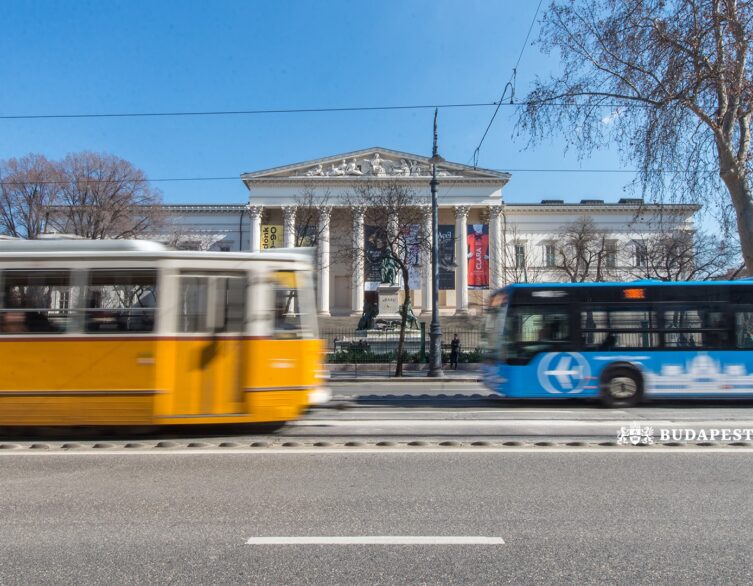
How Budapest Residents Are Shaping the City’s Transport Future
Budapest is quietly rewriting how it plans public transport and infrastructure, and it’s doing so by putting residents’ voices at the...
What’s On in Budapest This Weekend: July 16–19, 2026
If you’re spending this weekend in Budapest, you’ve picked one of the busiest, most exciting stretches of the summer calendar. Between...
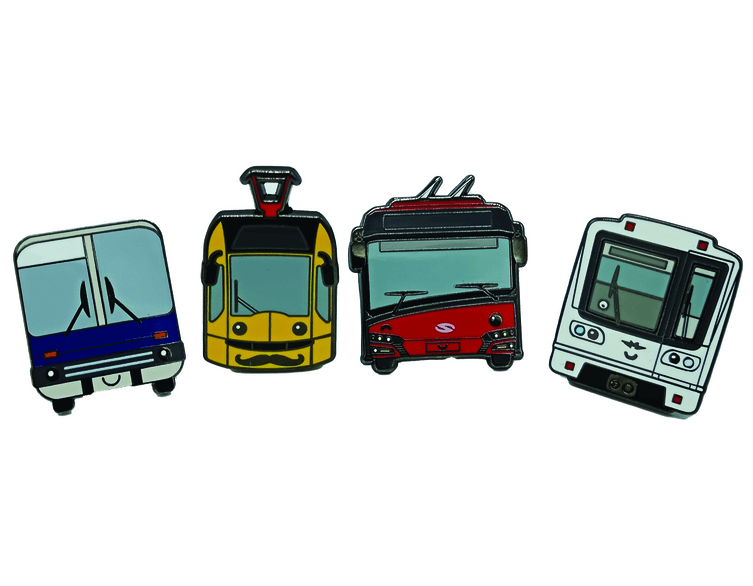
Take a Piece of Budapest’s Transport History Home With You
If you’ve spent any time riding Budapest’s trams, buses, or the quirky cogwheel railway up to the Buda Hills, you’ve probably noticed...
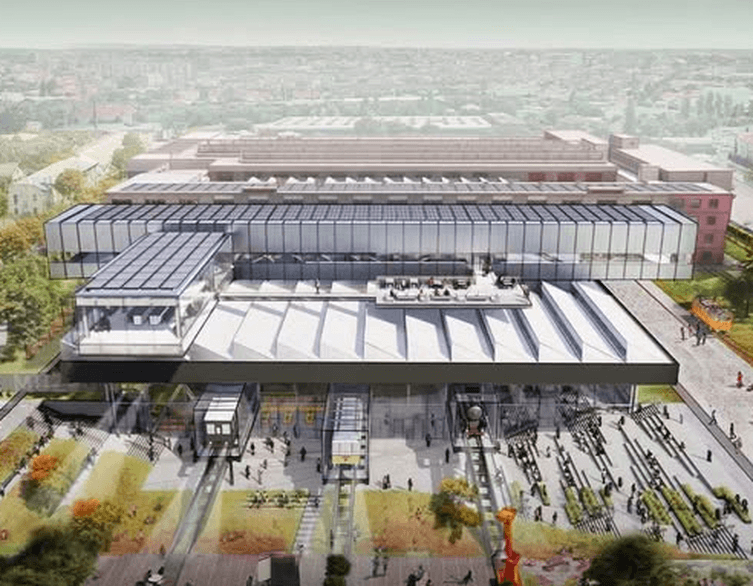
Budapest’s Transport Museum Is Getting a Spectacular New Home in Kőbánya
If you’ve ever wandered through Budapest wondering what happened to the city’s long-closed Transport Museum, here’s some genuinely...
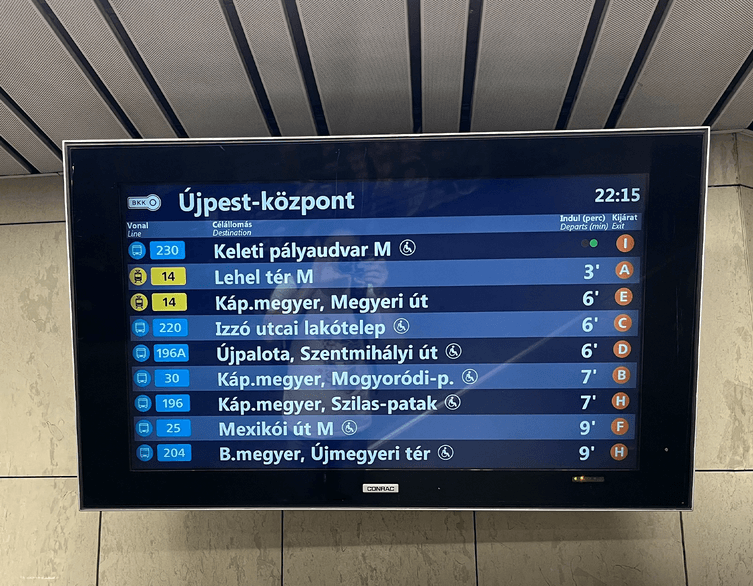
Clearer Stops, Real-Time Screens, and Accessible Rides: Budapest Upgrades Public Transport
Getting around Budapest by bus, tram, or metro is about to become a lot less confusing for visitors, thanks to a wave of new passenger information...
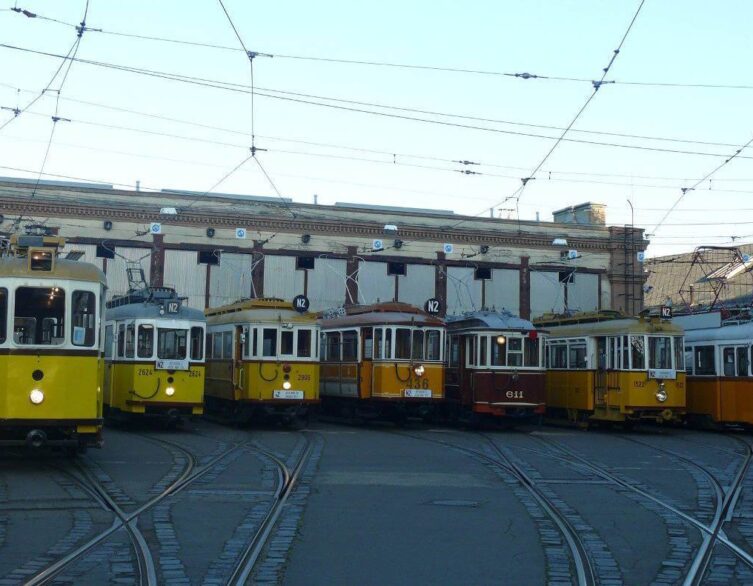
Nostalgia on Wheels: A Joyride Through Budapest’s Historic Vehicles
Imagine stepping back in time, surrounded by the charm and elegance of a bygone era. In Budapest, this dream becomes a reality as beautifully restored...
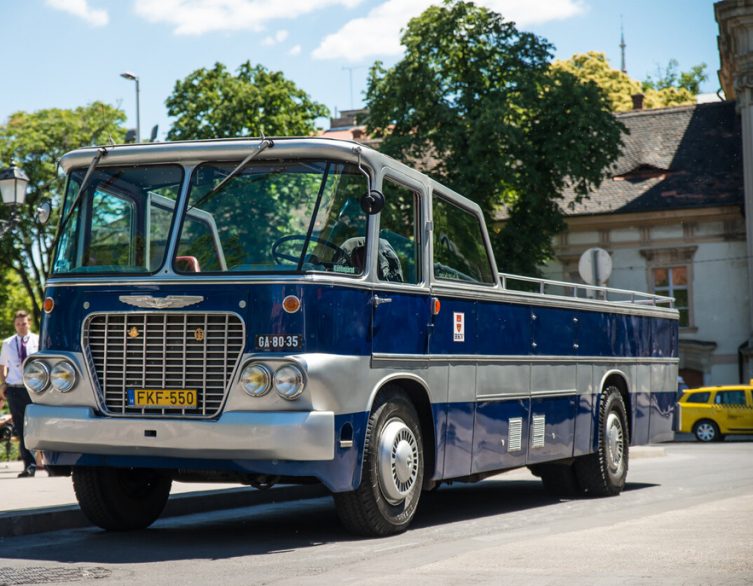
Nostalgic Vehicles Take Over Budapest – Ride The World’s Only Vintage Cabrio Bus!
The Centre for Budapest Transport, or BKK for short, is dusting off its old beauties to delight children and adults alike. Fans of the olden days’...