The Street of Hungarian Flavours 2026: Budapest’s Ultimate Food Festival for St. Stephen’s Day
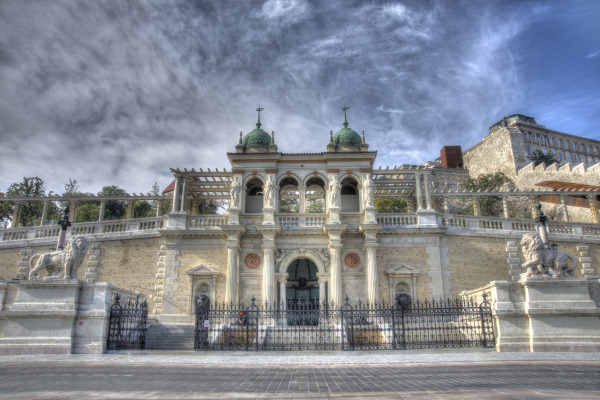
If you’re planning a trip to Budapest around the national holiday, clear your schedule for one very specific address: Ybl Miklós tér, right by the Castle Garden Bazaar (Várkert Bazár). From August 20 to 22, 2026, this stretch of the Buda riverbank transforms into the Street of Hungarian Flavours (Magyar Ízek Utcája), the largest and most beloved food festival in the Carpathian Basin. Expect close to 200 stalls, hundreds of thousands of hungry visitors, and enough goulash, stew, fresh bread, and cake to make you rethink everything you thought you knew about Hungarian cuisine.
This isn’t just another street food event tacked onto the holiday calendar. Organizers say more than 450,000 people have passed through the festival gates over the years, making it one of the anchor events of Hungary’s biggest national celebration. For a foreign visitor, it’s arguably the single best introduction to what Hungarians actually eat, as opposed to what ends up on tourist-trap menus near Váci Street.
What to Eat: This Year It’s All About the Stew
Every edition of the festival picks a theme, and in 2026 the spotlight falls on Hungary’s slow-cooked, paprika-heavy stew tradition, the dishes most foreigners lump together as “goulash” but which locals separate carefully into gulyás, pörkölt, and paprikás. The festival digs into how these dishes evolved from herders’ campfire meals into the backbone of modern Hungarian cooking, and visitors get to taste the range firsthand.
Best deals of Budapest



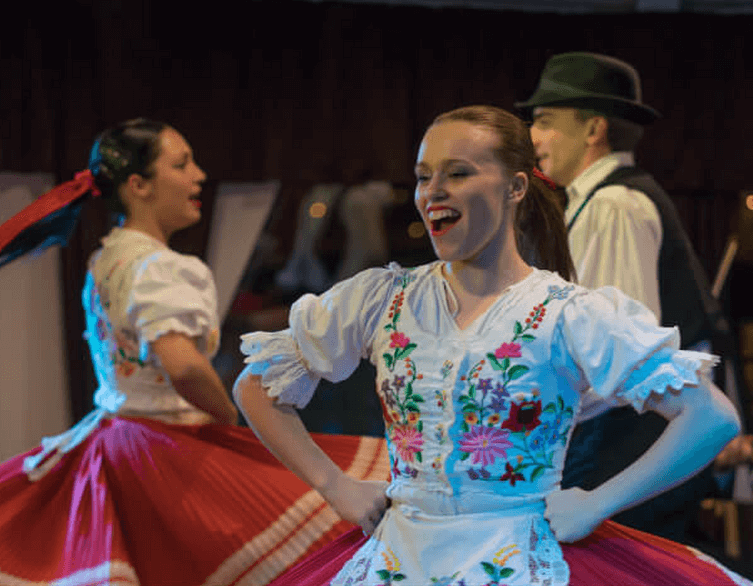




Among the stews on offer, look out for rooster testicle stew (a Hungarian delicacy that sounds more intimidating than it tastes), Karcag-style mutton stew, and even buffalo stew, alongside a duck stew for those wanting something a little more refined. Traditionalists shouldn’t skip the original Sokac clay-pot beans, a rustic dish with deep regional roots. One of the festival’s most charming corners is the Cooking Square (Főzők tere), where the food isn’t prepared by professional chefs at all, but by home cooks and community groups from towns and regions across the country. Chat with them while you sample their dishes and you’ll usually walk away with a family story or two along with a full stomach.
The Bread and Cakes Everyone’s Talking About
No St. Stephen’s Day celebration in Hungary is complete without the ceremonial unveiling of the year’s official holiday bread, and the Street of Hungarian Flavours is where it happens first. The 2026 winner of the Hungarian Bakers’ Association competition is the Pilisi Pityókás Bread, created by HEL Bakery and SZÁSZ Bakery. Made from BL55 and BL80 wheat flour, a naturally fermented sourdough aged for 24 hours at full hydration, water, salt, and potato, it earns its name from “pityóka,” a folk word for potato, and “Pilisi,” a nod to the Pilis hills region where the recipe originated. The potato gives the loaf a moist crumb and helps it stay fresh longer than a standard sourdough.
There’s also an Innovative Bread category, won this year by the Magvető Bread from Sütőmix Ltd. and Kossuth 1 Bakery, a long-fermented wild sourdough loaf packed with toasted flaxseed, sesame seeds, oats, and sunflower seeds for a nutty, fiber-rich finish. Pastry lovers should track down the winning Puff Pastry Walking Cake, the Lemon Blossom by Pedró Bakery, a butter puff pastry aged for 16 hours and filled with a fresh, house-made lemon zest cream.
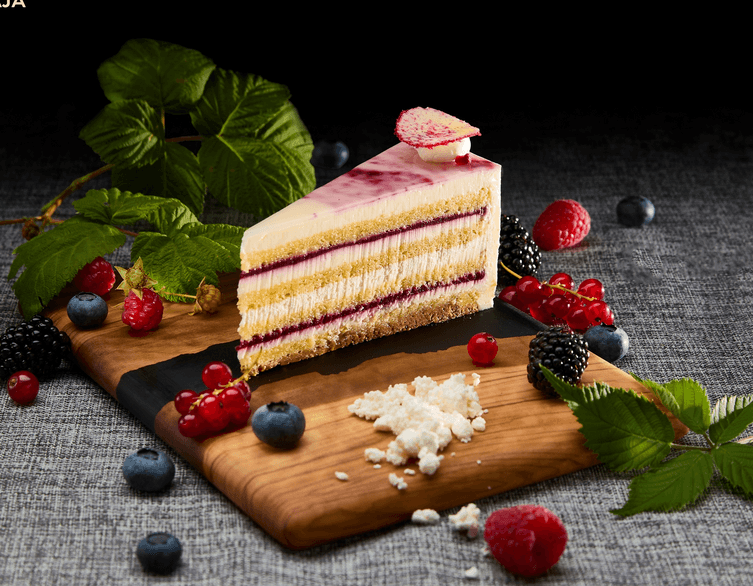
The festival is also the debut stage for Hungary’s two official holiday cakes. This year marks the 20th anniversary of the Cake of Hungary competition, and with a record 60 entries built around the theme of curd cheese and sour cream, the Kézműves Cukrászda team from Gyula took the title for the second year running. Their creation, called Bíborfehér (meaning “purple-white”), layers forest berries, toasted almonds, sour cream mousse, and curd cheese, rounded out with blackcurrant wine, chocolate, vanilla, and lemon, and finished with a dusting of freeze-dried raspberry on top. It will only be available at the festival on August 20 and 21.
For anyone watching their sugar intake, there’s also Hungary’s Sugar-Free Cake of the Year, the Szilvafácska (“Little Plum Tree”), created by pastry chefs at the Promenád Café in Balatongyörök. It pairs plum, walnut, milk chocolate, cinnamon mousse, and green tea, coming in at roughly 254 kcal and 13.5 grams of carbohydrates per slice, inspired by the chefs’ childhood memories of a grandmother’s garden and fresh plum jam.
Beyond the Food: Family Fun and Community Spirit
The organizers have built plenty of non-edible reasons to linger, too. Every day of the festival, from 10 a.m. to 6 p.m., the “Buda Dog Fair Is Back!” program brings adoptable pets and assistance dogs from local shelters and rescue groups out to meet visitors. On August 20 specifically, kids can enjoy road safety games on Döbrentei utca between 10 a.m. and 6 p.m., including a mini traffic course and quiz-style challenges run by the Foundation for Cultured Traffic.
The international flavors don’t stop at Hungary’s borders, either. This year’s lineup includes Jewish culinary traditions, plus Czech beer specialties and Czech-style goulash making an appearance. On the sustainability front, keep an eye out for Irinyi soda water, a locally bottled, packaging-free option that fits neatly with the festival’s growing focus on eco-conscious vendors. Health-minded visitors can also stop by the free blood sugar screening run by the Egy Csepp Figyelem Foundation, available August 20 through 22 between 10 a.m. and 5 p.m. at Ybl Miklós tér, alongside on-site kidney health consultations.
Getting There and Practical Tips
The Street of Hungarian Flavours runs daily from 10 a.m., with admission completely free, at Várkert Bazár, Ybl Miklós tér, 1013 Budapest. The location sits right on the Buda side of the Danube, an easy walk from the Chain Bridge and Buda Castle, making it simple to combine with a day of sightseeing. Given that this coincides with Hungary’s national holiday, expect large crowds, especially in the evening when the city’s famous fireworks display lights up the Danube.
If you’re building a full day around it, arrive earlier rather than later to beat the lunch rush at the most popular stalls, and pace yourself: between the stews, the fresh breads, and two competing holiday cakes, there’s a genuine risk of running out of appetite before you’ve worked through the highlights. Whether you’re chasing the perfect bite of pörkölt or just want to see what an entire nation’s baking talent looks like in one place, the Street of Hungarian Flavours is where Budapest’s food culture puts on its best show of the year.
Related news

Budapest Just Threw a Whole New Kind of National Holiday Party
If you happened to be strolling along the Danube on the evening of August 20th, you may have wondered whether Budapest had swapped its usual fireworks...
Sauska Opens English-Language Cellar Tours in Historic Budafok
If you’ve been searching for something to do in Budapest that goes beyond the usual castle-and-thermal-bath circuit, the Sauska sparkling wine...
Meet the Cake of Hungary 2026: A Sweet Reason to Visit Budapest This August
Every August, right around the country’s biggest national holiday, Hungary crowns a single dessert as its official “Cake of Hungary,”...
Related attractions