Budapest Just Gave Its Entire Ticket Machine Network a Total Makeover
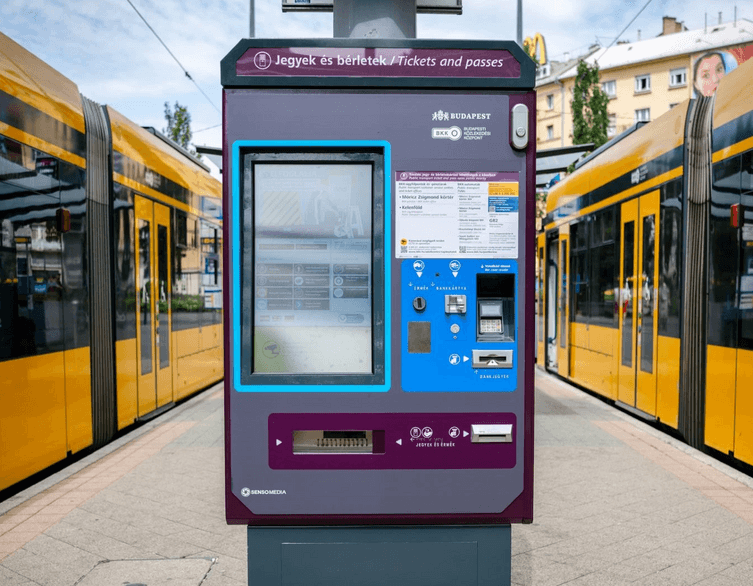
If you’re planning to ride Budapest’s metro, trams, or buses this year, you’re about to have a much smoother experience buying your ticket. The BKK, Budapest’s public transport authority, has just wrapped up a massive, citywide upgrade of its ticket and pass vending machines, and it finished well ahead of schedule. For tourists navigating the city on public transport, this is genuinely good news, especially if you’ve ever struggled with a clunky old ticket machine in an unfamiliar city.
A Decade Overdue Refresh
The vending machines scattered across Budapest’s metro stations, tram stops, and train hubs had been quietly doing their job since 2014, with a few more added in 2015 to finish replacing the city’s even older ticketing network. Over more than a decade of nonstop use, those machines processed over 164 million transactions, an enormous number driven largely by the busiest spots in the city: Deák Ferenc Square, Keleti Railway Station, Kelenföldi Railway Station, Astoria, Határ Road, Kossuth Lajos Square, Ferenciek Square, the Corvin Quarter, and, crucially for visitors, Budapest Liszt Ferenc International Airport.
That kind of heavy daily traffic takes a toll on hardware. Even though the underlying software and payment systems held up reasonably well after a 2021 operator switch, the physical machines themselves, particularly the printers, cash and coin handling units, and card payment terminals, were showing their age. So earlier this year, BKK confirmed it would replace or fully refurbish every single one of its ticket machines, and now the job is done: 35 brand-new machines with large, modern touchscreen displays are now in service, alongside 280 existing units that have been completely refurbished. The original target completion date was the end of 2026, but the whole rollout finished before summer was even over.
Where You’ll Find the New Machines
The new large-display machines have been prioritized at the locations tourists are most likely to actually need them. You’ll spot the sleek new units at Deák Ferenc Square, Nyugati and Keleti railway stations, Kelenföld, the airport, Astoria, Kálvin Square, Széll Kálmán Square, Móricz Zsigmond Circus, and the Corvin Quarter. In other words, pretty much every major transport hub and interchange a visitor is likely to pass through during a typical Budapest stay.
One detail worth knowing before you arrive with a pocket full of forints: 99 of these machines now accept card payments only, no cash. BKK has been careful to only convert machines to card-only status in locations where another cash-accepting machine is still available nearby, so you won’t get stranded without an alternative if you’re relying on cash.
Best deals of Budapest










Built With Accessibility in Mind
One of the more thoughtful upgrades in this overhaul is a genuinely useful accessibility feature for visually impaired travelers. If you plug your own headphones into one of the refurbished machines, it automatically activates an audio narration mode, reading aloud everything on the screen, from your basket contents to the number of tickets you’ve selected. Navigation happens through simple left and right swipe gestures rather than needing to see the screen at all, and you can easily adjust the volume of the spoken guidance. For privacy, the screen automatically dims whenever this mode is switched on, so nearby passengers can’t see your personal details or payment information. It’s a small design choice, but one that makes Budapest’s transport system meaningfully more usable for travelers with disabilities.
Machines Still Matter, Even in a Digital City
It might seem like physical ticket machines would be fading into irrelevance given how popular Budapest’s digital ticketing options have become. The BudapestGO app lets you buy digital single tickets, time-based tickets, and 24- or 72-hour travelcards straight from your phone, while the Pay&GO contactless system, now active across all four metro lines (M1, M2, M3, and M4) as well as the 100E airport shuttle bus, lets you simply tap a bank card or smartphone at the turnstile to pay and validate your journey in one motion, no app or registration required.
Despite that convenience, roughly 40 percent of all BKK ticket sales still happen through the physical vending machines. That’s a striking number, and it’s exactly why BKK invested in modernizing the entire fleet rather than slowly phasing machines out. The idea is that traditional ticket buying and digital ticket buying should both feel equally modern and reliable, so whichever method suits you as a visitor, cash at a machine, card at a machine, tapping your bank card directly at the metro entrance, or buying through an app, you’re covered.
What This Means for Your Trip
For a first-time visitor, Budapest’s public transport ticketing can feel like it has a lot of moving parts, but this refresh genuinely simplifies things. A single ticket currently costs 500 forints if bought in advance through a machine or the app, compared to 700 forints if purchased on the spot from certain other channels, so using these machines (or the app) rather than paying on board actually saves you money on every trip.
If you’re arriving at Liszt Ferenc Airport, heading through Keleti or Nyugati stations, or navigating busy interchanges like Deák Ferenc Square or Kálvin Square, you’ll likely be greeted by one of the new, larger-screened machines with a clearer interface and multilingual support, making it far easier to buy the right ticket without needing to guess your way through a small, outdated touchscreen. Combined with the rise of Pay&GO contactless payments on the metro, Budapest’s public transport system in 2026 is noticeably more visitor-friendly than it was even a couple of years ago, and this ticket machine overhaul is one of the clearest signs of that shift.
Related news
Getting Around Budapest During St. Stephen’s Day: A Visitor’s Transport Guide
If you’re planning to be in Budapest around August 20, you’re in for one of the biggest, most spectacular days on the Hungarian calendar....
How Budapest Residents Are Shaping the City’s Transport Future
Budapest is quietly rewriting how it plans public transport and infrastructure, and it’s doing so by putting residents’ voices at the...
Take a Piece of Budapest’s Transport History Home With You
If you’ve spent any time riding Budapest’s trams, buses, or the quirky cogwheel railway up to the Buda Hills, you’ve probably noticed...
Clearer Stops, Real-Time Screens, and Accessible Rides: Budapest Upgrades Public Transport
Getting around Budapest by bus, tram, or metro is about to become a lot less confusing for visitors, thanks to a wave of new passenger information...
Budapest’s Night Transport Gets a Major Upgrade This Summer — Everything Tourists Need to Know
If you’re planning a trip to Budapest and love staying out late, here’s some genuinely exciting news: the city’s night public transport...
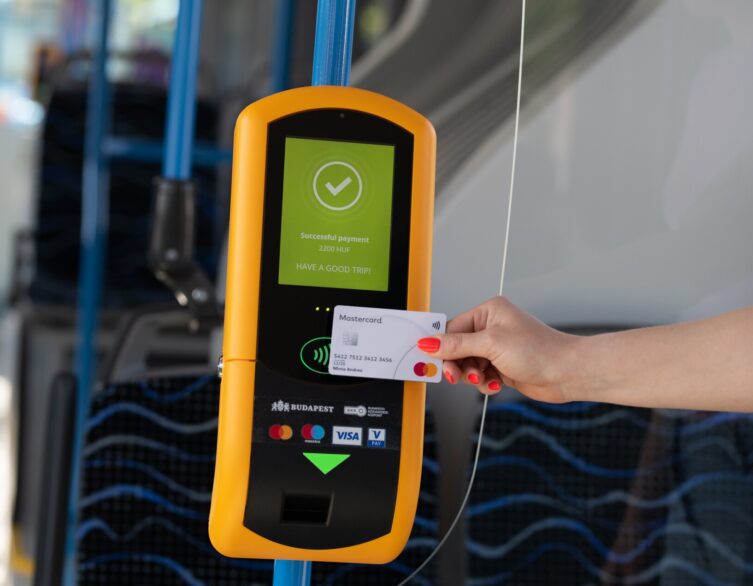
Budapest’s Pay&GO Is a Hit: Over 112,000 Metro Tickets Sold in Just One Month
Budapest’s public transport is on a roll — and the numbers prove it. Just one month after BKK (Budapest’s Centre for Budapest Transport)...