Sziget Festival Draws Fans from 112 Countries, Even as Attendance Dips This Year
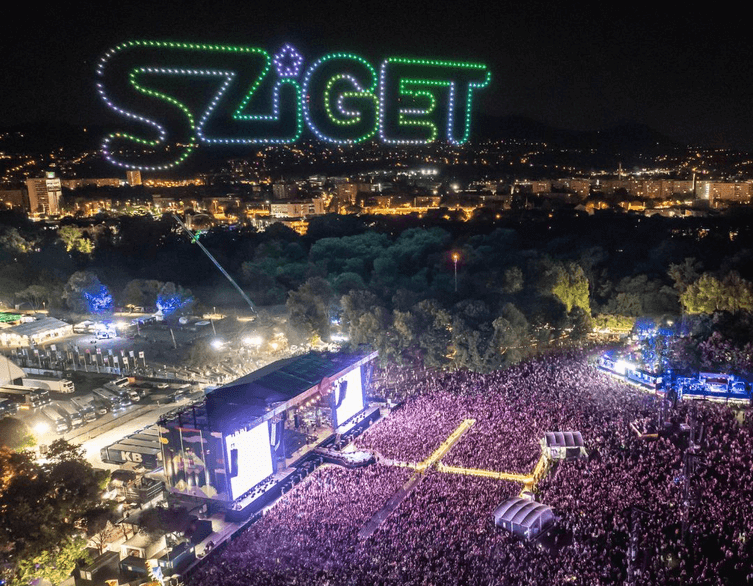
Sziget Festival has once again proven it’s one of the most genuinely international events on the planet, pulling in ticket buyers from 112 countries this year, meaning visitors from 111 nations beyond Hungary itself made the trip to Budapest. It’s a staggering number for any festival, let alone one based in a country of just 10 million people, and it cements Sziget’s reputation as one of the world’s most diverse and widely attended cultural gatherings.
A Truly Global Crowd on the Island
For decades, Sziget has been Hungary’s biggest cultural and tourism draw, pulling tens of thousands of visitors to Budapest from every corner of the globe each summer. Google search data backs this up in a striking way: over the past month alone, nearly half a million searches for the festival came from outside Hungary’s borders. What makes Sziget stand out even among the world’s biggest festivals is the sheer proportion of international visitors, roughly half of the total crowd, a ratio that puts it in the same league as the very top international festivals worldwide, despite Hungary’s relatively small population.
Although Sziget is primarily a European affair, this year’s edition attracted visitors from all six inhabited continents. The Netherlands remains the strongest source market among international visitors, with substantial numbers also arriving from the United Kingdom, Austria, Germany, and Slovakia. The most remarkable distance record belongs to New Zealand, where Budapest and Wellington sit roughly 18,000 kilometers apart, yet several hundred Kiwi festivalgoers made the journey anyway.
Best deals of Budapest











The African contingent included fans from Algeria, Angola, Ivory Coast, Morocco, Tunisia, and Zimbabwe, while South America was represented by attendees from Argentina, Brazil, Chile, Colombia, Ecuador, Paraguay, Peru, and Uruguay. Asia’s presence was equally broad, with festivalgoers arriving from Japan, South Korea, China, Hong Kong, Taiwan, Vietnam, Thailand, Malaysia, Singapore, Indonesia, and the Philippines, according to organizers.
Global Media and Influencers Descend on Budapest
It wasn’t just fans making the trip. Journalists from more than 40 countries came to Budapest to cover the festival firsthand, with especially heavy representation from across Europe. Reporters from Italy, France, Germany, the United Kingdom, the Netherlands, and Poland were joined by press from neighboring countries including Slovenia, Croatia, Serbia, Austria, Slovakia, Romania, and the Czech Republic.
Media interest stretched well beyond Europe too, with journalists arriving from India, China, Australia, Mexico, and Brazil, alongside outlets from Israel, Algeria, Senegal, Colombia, and Peru. Among the hundreds of accredited media organizations were major international names such as AFP, Reuters, AP, China’s Xinhua, and Britain’s NME, Kerrang!, Q Magazine, Dazed, and The Independent. French outlets ARTE, France Inter, RFI, and Libération sent correspondents, as did Italy’s La Stampa, Austria’s ORF, and Germany’s Deutsche Welle.
The influencer presence was just as significant, with organizers inviting 56 high-reach content creators this year, alongside numerous other accredited influencers from various countries. The festival’s international footprint was further amplified by 150 so-called Sziget Ambassadors, who promote the event to their own communities and audiences around the world throughout the year.
Fewer Visitors Than Hoped, Founder Explains Why
Despite the impressive international reach, this year’s Sziget saw a dip in overall attendance. Founder Károly Gerendai told Hungarian news agency MTI on the festival’s closing day that while feedback from audiences and press suggested the new direction was working, several factors kept the numbers below expectations. Last year’s six-day event drew 416,000 visitors, while this year’s five-plus-two-day format is expected to have welcomed only around 350,000 to 360,000 attendees.
Gerendai explained that the comparison isn’t entirely fair, since this year’s passes covered only five main days, supplemented by a minus-first and zeroth day aimed largely at an older Hungarian audience. He also pointed to a sudden change in ownership last autumn, when the Hungarian side had to take the festival back from its departing foreign owners, London-based Superstruct Entertainment, amid political disputes that nearly ended Sziget altogether. Under Superstruct, the festival posted a substantial loss of 2.8 billion forints last year, which organizers had hoped to trim to around 1.5 billion this year with roughly 400,000 visitors, a target that ultimately fell short.
Three factors drove the bigger-than-planned shortfall, according to Gerendai. Organizing and ticket sales started four months late, right when a third of season passes are typically sold in a normal year. The strengthening forint made the festival pricier for international visitors, and a summer of extreme heat, drought, and worries about power supply created a sense of unease among Hungarian ticket buyers that dampened festival enthusiasm. Hungarian attendees now make up 53 percent of the total crowd, a share that keeps growing even as international numbers continue to slide.
Interest cooled in several of Sziget’s traditionally strong markets too, including the Netherlands, the United Kingdom, Germany, France, and Italy, even as more visitors arrived from neighboring countries. Ongoing conflicts caused a sharp drop in attendees from Israel, Ukraine, and Russia, while rising travel costs kept many long-haul visitors away from more distant countries.
What’s Next for Hungary’s Biggest Festival
Gerendai highlighted some strategic moves that paid off this year, including bringing subcontractors on board as small shareholders in Sziget Zrt, covering everything from security and cleaning to stage building, catering, and lighting and sound technology. He also praised the decision to bring back a dedicated Hungarian main stage in partnership with Budapest Park, calling it a popular choice with the crowd, even if scheduling clashes, like Twenty One Pilots facing off against Hungarian rock band Tankcsapda, weren’t always ideal. On the main stage, Twenty One Pilots and SOMBR drew the largest crowds this year.
Looking ahead, Gerendai stressed that the old strategy of simply stacking a lineup with big names is losing effectiveness as more European festivals compete for the same headliners. Sziget’s future, he argued, depends on rebuilding its international representative network, which once spanned 26 countries, while continuing to court the Hungarian audience that now makes up the majority of attendees. Two long-standing infrastructure issues are also finally moving toward resolution: the city plans to begin much-needed renovation of the K bridge leading to Óbuda Island this autumn, a two-year project, and talks with the mayor have led to plans for two new wells on the island to keep dust down across one of Budapest’s largest public parks, a welcome improvement for festival conditions going forward.
Related news
Sziget Festival’s Biggest 2026 Set Is Now Free to Watch, and 2027 Tickets Are Already Moving
If you missed Sziget Festival this summer, or you were there and just want to relive it, you’re in luck. One of the most talked-about performances...

Sziget Festival’s Leftover Tents Get a Second Life Helping Those in Need
If you wandered around Budapest in the days after Sziget Festival wrapped up, you might have wondered what happens to the sea of tents, mattresses,...
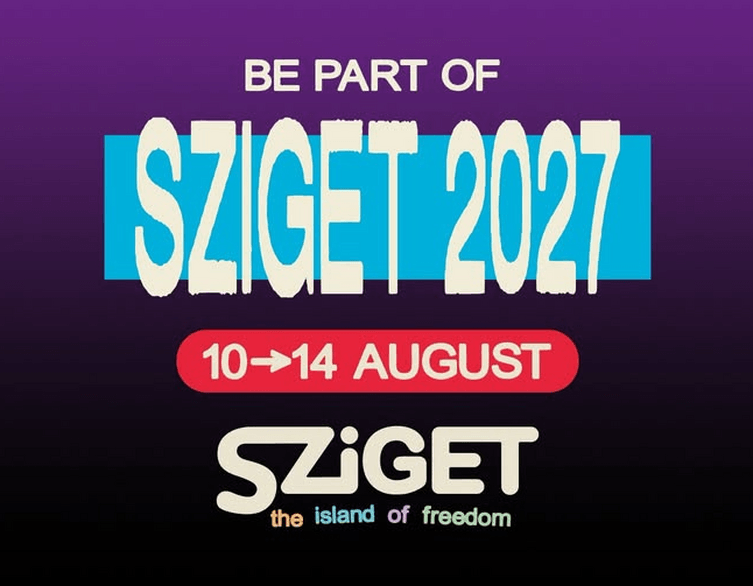
Sziget Festival 2027: How to Register Now for the Best-Priced Tickets
Sziget Festival is already looking ahead to next summer, and if you’re the kind of traveler who plans festival trips a year in advance, this...
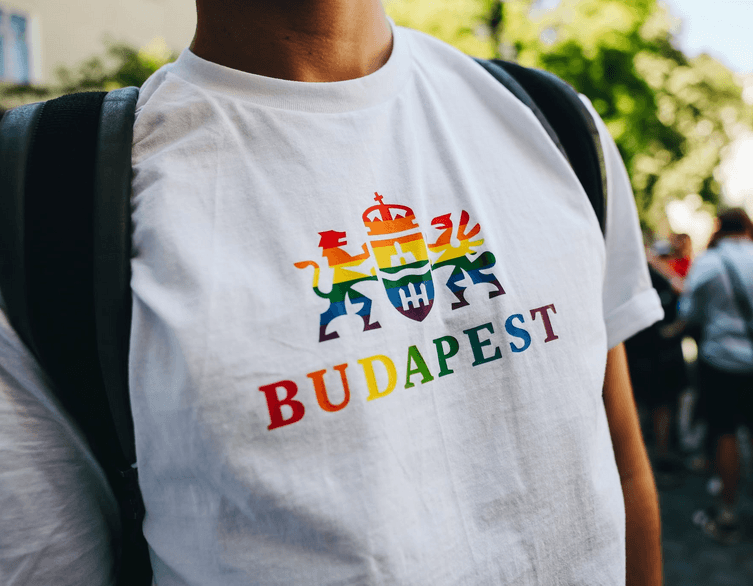
Sziget Festival 2026: How Budapest Becomes Part of the Party
Sziget Festival has always used Budapest as its backdrop, but this year the Hungarian capital is stepping out of the background and becoming an actual...
Related events