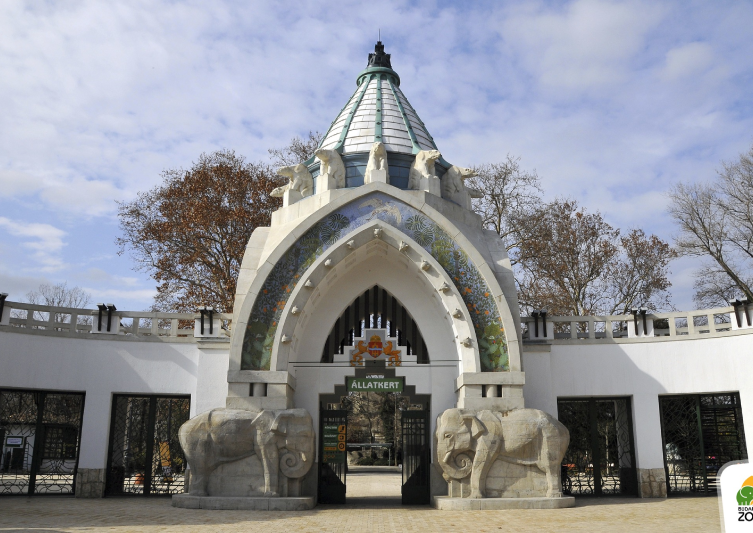
A New Foal, a New Biodome Wonder: What’s On at Budapest Zoo This Summer
Budapest is famous for its thermal baths and grand boulevards, but right now, one of the most exciting reasons to visit the city is happening at Budapest Zoo, where a brand-new baby zebra and a spectacular new indoor jungle have both just made their public debut.
A Brand-New Zebra Foal Takes Its First Steps
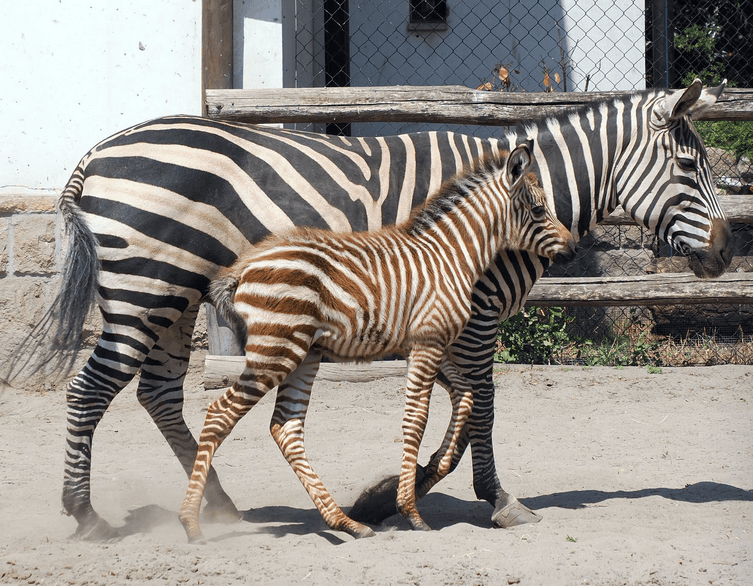
On Wednesday, June 24, Budapest Zoo welcomed a healthy new arrival: a baby zebra colt born to mother Romy and father Zucchero. Both mother and foal are doing well, and visitors can now meet the pair in the outdoor paddock next to the Giraffe House, directly across from the Elephant House. For safety reasons, the zoo has temporarily divided the display area so the newborn isn’t yet mixed in with the other three members of the herd, though he’s already showing off plenty of energy, galloping and leaping around the enclosure to the delight of everyone passing by.
Look closely and you’ll notice the little one’s coat looks noticeably fuzzier than the adults’, and his stripes appear brownish rather than jet black. This is completely normal: young zebras wear a special “foal coat” until their first molt, which provides extra insulation since their body temperature regulation isn’t fully developed yet. Romy, the mother, has lived in Budapest since 2010 and is a highly experienced parent, having successfully raised several foals over the past 16 years, including a filly born during the 2024 Advent season who still lives at the zoo and will soon meet her new little brother. Budapest Zoo has cared for zebras since 1883, and the species on display is the Böhm’s zebra (also known as Grant’s zebra in English), a subspecies of the plains zebra native to East Africa.
Best deals of Budapest










Step Inside the Urban Oasis
The zoo’s newest permanent attraction, the Urban Oasis, has opened inside the central hall of the Biodome, and no separate ticket is needed to visit it. It’s included with the regular zoo admission ticket or season pass, just like any other animal house on the grounds, and its opening hours follow the same schedule as the rest of the zoo.
The official inauguration took place on Tuesday, June 30, with Hungary’s minister for living environment László Gajdos, Budapest mayor Gergely Karácsony, and zoo director general Dr. Endre Sós cutting the ribbon, alongside a delegation from the Indonesian embassy in Hungary. The general public got to explore the space starting Wednesday, July 1, with a quiz game for families followed by a roundtable discussion on the Biodome’s architecture featuring lead designers Dr. Gergely Paulinyi, Dr. András Reith, and Dr. Anthony Gall alongside director Dr. Endre Sós, moderated by television host Gábor Gundel Takács. At 11:15 am, the panel jointly switched on the Biodome’s waterfall for the first time.
Rare Animals You Won’t See Anywhere Else in Hungary
One of the true highlights of the Urban Oasis is the gray langur, a South Asian primate native to India and Bangladesh that’s become rare in the wild. Budapest’s newly arrived langurs came from Czech and Bulgarian zoos as part of a European breeding program coordinated by the European Association of Zoos and Aquaria (EAZA). The species holds deep cultural significance in India, where it’s associated with Hanuman, the monkey-faced deity of Hindu mythology, and it also appears in Rudyard Kipling’s The Jungle Book. Remarkably, Budapest Zoo visitors last had the chance to see langurs 74 years ago.
Equally special is the critically endangered Bali myna, a striking white bird found in the wild only in a national park covering the western part of Bali, with fewer than 50 individuals estimated to remain in nature. Budapest Zoo previously kept Bali mynas but hasn’t displayed them in over a decade and a half, making their return a genuine milestone. Bird lovers should also look out for the Palawan peacock-pheasant, native to the Philippine island of Palawan and nicknamed the “Napoleon pheasant” thanks to a curious historical link: the French naturalist who first described the species in 1831 admired Napoleon and based his description on a painting owned by the son of one of Napoleon’s own generals. The species is currently classified as vulnerable by the IUCN.
Among the more unusual residents is the Luzon cloud rat, a large rodent native to the Philippines that can weigh up to 2 to 3 kilograms, making it one of the biggest members of the mouse family. With its distinctive shaggy coat, it looks a little like a giant panda plush toy, and its fur even carries a fruity, musky scent that can throw off predators. The Urban Oasis also houses the vulnerable Takydromus dorsalis lizard, Henkel’s leaf-tailed gecko from Madagascar, and the African spurred tortoise, the third-largest tortoise species in the world.
A Lush Jungle Grown From Movie Sets and Neighbors’ Balconies
The heart of the Urban Oasis is its greenery: nearly a third of the one-hectare visitable area is covered in plants, spread across 2,950 square meters of planting beds. Building the space required 150 planting troughs filled with 276 cubic meters of foam glass drainage material and 1,740 cubic meters of specialized tropical soil, a volume equivalent to about 70 full semi-trailer truckloads.
Planting actually began back in 2021 with an unexpected source: retired film palms. The Biodome’s impressive Canary Island date palms and true date palms originally served as set dressing for Marvel Studios’ Moon Knight miniseries, part of which was filmed in Hungary, before being handed over to the zoo afterward, requiring some serious logistical planning to move the massive trees indoors. Some of the other plants were donated by private individuals who’d simply outgrown them at home, while others were purchased new at a cost of around 11.5 million forints. The majority, however, were propagated and raised by the zoo’s own gardeners over the past five years specifically for this project, representing a further investment worth nearly 50 million forints.
Dinosaurs Roam the Biodome Once Again
Alongside all the living animals and plants, the Biodome is also home to more than 30 lifelike, full-scale dinosaur and prehistoric reptile models, many of which can move. The zoo has a long tradition of bringing prehistoric life to visitors, including the themed section inside the Magic Mountain that opened in 2012, and a hugely popular dinosaur exhibition held in the Biodome back in February and March 2025 that drew more than 47,000 visitors, which inspired this permanent addition.
The star of the show is a full-scale Brachiosaurus reconstruction measuring 25 meters long and nearly 12 meters tall. Classic crowd favorites are also on display, including a predatory Tyrannosaurus, the plated Stegosaurus, and the sail-backed Spinosaurus, alongside an especially striking Quetzalcoatlus, the giant flying reptile with a wingspan of roughly 12 meters. Hungarian paleontology gets its due as well, with a reconstruction of Hungarosaurus, a dinosaur whose remains were discovered by Hungarian researchers near Iharkút in the Bakony hills, and kids can even try their hand at excavating bones like real paleontologists.
Nature’s Hidden Colors, Revealed in Ultraviolet Light
Don’t miss the photography exhibition “Our Invisible Reality” along one of the Biodome’s corridors, showcasing striking ultraviolet images captured by geologist, geographer, and cave photographer Ágnes Berentés, displayed on interactive touchscreens. Since the human eye only perceives a limited range of light while many animals can detect ultraviolet wavelengths, these photographs reveal a hidden side of nature invisible to ordinary sight, offering a genuinely eye-opening final stop on any Budapest Zoo visit.
Related news
Budapest Zoo Wins International Animal Welfare Award in Its 160th Year
Budapest Zoo and Botanical Garden has a reason to celebrate—and, for once, it isn’t a new arrival with unusually large ears. The zoo has earned...
Night of the Zoos Returns to Budapest: Where Myths Meet Wildlife
Budapest’s summer calendar has one more standout evening before the season winds down, and it belongs to the animals. On Friday, August 28,...
Budapest Zoo Is Having a Baby Boom, and Tourists Should See It Now
If cute animal babies are on your Budapest bucket list, timing couldn’t be better: the Budapest Zoo and Botanical Garden is in the middle of...

Budapest Zoo Is About to Open Something Spectacular: Get Ready for the Biodome Urban Oasis
If you’re in Budapest this week, you’ve timed your visit perfectly. On July 1, 2026, Budapest Zoo and Botanical Garden will throw open...
Watch Your Step! Budapest Zoo’s Tiniest Escape Artists Are on the Move
If you’re planning a visit to the Budapest Zoo & Botanical Garden this summer, keep your eyes on the ground — because the zoo’s...
The Palm House of Budapest Zoo: A 160-Year Story of Survival, Renewal, and Tropical Wonder
Discover one of Budapest’s most captivating hidden gems — a Victorian glass palace filled with jungle life, right in the heart of the city....
Budapest Zoo Welcomes an Adorable Pallas’s Cat Kitten: Meet the Newest Internet Star in the Making
Visitors to Budapest have a brand-new reason to add the city’s famous zoo to their itinerary. A tiny Pallas’s cat kitten, one of the most charming...
Budapest Biodome Opening 2026: New Details Revealed About the Tropical Oasis Experience
The reopening of the Budapest Biodome has been on the radar for quite some time, but now the Zoo has shared exciting new details about what visitors...
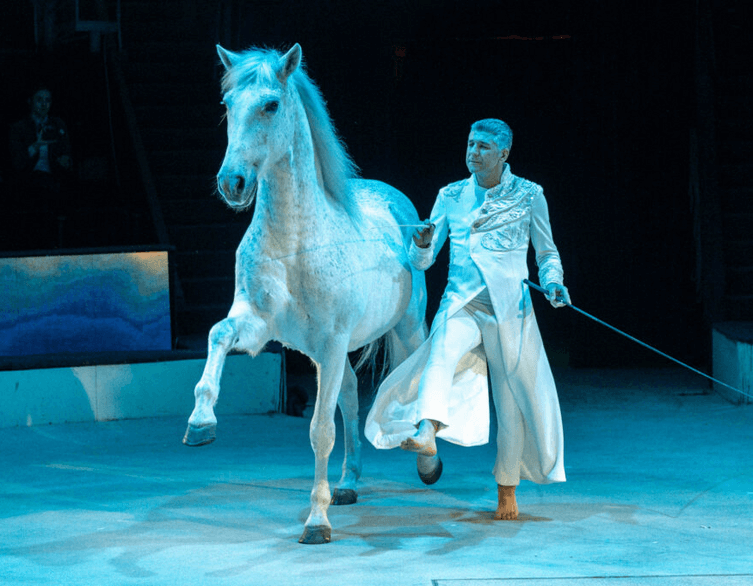
Budapest Zoo Cheers as Hungary Finally Bans Wild Animals from the Circus
There are moments in the slow, grinding machinery of legislation when something genuinely good happens — and when it does, it’s worth pausing...
The Biodome at Budapest Zoo: Evolution of a Modern Landmark
The Biodome at Budapest Zoo, situated in the heart of City Park, has become one of Budapest’s most discussed urban projects. While its full-scale...
Related events
Related attractions