Metallica in Budapest: How the Metal Legends Broke Every Record in the Book
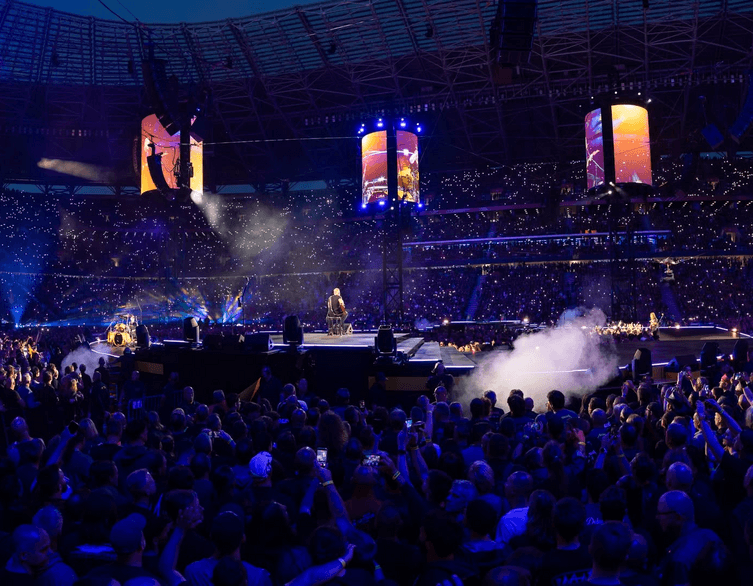
When Metallica comes to town, you expect something special. But when they rolled into Budapest in June 2026, nobody quite anticipated just how historic the weekend would turn out to be. The legendary thrash metal band didn’t just play two concerts — they shattered attendance records, flooded the city with fans from nearly 70 countries, and briefly turned Budapest into the undisputed capital of heavy metal on Earth.
A Weekend That Rewrote the History Books
The numbers alone are staggering. Thanks to a specially designed in-the-round stage setup — a circular stage placed roughly in the centre of the pitch — Puskás Aréna was able to sell tickets to every single sector of the stadium, something that traditional stage configurations simply don’t allow. The result? More than 75,000 fans packed inside the venue each evening, with over 150,000 people attending across the two nights of the No Repeat Weekend. That’s not just a record for Puskás Aréna — it’s the biggest stadium concert attendance figure in Hungarian history.
The in-the-round concept, which has been the signature of Metallica’s M72 World Tour since it launched three years ago, created something genuinely magical. No matter where you stood or sat, the band was playing to you. Previous tour stops in Berlin, Chorzów, and Athens had already broken house records, and Budapest was next in line — joining a remarkable list of cities that will be talking about this tour for decades.
Two Nights, Two Different Shows
The No Repeat Weekend format is exactly what it sounds like: two consecutive concerts with entirely different setlists, different support acts, and a promise that no song gets played twice across the weekend. It’s a bold concept that rewards dedicated fans and creates a genuine sense of event around each night.
Thursday, June 11th brought Pantera and Avatar as support acts, while Saturday’s show featured Gojira and Knocked Loose warming up the crowd. Both nights drew enormous audiences, but for many local fans and visiting metalheads alike, Thursday held a particular emotional pull — not least because it marked Metallica’s return to Budapest after an eight-year absence.
Best deals of Budapest





The circular stage itself deserves special mention. Flanked by enormous LED columns that doubled as speaker towers and video screens, it gave each song its own visual identity. The golden haze of 72 Seasons, the deep blue of Temptation, the precisely choreographed light shows that grew more spectacular as the night darkened — all of it combined to make this far more than a concert. It was a full sensory experience, and Puskás Aréna proved itself an exceptional host for the occasion.
The Setlist: A Greatest Hits Machine
Metallica opened with Creeping Death, setting the tone immediately for what would be a relentless parade of classics. The crowd had already been roaring along to Ennio Morricone’s iconic theme — a long-standing Metallica tradition before they take the stage — and by the time James Hetfield’s first riff rang out, the atmosphere was electric.
Over the course of the evening, the band tore through a setlist that read like a career-spanning best-of: Sad But True, Battery, Fuel, The Memory Remains, and a thunderous Master of Puppets to close the show. Hetfield’s voice was in remarkable shape, a testament to the fact that even after 45 years on stage, the man remains one of rock’s most compelling frontmen. Lars Ulrich, whose drumming is always a topic of lively debate among fans, delivered a strong performance through most of the set, and when the classics hit in the final stretch, any imperfections were swept away entirely by the sheer joy of the moment.
A Hungarian Surprise — With Mixed Results
One of Metallica’s most endearing touring habits is learning a song from the local music scene to perform as a surprise at each tour stop. In Budapest in 2018, Kirk Hammett and Rob Trujillo played Tankcsapda’s beloved anthem Legjobb Méreg to thunderous applause. This time around, the pair chose Totális Metal by Pokolgép, a Hungarian heavy metal classic — but the reception was rather more muted.
Trujillo’s Hungarian pronunciation proved something of a stumbling block, making the song difficult to recognise at first, and the track itself is less familiar to younger concertgoers than it might be to older fans who came of age with it. The moment drew smiles more than roars, which is perhaps not quite what the band intended. Still, the gesture itself is a charming one, and the effort to connect with local music culture — however imperfectly executed — is part of what makes Metallica feel like more than just a touring machine.
The Support Acts: From Mixed Feelings to Metal Perfection
Avatar, the Swedish metal outfit opening Thursday’s show, faced an uphill battle. The venue was still filling up when they took the stage, and the crowd’s attention was scattered — people chatting, exploring the arena, taking photos. The band played a technically precise set, but struggled to make a lasting impression on an audience that was, frankly, saving themselves for what was to come. They return to Budapest in December for a headline show at Barba Negra, a more intimate venue that will likely suit them far better.
Pantera, on the other hand, were a different proposition entirely. The reformed band — featuring Phil Anselmo and Rex Brown alongside Charlie Benante on drums and Zakk Wylde on guitar — had already proven their worth to Budapest audiences at a 2025 show at László Papp Budapest Sports Arena, and they delivered again here. Anselmo’s voice hit like a sledgehammer, the groove-heavy riffs of their catalogue filled the stadium with testosterone-fuelled intensity, and a touching video tribute to the late Vinnie Paul and Dimebag Darrell brought a moment of genuine emotion to the proceedings. Their setlist was virtually flawless: Mouth for War, Becoming, 5 Minutes Alone, Walk, I’m Broken, and Cowboys from Hell. Pure, uncut heavy metal at its finest.
Beyond the Concerts: A City Taken Over by Metal
The concerts were just the centrepiece of a weekend that transformed Budapest into a global metal pilgrimage destination. Fans arrived from nearly 70 countries, and the city more than rose to the occasion.
At Allee shopping centre, the official Metallica pop-up store drew queues stretching for hours — some fans reported waiting an hour and a half just to get inside, though the reward of a limited-edition Budapest-exclusive splatter vinyl made it entirely worthwhile for hardcore collectors. The store offered a range of exclusive merchandise available nowhere else in the world, making it a must-visit for anyone who made the trip.
At the House of Hungarian Music, a stunning Frank Gehry-designed building in City Park, Kirk Hammett held a book and guitar showcase that drew a packed and enthusiastic crowd. The evening was capped by a surprise appearance from Robert Trujillo for an impromptu jam session — the kind of spontaneous moment that fans recount for years.
The Metallica Film Festival ran to a full house throughout the weekend, and for those who wanted to keep the energy going into the night, a tribute festival called …And Tributes For All! at Barba Negra and a metal club night at Akvárium Klub provided the perfect after-show options.
Metal With a Heart
Perhaps the most remarkable record broken this weekend had nothing to do with ticket sales. Metallica has a long-standing tradition of giving back to the communities they visit on tour, and Budapest was no exception. In partnership with local organisers, the band set up a blood donation drive across both concert days — and the response was extraordinary. Nearly 2,000 people donated blood over the two days, making it the single largest blood donation event in Hungarian history. A full quarter of those donors were giving blood for the very first time, which organisers expressed hope would inspire a lifetime habit.
The band also donated to NANE, a Hungarian organisation working to support victims of domestic violence, and partnered with Budapest Bike Maffia — a beloved local charity cycling collective — to deliver more than 1,000 meals to people in need across the city. It’s a side of Metallica that doesn’t always make headlines, but it matters enormously, and it left a lasting impression on Budapest well beyond the music.
Why Budapest Should Be on Every Metal Fan’s Map
What this weekend demonstrated, above all else, is that Budapest is a world-class destination for live music. Puskás Aréna proved it could host an event of this scale with grace, the city’s venues and cultural spaces rose to the occasion, and the local fan base showed the world that Hungarian audiences bring an energy and passion that few can match.
If you’re planning a trip to Budapest and you have any interest in live music — metal or otherwise — the city rewards you generously. From intimate club gigs at Barba Negra and Akvárium Klub to stadium spectacles of this magnitude, the Hungarian capital has quietly become one of Europe’s finest live music cities. The Metallica weekend was, in many ways, its coming-out party on the global stage.
As for the band themselves? After 45 years, multiple lineup changes, and a career that has outlasted virtually every trend in rock music, Metallica remain exactly what their Thursday night performance confirmed them to be: not just a band, but an institution. And Budapest, for one unforgettable weekend in June 2026, was lucky enough to be at the centre of it.