Keeping Budapest Clean: A Visitor’s Guide to Caring for the City

A takeaway coffee on your morning walk, a picnic in the park or a late-night snack after sightseeing—small moments like these are part of enjoying Budapest. What happens to the packaging afterwards matters, too.
According to Budapest Public Utilities, its teams look after the cleaning of 25 million square metres of public space throughout the year, in every kind of weather. That is an enormous area to maintain, but even the most dedicated cleaning crews cannot prevent litter from being dropped in the first place. Keeping Budapest welcoming is a shared responsibility, and visitors can make a difference with a few everyday decisions.
Small Pieces of Litter Make a Big Difference
Budapest Public Utilities operates around 11,000 street bins across the city. These are intended for the small items of rubbish that accumulate while you are out and about, such as tissues, snack wrappers and other everyday litter.
If the nearest bin is full, hold on to your rubbish until you find another one. Leaving it on top of a bin or placing it beside one does not solve the problem: it can easily end up scattered across the pavement.
Cigarette ends count as litter, too. If you smoke, extinguish your cigarette completely and use a designated cigarette receptacle, including those attached to some street bins. The pavement is not an ashtray, however small a cigarette end may seem.
Why Your Pizza Box Might Need to Come Back with You
Street bins are designed for passing pedestrians, not for large amounts of takeaway packaging. A pizza box squeezed into a small opening can block the bin, preventing everyone else from using it even when there is still space inside.
After a bigger meal on the go, take bulky packaging back to your accommodation and use the appropriate waste or recycling facilities there. The same principle applies to bags of rubbish: public street bins are not a substitute for household waste collection.
Returnable drinks containers are worth keeping separate, too. Rather than throwing them away, use the relevant return facilities to recover the deposit.
Enjoy Budapest’s Parks Without Leaving a Trace
A picnic is a lovely way to slow down during a city break. Whether you settle on Margaret Island, find a spot in City Park or take a break in another green space, leave the area as you would hope to find it.
For a quick snack, a nearby bin may be all you need. A picnic with a larger group takes a little more planning. Several bags of food packaging can overwhelm bins intended for ordinary park use, so bring something to collect your rubbish in and be prepared to carry it away.
Do not leave tied bags beside an overflowing bin. Use a suitable larger container where one is provided, or take the waste back to your accommodation. A final look around before leaving also helps catch the easily forgotten items: a bottle cap in the grass, a napkin under a bench or a wrapper blown a few steps away.
Best deals of Budapest











Visiting Budapest with a Dog? Bring Waste Bags
If your four-legged travel companion is joining you, cleaning up after them is part of responsible city exploring. Dog waste should be collected in a bag and placed in a designated dog-waste bin. Where no dedicated bin is available, an ordinary street litter bin is also an appropriate option.
Carry bags with you rather than relying on finding a dispenser. It is a simple habit that makes pavements, parks and shared green spaces more pleasant for everyone.
Who Keeps Budapest’s Pavements Clean?
You may notice caretakers sweeping outside apartment buildings or shop staff tidying the pavement in front of their premises. That is because street cleanliness is not solely the responsibility of the municipal cleaning service.
Under Budapest’s public-cleanliness rules, property owners, managers or users have responsibilities for maintaining the pavement outside their buildings and certain adjoining areas. Businesses are responsible for the pavement directly outside their premises, while residential buildings generally arrange this work through their caretaker or maintenance service.
Those responsibilities also extend to keeping overhanging vegetation from obstructing the pavement and dealing with snow and ice in winter. As a short-term visitor, you are not expected to take over these tasks, but understanding the division of responsibility helps explain the work you see happening around the city each day.
Respect the Buildings, Benches and Bridges
Looking after Budapest also means protecting its public spaces from damage. Adding stickers, writing on street furniture or leaving an unauthorised mark on a wall is not a harmless holiday souvenir.
The city’s public-cleanliness guidance warns that unauthorised graffiti and stickers can constitute vandalism and may lead to financial penalties, depending on the damage and the location. Enjoy the city’s visual character without adding your own mark to its buildings, bridges, benches or lamp posts.
Spot a Bigger Problem? Local Stewards Can Help
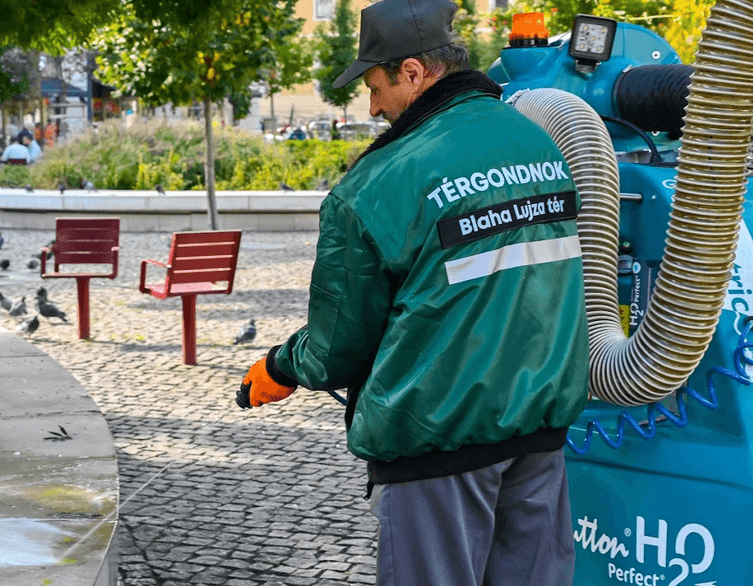
Budapest also has public-space stewards working at several busy locations, including Deák Ferenc Square, Blaha Lujza Square, Széll Kálmán Square and Margaret Island.
Their work goes beyond picking up stray rubbish. They monitor cleanliness, watch for problems affecting street furniture and green spaces, and coordinate with the relevant services when bins need urgent emptying or an area needs attention.
If you notice a significant cleanliness problem in an area where a steward is working, let them know. Bringing an overflowing bin or scattered rubbish to their attention can help the right team respond.
A Cleaner City Makes a Better Visit
You do not need to make big changes to be a considerate visitor. Carry a wrapper a little further, keep bulky packaging out of small street bins and check your picnic spot before moving on.
Behind Budapest’s public spaces is a year-round cleaning effort. Giving that work a helping hand leaves more room for what you came to enjoy: a relaxed walk, a pleasant park bench and a city worth exploring on foot.
Related news

Dog Walking in Budapest’s Nature Reserves: How to Explore Responsibly
A walk in nature can be one of the loveliest ways to slow down during a Budapest city break, especially if you’re travelling with your dog. There’s...
Margaret Island Gets Its Own Dedicated Cleanup Crew
Budapest’s most beloved green getaway just got some extra care. As of September 1, 2026, Margaret Island has joined the city’s “square...
Budapest’s Public Spaces Get a Fresh Spark: The New Square Caretaker Service
Budapest has always been known for its grand squares, vibrant streets, and historic atmosphere — but recently, visitors might notice that the city...