Meet the Faces of Ancient Rome at Budapest’s Aquincum Museum
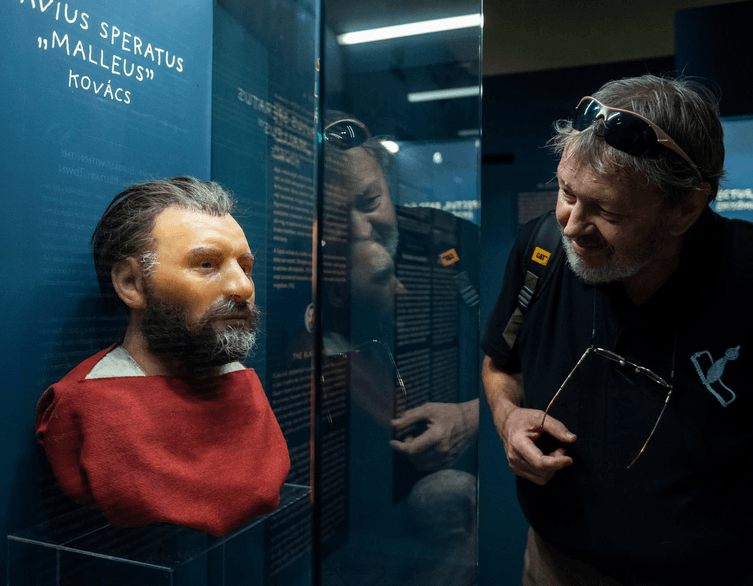
Imagine standing face to face with someone who walked the streets of Budapest nearly two thousand years ago. That’s exactly the experience awaiting visitors at the Aquincum Museum, where a remarkable new exhibition brings sixteen Roman-era residents back to life through scientifically reconstructed faces. Titled “Once We Were Like You: Facial Reconstructions from the Roman Period,” the exhibition runs at the Budapest History Museum’s Aquincum Museum through October 31, 2026, before reopening again in spring 2027. It’s shaping up to be one of the most exciting cultural additions to Aquincum this summer.
Where Science Meets Storytelling
What makes this exhibition genuinely special is how it bridges hard science and human imagination. The project traces back to major excavations conducted between 2019 and 2021 in Aquincum’s former military town, where archaeologists uncovered thousands of Roman-era burials. From this wealth of material, sculptor and forensic reconstruction artist Ágnes Kustár was commissioned to recreate a handful of faces using anthropological methods. The results were so compelling that the idea grew into a full-scale exhibition, developed by archaeologists Péter Vámos, Lóránt Vass, and Tibor Budai Balogh in collaboration with the Institute of Archaeogenomics at Eötvös Loránd University and Semmelweis University.
Tragically, Kustár passed away in 2023 at the height of her career, having completed six reconstructions. Artist Emese Gábor continued her work, ultimately bringing the total to sixteen faces, each based on real skeletal remains discovered in and around ancient Aquincum, the Roman settlement that once stood where Budapest sits today. Thanks to recent bioarchaeological research, visitors can now look directly into the eyes of Romans who lived roughly 1,600 to 1,800 years ago, a genuinely striking experience that few museums anywhere can offer.
What sets this project apart from typical archaeological displays is its use of archaeogenetic research alongside traditional anthropology. Through joint research between the Budapest History Museum, ELTE’s Institute of Archaeogenomics, and Semmelweis University’s medical imaging experts, scientists extracted DNA data to determine details like eye color and hair color, grounding these reconstructions in genetic evidence rather than artistic guesswork alone.
More Than Just Faces
The curators didn’t stop at physical reconstruction. Each of the sixteen individuals has been given a name and a short, fictional yet historically grounded life story, designed to help visitors connect emotionally with people who lived, worked, and died in Roman-era Pannonia. A teenage girl buried with a mirror, a wealthy matron dressed in fine fabric, or a supposed wrongdoer buried face-down each tell their own quiet story, offering glimpses into beliefs, social status, and daily life that bones alone cannot fully reveal.
Best deals of Budapest











As the exhibition’s curators explain, this is essentially “a meeting of scientifically verifiable findings and historical imagination.” The biographies are invented, but they’re built from genuine archaeological and historical context, meaning these could very well be the real stories of real people who once called this city home.
What You’ll See on Site
Spread across four exhibition rooms in the Aquincum Museum’s historic building, the display features the sixteen facial reconstructions alongside a range of archaeological finds tied to each individual’s story. Beyond the faces themselves, visitors can also admire the museum’s famous Aquincum mummy, along with fresh insights revealed by a recent CT scan of the remains. The exhibition further showcases beautifully preserved artifacts recovered from ancient graves and offers a fascinating glimpse into the world of ancient Roman magic and superstition.
Paleoanthropologist Balázs Mende, who spoke at the opening, noted that Aquincum’s population was every bit as diverse as modern Budapest’s, a reminder that cultural richness and human variety are hardly unique to our era.
Practical Information
- Exhibition: Once We Were Like You – Facial Reconstructions from the Roman Period
- Venue: Aquincum Museum (old museum building), Budapest History Museum
- Dates: June 26 – October 31, 2026, reopening in spring 2027
- Exhibition hours (April 1 – October 31): Tuesday to Sunday, 10:00 AM – 6:00 PM
- Archaeological Park hours: Tuesday to Sunday, 9:00 AM – 6:00 PM
- Last entry: 5:30 PM; museum closing procedures begin at 5:40 PM
- Closed: every Monday
- Note: after daylight saving time ends in late October, smaller park buildings such as the House of the Painter and the Symphorus Mithraeum close earlier, before sundown
Why This Is Worth Your Time in Budapest
For travelers interested in history, archaeology, or simply unusual and thought-provoking museum experiences, this exhibition offers something rare: a genuinely emotional connection to the ancient world. Rather than viewing artifacts behind glass with little context, visitors come away having essentially “met” sixteen individuals from Roman Budapest, complete with faces, names, and stories.
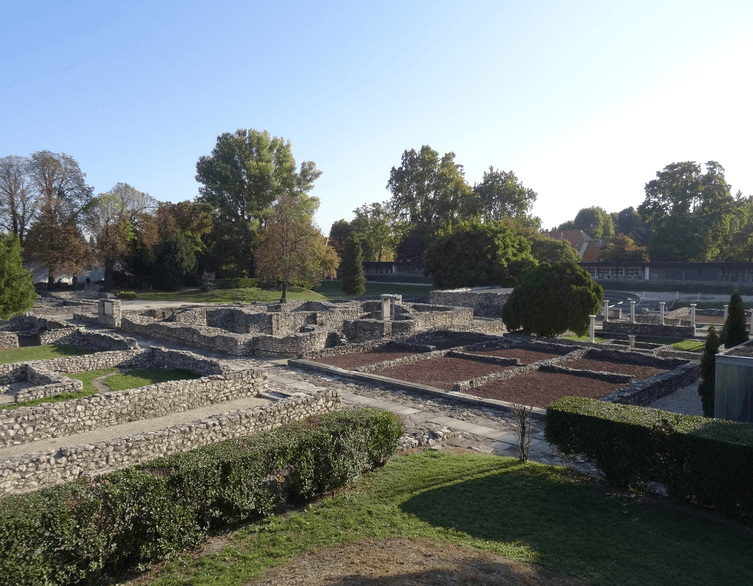
The Aquincum Museum itself sits atop the ruins of the ancient Roman civilian town, making it easy to pair a visit to this exhibition with exploring the surrounding archaeological park. It’s a rewarding stop for anyone curious about Budapest’s layered history that predates the Habsburgs, the Ottomans, or even the Magyars, stretching back to when this land was a thriving outpost of the Roman Empire.
If your Budapest itinerary includes any interest in ancient history, this exhibition is well worth the trip out to Óbuda before it closes for the season at the end of October. Come look the Romans in the eye yourself.
Related attractions
Related news
Beat the Heat: Budapest’s Best Indoor Exhibitions to Explore in August
August in Budapest means golden light on the Danube, packed rooftop bars, and a heat that can make even the most enthusiastic sightseer start dreaming...
History Awaits: Budapest’s Best Museum Exhibitions This Summer
Summer in Budapest can be a bit tricky weather-wise, with sudden thunderstorms rolling in just as often as heat waves, but the good news is that...