Budapest’s Beloved Thermal Baths Are Getting a Makeover — Here’s Everything You Need to Know
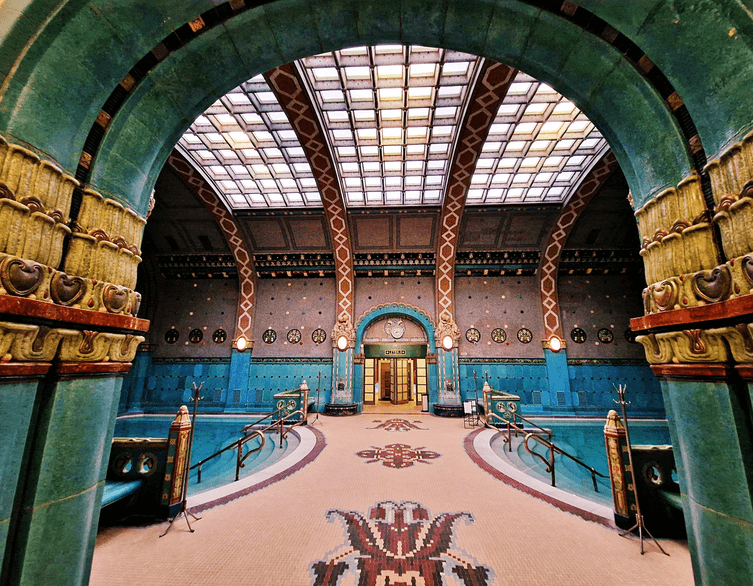
If there is one thing Budapest does better than almost anywhere else on Earth, it is the art of doing absolutely nothing in hot water while surrounded by spectacular architecture. The city sits on top of more than 100 thermal springs, and for centuries its residents have been turning that geological accident into one of the world’s great bathing cultures. But right now, several of Budapest’s most iconic baths are mid-renovation, mid-planning, or mid-bureaucratic-tangle — and if you are visiting in the next few years, it pays to know what’s open, what’s closed, and what is going to be absolutely magnificent when it finally reopens.
The Gellért: Closed, But Coming Back Better Than Ever
Let’s start with the big one. The Gellért Thermal Bath — that jaw-dropping Art Nouveau masterpiece on the Buda bank of the Danube, opened in 1918 and operating continuously for over a century — closed its doors on 1 October 2025 for the most ambitious bath renovation in Hungarian history. So yes, if the Gellért was top of your Budapest bucket list, you are going to have to save it for a future trip. The good news is that what is being planned for its return is genuinely worth the wait.
The budget is around 20 billion forints (roughly €51 million), and the project covers pretty much everything: structural reinforcement, restored Art Nouveau interiors, unified changing rooms, a new panoramic sunbathing terrace with Danube views, a modern wellness area, and a brand new Private Spa section. The Zsolnay Porcelain Manufactory — which produced many of the bath’s original decorative elements over a century ago — has already been consulted about recreating pieces that need replacing. This is not a quick lick of paint. This is a full resurrection.
Best deals of Budapest











Where things stand right now is interesting, and slightly political. Budapest Spas (BGYH), the city-owned company that operates the baths, has had the full construction plans ready for months and has struck financing deals with two major banks. The snag is that, as a municipal company, BGYH needs the Hungarian government’s sign-off to take out a loan — and in December 2025, the government rejected that application without explanation. BGYH resubmitted in March 2026 and is now waiting on the newly formed government to rule on it. CEO Ildikó Szűts remains optimistic, and the timeline — if approval comes through as hoped — has construction starting in earnest in early 2027, the indoor spaces reopening in late 2028, and the outdoor pools and new Private Spa section ready for the summer of 2029.
In the meantime, things are already moving inside the building. The mechanicals room — the beating heart that keeps any bath running, and which had apparently reached a state that the CEO diplomatically described as “life-threatening” — is being fully overhauled this year. So while you cannot go for a soak, the Gellért is very much alive and being carefully brought back to its former glory.
The Rác: The Longest Comeback Story in Budapest
While the Gellért is a recent closure, the Rác Bath on the Buda side near Tabán has been shut since 2002 — which means an entire generation of Budapest visitors has never set foot inside it. The building spent years in legal limbo following a failed private redevelopment attempt before the City of Budapest repurchased it in 2021. Since then, the team has been fighting mould (three separate contractors were needed before someone finally agreed to tackle it), fixing flood pumps, patching the roof, and generally trying to stop the gorgeous historic building from falling apart while the finances got sorted.
The good news is that the renovation tender has been officially launched, multiple bidders have come forward, and the bids are looking considerably more affordable than initially estimated. The same government loan approval that the Gellért is waiting on also covers the Rác, and the renovation itself would take around 15 months once construction starts. If everything goes to plan — which, admittedly, is a phrase that has been said about the Rác many times before — it could reopen in 2027. That would be genuinely exciting, because this bath, with its intimate scale and Turkish-era thermal pools tucked into the Buda hillside, has long been considered one of Budapest’s most intriguing hidden gems. The adjacent hotel is a whole separate saga still to be resolved, but the idea of running the bath and hotel as a combined package for international visitors is being actively discussed.
The Széchenyi: Still Open, Still Magnificent, Still a Little Complicated
The Széchenyi Thermal Bath — the enormous yellow Neo-Baroque palace in City Park that has been welcoming visitors since 1913 and is basically impossible to photograph badly — is open, operational, and as spectacular as ever. Go. Enjoy it. Rent a towel, get in the water, watch a stranger play chess waist-deep in a thermal pool, and feel very good about your life choices.
That said, there is some behind-the-scenes drama worth knowing about. A 2024 government regulation requires pools that operate on a “fill and drain” system — filled in the morning, emptied at night — to be converted to modern circulation-and-filtration technology. Historic baths like the Széchenyi were built long before such systems existed, and BGYH argued they should be exempt. They applied for an exemption for the Rudas Bath’s central pool and were unexpectedly turned down. That single rejection raised the uncomfortable question of whether all fifty-plus pools across Budapest’s historic baths might need to be converted — a project costing more than 10 billion forints, due by spring 2029. A technical feasibility study on the conversion options has just been completed and is being presented on 11 May 2026, after which the City Assembly will decide how to proceed. Until that question is resolved, the larger thermal section renovation — a 2+ billion forint project — remains on hold.
None of this affects your visit. The water is still hot, the building is still breathtaking, and the outdoor swimming pool was freshly refurbished last autumn. This year, the grand main entrance staircase and the sunbathing terrace are being restored, with both due to be finished by summer. The Széchenyi is, as always, very much worth your time.
Where to Go Right Now
With the Gellért closed, BGYH has been working hard to redirect visitors to its other historic baths — and honestly, the alternatives are excellent. The Rudas Bath has extended its co-ed swimming hours significantly and offers one of the most atmospheric bathing experiences in the city, with its original Ottoman dome filtering light onto the central octagonal pool. The Lukács Bath is quieter, more neighbourhood-feeling, and genuinely beloved by locals who want a soak without the crowds. And the Széchenyi, with its 18 pools and vast footprint, handles the extra visitors without breaking a sweat.
A recent survey of tourists visiting Budapest found that thermal baths appear in the top five reasons people come to the city in the first place. When asked why they come back, only two things made the list: the food, and the baths. And here is the best bit — when tourists were asked what specifically draws them to the baths, the architecture came first. The therapeutic properties of the thermal water — the whole reason these springs were developed in the first place — came fifth. People are essentially coming to float around inside a UNESCO World Heritage-listed work of art, and the hot water is a very pleasant bonus.
The Bottom Line
If you are visiting Budapest in 2026, the Gellért is off the table but the Széchenyi, Rudas, and Lukács are all open and excellent. If you are planning a trip for 2027, keep an eye on the Rác — it could be one of the most exciting reopenings in Budapest in years. And if you are already dreaming about 2028 or 2029, you might just want to time your visit around the Gellért’s grand return, which promises to be an event worth building an entire trip around. Budapest’s baths are not just tourist attractions. They are living monuments to a city that has always known how to make the most of what lies beneath it.
Related news
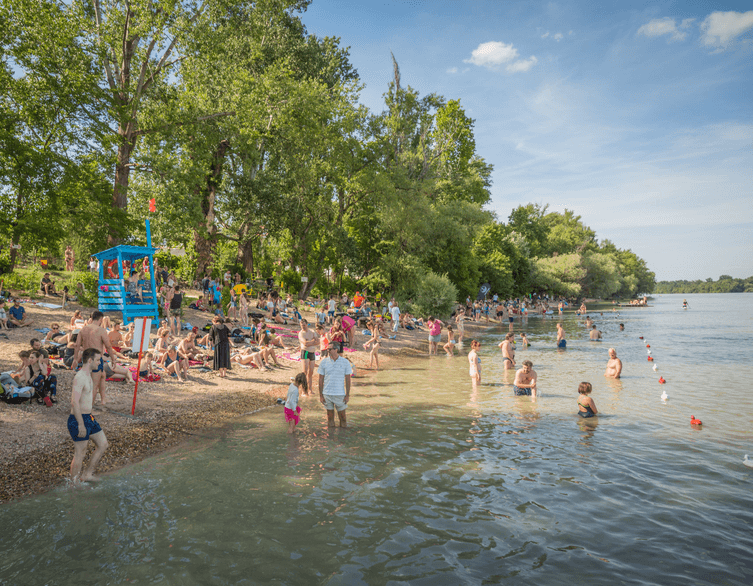
Swimming in the Danube Is a Thing in Budapest — And It’s About to Get Even Better
When most people think of Budapest, they picture grand thermal baths, steaming pools, and tourists in fluffy robes looking deeply content with their...
Tension in the Thermal Waters: How the Gellért Spa’s Closure Shook Budapest’s Bath Culture
Few places in the world are as famous for their thermal spas as Budapest. Steaming pools under grand domes, art nouveau tiles, and centuries of bathing...
Gellért Thermal Baths Renovation: Panoramic Danube Views and Restored Art Nouveau Splendor Coming 2028
Budapest’s beloved Gellért Baths will close its doors on September 30, 2025, marking the beginning of the most ambitious thermal bath renovation...
Related attractions
