Budapest’s Greenest District Is Fighting Back Against Flash Floods — and the Results Are Beautiful
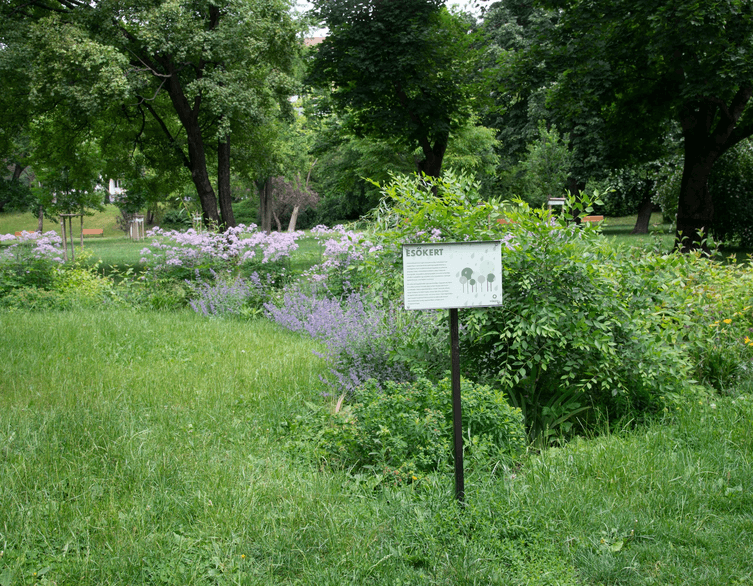
If you’ve ever strolled through the leafy hills of Budapest’s 12th District — known locally as Hegyvidék, meaning “Highland” — you’ll know it’s a world apart from the bustling city centre. Winding streets, dense forest cover, and sweeping views make it one of the most beloved corners of the Hungarian capital. But behind that picture-postcard scenery lies a practical challenge: when it rains in Hegyvidék, it really rains, and the hilly terrain means water rushes downhill fast. The local council has decided to stop fighting that water — and start working with it instead.
A District That Thinks Like a Sponge
Hegyvidék is the greenest district in Budapest, with more green space per resident than anywhere else in the city. But green space alone doesn’t solve everything. In recent years, rainfall patterns across the region have shifted: intense, short-duration downpours have become more frequent, alternating with increasingly long dry spells. On a steep hillside, that’s a double problem — too much water all at once, then not nearly enough.
The district’s response has been to embrace what urban planners call “sponge city” thinking: instead of rushing stormwater into drains and sewers, you slow it down, soak it up, and store it for later. A series of nature-based infrastructure projects, grouped under the LIFE Urban Rain initiative, are quietly transforming corners of the district into smarter, more resilient green spaces. Visitors who happen across them might not even realise they’re looking at cutting-edge water management — they just see a rather lovely garden.
The Dog Park That Became a Rain Garden
One of the most charming examples of this approach can be found at the Pagony Street dog run, tucked into the steep green hillside on Orbán Hill between Fodor Street and Pagony Street. It’s one of the largest and most popular dog parks in the 12th District, which is precisely why the soil there had become compacted and hard as concrete — trampled by thousands of enthusiastic paws over the years.
During heavy rain, water would pour down from the neighbouring playground and the slope above, pool at the lower end of the park near Pagony Street, and turn the whole area into a muddy swamp. The solution was a nature-based landscape design that collects rainwater running off the slope below the playground and channels surface water from the street directly onto green land — a first for the district, where road runoff had never before been redirected to a green area for absorption. At the bottom of the dog run, a purpose-built rain garden now captures and slowly soaks up all that collected water.
The rain garden itself is planted with species chosen specifically to handle both flooding and drought — perennials, ornamental grasses, and shrubs that can get their feet wet or go without water for weeks without complaint. Dead wood has been thoughtfully placed among the plantings to create habitat for insects and birds, giving the space an almost wild, forest-floor character. Once the plants are established enough that dogs can’t damage them, the entire rain garden will be open for four-legged visitors to explore. The muddy puddles will be gone, replaced by a fragrant, biodiverse mini-nature reserve — and the surrounding mature trees will benefit too, as the improved soil structure helps them better withstand dry periods.
An Underground Tank at the Heart of the Hills
A few streets away, at the junction of Gyöngyvirág Road and Diana Street, a very different kind of water management infrastructure sits hidden entirely underground. The intersection sits near the top of the Győri Road–Sváb Hill catchment area, and during heavy storms, the lower parts of that catchment — including both public and private properties — have historically suffered serious flood damage.
Best deals of Budapest








The solution here is a 30-cubic-metre underground cistern made up of three interconnected 10-cubic-metre tanks. A grate-covered channel running across Diana Street catches surface runoff and feeds it underground, where the water is filtered through leaf traps, oil separators, and silt traps before filling the tanks. If all three tanks reach capacity, excess water simply flows back to the road surface via an overflow. Water level sensors in each tank relay data to the district council’s servers in real time, so staff can monitor exactly how much water has been captured after any given storm.
When dry weather arrives, the stored water is pumped out and used to irrigate street-side flower beds, tree lines, and pollinator meadows across the area. Rain that might otherwise have caused a flash flood downstream ends up watering the neighbourhood’s roses and lime trees. Residents living near Diana Street were even involved in the landscaping of the site during restoration, and together they created a small walnut grove — the Diana Walnut Grove — as a lasting community mark on the project.
Öröm Street: Turning Old Infrastructure Into New Solutions
The Öröm Street project tackles a slightly different puzzle on the southern slopes of Hegyvidék. This part of the district has only a sewage system — no separate stormwater drain — and it is strictly prohibited to discharge rainwater into it. During heavy rain, water cascading down from higher ground along Öröm Street regularly flooded several private properties lower down the slope.
There was already a basic infiltration unit on site, but it was undersized and poorly maintained. Rather than replacing it wholesale, the district chose to upgrade it: a new 20-cubic-metre underground system now combines a 10-cubic-metre storage tank and a 10-cubic-metre infiltration unit side by side. Two linked inlet shafts in the road capture surface runoff, clean it through the same filtration stages used on Diana Street, and feed it into the system. Calculations showed that the infiltration unit absorbs water quickly enough that no overflow pipe is even needed — the water simply percolates back into the earth. As with the Diana Street project, whatever is collected between storms is pumped out for use on local green spaces.
Szepesi Street: Slowing the River Down
Perhaps the most ambitious project in the series is the planned transformation of Szepesi Street, a road in the northern part of the 12th District that runs along a hillside between the Kútvölgy and Szépilona neighbourhoods. The street does double duty: it carries pedestrian traffic across four side streets, and it acts as a drainage channel for rainwater pouring down from higher ground. During heavy storms, water races through the roadside ditch like a torrent and spills across every intersection it crosses, blocking traffic and creating hazards.
The LIFE Urban Rain project is designing a terraced landscape system for Szepesi Street that will slow water down as it descends the ditch, then guide it into green strips and Seattle-style rain gardens at the bottom of the road for gradual absorption. A preliminary survey revealed that a sewer pipe running two metres beneath the ditch is too old to safely work around, so in partnership with Budapest’s municipal waterworks, a section between Kiss Áron Street and Dániel Road will be reconstructed first. This stretch will serve as a test case, monitored by instruments placed in the culverts, before the rest of the street follows in phases over the coming years.
Why This Matters for Visitors
You might wonder why any of this is relevant to someone spending a long weekend in Budapest. The answer is that Hegyvidék’s green hills are a genuine highlight for visitors who venture beyond the city’s famous thermal baths and ruin bars. The district’s forested slopes are criss-crossed with walking trails, the children’s railway and the chairlift up to János Hill are beloved family excursions, and the residential streets are some of the most pleasant in the city for an aimless afternoon wander.
Projects like these help ensure that those green spaces remain lush and accessible — even during the hotter, drier summers that climate projections suggest are coming. They also signal something broader about how Budapest is approaching urban sustainability: not with grey concrete and underground pipes, but with rain gardens, community orchards, and neighbourhoods designed to work with nature rather than against it. The next time April showers catch you off guard on a Budapest hillside, spare a thought for the rain garden quietly doing its job beneath your feet.
Related news
Budapest’s Green Future: The City Turns Into a “Sponge City”
Budapest has just taken a major step toward becoming one of Europe’s most climate-resilient capitals, and it’s a story worth knowing...
Budapest’s Urban Trees Need You: Join the Volunteer Water Giver Campaign
Budapest is one of Europe’s most beautiful cities — and a big part of that beauty comes from its trees. Those leafy giants lining the boulevards,...
Budapest Is Drying Out — And Here’s Why You Should Care (Even on Vacation)
If you’ve arrived in Budapest this spring expecting lush green parks and a mighty, roaring Danube, we have some news for you. The river is...

Budapest Airport’s Green Revolution: How RESILIMET Keeps Your Flights Storm-Proof
Ever worried about a sudden downpour delaying your Budapest getaway? At Ferenc Liszt International Airport (BUD), that’s becoming history thanks...

Budapest’s Healing Waters: Your Stress-Busting Guide to Hungary’s Thermal Treasures
So, you’ve made it to Budapest – congratulations! You’re about to discover one of the world’s best-kept secrets for melting away...

Budapest Weather All In: What to do When It Rains and Shines at The Same Time?
When the weather forecast throws you a curveball in Budapest, don’t let a little rain or scorching heat derail your travel plans. The Hungarian...
Budapest’s Sponge City Initiative: A Sustainable Approach to Urban Water Management
In the heart of Hungary, Budapest is embracing an innovative approach to urban water management known as the “Sponge City” concept. This...