Exhibitions in Budapest This Winter 2026: Art, Photography, History and Unexpected Discoveries
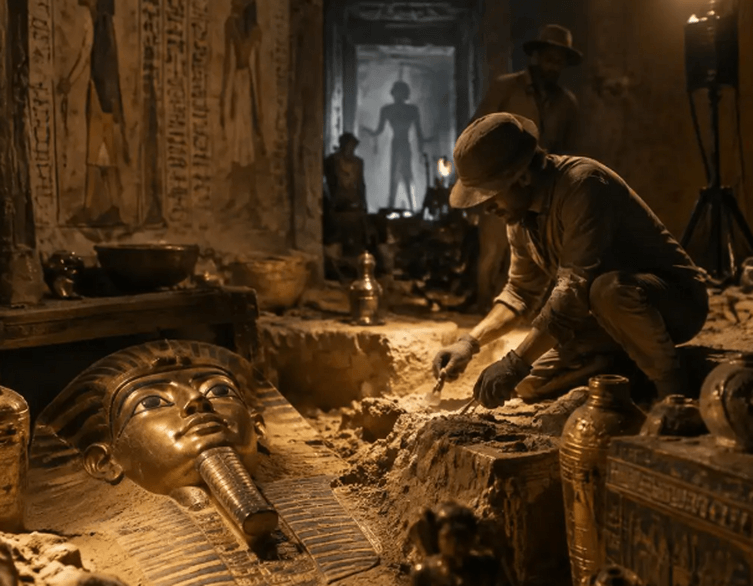
A bronze Apollo rediscovered under the wrong identity, Freddie Mercury’s personal belongings, recreations of Tutankhamun’s treasures and objects that have travelled into space: Budapest’s exhibitions offer plenty of reasons to step indoors this winter. Whether you want to lose yourself in paintings, explore ancient civilisations or understand the city beyond its postcard views, there is an exhibition to build an afternoon around.
This guide to exhibitions in Budapest for winter 2026 focuses on the season beginning in late 2026 and continuing into early 2027. It also includes several November highlights worth catching before winter properly arrives. Not everything runs for the whole season, so pay attention to the dates, especially if you are visiting over Christmas or after New Year.
Fine Art and Contemporary Perspectives
Bonjour Monsieur Gauguin! at the Museum of Fine Arts
If you want one major art exhibition to anchor your Budapest itinerary, Bonjour Monsieur Gauguin! Circles of the Post-Impressionists and Symbolists makes a compelling case. Running from October 28, 2026, to February 28, 2027, at the Museum of Fine Arts on Heroes’ Square, it brings together around 150 works, including approximately 80 by Gauguin, with loans from nearly 40 institutions.
The exhibition follows the artist from France to Martinique, Tahiti and the Marquesas Islands, tracing his movement away from naturalistic painting towards an expressive language of colour, rhythm and symbolism. Works by artists including Pissarro, Cézanne, Monet and Van Gogh place that journey within a much wider creative conversation. You do not need specialist knowledge to enjoy it: watching these different approaches to painting unfold side by side is part of the attraction.
Allow around an hour and a half for the exhibition itself. Listed adult tickets cost 6,800 HUF on weekdays and 7,800 HUF at weekends. Regular opening hours are Tuesday to Sunday, 10 am–6 pm, with ticket sales ending at 5 pm. Its location makes it easy to continue into City Park afterwards.
Dedicated Ones: Hungarian Women Artists at the Hungarian National Gallery
For a different perspective on twentieth-century art, head to the Hungarian National Gallery for Dedicated Ones: Hungarian Women Artists in the First Half of the Twentieth Century. On view from October 21, 2026, to February 14, 2027, the exhibition presents more than 130 works by 60 artists.
The paintings and sculptures tell a story about claiming space: in artistic education, public exhibitions, professional institutions and the wider world. Portraits, interiors, cityscapes and depictions of motherhood reveal distinct individual voices rather than a single, supposedly uniform “women’s perspective.” Internationally recognised figures appear alongside artists whose achievements deserve a fresh audience.
Look out for names such as Noémi Ferenczy, Margit Anna, Ilka Gedő, Anna Lesznai and Judit Reigl. Tickets have a one-hour arrival window, but that does not mean your visit is limited to an hour. Admission also includes the permanent exhibitions and halls open that day, making this a good opportunity for a longer gallery visit at Buda Castle.
LOBBYISM at Hotel Clark Budapest
Not every art encounter needs a museum ticket. At the Buda end of the Chain Bridge, LOBBYISM – kissmiklos × Art Corner X brings contemporary art into the ground-floor public spaces of Hotel Clark Budapest and Leo Bistro.
Running from October 1 to December 6, 2026, the exhibition gathers work from a decade of Hungarian artist kissmiklos’s practice while introducing a new chapter focused on fine art. Its setting raises an interesting question: why do we treat an object differently when it appears in a hotel rather than a gallery?
That idea makes this more than decorative scenery for your coffee. The surroundings become part of the exhibition, inviting you to reconsider the boundary between design, decoration and art. Entry is free, with visiting hours listed as daily, 7 am–midnight. It is particularly easy to work into an early-December walk across the Chain Bridge.
Housing and Belonging at City Hall Park
For a contemporary art stop between downtown sights, seek out the outdoor exhibition LAK|HATÁS at City Hall Park. Its Hungarian title plays on ideas of housing and impact, while its subject—what it means to have a home—needs little translation.
Featuring work by 21 young artists, the exhibition explores belonging, moving, uncertainty and the challenge of putting down roots. Presented through the Deák17 Children and Youth Art Gallery’s outdoor exhibition programme, it offers a glimpse into how a younger generation sees everyday life.
The display runs from September 25, 2026, to January 8, 2027, in the City Hall courtyard along Charles Boulevard. Admission is free. Unlike the museum exhibitions in this guide, this one is outdoors, so treat it as a thoughtful detour during a city walk rather than an escape from the cold.
Art Weekend Budapest 2026: Free Gallery Visits and Guided Art Walks
If your visit falls on November 27–29, 2026, leave some room between the Christmas markets and sightseeing for Art Weekend Budapest. Returning for its fourth edition over the first weekend of Advent, the festival brings free art programmes to around 40 participating locations, opening up a side of Budapest that can be easy to miss on a first visit.
The attraction is not simply the number of exhibitions, but the variety of places you can discover. Museums, independent galleries, artists’ studios and alternative spaces share the programme, creating opportunities to explore beyond a single institution. Announced participants include the Ludwig Museum, Kiscell Museum, Hegyvidék Gallery, Ladó Gallery and the Eötvös10 Basement Gallery, alongside spaces such as Budapest Art Factory, Brody House, INDA Gallery and Várfok Gallery. The Hungarian University of Fine Arts also joins with an exhibition and as a collaborating partner.
The festival’s guided art walks offer a structured introduction, connecting exhibitions with the people and spaces behind them. They welcome curious newcomers as well as regular gallery visitors, so there is no need to arrive with an art-history vocabulary. You can also explore participating exhibitions independently, choosing a few venues that fit your interests rather than trying to cover the whole programme.
Advertised festival walks and programmes are free, but registration is required, and you should check what each listing includes, particularly at museums. English-language guided activities have not yet been confirmed. Organised by artNESZ Fine Art Agency, the festival is still updating its detailed programme, so confirm addresses, languages and event times before setting out. One partner gallery is in Szeged rather than Budapest, making it especially important to check the location when planning your route.
Photography and Ways of Seeing
Robert Capa, The Correspondent at the Capa Center
Budapest-born Robert Capa changed the way the world saw war, bringing viewers close not just to combat but to the people living through it. Robert Capa, The Correspondent at the Robert Capa Contemporary Photography Center explores that legacy through 138 photographs from his Master Collection.
The exhibition combines landmark images with the story of the man behind the camera. Photographs of soldiers, civilians and everyday moments reveal how Capa’s work moved between frontline reporting and a deeply human interest in resilience, vulnerability and connection.
There is an important planning detail here: the supplied material describes this as a permanent exhibition but also includes an outdated December 31, 2025, visiting deadline. It belongs on a photography lover’s Budapest shortlist, but its winter 2026 opening arrangements should be confirmed before visiting. The centre is on Nagymező Street, close to Andrássy Avenue.
Rituals of Beauty at the Museum of Ethnography
Rituals of Beauty – Featherwork and Body Painting in Amazonia asks you to look beyond appearance and consider beauty as a shared cultural language. At the Museum of Ethnography, photographs and objects explore the ceremonial life of the Mebengokre, also known as the Kayapó, of Brazil.
Body painting, featherwork and adornment communicate identity, community membership and life stages. The exhibition explains how patterns and materials carry meanings that may be immediately recognisable within the community but unfamiliar to an outside observer.
Its photographs draw on the extensive archive of anthropologist Gustaaf Verswijver, alongside images by Martine de Roeck, spanning fieldwork from 1974 to 2019. This long perspective allows visitors to consider both continuity and change. Running from May 19, 2026, to January 4, 2027, it is an option for a December visit, but not one to leave until later in the winter.
Ancient Civilisations and Archaeological Discoveries
Treasures of Egypt at Bálna Budapest
You do not need to leave Budapest to step into the world of pharaohs this winter. Opening at Bálna Budapest on November 20, 2026, Treasures of Egypt brings together nearly 100 detailed reconstructions and reproductions, using monumental scenery and themed spaces to explore ancient Egyptian civilisation.
This is not an exhibition of original archaeological artefacts. Instead, its appeal lies in recreating the settings and objects that make ancient Egypt so compelling. Displays evoke the Temple of Luxor and the Avenue of Sphinxes before leading you into a world of pyramids, burial chambers and elaborate preparations for the afterlife. Along the way, you encounter gods including Anubis, Osiris, Isis and Horus, discovering how religious beliefs shaped royal burial traditions.
Tutankhamun takes centre stage through recreations of his golden throne, sarcophagus, guardian statues, jewellery, mirror and chariot, alongside a presentation of his burial chamber. Rather than treating these treasures as isolated showpieces, the exhibition connects them with the beliefs behind them. Displays of canopic jars and mummification tools explain funerary rituals, while another strand follows the rediscovery of ancient Egyptian writing, from the Rosetta Stone to Jean-François Champollion’s decipherment of hieroglyphs.
Following its presentation at the Atkinson Museum in Porto’s WOW cultural district, the exhibition is announced for a three-month stay in Budapest. That places it within the winter 2026–2027 season, although the exact final visiting date has not been confirmed. Admission uses timed entry, with hourly weekday slots from 10 am to the final admission at 7 pm, followed by closing at 8 pm. Weekend entry times are more frequent, at intervals of 20 or 30 minutes.
Guided tours are scheduled to begin on the hour and are led by university students training to become history teachers. English-language tours and exhibition texts have not been confirmed, so check the available languages before booking if you want a guided introduction. For families and anyone fascinated by ancient history, the combination of recreated spaces and storytelling offers a change of pace from Budapest’s own historic landmarks.
The Rediscovered Apollo at the Hungarian National Museum
Sometimes a museum’s most intriguing story concerns something rediscovered inside its own collection. A 56-centimetre bronze Apollo at the Hungarian National Museum spent decades misidentified as a nineteenth-century pharmacy statue before specialists recognised its ancient origins.
Dated to the second half of the second century AD, the sculpture is especially striking for the silver sheet covering its eyes. Its precise provenance remains uncertain, although it is thought to be connected with the Roman settlement of Sopianae, beneath present-day Pécs.
Presented through the museum’s Treasure of the Month series, the statue is listed as being on display for one month from November 4, 2026. That makes it an early-season opportunity rather than a full-winter exhibition. Find it in Room 6 of the permanent archaeological exhibition, At the Crossroads of East and West.
Budapest History: Landmarks, Frontiers and Everyday Lives
A City on the Front Line at the Budapest History Museum
Buda’s Ottoman past becomes much more tangible in A City on the Front Line – Buda and Pest under Ottoman Rule, 1526–1686. Running from October 15, 2026, to April 18, 2027, at the Budapest History Museum’s Castle Museum, it explores a city shaped by warfare, trade and cultural exchange.
The dates need a little explanation. The exhibition begins with the upheavals of 1526, while lasting Ottoman control of Buda began in 1541 and continued until 1686. Rather than reducing that period to sieges and rulers, the displays examine the communities that worshipped, studied, traded and built their lives here.
Archaeological finds include household objects, decorative tiles and discoveries connected with the Ottoman governors’ palace. Goods originating as far away as China and Vietnam reveal that a frontier city could also be internationally connected. An animated siege engraving brings the final struggle for Buda into focus. Find the exhibition in Building E of the Royal Palace at Buda Castle.
Hungary’s Guardian Angel at the City Park Visitor Centre
The Archangel Gabriel above Heroes’ Square is normally too far away for anyone to appreciate its finer details. Hungary’s Guardian Angel – The Archangel Gabriel Statue of Heroes’ Square changes that perspective with a full-scale, five-metre replica displayed at eye level.
Created in connection with the original statue’s restoration, the exhibition explores the monument’s history through archival images, projections and interactive installations. A curved-wall projection offers a virtual view from the angel’s position above the square, while the replica lets you study the sculpture without craning your neck.
Another highlight is the story of the time capsule discovered during restoration, with coins connecting the display directly to the monument’s early history. Admission is free at the City Park Visitor Centre, on the western side of the Museum of Ethnography. Listed opening hours are Tuesday to Sunday, 10 am–6 pm; no closing date is specified in the supplied information.
Budapest Tales at the Underground Railway Museum
You may use Budapest’s public transport every day of your trip without giving much thought to the stories behind it. Budapest Tales at the Underground Railway Museum offers a reason to look again.
Best deals of Budapest











Set in the historic underground railway environment beneath Deák Ferenc Square, the exhibition tells more than 150 years of city history through ten transport-themed stories. Vintage photographs, posters, original objects and memorabilia reveal how getting around influenced everyday life, from horse-drawn vehicles to the changing appearance of tram routes.
This is an appealing stop if you enjoy small museums with a strong sense of place. The supplied listing says the exhibition runs until the end of the year, without explicitly identifying that year, so confirm the temporary display’s dates before making a special journey. Listed hours are Tuesday to Sunday, 10 am–5 pm, with adult admission at 1,000 HUF and cash-only payment at the ticket desk.
Secret · Story · Fairy Tale at the Pest Vigadó
The Pest Vigadó is not simply an elegant building beside the Danube. Its past brings together concerts, political turning points, glittering social occasions and some unexpectedly unusual events. The permanent exhibition Secret · Story · Fairy Tale: The Golden Ages of the Vigadó gives those stories room to unfold.
Franz Liszt’s appearances, the building’s destruction and rebuilding, and the first Rubik’s Cube speedcubing world championship all form part of its history. Objects connected with Budapest’s bridges and urban development place the venue within the wider transformation of the city.
The exhibition also draws on the fairy-tale imagery above the grand staircase, connecting the building’s decorative world with its lived history. Listed admission is 2,000 HUF for the exhibition alone or 3,500 HUF for general admission covering additional building highlights, including the Panorama Terrace. Regular hours are daily, 10 am–7 pm, although public-holiday closures apply.
A Soldier’s Lot at the Museum of Ethnography
Some of the most revealing historical objects are also the most ordinary. In A Soldier’s Lot – Remembering Compulsory Military Service, letters, photographs, handmade gifts and discharge countdown tapes tell stories that official military histories often leave out.
Running from September 30, 2026, to August 29, 2027, the exhibition explores barracks life through the memories of former Hungarian conscripts. Friendship and humour sit alongside homesickness, hierarchy and vulnerability. One unexpected keepsake is a shrivelled lemon preserved for decades after its owner’s service.
This is not primarily an exhibition about weapons or campaigns. It is about how people adapted to an experience they had not necessarily chosen, and why certain possessions continued to matter afterwards. Families should note that a separate section contains explicit, intimate and sexual material; visitors under 18 are advised to enter that section with a parent or guardian.
The Legacy of the Gold Train at the Money Museum
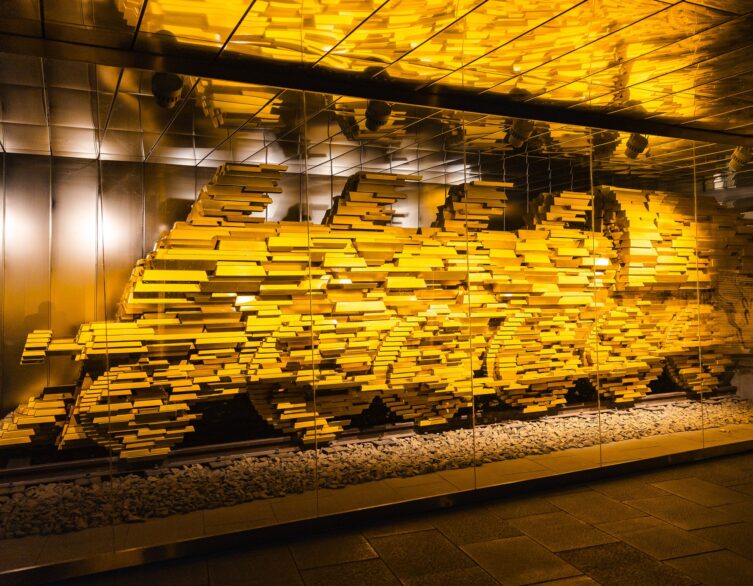
The forint in your wallet has a more dramatic backstory than you might expect. The Legacy of the Gold Train – Rebirth of the Hungarian Currency at the Money Museum connects Hungary’s post-war financial recovery with the people who helped protect the central bank’s gold reserves.
The exhibition distinguishes this central-bank operation from the separate wartime “Gold Train” associated with valuables looted from Jewish families. Its focus is the journey of the bank’s reserves, the employees who accompanied them and their role in the financial foundations of recovery.
Around 80 objects, including documents, personal letters and banknotes, turn economic history into a human story. A railway-inspired interior and archival footage help evoke the period, while high-denomination pengő notes illustrate the scale of the inflation crisis. The exhibition runs from August 1, 2026, to November 1, 2027. Entry is free without advance registration, although the museum’s permanent exhibition requires separate booking.
Folk Traditions, Craft and Cultural Connections
Scents, Flavours, Shapes at the Hungarian Heritage House
Museums usually ask you not to touch. Scents, Flavours, Shapes – Look by Hand, See by Heart takes a different approach, inviting visitors to explore Hungarian folk crafts through texture, scent and hands-on discovery.
At the Hungarian Heritage House on Corvin Square, gingerbread making, felting, pottery and shepherding provide the starting points for a multisensory experience. Spice-recognition challenges, tactile games and pattern-based activities help make the traditions understandable through participation rather than observation alone.
Designed with sensory accessibility in mind, the exhibition offers an introduction to craft for visitors with and without disabilities. It is also a choice for families looking for something more interactive than a conventional gallery. Listed adult admission is 1,000 HUF, with reduced tickets at 500 HUF. No closing date is specified in the supplied material.
Tulip and Sage at the Hungarian Heritage House
If your trip falls in November, Tulip and Sage – Gardens, Eras, Folk Art offers a gentle counterpoint to the city outside. Running until November 29, 2026, it explores five centuries of connections between gardens, nature and Hungarian decorative traditions.
More than 120 objects, including embroidered textiles, painted furniture, ceramics and folk costume, show how flowers and plants travelled from the natural world into everyday surroundings. Rather than treating these motifs as decoration alone, the exhibition considers the beliefs, habits and relationships they expressed.
The atmosphere is deliberately reflective, with an emphasis on the calming effects of rhythm, pattern and beauty. Adult admission is listed at 2,800 HUF and includes Scents, Flavours, Shapes. Opening hours are Tuesday to Sunday, 10 am–6 pm. Visitors with fragrance sensitivities should note that light natural scents are used in the space.
Like Spring Water: 75 Years of the Hungarian State Folk Ensemble
Another exhibition to catch before winter arrives is Like Spring Water, celebrating the Hungarian State Folk Ensemble’s 75th anniversary. Free to enter at the Hungarian Heritage House, it runs until November 15, 2026.
Costumes, archival footage, personal accounts and historic materials trace the ensemble’s development from its early years to its continuing international presence. The focus is not simply on preserving old dances, but on how performers have repeatedly reinterpreted tradition for the stage.
For visitors unfamiliar with Hungarian folk performance, the exhibition provides a visual introduction to the relationship between dance, music and identity. It also adds context if you plan to attend a live folk performance during your stay. Because it closes in mid-November, it is a last-chance addition rather than a December recommendation.
Washi: The Thousand Faces of Japanese Paper
At the Ferenc Hopp Museum of Asiatic Arts, Washi: The Thousand Faces of Japanese Paper makes a familiar material feel surprisingly unfamiliar. Running from September 25, 2026, to January 31, 2027, it explores the versatility of Japanese handmade paper through nearly 200 objects, documents and interactive elements.
Washi appears in far more places than you might expect, from domestic interiors and ceremonial wrapping to clothing, religious practices and art. The exhibition also considers its changing status: once an everyday necessity, it became increasingly associated with specialist craftsmanship and cultural heritage as industrial production transformed Japan.
Conservation research adds another dimension, revealing how specialists understand and preserve fragile paper objects. The museum is at 103 Andrássy Avenue, with listed opening hours of Tuesday to Sunday, 10 am–6 pm. Adult admission is 2,800 HUF, with reduced tickets at 1,400 HUF.
Music, Coffee and Budapest’s Social Life
Freddie Mercury at the House of Music Hungary
Few international performers have a connection with Budapest quite like Freddie Mercury’s. The House of Music Hungary’s exhibition, created with World of Freddie, celebrates both his career and the enduring memory of Queen’s 1986 Budapest concert.
Nine themed spaces move from the public performer to more personal aspects of his life through stage clothes, handwritten materials, furniture and other original belongings. Audio and video contributions from his personal assistant, Peter Freestone, bring a first-hand perspective to the experience.
The Budapest connection gives the exhibition particular resonance. Queen’s concert became a memorable cultural encounter during the final years of the Iron Curtain, with Mercury’s performance of the Hungarian folk song Spring Wind Brings Water becoming one of its defining moments.
The exhibition runs from May 1, 2026, to February 28, 2027. Listed full-price tickets are 7,900 HUF on weekdays and 9,900 HUF at weekends. Entry is timed, with a 15-minute arrival allowance, so check available sessions rather than arriving without a booking.
Coffee Comes First at the Electrical Engineering Collection
Budapest’s café culture becomes even more interesting when you start looking at the objects behind the ritual. Coffee Comes First – From Camel Feed to New Wave, titled Fő a Kávé in Hungarian, explores the journey from historic coffee-drinking traditions to modern specialty brewing.
At the Electrical Engineering Collection on Kazinczy Street, grinders, brewing devices, espresso machines, porcelain and café-related objects connect technological change with social life. The exhibition considers coffee not just as a drink, but as part of the settings where people exchanged ideas, conducted business and spent time together.
The supplied programme runs from March 4 through late December 2026, with daily hours listed as 10 am–7 pm. An exact closing date and ticket price are not provided, so check those before visiting. Afterwards, you will have a fresh appreciation for the equipment—and the history—behind your next Budapest coffee.
Space Exploration and Hungarian Journeys Beyond Earth
Space-Travelled Hungarian Relics at the Hungarian National Museum
A flag or a tiny book becomes a different kind of object once it has travelled beyond Earth. The Hungarian National Museum’s Rotunda display brings that idea to life through relics connected with Bertalan Farkas’s 1980 mission and Tibor Kapu’s 2025 spaceflight.
The earlier material includes flags and a photograph signed aboard the Salyut 6 space station. The more recent objects include miniature editions of Hungary’s national anthem and the patriotic poem Appeal, alongside a Hungarian flag carried during Kapu’s mission.
Together, they connect two very different eras of space exploration through personal belongings, documentation and national memory. The display is listed as free to visit, but the supplied information gives no closing date, so confirm that it remains on view for your travel dates. These are objects to see, not an advertised hands-on handling experience.
HUNIVERZUM at Millenáris: Check for a New Edition
HUNIVERZUM brings a more interactive approach to Hungary’s space story, with simulators, a planetarium dome, astronaut artefacts, models and digital displays. Its programme connects Bertalan Farkas’s pioneering journey with the more recent story of Tibor Kapu.
There is, however, a crucial date issue: the supplied listing covers May 13 to November 29, 2025. It does not establish that the exhibition is open during winter 2026.
For that reason, HUNIVERZUM should remain a watch-for-updates entry rather than a confirmed winter recommendation. If a new edition or reopening is announced, its Millenáris setting and interactive format would make it worth considering, particularly for families. Do not plan a journey around the older opening hours without checking first.
Planning Your Winter Exhibition Visits in Budapest
The easiest way to enjoy Budapest’s exhibitions is to choose an area rather than race between opposite sides of the city. Around Heroes’ Square and City Park, the Gauguin exhibition, House of Music Hungary, Museum of Ethnography and Archangel Gabriel display create several possible cultural pairings. At Buda Castle, Hungarian art and Ottoman-era history offer two very different ways to understand the country. Downtown, the Vigadó, Underground Railway Museum and City Hall Park lend themselves to shorter stops between other sights.
Your travel dates will shape the choices. November visitors can catch the folk ensemble anniversary exhibition before November 15, Tulip and Sage before November 29, and Art Weekend Budapest from November 27–29. Treasures of Egypt opens on November 20, adding another substantial attraction for the season, while LOBBYISM continues only until December 6.
If you are arriving after New Year, pay particular attention to the early-January closing dates for Rituals of Beauty and the City Hall Park display. Washi continues until January 31, while the exhibitions devoted to Hungarian women artists, Gauguin and Freddie Mercury run further into February.
Use the listed prices and regular hours as planning information, then check the venue’s arrangements for your exact date, particularly around public holidays. Confirm the language of guided activities as well, especially for Art Weekend Budapest and Treasures of Egypt. With a little attention to those details, a winter exhibition visit can become much more than a break from sightseeing: it can reveal the people, ideas and unexpected stories behind the Budapest you are exploring.
Related news

Budapest Weather This Week: Rain, a Brief Warm-Up and a Cooler Weekend
Visiting Budapest this week? Keep your umbrella close and leave a little flexibility in your sightseeing plans. The forecast for 9–15 November...

Budapest Winter Lights: Festive Streets, Glowing Landmarks and Unexpected Views
Budapest doesn’t need snow to look magical in winter. Once darkness falls, its riverside landmarks, elegant avenues and festive shopping streets...
Best Autumn Walks in Budapest: Beautiful Parks, Scenic Viewpoints and Evening Lights
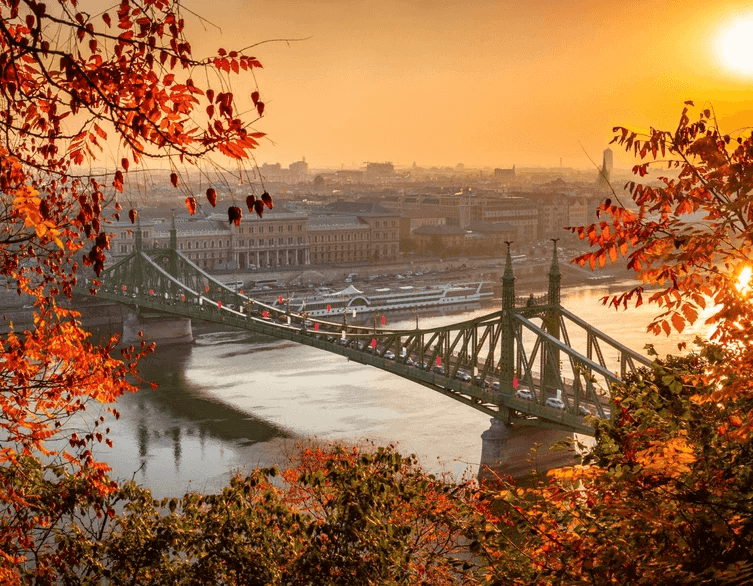
Budapest is a city worth slowing down for in autumn. Golden leaves soften its parks, woodland paths invite you into the hills, and panoramic terraces...

Immersive Light Events in Budapest This Autumn 2026
Budapest’s autumn evenings are getting a colourful makeover. Beyond the illuminated bridges and riverside landmarks, the city is filling with glowing...
Related events
Related attractions
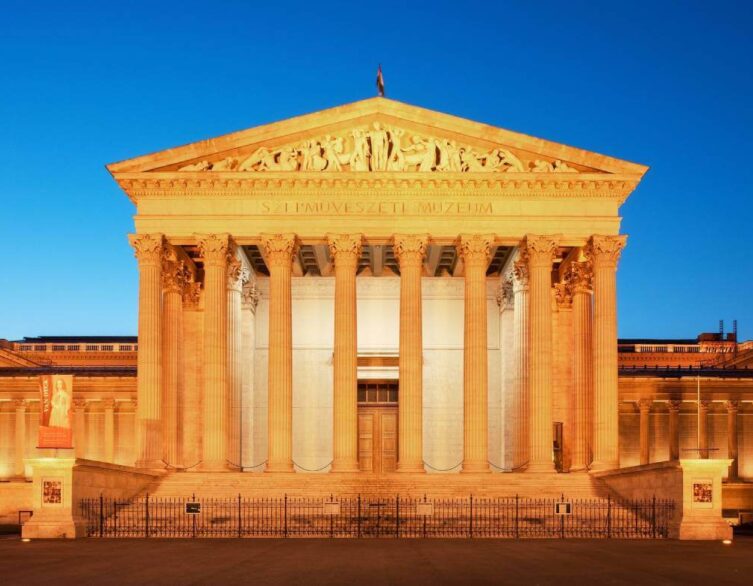
Exploring the Museum of Fine Arts in Budapest
The Museum of Fine Arts in Budapest is one of Europe’s most prominent cultural institutions, housing an extensive collection that spans from...
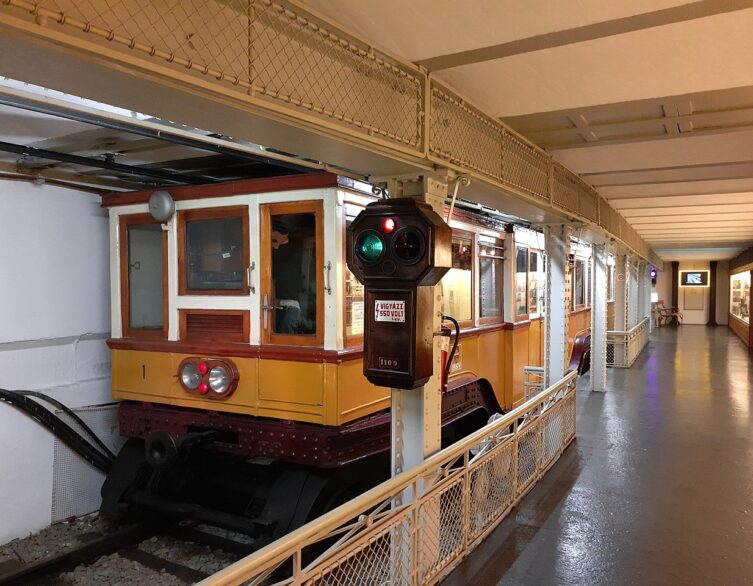
Millennium Underground Museum: Travel Through Time in Budapest
The Millennium Underground Museum in Budapest is a fascinating attraction that offers visitors a glimpse into the history of the city’s underground...
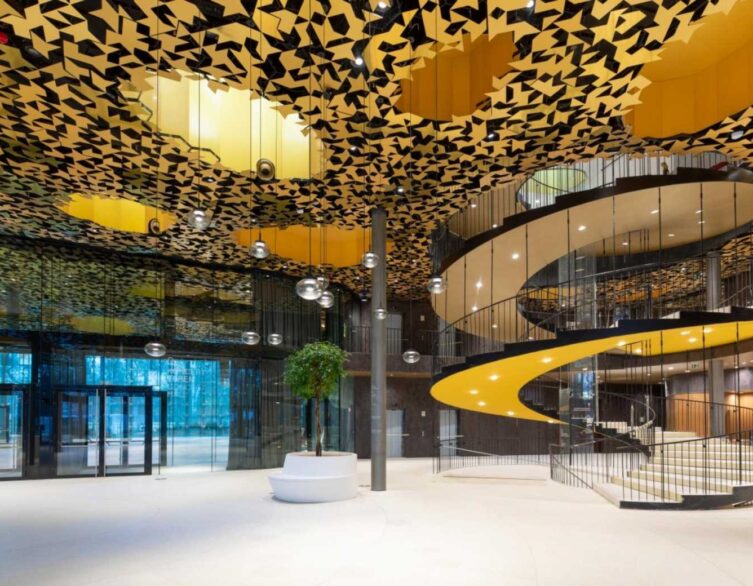
The House of Hungarian Music in Budapest – An Architectural Marvel Filled with Melodies
The House of Hungarian Music, located in Városliget, is a must-visit attraction for music lovers and architecture enthusiasts alike. This iconic...
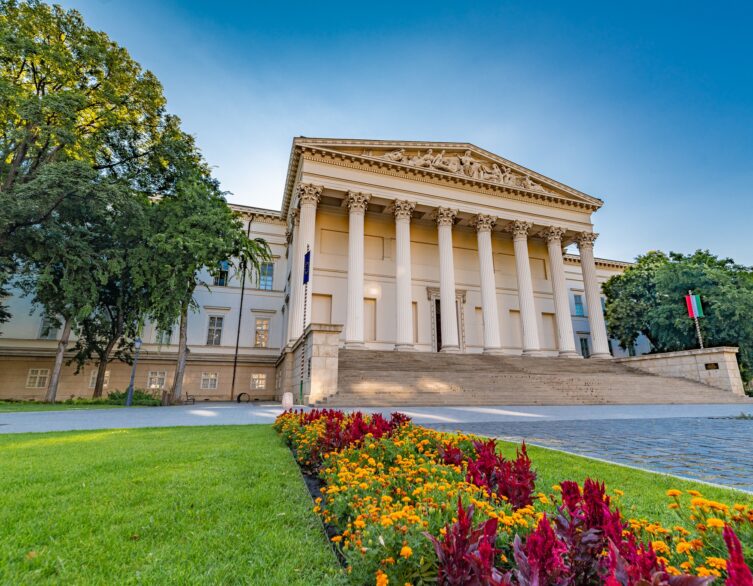
Discover the Treasures of the Hungarian National Museum in Budapest
The Hungarian National Museum in Budapest is a must-visit attraction for anyone interested in the rich history and culture of Hungary. Founded in...
Get Your Money’s Worth at the Money Museum in Budapest
Budapest, the vibrant capital of Hungary, is home to numerous fascinating attractions that captivate visitors from around the world. Among these...