Budapest Is the Star: Ralph Fiennes and Viggo Mortensen Film a Hungarian Classic in the Hungarian Capital
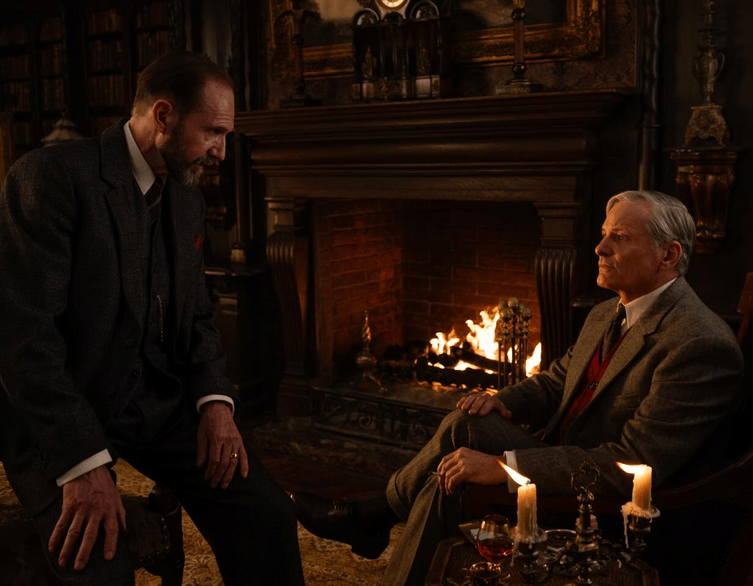
Some film projects feel like destiny. When word broke in April 2026 that legendary Hungarian director István Szabó — at 88 years old and with an Academy Award to his name — was back behind the camera with two of Hollywood’s most respected actors by his side, the film world sat up and took notice. Embers, the long-awaited adaptation of Sándor Márai’s celebrated novel A gyertyák csonkig égnek, is currently being filmed right here in Budapest, and if you’re visiting the city right now, you’re sharing its streets with a truly historic production.
A Novel That Has Waited Decades for the Screen
Sándor Márai’s Embers — published in Budapest in 1942 — is one of the jewels of 20th-century European literature. The story is deceptively simple in structure but deeply powerful in effect: an aging general living in a remote castle receives, after 41 years of silence, the one visitor he has spent his entire life waiting for — his former closest friend. Over a single candlelit evening, the two men conduct what can only be described as a psychological duel, unearthing buried truths about their friendship, a beautiful woman they both loved, and a long-ago betrayal that shattered everything. It’s a story about time, memory, pride, and the things we choose never to say out loud — and it has captivated readers around the world ever since its rediscovery by international audiences in the early 2000s.
The road to a film adaptation has been anything but smooth. Back in 2003, acclaimed director Miloš Forman was reportedly set to bring Embers to the screen, with a cast that would have included Sean Connery, Winona Ryder, and Klaus Maria Brandauer, with filming planned to begin in Prague in October of that year. The project fell apart when Connery declined the role, and the adaptation quietly disappeared from the conversation. More than two decades later, it has finally found its moment — and its director.
The Dream Team Behind the Camera
István Szabó is not just any filmmaker. He is Hungary’s most internationally celebrated director, the man who won the Academy Award for Best Foreign Language Film in 1981 for Mephisto, making him the first Hungarian filmmaker ever to receive that honor. His subsequent films — Colonel Redl, Hanussen, and the English-language Sunshine — cemented his reputation as a master of intimate, psychologically rich drama set against the backdrop of European history. Embers marks his long-awaited return to directing, and by all accounts, it is shaping up to be a crowning achievement.
The screenplay was written by Christopher Hampton, the Oscar-winning British playwright and screenwriter best known for The Father, and Szabó has spoken about it in glowing terms, calling it “the best screenplay that has ever come into my hands.” Producer Robert Lantos, who previously collaborated with Szabó on Sunshine, brought the project together — and the result is a cast that reads like a wish list for any serious film lover.
Best deals of Budapest










Two World-Class Stars Bring the Story to Life
Ralph Fiennes takes on the role of Henrik, the brooding general whose entire life has been defined by waiting. It is, in many ways, a role tailor-made for him: intense, cerebral, burning with suppressed emotion. Fiennes has spoken warmly about the project, saying that he had long hoped to collaborate again with Szabó — the two previously worked together on Sunshine — and that finding himself on set alongside Viggo Mortensen was one of the great pleasures of his career. “It was an extraordinary experience to be with him, with István, and with the excellent Hungarian crew on set,” Fiennes said.
Viggo Mortensen, who plays Konrad — the long-absent friend whose return sets the story in motion — described the project as a once-in-a-lifetime experience, calling the collaboration with Szabó and Fiennes an inspiring challenge. And it seems Mortensen isn’t just immersing himself in the film — he’s immersing himself in Budapest itself. The actor was recently spotted at the Attila exhibition, exploring the city’s rich historical offerings like any curious and passionate visitor. It’s a reminder that Budapest has a way of getting under your skin, whether you’re a tourist for a week or a Hollywood star on a months-long shoot. The supporting cast adds further depth and prestige: Charlotte Rampling, Katherine Langford, Louis Hofmann, Gijs Blom, and Evelyne Brochu all appear in the film, while Canadian composer Mychael Danna provides the score and Dániel Garas serves as cinematographer.
Budapest: The Living Backdrop of a Timeless Story
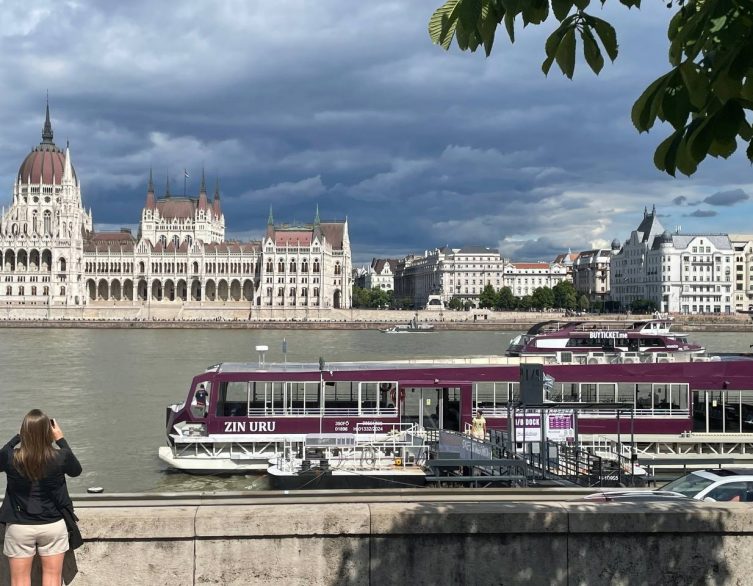
Much of the filming is taking place in a countryside castle outside the city, perfectly echoing the novel’s atmospheric, castle-bound setting. But Budapest itself is very much at the heart of this production — the city where Márai wrote his masterpiece, where Szabó was born and shaped as a filmmaker, and where the cameras are now rolling on a story that is, in every sense, Hungarian to its core.
For visitors exploring Budapest today, there’s something quietly thrilling about wandering the same cobblestone streets, crossing the same river, and breathing the same air as this extraordinary cast and crew. Budapest has always had a cinematic quality to it — its grand 19th-century architecture, its melancholic beauty, its sense of history layered upon history — and Embers feels like a film that could only have been made here.
Why This Film Matters for Budapest
Beyond the glamour of its cast, Embers carries deep cultural significance. Sándor Márai is one of Hungary’s most beloved literary figures, a writer whose work was suppressed under communism and rediscovered by the world only after his death. The fact that his most famous novel is finally being brought to the screen — by Hungary’s greatest living director, with a world-class international cast, filmed in Hungary — is a source of enormous national pride.
For foreign visitors, the film offers a wonderful entry point into Hungarian culture and literature. If you haven’t yet read Embers, picking up a copy during your stay in Budapest is a deeply rewarding experience. And when the film is eventually released, you’ll be able to say you were in Budapest while it was being made — walking the same city, living the same moment in history.
Related news

Middle-earth Has Arrived in Budapest
Look, Budapest’s thermal baths are lovely. The ruin bars are iconic. The langos is life-changing. But what if we told you that this summer,...

Viggo Mortensen Stopped By This Budapest Bistro — And Now You Should Too
When Aragorn himself walks into your neighborhood bistro and poses for a photo, you know the place is doing something right. Két Szerecsen — a...
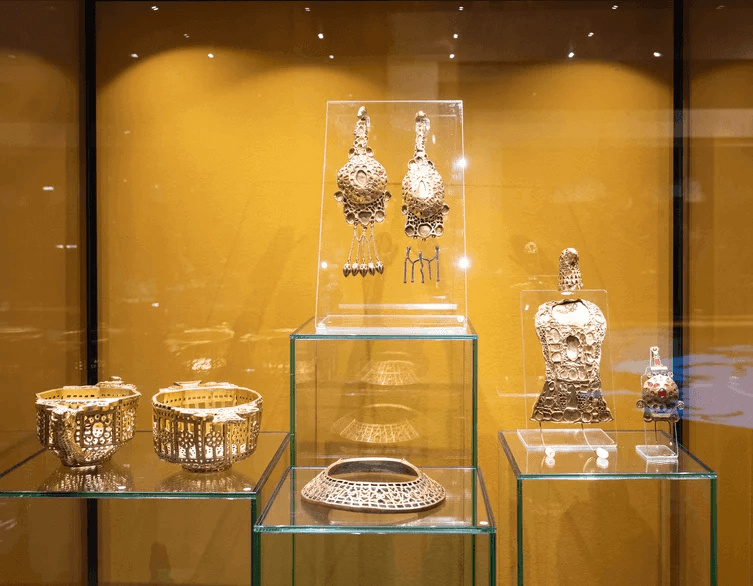
Budapest’s Hottest Exhibition Just Got Even More Accessible — And Here’s Why That Matters
It’s not often that a museum has to extend its opening hours because demand is simply too high. But that’s exactly what has happened...
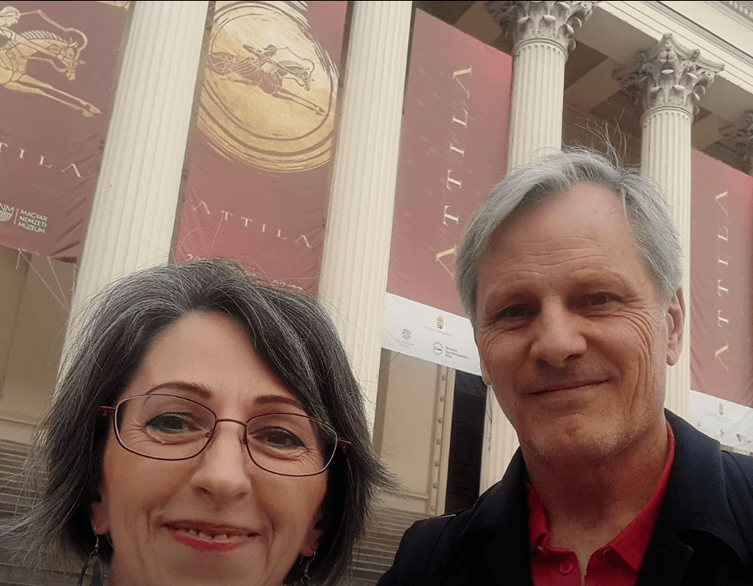
When Aragorn Walked Into Budapest: Viggo Mortensen’s Quiet Visit to the Hungarian National Museum
A Sunday Afternoon Like No Other It was an ordinary Sunday afternoon at the Hungarian National Museum — or so it seemed. Visitors wandered through...
Hollywood’s All Around Favorite City To Film
Budapest has indeed become a favorite filming location for international productions over the past few decades. The city’s versatile architecture,...
Related events