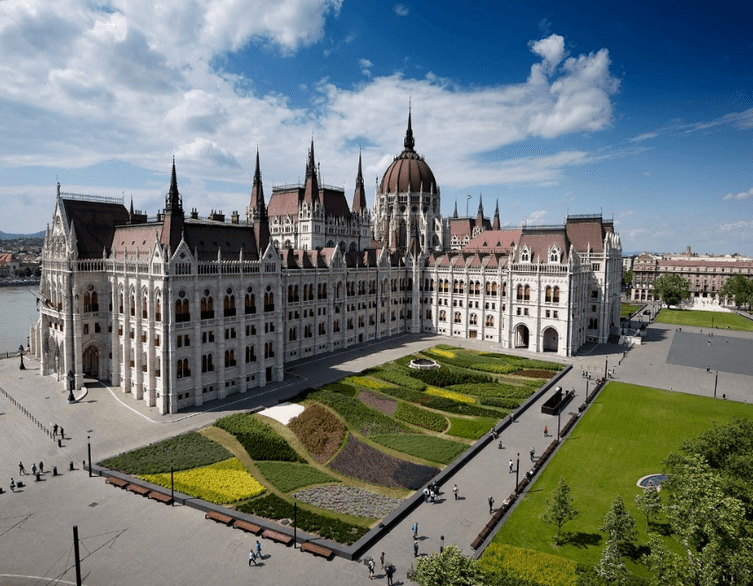
Budapest’s Most Unusual Free Attraction: The Corrupt Square AR Museum at Kossuth Square
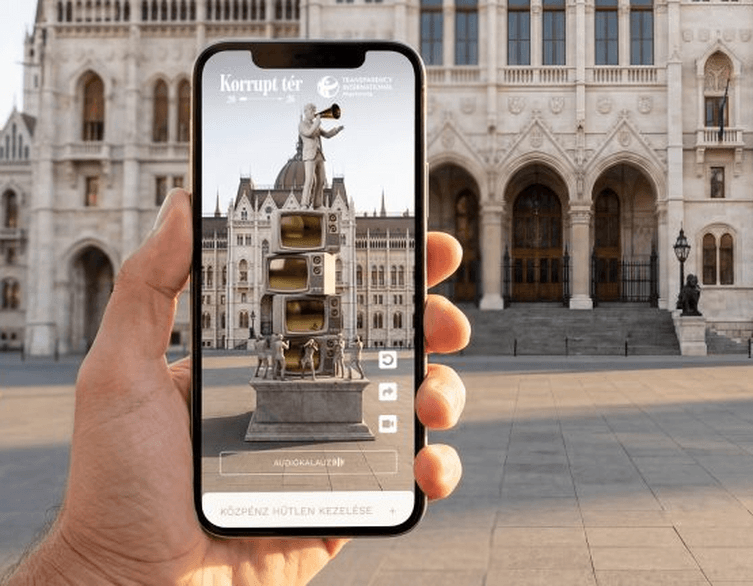
Budapest is well known for its stunning Parliament building, vibrant ruin bars, and UNESCO-listed riverbanks — but right now, one of the most thought-provoking experiences the city has to offer costs nothing and fits in your pocket. Welcome to Corrupt Square (Korrupt tér), a one-of-a-kind augmented reality museum that has taken up invisible — yet very powerful — residence right in front of the Hungarian Parliament.
What Is the Corrupt Square Exhibition?
Launched on April 7, 2026, and open until May 30, 2026, Corrupt Square is a joint project by Publicis Groupe Hungary and Transparency International (TI) Hungary. Instead of white gallery walls and velvet ropes, this exhibition uses augmented reality (AR) technology to place nine monumental virtual sculptures directly on Kossuth Square — one of Budapest’s most iconic public spaces, just steps from the Parliament building. All you need to see it is your smartphone.
The project sits at the intersection of civic activism and cutting-edge digital art. It was born out of a sobering statistic: according to Transparency International’s Corruption Perception Index, Hungary has been ranked the most corrupt member state in the European Union for four consecutive years as of 2025. That’s not a distinction any country wants to hold, and the creators of Corrupt Square decided the response should be as bold as the problem itself.
Art as a Political Statement
There is something deliberately provocative about the choice of location. Kossuth Square is named after Lajos Kossuth, the 19th-century Hungarian statesman and hero of the 1848 revolution — a man who symbolized the fight for freedom and justice. Today, it is also the square that faces the Parliament building, the very seat of political power. Márton Jedlicska, Executive Creative Director of Publicis Groupe Hungary, summed up the power of this placement perfectly: “I am very proud that we erected a monument to unbridled corruption right below the balcony of those who committed it, and there was nothing they could do about it.”
That quiet but pointed act of defiance — using technology to occupy a public space in a way that cannot be removed or censored — gives Corrupt Square a rebellious energy that goes far beyond a typical museum visit. It is art and activism rolled into one, and it is free for everyone to experience.
The Nine Sculptures and the Stories Behind Them
The exhibition features nine unique virtual monuments, each one commemorating a specific corruption scandal that has shaken Hungary in recent years. Among the most striking is the sculpture dedicated to the Hungarian National Bank scandal, a case that continues to cast a long shadow, with those responsible yet to face accountability. Another work, titled The Treetop Walk Without Treetops, illustrates how Hungarian citizens were deprived of EU funding that was instead funneled into pointless development projects — a metaphor that is both darkly humorous and deeply serious.
Other monuments draw attention to the Völner–Schadl affair, the Elios scandal (which drew international attention due to its ties to prominent political figures), and the irregularities surrounding ventilator purchases during the COVID-19 pandemic. Two of the sculptures carry titles that distil the essence of the problem with striking clarity: Public Assets Becoming Private Property and Misappropriation of Public Funds. Taken together, the nine works paint a comprehensive — and sobering — picture of how systemic corruption can weave itself into the fabric of everyday life.
Each sculpture comes with its own audio guide narration, recorded by Tamás Lengyel, a Hungarian actor and activist. Importantly for international visitors, the audio guides are available in both Hungarian and English, making the experience fully accessible to tourists from around the world.
How to Experience It — Step by Step
Visiting Corrupt Square is refreshingly simple, and there is no app to download. Head to Kossuth Square, open your mobile browser, and navigate to korruptter.com. The site will guide you through the experience on-screen, step by step. Using your phone’s camera and location services — available on both Android and iOS — the AR technology will render the virtual sculptures as if they are physically standing on the square around you. You can walk around each one, view it from every angle, and listen to the audio guide.
Best deals of Budapest










A map on your phone helps you navigate to the starting point from which all nine sculptures are visible at once. You can place each sculpture wherever you like on the square, explore them in any order, and even download a detailed information document about the real-life story behind each work. The creators recommend saving the downloads for after you have seen all the sculptures, so you can stay fully immersed in the experience.
Why This Matters — Even for Visitors
You might be wondering why a corruption awareness campaign should matter to someone who has just arrived in Budapest for a weekend break. The answer, as Judy Majosi, Chief Business Officer of Publicis Groupe Hungary, puts it, is that “corruption is not a political question. Regardless of party affiliation, it is capable of causing irreversible damage — it appropriates a country’s future, limits economic development, and paralyzes creativity.”
For foreign visitors, Corrupt Square offers a rare window into contemporary Hungarian civic society and the challenges it faces. It is a chance to engage with the city on a deeper level — not just as a backdrop of beautiful architecture, but as a living, breathing place where citizens are actively fighting for accountability and transparency. In a city full of history, this is very much a piece of history being made in real time.
Practical Information
Corrupt Square is completely free to visit and is open on Kossuth Square until May 30, 2026. All you need is a smartphone with a camera and location services enabled. Full instructions and background information on all nine corruption cases are available at korruptter.com. Photography is not only allowed but actively encouraged — the organizers want word of the exhibition to spread as widely as possible, so feel free to share your AR photos on social media.
The project also serves as a fundraising campaign for Transparency International Hungary, which accepts one-percent personal income tax donations (a uniquely Hungarian civil society mechanism) as well as year-round financial support for its anti-corruption work.
Whether you are a first-time visitor to Budapest or a seasoned traveler who has seen every corner of the city, Corrupt Square is the kind of experience that stays with you long after you put your phone back in your pocket. It is unusual, it is free, and it asks the most important question a city can ask of itself — and of you.
A Monument to the Past — and a Hope for the Future
Whether you are a first-time visitor to Budapest or a seasoned traveler who has seen every corner of the city, Corrupt Square is the kind of experience that stays with you long after you put your phone back in your pocket. It is unusual, it is free, and it asks the most important question a city can ask of itself — and of you.
What makes visiting the exhibition in these particular weeks even more poignant is the political moment Hungary finds itself in. On April 12, 2026, Hungarians went to the polls in a historic general election that ended more than a decade and a half of Viktor Orbán’s rule, with the opposition delivering a landslide victory that sent shockwaves across Europe. For many, it was the moment the country had been waiting for. Against that backdrop, Corrupt Square takes on a new layer of meaning — it is no longer just a warning, but potentially a farewell. The nine AR sculptures standing silently in front of Parliament may well end up serving as a memorial to an era that Hungarians have finally chosen to leave behind.
The creators of the exhibition hoped it would reach as many people as possible, and the timing could not have been more fitting. So visit, explore, listen to the audio guides, and take your photos. You may be witnessing Budapest at a genuine turning point — and this open-air digital museum is one of the most honest and creative ways the city has found to mark it.
Related news

Green Ways to Explore Budapest: Your Guide to Eco-Friendly Transport
Earth Day is a great reminder that protecting our planet doesn’t require grand gestures. In fact, some of the most meaningful changes start...

Budapest Erupts in Joy: Hungary’s Historic Election Ends Orban Era
If you happened to be in Budapest last night — or if you’re arriving in the city today — you may have noticed something extraordinary in...
Related attractions