Freddie Mercury Is Back in Budapest — And This Time He’s Staying Until 2027
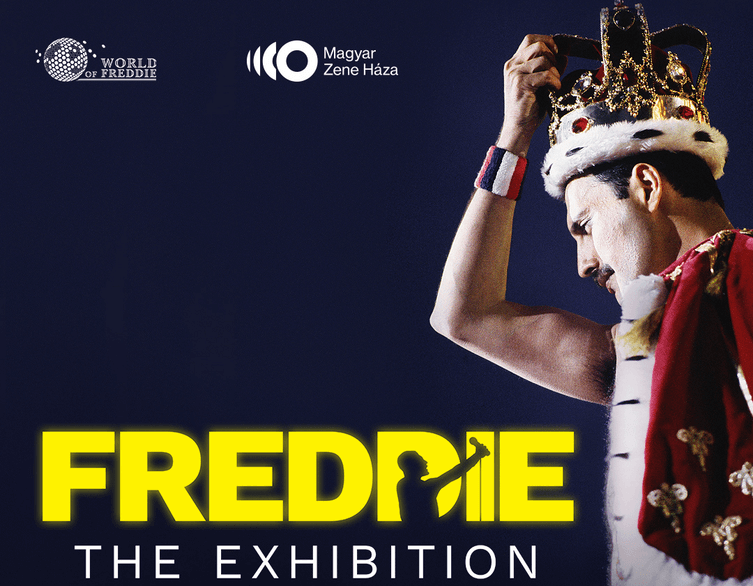
Forty years ago, Freddie Mercury walked onto the stage of Budapest’s People’s Stadium and did something nobody expected: he sang a Hungarian folk song to a crowd of 80,000 people behind the Iron Curtain — and the walls, both literal and metaphorical, trembled a little. Now, in 2026, Budapest is honouring that moment — and the man behind it — with one of the most anticipated cultural events the city has seen in years.
What Is the Freddie Exhibition?
The House of Music Hungary in City Park has opened a brand-new temporary exhibition simply called Freddie, and it is already causing a stir. Before it even opened its doors on May 1st, 2026, over 10,000 tickets had been sold in advance — which tells you everything you need to know about the level of excitement surrounding it. The exhibition runs until February 28, 2027, so whether you’re visiting Budapest this summer, autumn, or over the winter holidays, you’ll have plenty of time to catch it.
The timing is no coincidence. This year marks a remarkable double anniversary: Freddie Mercury would have turned 80 in 2026, and it has been exactly 40 years since Queen played their legendary Budapest concert — the first time a major Western rock band performed a full-scale stadium show behind the Iron Curtain. That historic night in 1986 deserves its own chapter, and it gets one.
Nine Rooms, One Icon — Seen Like Never Before
The exhibition takes you through nine thematic spaces, and the journey is a deliberate one. It starts with the Freddie everybody knows — the electrifying, larger-than-life frontman who owned every stage he ever set foot on — and gradually peels back the layers to reveal the private person behind the persona. By the time you reach the final room, you’ll have a portrait of someone far more complex, warm, and fascinating than the myth alone can capture.
Best deals of Budapest






Your guide through this journey is none other than Peter Freestone, Freddie’s personal assistant and close friend, who lived with him for 12 years. His audio commentary accompanies visitors throughout the entire exhibition — and thanks to an AI-powered narration developed with the support of Visa, Peter’s voice speaks to Hungarian visitors in their own language while remaining entirely his own. It’s a genuinely clever and moving touch.
The Artefacts: Touching History Through Glass
If you’re the kind of person who gets goosebumps standing near objects that were part of something extraordinary, prepare yourself. The exhibition brings together over 500 original items sourced by the World of Freddie organisation and private collectors, including some truly jaw-dropping pieces.
The iconic jacket and shoes Freddie wore at the 1986 Budapest concert are here. So is the white vest from Live Aid — perhaps the most famous 20 minutes in rock history, watched by over 1.5 billion people worldwide. There is a robe from the Bohemian Rhapsody music video, Freddie’s iconic mic stand, his 1970s Martin guitar, and handwritten lyric sheets covered in his own distinctive handwriting. On the more personal side, you’ll find antiques he collected on his travels, furniture from his beloved London home Garden Lodge, his own drawings, and — wonderfully — his favourite Scrabble set. Yes, Freddie Mercury was apparently an avid Scrabble player. The man contains multitudes.
The 1986 Budapest Concert: Why It Mattered So Much
The exhibition dedicates an entire chapter to that night in July 1986, and if you’re not already familiar with the story, it will stop you in your tracks. Queen’s Magic Tour was their last with Freddie, and in a remarkable decision, Budapest was the only Eastern European city they visited on that tour. Performing behind the Iron Curtain at the height of the Cold War was not a casual booking decision — it was a statement.
The concert, held at the People’s Stadium (now known as Puskás Aréna), drew 80,000 fans and was filmed for posterity. What nobody expected was the moment near the end when Freddie Mercury spontaneously led the crowd in singing Tavaszi szél vizet áraszt — a traditional Hungarian folk song. For an entire generation of Hungarians who had grown up with tightly controlled access to Western culture, that moment felt like a crack of light through a very thick wall. The exhibition brings this to life through the personal recollections of concert organiser László Hegedűs, producer György Mihály, and Janicsák István, the frontman of Z’Zi Labor, the Hungarian support act that night.
The People Who Knew Him Best
What makes this exhibition genuinely different from a standard rock retrospective is the human testimony woven through every room. Alongside Peter Freestone, visitors hear from photographers Richard Young and Denis O’Regan, who documented Queen’s tours; Mike Moran, who co-wrote and produced the Barcelona album with Freddie; Diana Moseley, his costume designer; director Rudi Dolezal; bodyguard Terry Giddings; former bandmates Tim Staffell and Chris Chesney; and Dr. Graeme Moyle, a British HIV/AIDS specialist who provides important context around Freddie’s illness and final years.
Peter Freestone himself puts it best: “He amazed me in every respect. As a human being and as an artist. You can clearly hear the difference between the early seventies and the late eighties — how mature and versatile he became over those decades. All while that raw power just kept pouring out of him. He never had a singing lesson. It just came from within.”
The House of Music Hungary: Worth the Visit on Its Own
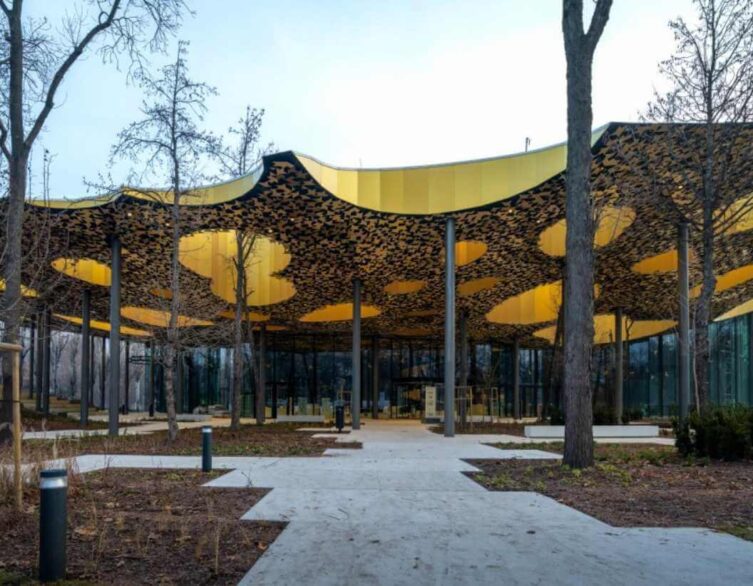
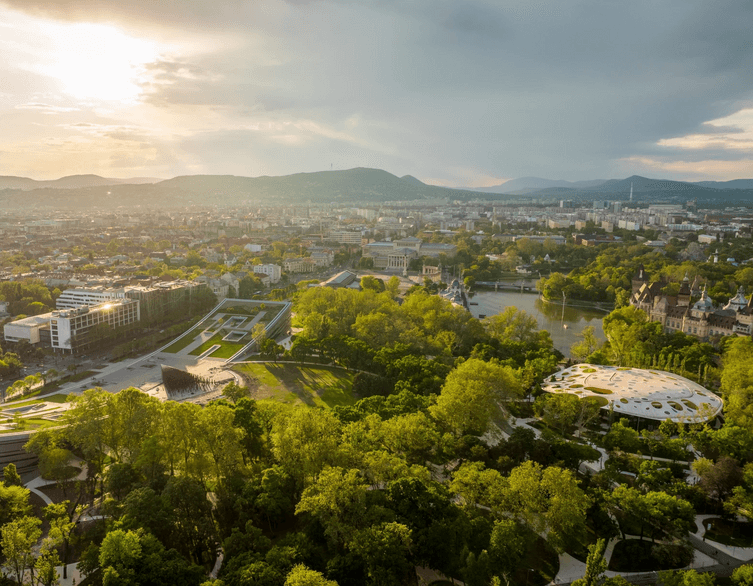
Even if you somehow weren’t a Queen fan — though frankly, who isn’t — the House of Music Hungary is worth visiting purely as an architectural and cultural experience. Designed by Japanese star architect Sou Fujimoto, the building sits in the lush surroundings of City Park and looks like something that landed gently from another dimension: a flowing, organic structure with a canopy roof that lets dappled light filter through like music made visible. It opened in 2022 as part of the major City Park redevelopment and has already established itself as one of Budapest’s most beloved cultural institutions.
The Freddie exhibition is the fourth major temporary exhibition at the House of Music, following shows on Hungarian pop music history, international and Hungarian divas, and world music traditions. This one, however, is the first designed to travel internationally — and given the queues already forming, it seems fair to say it won’t be Budapest’s secret for long.
Tickets, Prices, and Practical Info
The exhibition is ticketed separately from the permanent House of Music collection, and given the demand, you’ll want to book your slot in advance. Tickets are timed-entry, so make sure you arrive on time — late arrivals cannot be accommodated due to the nature of the exhibition flow.
Weekday tickets are priced at 7,900 HUF, while weekend tickets are 9,900 HUF. Student tickets are available at 6,000 HUF on weekdays and 7,500 HUF on weekends. Children under one year old enter free in a baby carrier, and while the exhibition is not recommended for children aged one to six, children of any age can attend with a student ticket.
The House of Music Hungary is located at Olof Palme Promenade 3-5 in City Park, easily reachable by metro (line M1 to Hősök tere, Heroes’ Square) or a pleasant walk through the park from Városliget. While you’re in the neighbourhood, the nearby Heroes’ Square, Széchenyi Thermal Bath, and Museum of Fine Arts make for a full and very satisfying day out.
Related news
Budapest’s House of Music Hungary Is Breaking Records — and a Freddie Mercury Exhibition Is Coming
If you’re planning a trip to Budapest and you consider yourself even a casual music lover, one venue deserves a prominent spot on your itinerary:...
Liget Budapest: World’s Top Creative Eco Quarter – Your Must-Visit Green Escape in the Capital
Picture strolling through a lush urban oasis where world-class museums blend seamlessly with shimmering lakes, immersive sound domes, and fresh-planted...
Rock the City of Spas: Freddie Mercury Exhibition Lights Up Budapest This Summer
Imagine stepping into the electrifying world of Freddie Mercury right here in Budapest, where the echoes of Queen’s legendary 1986 concert...
Moonwalking Through Budapest: Your Ultimate Guide to Michael Jackson Experiences in Hungary’s Capital
Let’s be real: you probably didn’t wake up this morning thinking “I need to visit Michael Jackson attractions in Budapest.”...
Related events