Riding Into the Future: Budapest’s Tram Network Is Getting a Modern Makeover
Budapest’s Trams Are Getting a Major Upgrade — And You Might Just Ride One
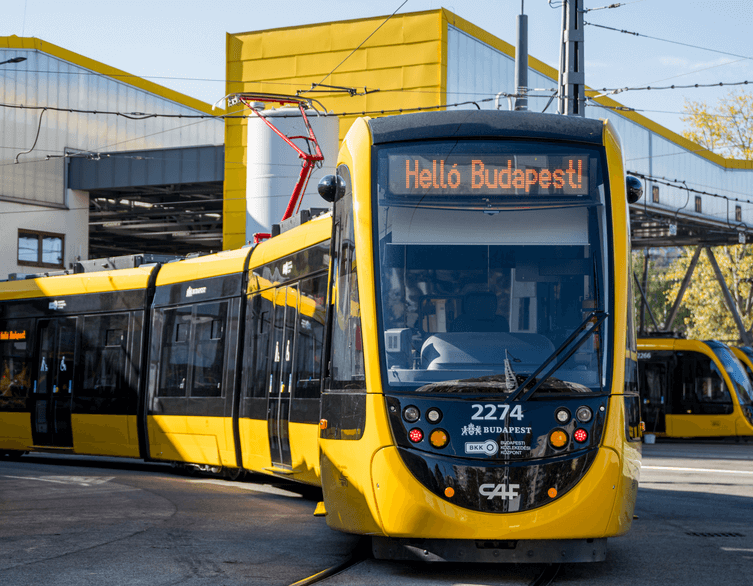
If you’ve ever hopped on a tram in Budapest and marveled at how smoothly it glides along the Danube or through the city’s busy streets, you’re in for an even better experience. The Hungarian capital is in the middle of a significant public transport transformation, and the latest milestone arrived on April 24, 2026, when the 33rd brand-new CAF tram rolled into passenger service. For visitors, this means cleaner, quieter, and more accessible rides across some of the city’s most scenic and useful routes.
What Exactly Is a CAF Tram?
CAF stands for Construcciones y Auxiliar de Ferrocarriles, a Spanish rail vehicle manufacturer that has become one of Europe’s most respected names in modern urban transit. The trams being delivered to Budapest are the Urbos 3 model — sleek, low-floor vehicles that are fully air-conditioned and designed with accessibility at their core. They are a significant step up from some of the older rolling stock still operating on parts of the network, offering a noticeably more comfortable ride with smooth boarding, spacious interiors, and a quieter journey overall.
The newest vehicle to enter service, numbered 2289, is now running on tram line 17, one of the scenic routes connecting Buda’s riverside areas. It is the 33rd unit of a total order of 51 trams being procured under an EU-funded project, with the remaining vehicles still rolling off the production line and scheduled to enter service gradually through the end of 2026.
A Massive Investment in Budapest’s Future
The scale of this project is genuinely impressive. The entire acquisition is being financed through the European Union’s cohesion funding and co-financed by the Hungarian state, with a non-repayable grant totalling 54.15 billion Hungarian forints — a sum that underlines just how seriously Budapest is investing in sustainable urban mobility. The EU has been a key partner in Budapest’s transport development for years, previously contributing hundreds of millions of euros to Metro Line 3 reconstruction and the extension of tram routes across the city.
Each new tram goes through a rigorous approval process before it carries a single passenger. The certification procedure includes a 500-kilometre fault-free test run, a series of technical inspections, and all the regulatory checks required for a vehicle of this complexity. Only once all of these boxes are ticked does the tram make its debut on the streets of Budapest.
Best deals of Budapest








Which Lines Will Benefit?
As the fleet continues to grow, more and more routes across Budapest will see the new trams replace older vehicles. Lines 1, 3, 17, 19, 42, 50, 56, 56A, and 61 are all already receiving CAF trams or are expected to see increased numbers of them in the near future. In fact, once the 100th CAF tram enters service — counting both this new batch and the earlier generations already in operation — lines 3 and 42 will run exclusively with CAF vehicles.
Looking further ahead, lines 2, 23, 24, and 62 are also earmarked to receive the modern trams, subject to the availability of EU infrastructure funding. BKK (the Budapest Transport Centre) and BKV (the operator) are also studying whether the popular lines 47 and 49 — which run through the city centre and across Liberty Bridge — could accommodate the new vehicles, which would require infrastructure upgrades to the existing track and power supply systems.
Why This Matters for Tourists
For visitors exploring Budapest, trams are often the most enjoyable way to get around. Tram line 2, running along the Pest side of the Danube with uninterrupted views of Buda Castle and the Chain Bridge, has been widely described as one of the most scenic urban tram journeys in the world. The prospect of riding it in a sleek, modern, air-conditioned CAF tram makes an already memorable experience even more appealing.
The low-floor design of the new vehicles also makes a real difference for tourists travelling with luggage, pushchairs, or mobility aids. Boarding is quick and effortless, with no steps to navigate, which is particularly welcome during the busy summer months when platforms can get crowded. The share of low-floor trams in Budapest’s entire network is set to exceed 40 percent once all 51 vehicles are in service.
Getting Around Budapest by Tram
Budapest’s tram network is extensive and well-integrated with the metro, buses, and the suburban HÉV rail lines, all operating under a single BKK ticket and pass system. A single journey ticket, a 24-hour pass, or a multi-day travel card will cover all of these modes of transport, making it easy and cost-effective to explore the city without relying on taxis or rideshare apps.
The BudapestGO app, available for both iOS and Android, is the most convenient way to manage your tickets digitally, plan routes in real time, and check live vehicle arrivals. For a city as vibrant and compact as Budapest, the tram network — now increasingly powered by some of the most modern vehicles in Europe — is genuinely one of the best ways to experience it, one stop at a time.
Related news
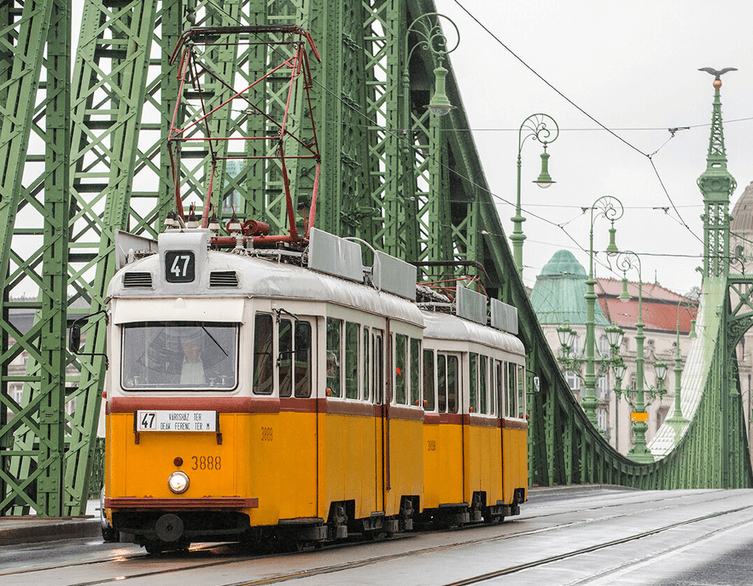
Riding Through Time: Budapest’s Heritage Trams and Retro Buses Are Back This Spring
There are few cities in the world where getting from A to B can feel like stepping into a history book. Budapest is one of them. Thanks to a long-running...
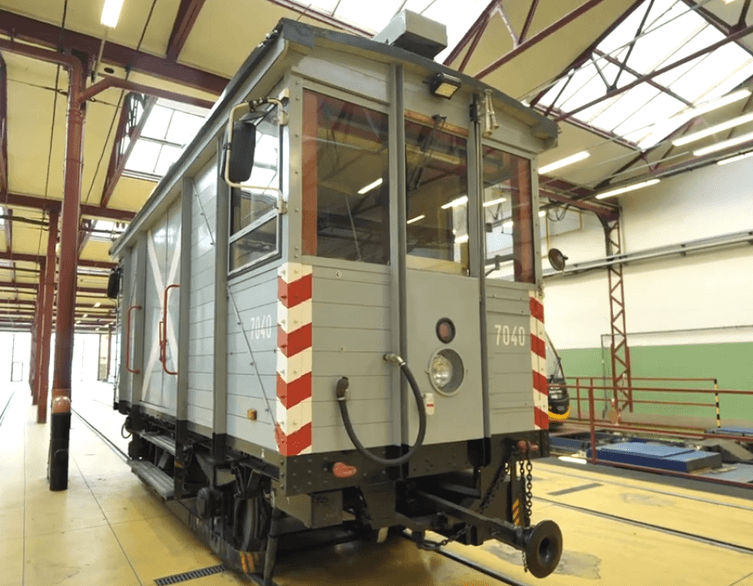
Meet the Muki: Budapest’s 100-Year-Old Freight Trams That Just Went Viral
Budapest is famous for many things — its thermal baths, grand architecture, ruin bars, and the Danube views that stop you in your tracks. But tucked...
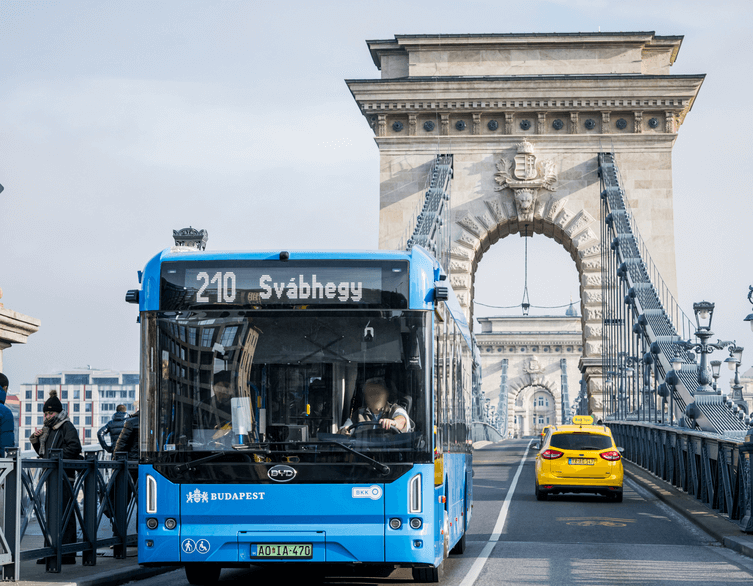
Budapest’s Public Transport Gets a Spring Upgrade: More Buses, More Trams, and Easier Access to the City’s Green Spaces
Spring has arrived in Budapest, and the city is responding in the best way possible. As the temperatures rise and the urge to get outside takes over,...
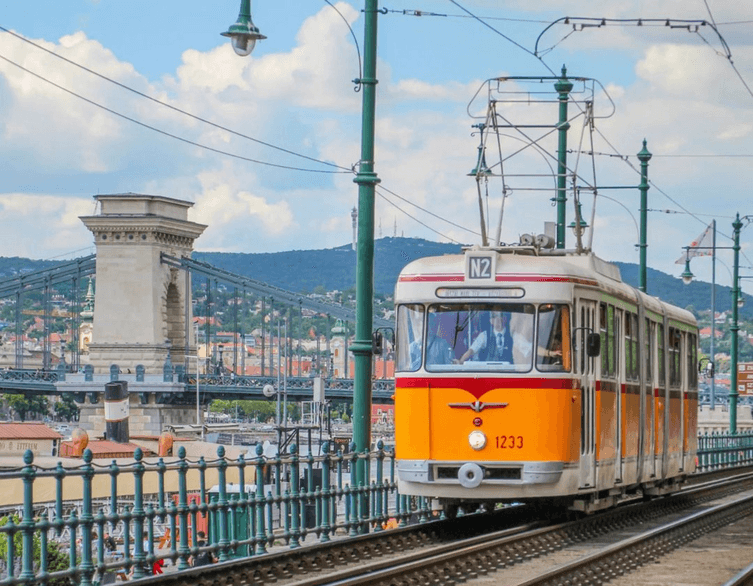
Budapest’s Iconic Tram Network: A Scenic and Convenient Way to Get Around
When it comes to exploring Budapest, there’s no better way to see the city than by hopping on one of its iconic trams. With over 40 tram lines,...